

Platform Eng
47 posts
Platform Eng
@PlatformEng
Following up CNCF projects and most known DevOps tools. Interested in K8s.
Присоединился Temmuz 2024
57 Подписки5 Подписчики

English

And the circle is complete. MinIO is now archived.
1️⃣ MinIO deprecated the UI.
2️⃣ They stopped providing images and pre-built binaries, going source code only.
3️⃣ The documentation “disappeared”, available only to enterprise users.
4️⃣ MinIO started to only receive security updates and bug fixes - no new features.
5️⃣ MinIO gets archived and the CE version is no longer maintained.

English
@peaklabs_dev @emreloperr Rustfs is a vibe coded project. You should avoid it from production.
English
@emreloperr Not sure which are good but I know of garagehq.deuxfleurs.fr and
github.com/rustfs/rustfs
English

@kubernetesio heads up if you're moving from dashboard to headlamp - the RBAC model is slightly different
default ClusterRole bindings won't give the same access. check the headlamp.rbac.roles docs first or you'll get a lot of 403s
English
The Kubernetes Dashboard was officially retired and archived on January 21, 2026.
To continue providing a modern, extensible web UI for the community, the project now recommends transitioning to Headlamp.
Now under SIG UI, Headlamp is a user-friendly tool for managing and troubleshooting your clusters.
Check out the project and docs here:
🔗 headlamp.dev
English
@valigo what makes you think Redis made billions in 2009? Is there any data?
English

2009 was a crazy year. You could put a hash table behind a TCP socket and make billions.

English

Running PostgreSQL outside your Kubernetes cluster because "databases are special" is how you end up with 47 different backup scripts and no one knows which one works.
English
@mischavdburg So, you think CSI snapshot & Backup is more reliable?
English

Docker just declared war on Helm.
They just launched Kanvas.
Kanvas converts your Docker Compose files directly into Kubernetes manifests. No YAML hell.
No Helm charts.
No templating headaches.
Kanvas is built on Meshery, which is CNCF’s 6th highest velocity project.
Most developers already use Docker Compose for local development.
You write a compose file. Run docker compose up. Everything works.
But when you want to deploy to Kubernetes, you need to learn Helm.
By that i mean, write complex YAML. Deal with Go templating. Debug cryptic errors.
For a simple app, you are writing hundreds of lines across multiple files.
Kanvas fixes this. Import your compose file, and It generates Kubernetes manifests automatically.
It even creates Terraform and Pulumi configs if you need them.
But i want to know if Docker solving the right problem?
Helm exists for a reason.
- Production environments need templating.
- They need versioning.
- They need rollbacks.
- They need complex configurations that change across environments.
Kanvas abstracts all of that away. For small teams and simple apps, that is perfect.
But for enterprise teams managing hundreds of microservices across multiple environments, that abstraction becomes a limitation.
You lose fine grained control.
You lose the ability to customize every piece.
Docker lost the orchestration war to Kubernetes years ago.
Now Docker is betting they can own the on ramp, help team eliminate help and make teams buy Docker Desktop subscription.
Kanvas is not replacing Helm in complex enterprises. It is bypassing Helm for many teams entirely.
Teams that want better developer experience over infrastructure control, and don’t want to do anything to do with helm
Will it work? Time will tell.
But whoever makes Kubernetes easiest wins a lot of developers.
English

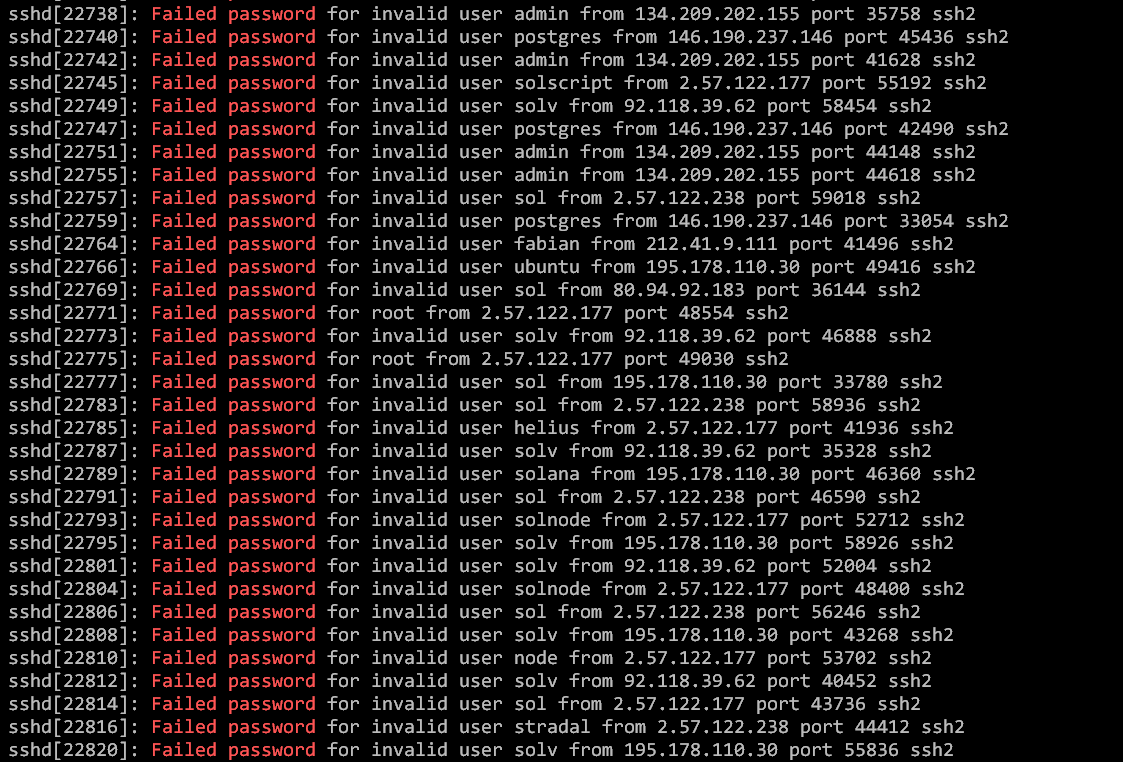
Yaklaşık 3 gün önce açılan ve kasıtlı olarak 22 ( ssh ) portu dışarı açık bırakılan bir sunucuya yapılan giriş denemesi sayısı yaklaşık 9 bin...
Türkçe


@bitnami Sorry bitnami, you chose money and lost the community...
English

Clearing the noise around Bitnami 🚨
Bitnami is still open source, Docker Hub images are still available, and security is stronger than ever with hardened PhotonOS images, SBOMs, and VEX data.
Get the facts 👉 blogs.vmware.com/tanzu/whats-up…
English
@honour_can_code Why to rewrite all your enterprise and stable software just to use "hype" languages?
English

java is only alive because entreprises are afraid of migrating.
Coder girl 👩💻@dev_maims
Which bold opinion on tech can bring u here ?
English
@livingdevops You should not compare a SaaS tool with a self hosted one.
English
I have used Jenkins.
I have used Github Actions
And I choose Github Action every freaking time.
English
@tom_antok Bro is not popular on social media and startups. But Its best and most popular choice of big enterprises.
English

@livingdevops Believe me, nobody build IDPs. Platform engineers mostly are DevOps engineers who are responsible of infra and networking as well.
English
2019: We need DevOps engineers!
2025: We need Platform engineers!
Same job.
Different title.
20% salary increase.
Platform Engineering responsibilities:
- Build internal developer tools
- Manage infrastructure automation
- Create self-service deployment platforms
- Reduce operational complexity
DevOps responsibilities from 2019:
- Build CI/CD pipelines
- Manage infrastructure automation
- Create deployment platforms
- Reduce operational complexity
The only difference is Platform Engineering sounds more strategic to executives.
Companies are paying premium salaries for the same work with better marketing.
This isn't innovation.
It's rebrand strategy.
Next trend prediction: Infrastructure Experience Engineers demanding $300K for the same work.
Market cycles repeat every 5 years with new terminology.
Smart engineers adapt to the terminology.
Wise engineers recognize the pattern.
Don't chase titles.
Chase skillset that create value regardless of what they're called.
Credit: Soleyman Shahir
English
@mischavdburg Redhat is trying hard to adopt that. But its so hard to bring traditional VMware admins to kubevirt and let them learn k8s to manage vms. It is an options for whome has strong K8s knowledge and need to go out from VMware.
English
@PlatformEng I see a trend where Kubernetes is becoming the new hyper visor with kubevirt
English
Kubernetes is freaking easy.
People want to make it sound hard because they feel threatened.
I see it all the time on X and LinkedIn.
These engineers with comfortable six figure salaries coasting two hours a day telling you Kubernetes is overkill for most companies.
Complete nonsense.
They find Kubernetes intimidating because they have outdated skill sets. They have been in the industry for 10 or 15 years and they don't want to learn something new.
Here is what they won't tell you.
If you know Linux and you know how to work with an API, Kubernetes is easy. The footprint of K3S is like 500 megabytes.
xAI Grok runs on Kubernetes. ChatGPT runs on Kubernetes. Microsoft Azure services run on Kubernetes. Microsoft 365 runs on Kubernetes.
Think about what that means.
Cloud providers are using Kubernetes to run their own clouds. Big AI companies are using it. Why would it not be the future?
The rumors that Kubernetes is hard to learn are false. People who say this are either lazy or scared their skills are becoming obsolete.
I saw this three years ago. I went all in. I make good money. I get contracts left and center. I can get a job any time I want.
Kubernetes is freaking easy.
If you are ignoring Kubernetes because someone told you it is too complex, you are making a massive mistake. Anyone in the comments who disagrees, let me know.
What is one technology people say is too complex that you mastered anyway?

English
@mischavdburg If you must go with containers, ofcourse K8s is the only way. The discussion should be choosing between containers vs bare metal. And even microservice architecture. Basically when people switch from monolith on VM to microservice on k8s, they face lots of challenges.
English
@PlatformEng Seriously what would you do without it. Did you ever run ansible playbooks over 100+ servers running individual containers? It’s a nightmare
English
English

@dhh @Cloudflare I wonder how the ISO is at 6.3GB. I believe the Core Arch ISO is 1.4GB. I haven't gotten a chance to try Omarchy yet, but is it because of the applications?
English

Gotta love the @cloudflare CDN distribution of the Omarchy ISO. I can download all 6.3GB in ~20 seconds on my 2.5gbit fiber connection. Pulling nearly 300MB/sec!!

English
@brankopetric00 By default, it attaches the default service account token which basically can't do anything even its stolen.
English

We ran a security scan. 90% of our K8s pods had a Service Account token mounted in /var/run/secrets/...
We asked the devs: Do you use this to talk to the K8s API?
They said no.
The problem: automountServiceAccountToken is true by default. Every pod gets a token, even if it doesn't need one.
This is a huge risk. If a pod is hacked (e.g., SSRF), the attacker instantly gets a token to query the API.
Fix: We now set automountServiceAccountToken: false on all Deployments by default.
English