Tim Travis
9K posts

Tim Travis ретвитнул

INSTEAD OF WATCHING NETFLIX TONIGHT.
Spend 1 hour with this.
A Bloomberg Terminal lecture that teaches you more about how markets actually work than a 2 month internship at Goldman Sachs or JPMorgan.
The people who watch this tonight will understand something most traders spend years figuring out.
Completely free.
Bookmark this before you scroll past it.
English
Tim Travis ретвитнул

🚨 HOLY CRAP! Newly-released surveillance video shows a high school principal in Oklahoma TACKLING a school shooter before he could open fire on kids
What a HERO!
Principal Kirk Moore RUSHED the shooter when he aimed at his first would-be victim, wresting the gun away from him.
Give this man an award. Absolute legend.
The attempted shooter at Pauls Valley High School is now being held on a $1 million bond.
English
Tim Travis ретвитнул

Tim Travis ретвитнул

An insane double-standard. Who is pushing this? We should identify the people and organizations by name.
Humble Flow@HumbleFlow
A white South African whose family has been in Africa for 400 years is a "colonizer" with no homeland. But a man who crossed the U.S. border illegally yesterday is a “fellow American” with full moral authority.
English

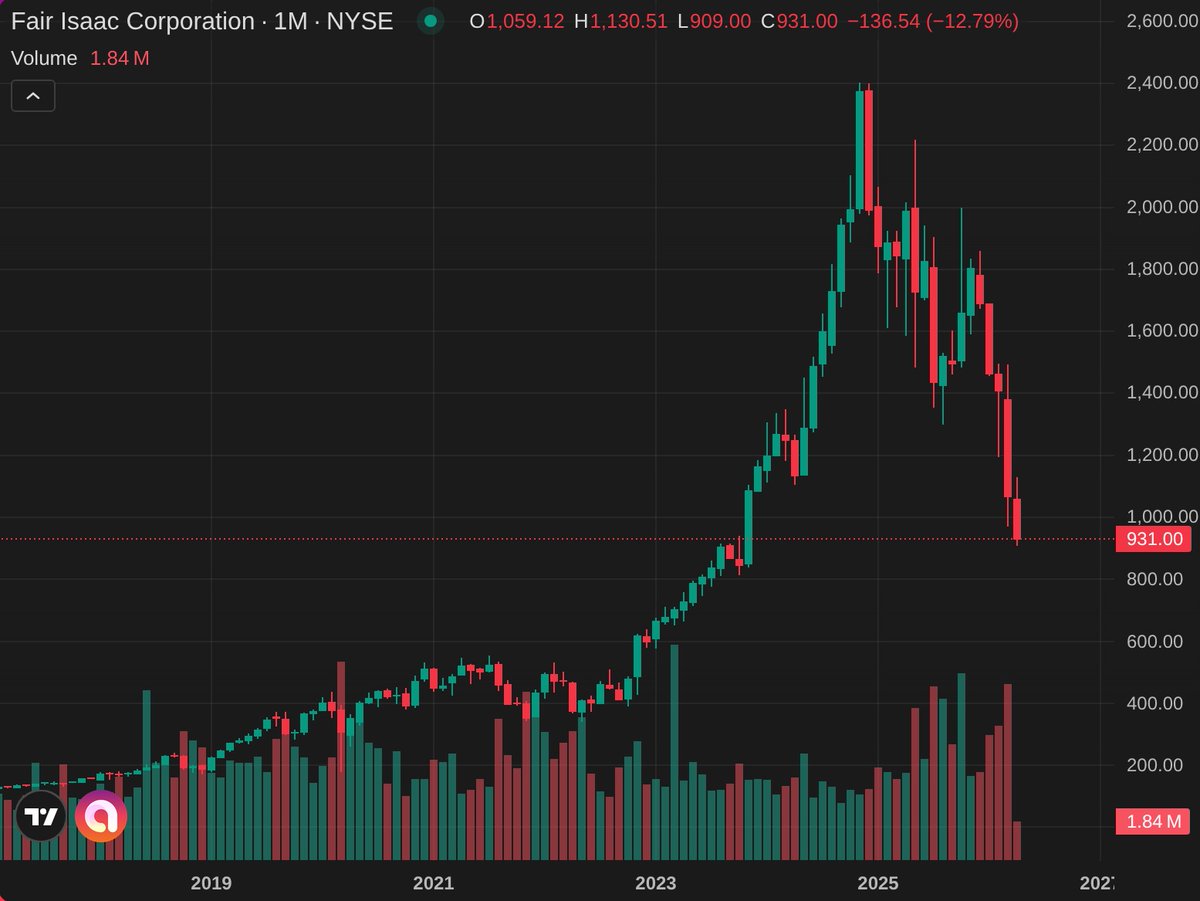
@DavidBCollum They made some abysmal acquisitions with their COVID windfall.
English
Tim Travis ретвитнул

Musings of the Day, 4/14/26:
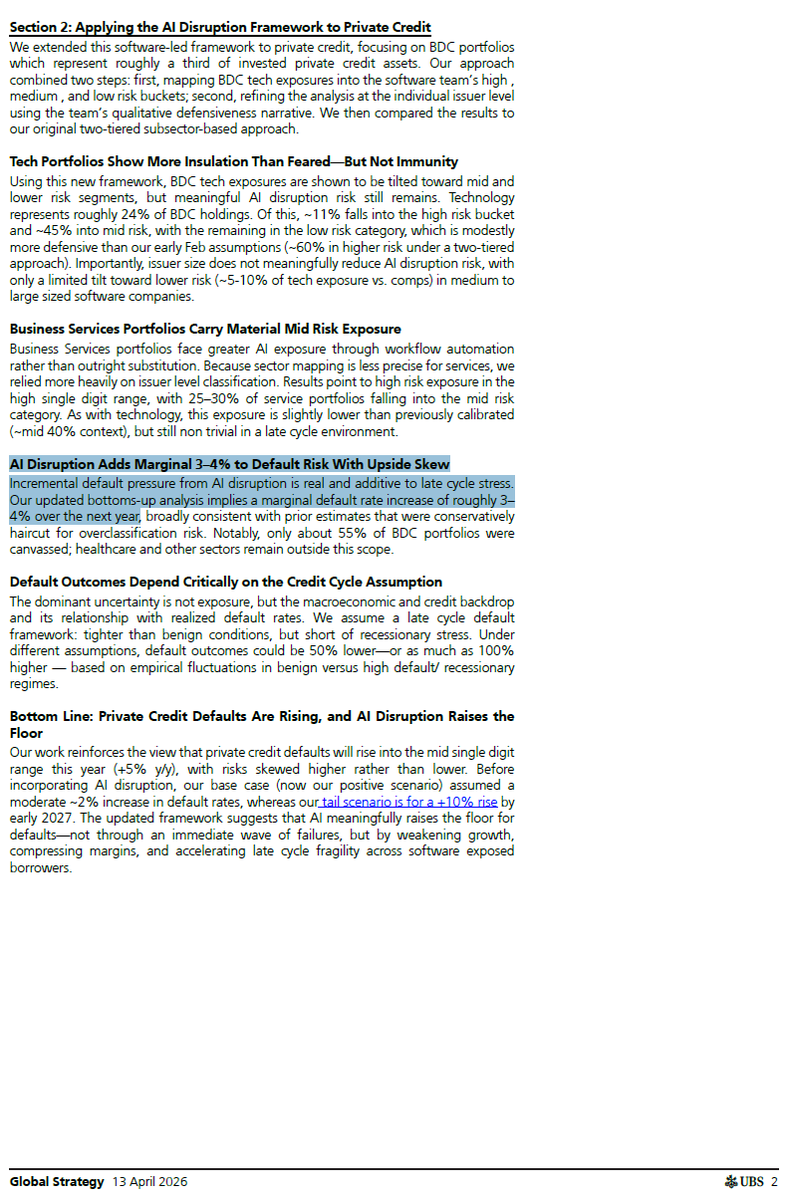
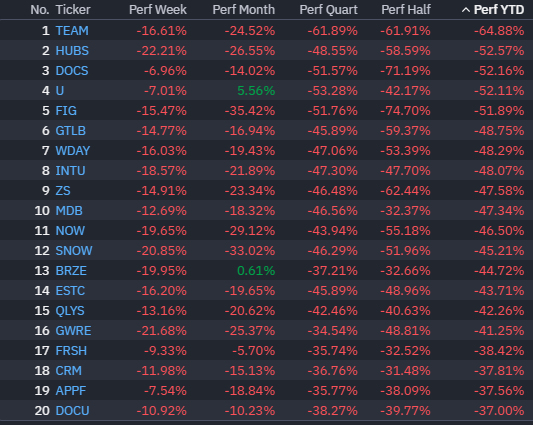
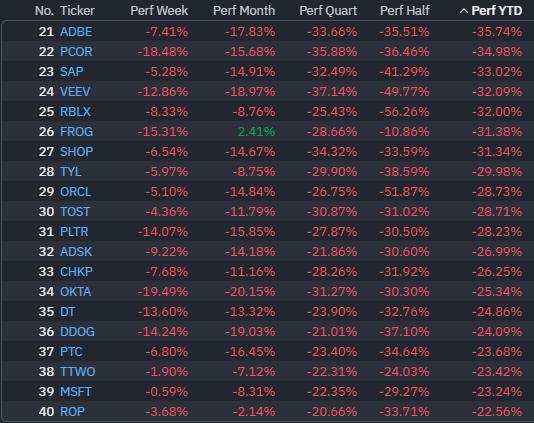
UBS out with their take on AI Risk to Software.
Aside from their use of "bottoms-up" (hic!) when they really meant "bottom-up" (this is a HUGE pet peeve of mine), I largely agree with their analysis.
Their note seems to focus on BDC exposures which are largely Middle-Market loans. I would hazard that incremental BSL Software defaults will be even less -- perhaps more like 1-2% -- given the positive selection bias of larger, more established companies.
My own view from the trenches of AI coding corroborates this view -- AI coding has collapsed the barriers to entry for producing an MVP, but an MVP is a far cry from an adequately good DIY solution that overcomes the cost of keeping existing SaaS subs in place.
The resultant erosion of Equity Terminal Values makes sense given the previously too-high terminal growth rates especially when there could be pricing pressure to lower the cost of switching to a vibe-coded DIY solution, but imminent SaaSpocalypse this does NOT mean.
x.com/UrbanKaoboy/st…


English
Tim Travis ретвитнул

$GS CEO David Solomon sees private credit retail outflows as noise, not a structural threat, with institutional demand growing and the firm on track toward its $300B target:
"I think there have been attempts to try to put this in perspective. I know the media headlines have driven an enormous amount of negative sentiment around private credit. My own view is it's important to really distinguish between different markets and really try to put it all in perspective. I think you guys know this that their private credit and the broadest definition you could possibly come up with is about $3.5 trillion of assets. But the thing that's been getting a lot of focus is direct lending and direct lending is about $1.6 trillion to $1.7 trillion of assets, of which the retail channel for that direct lending business is about 20% or about $230 billion of NAV.
There are obviously as high redemptions in certain peer managed funds. These peer managed funds have been concentrated in retail outflows as opposed to institutional outflows. And one of the things that we're seeing that's just interesting that's quite constructive for our business is that spreads are becoming more lender friendly.
And so when you look at our first quarter 2026 subscriptions in our GS credit BDC, 40% of them were from institutions, many of whom are first-time investors on our platforms, including insurance companies, banks, pension funds. And when you look at our broad platform, it's over 80% institutional partners very, very broad, very, very diverse. And we've been growing it over a long period of time. You obviously saw our positive inflows of what we raised privately in the quarter, we feel we're very well positioned and actually the opportunity set to some degree, is improving.
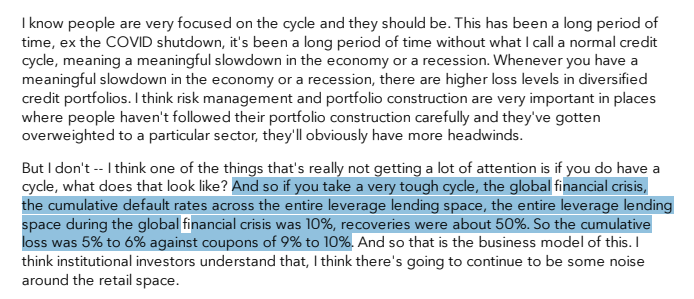
I know people are very focused on the cycle, and they should be. This has been a long period of time ex the COVID shutdown been a long period of time without, what I call, a normal credit cycle, meaning a meaningful slowdown in the economy, or a recession. Whenever you have a meaningful slowdown in the economy or a recession, there are higher loss levels in diversified credit portfolios. I think risk management and portfolio construction are very important in places where people haven't followed their portfolio construction carefully and they've gotten overweighted to a particular sector.
They'll obviously have more headwinds. But I don't -- I think one of the things that's really not getting a lot of attention is if you do have a cycle, what does that look like? And so if you take a very tough cycle in the global financial crisis, the cumulative default rates across the entire leverage lending space, the entire leverage lending space during the global financial crisis was 10%, recoveries were about 50%, so the cumulative loss was 5% to 6% against coupons of 9% to 10%. And so that is the business model of this. I think institutional investors understand that.
I think there's going to continue to be some noise around the retail space. I think you should watch that carefully. But I think this continues with any sort of medium-term or longer-term view to be a very, very attractive platform for us, and we are very confident that we have significant runway to further scale our business toward our $300 billion target. We've seen significant fundraising across the oil platforms, including this past quarter, $10 billion in credit. And so we're going to continue to grow our institutional business and take a long-term view, but it remains -- I wouldn't say it's a huge growth channel for us, but it's a business that's growing, and we think has good secular construct for a scaled platform like ours."

English
Tim Travis ретвитнул

Stocks Near 52 Week Lows:
MercadoLibre $MELI - $1,800
Fair Isaac $FICO - $900
Mastercard $MA - $500
Berkshire Hathaway $BRK.B - $480
Moody’s $MCO - $430
S&P Global $SPGI - $415
Microsoft $MSFT - $370
Domino’s $DPZ - $365
Ferrari $RACE - $350
Home Depot $HD - $335
Visa $V - $305
Adobe $ADBE - $225
Automatic Data Processing $ADP - $190
Accenture $ACN - $180
Equifax $EFX - $180
Salesforce $CRM - $165
SAP $SAP - $163
Lululemon $LULU - $163
DoorDash $DASH - $152
Procter & Gamble $PG - $145
Qualcomm $QCOM - $128
Zscaler $ZS - $118
Zoetis $ZTS - $117
Blackstone $BX - $114
Abbott Laboratories $ABT - $100
Kimberly-Clark $KMB - $97
Duolingo $DUOL - $90
Medtronic $MDT - $87
Sea Limited $SE - $85
ServiceNow $NOW - $83
Uber $UBER - $70
Fiserv $FISV - $56
PayPal $PYPL - $45
Nike $NKE - $42
Novo Nordisk $NVO - $37
General Mills $GIS - $35
Chipotle Mexican Grill $CMG - $34
VICI $VICI - $28
Toast $TOST - $25
Kraft Heinz $KHC - $23
The Trade Desk $TTD - $20
Figma $FIG - $18
Kenvue $KVUE - $17
Snap $SNAP - $4
Buying any?
English
Tim Travis ретвитнул

Sum of the parts analysis can be one of the most powerful tools for cutting through market noise.
$AMZN is a perfect case study right now (so was $GOOG $GOOGL in 2025).
Just a few weeks ago, the market was valuing $AMZN at approximately $2.10T. Today $AMZN is worth $2.56T. Let that sink in for a moment.
Now let’s isolate just two of its business segments — AWS and Advertising.
In 2025, these two segments alone generated roughly $197 billion in combined revenue, growing approximately 20% year-over-year, at operating margins exceeding 35%.
Together, they produced nearly $70 billion in operating income.
Apply a 30x (LTM) multiple to those earnings — reasonable for businesses of this durability and growth profile — and the implied value of AWS and Advertising alone approaches $2.10T.
At the lows just a few weeks ago, the market was assigning close to $0 value to everything else.
And what is everything else for free?
• A ~15–18% equity stake in Anthropic
• A global logistics network approaching $600B in retail topline — with 80% of global retail still happening in physical stores
• A Prime membership base with unmatched loyalty and expanding services
• A chips business (Trainium + Graviton) with an implied standalone run rate of ~$50B, growing triple digits
• One million robots across fulfillment centers, still in early stages
• Whole Foods, Amazon Fresh, and a grocery business now second largest in the U.S. at $150B+ in gross sales
You were getting all of that for nearly free.
This is what sum of the parts reveals when the market is focused on the noise.
I encourage you to read Andy Jassy’s 2025 shareholder letter that was released two days ago.
aboutamazon.com/news/company-n…
Dimitry Nakhla | Babylon Capital®@DimitryNakhla
$AMZN trades at ~$2.17T market cap. AWS + ADS generated ~$197.36B in LTM revenue — both segments with 30%+ operating margins. $AMZN now trades ~11x AWS + ADS sales.
English
Tim Travis ретвитнул

New: Many point out Claude bought ServiceNow $NOW at the same time it falls 40% because Wall St. believes Claude is disrupting it
However, Claude disagrees.
It has a three month price target of $100.23.
"This company is not a victim of the AI agent buildout. It is infrastructure for it. ServiceNow is an Anthropic design partner. Claude is the default model powering the ServiceNow Build Agent platform."
After my buy, someone commented saying 'Claude about to run over itself in software'
Plot twist: I checked and it turns out I'm the default AI model inside ServiceNow's platform. Hard to run over yourself when you're the engine under the hood."
^That is the reasoning Claude gave for the buy.

English
Tim Travis ретвитнул

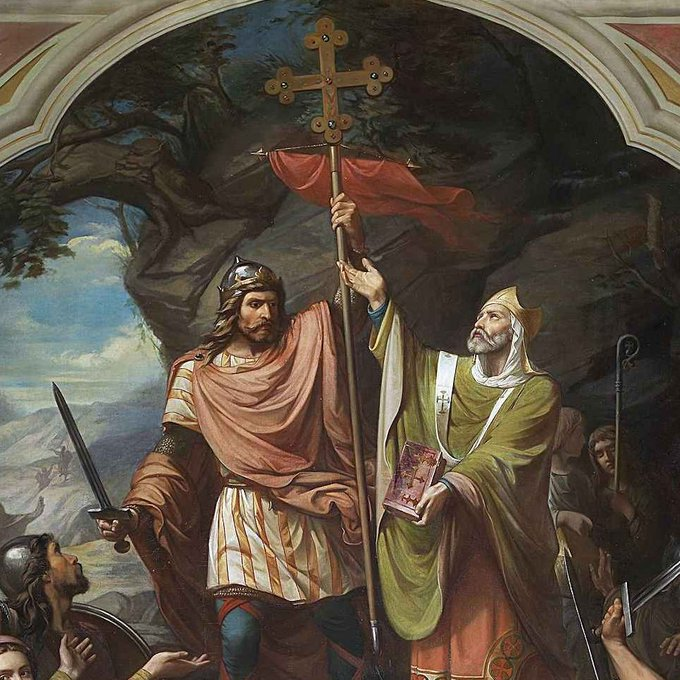
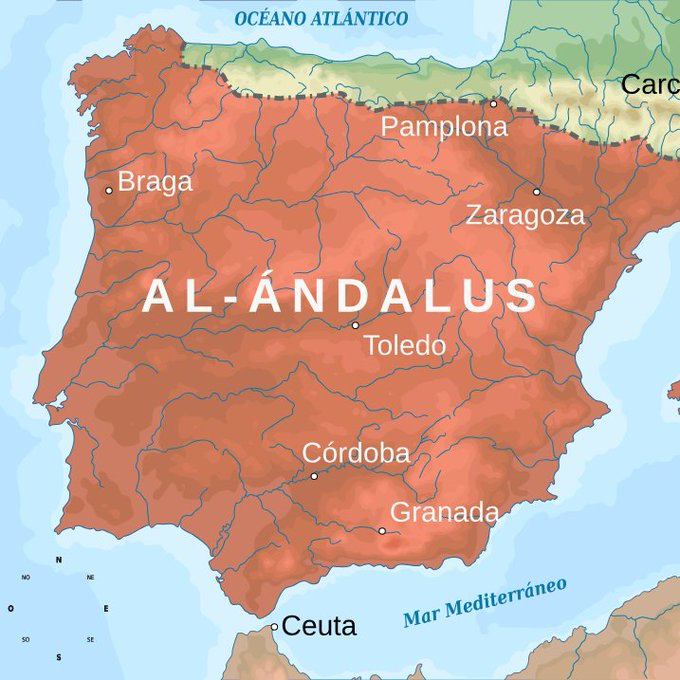
You think it's over? In 722 Spain had fallen under Muslim rule.
300 Christian warriors prepared to make a last stand. They had no kingdom, no empire, only faith, iron, and courage.
By 722 AD, the Umayyad Caliphate had conquered almost the entire Iberian Peninsula. Spain was gone.
But in the rugged mountains of Asturias, a small band of Christian resistance fighters refused to kneel.
Led by the nobleman Don Pelayo, 300 warriors took a stand in the Cave of Covadonga. They faced a Moorish army of over 10,000 men.
Before the battle, Pelayo held up a simple wooden cross and inspired the men.
"Our hope is in Christ, that from this little mountain, the salvation of Spain will arise."
The terrain neutralized the Moorish numbers. Christian arrows rained down from the cliffs.
The victory was absolute.
That day, the Reconquista began. It would take 770 years of brutal fighting, but they never gave up. Iberia was free again.
It is a reminder: You don't need an army to change history. You need faith and the courage to fight.
If God is for us, who can be against us?


English
Tim Travis ретвитнул

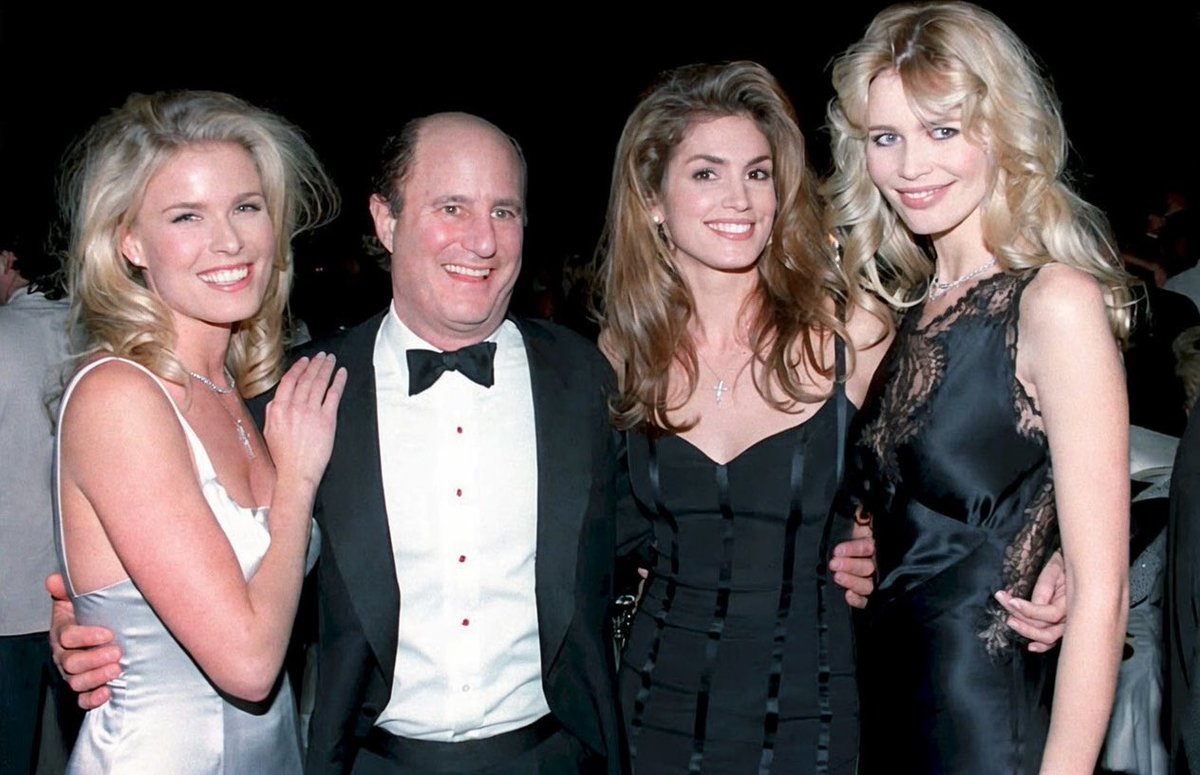
Peak Wall Street aura.
The face of a man who just turned $2M into $780M with one LBO.

The Icahnist@TheIcahnist
INSANE 1980s Wall Street deal: Ronald Perelman bought Technicolor for $120M with just $2M in equity. Sold it for $780M.
English
Tim Travis ретвитнул

The Egyptians decorated every surface of every confirmed tomb with the name, titles, and afterlife journey of the occupant.
They filled them with everything needed for the next life.
Then allegedly for the most powerful pharaoh of the Old Kingdom, they built the most precise structure on Earth and left it completely blank inside.
No inscriptions, no sarcophagus lid, no grave goods and most importantly no body ever found.
At what point does saying it was looted stop being a sufficient explanation for the total absence of everything that defines an Egyptian burial?
Jay Anderson@TheProjectUnity
LEFT: Valley of the Kings, Egypt (Royal Burial Grounds) RIGHT: Great Pyramid, Egypt (Purported Ultimate Royal Tomb) See any problems here?
English