L. Wayne Mathison

118.3K posts

L. Wayne Mathison banner
L. Wayne Mathison

L. Wayne Mathison

@WayneMathison

Entrepreneur & Ex Municipal Leader. Cross-disciplinary student of economics, psychology, and philosophy. I prefer local grit and real-world results over vibes.


Manitoba Присоединился Aralık 2021
2.2K Подписки6K Подписчики
Закреплённый твит
L. Wayne Mathison
L. Wayne Mathison@WayneMathison·
Pelican Lake, Manitoba
L. Wayne Mathison tweet media
Español
11
1
103
8.6K
L. Wayne Mathison
L. Wayne Mathison@WayneMathison·
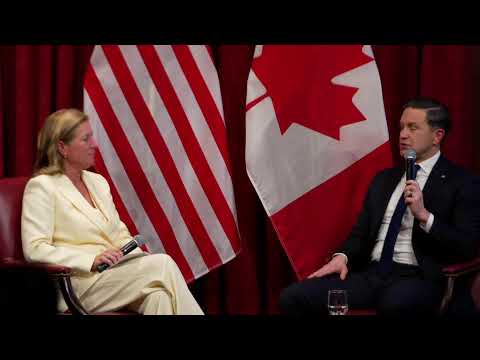
Let Canadians Hear the Argument Before Judging It Public debate in Canada is starting to feel less like an exchange of ideas and more like a managed performance. Positions are framed before they are heard. Reactions arrive before the facts. And too often, the goal is not to persuade but to pre-empt. The recent reaction to Pierre Poilievre’s appearance on a long-form podcast made that pattern hard to ignore. Much of the criticism surfaced before most people had even listened to the interview. That suggests something deeper than disagreement. It suggests a habit of judgment without engagement. This is not healthy for a democracy that depends on citizens weighing arguments for themselves. A growing ecosystem of political actors, media voices, and online activists appears to operate on a shared playbook. First, define a figure as “dangerous.” Second, establish a moral frame that places one side on higher ground. Third, amplify selective clips that reinforce the narrative while leaving out context. The result is not debate. It is conditioning. The danger here is not that people disagree. It is that disagreement is increasingly treated as something suspect, even illegitimate. Mark Carney represents a polished, technocratic approach to leadership. His credentials are strong, and his tone is measured. But his model also reflects a broader shift toward centralized, expert-driven decision-making. In that framework, public input is often filtered through institutions that claim authority over interpretation. That approach can bring stability. It can also distance decision-making from the people it affects. Canadians have already seen moments where institutions extended their reach into areas many believed should remain off-limits. Those moments raised legitimate questions about how power is exercised, and how easily it can be justified in the name of broader goals. Pierre Poilievre’s communication style takes a different path. He favours direct, unfiltered conversation. Long-form interviews, where ideas can be explored without interruption or editing, allow voters to hear arguments in full. That format carries risks. It is less controlled, less polished. But it is also more transparent. The strong reaction to that kind of exposure is telling. It suggests that open platforms challenge an environment that depends on framing and interpretation to guide public opinion. At its core, this is not a dispute between left and right. It is a question of whether Canadians are encouraged to think independently or guided toward approved conclusions. A functioning democracy requires more than access to information. It requires the freedom to evaluate competing ideas without pressure to conform. When debate is replaced by labeling, and curiosity is replaced by certainty, that freedom begins to erode. Canadians deserve better than pre-packaged judgments. They deserve the chance to hear arguments in full, to question them, and to make up their own minds. The simplest step forward is also the most important. Listen first. Decide after.
English
0
0
3
12
L. Wayne Mathison
L. Wayne Mathison@WayneMathison·
Here’s the trick: “everyone I meet is talking about it” is one of those lines that sounds like evidence but isn’t. It’s soft persuasion. No names, no quotes, no context. Just implied importance. It’s the rhetorical version of “trust me, it’s a big deal.” Now, could foreign officials ask about a high-profile Davos speech? Sure. That happens. Davos is basically a networking circus for elites. People trade talking points the way your old store traded coffee chatter at the counter. But turning that into “this is defining global policy” is a leap. A big one. And calling it a “doctrine”? That’s branding. Not analysis. Real doctrines show up in policy, budgets, laws, and outcomes. Not just speeches and buzz. So do I believe her? I believe she probably had conversations. I don’t believe the implied weight without receipts. What changed in the real world because of this?
English
0
0
0
6
The Real Mr Bench
The Real Mr Bench@therealmrbench·
"The Carney Doctrine" That's how Anita Anand describes The Mark Carney speech from Davos. She also says... Every foreign minister she meets starts of a conversation asking about the speech. Do you believe her? Anand is in London, England
English
248
46
126
6.1K
L. Wayne Mathison
L. Wayne Mathison@WayneMathison·
@Mikeggibbs That’s a status update, not a resolution. “No current activity” just means nothing detected right now. Show me sustained behaviour change, not a headline.
English
0
0
33
870
Michael Gerald Gibbs🏳️‍🌈🍁 🇺🇦 (He/Him)
Holy sh--, Carney got it done! The India-Canada cold war, is over! The RCMP announced today that it appears India has ceased all clandestine activities against Canada. Modi delivered and kept his word. Hopefully this marks the beginning of a long new trusting prosperous friendship. "EXCLUSIVE: RCMP says no current clandestine activities in Canada linked to government of India" ctvnews.ca/politics/artic…
Michael Gerald Gibbs🏳️‍🌈🍁 🇺🇦 (He/Him) tweet media
Ajax, Ontario 🇨🇦 English
476
296
1.4K
62.1K
L. Wayne Mathison ретвитнул
Lorrie Goldstein
Lorrie Goldstein@sunlorrie·
Tom Marazzo: How Supreme Court Chief Justice Richard Wagner dragged the Supreme Court Into Politics 'He placed himself at the centre of a serious judicial controversy when he described the Freedom Convoy in language no Chief Justice should ever use about a politically charged event that could come before the courts.' tommarazzo.substack.com/p/how-wagner-d… h/t @cbcwatcher
English
33
236
719
17.6K
L. Wayne Mathison ретвитнул
Jon Fraser
Jon Fraser@JonFraserTF·
If @LoriIdlout robbed a bank but gave the money back after being caught, would she have no consequences? Apparently she's operating under the exclusive Liberal school of ethics. I wonder if that's the coercion used by the @liberal_party to get her to cross the floor?
Canada Proud@WeAreCanProud

#REPORT: Nunavut MP Lori Idlout, who crossed the floor from the NDP to the Liberals earlier this month, has reimbursed the House of Commons $1,700 after being caught expensing items she purchased for her office from Carvings Nunavut, her own private business.

Montpellier, France 🇫🇷 English
67
376
856
8.2K
Polling Canada
Polling Canada@CanadianPolling·
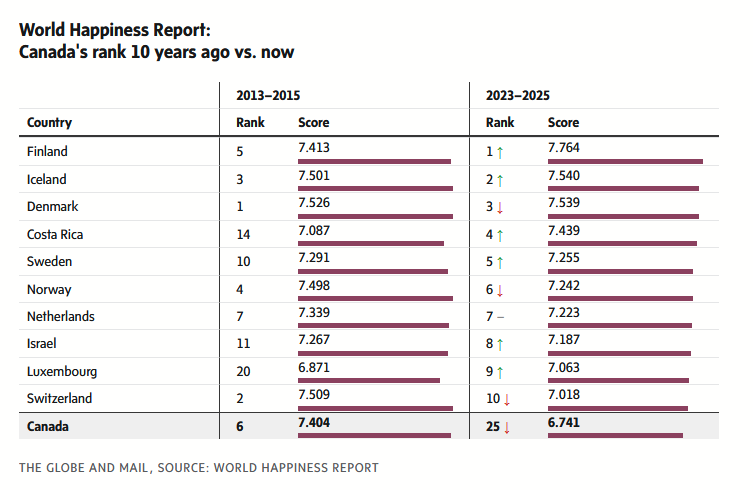
Between 2013-2015, Canada ranked 6th for happiest country Today, we rank 25th
Polling Canada tweet media
English
261
97
503
26.9K
L. Wayne Mathison ретвитнул
National Post
National Post@nationalpost·
Defence minister backtracks, now says he was informed 'immediately' after Iranian strike on base housing Canadians nationalpost.com/news/canada/de…
National Post tweet media
English
370
191
430
40.2K
L. Wayne Mathison ретвитнул
Jasmin Laine
Jasmin Laine@JasminLaine_·
“So why did you lose?” Joe Rogan seems baffled that Canadians had anything bad to say about Pierre Poilievre based on how sensible and effective his policies would be.
English
413
751
5.7K
259.7K
L. Wayne Mathison ретвитнул
Cosmin Dzsurdzsa
Cosmin Dzsurdzsa@cosminDZS·
You can pretty much explain the entire legacy media response to Poilievre’s Joe Rogan appearance as a mix of envy and panic It's the same reasons they want to see X banned in Canada
English
56
191
1.2K
21.3K
L. Wayne Mathison
L. Wayne Mathison@WayneMathison·
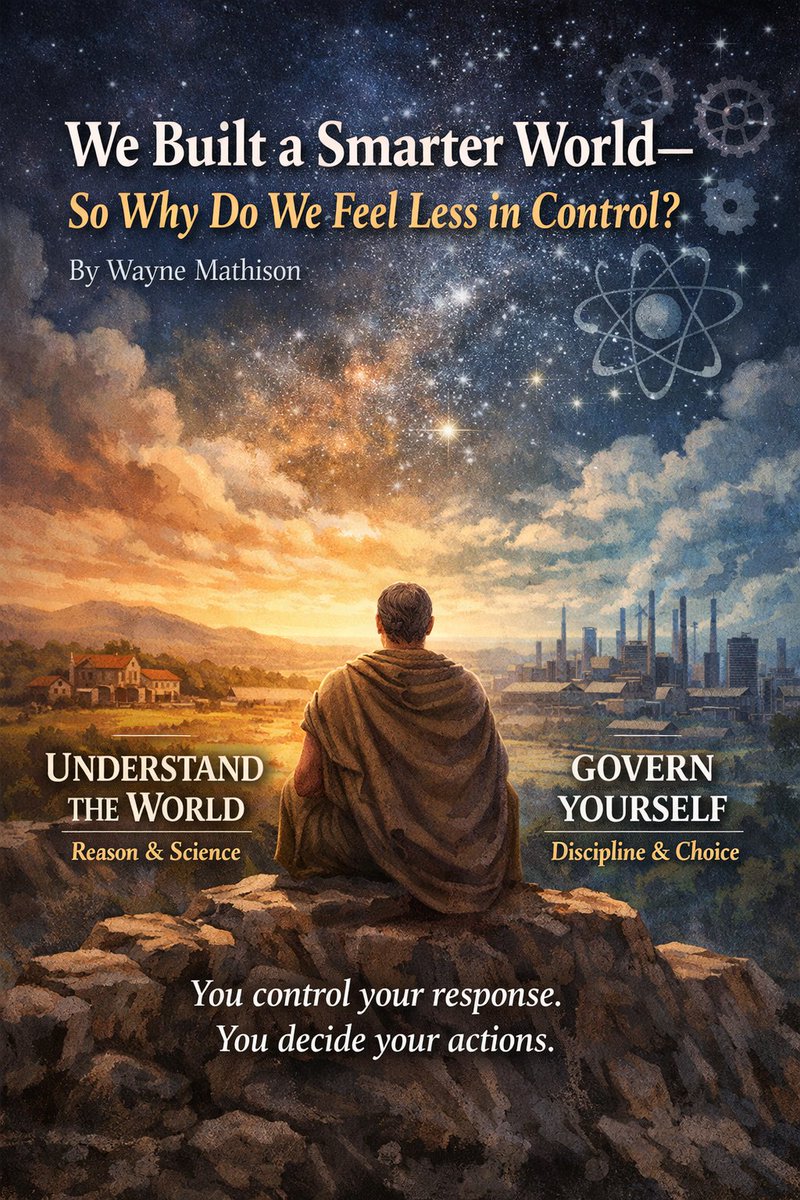
We Built a Smarter World - So Why Do We Feel Less in Control? Modern life has a strange feel to it. We’ve solved problems that crushed our ancestors, yet many people feel more uncertain, not less. Go back a few centuries and life was simple in one sense: hard, but clear. You worked the land. You survived or you didn’t. Then came the Agricultural and Industrial Revolutions. Food became abundant. Labour shifted. Cities grew. Wealth expanded. Life improved... dramatically. That part is undeniable. But progress didn’t just change how we live. It changed how we see ourselves. The Enlightenment gave us a powerful framework: truth exists, reason can find it, and acting on it improves human life. That idea built modern civilization. It’s why we have medicine, infrastructure, and rising living standards. Then science kept going. It began to explain not just the world... but us. At one level, we experience ourselves as agents. We choose. We judge. We act. We carry responsibility. This is the world we actually live in. It’s the foundation of law, morality, and daily life. At another level, science describes us as systems. Biology, chemistry, and physics explain behaviour in terms of cause and effect. The deeper you go, the less room there seems to be for choice, meaning, or moral responsibility. That tension unsettles people. Am I choosing, or am I being driven? Am I responsible, or just the result of prior conditions? Stoicism cuts through this confusion. It doesn’t deny science. It doesn’t pretend the world is simple. It makes a more practical move: it focuses on what remains within your control. You don’t control the entire chain of causes that shaped you. You don’t control every impulse, every external event, or every outcome. But you do control your response. You can pause. You can examine your judgement. You can decide how to act, regardless of the pressures around you. That’s enough. The Stoics weren’t concerned with building a perfect theory of the universe. They were concerned with living well inside it. Whether the world is fully determined or partly uncertain doesn’t change the immediate fact: you are still faced with choices in front of you, right now. And those choices have consequences, for you and for others. The same principle applies to leadership. Many people cling to ideas long after evidence has turned against them. Not because the evidence is unclear, but because admitting error is costly. It threatens identity, reputation, and past decisions. A Stoic approach is different. You don’t defend your past self. You correct your present course. You ask: What is true? What is within my control? What is the right action now? Then you act on that, without drama, without ego. We built a world of incredible capability through reason and discipline. Those tools still matter. But they only work if we apply them inward as well as outward. Understanding the world is one task. Governing yourself is another. The first built modern civilization. The second determines whether we can sustain it. Final point: You don’t need certainty about the nature of reality to live well. You need clarity about your next decision, and the discipline to make it properly.
L. Wayne Mathison tweet media
English
2
0
1
56
L. Wayne Mathison ретвитнул
Jonathan Kay
Jonathan Kay@jonkay·
the indigenous qualifications of Michelle Coupal, the “Canada Research Chair in Truth, Reconciliation & Indigenous Literatures” at @UofRegina, consists of having a great-grandfather who was “believed” to have had an indigenous ancestor two centuries ago cbc.ca/news/indigenou…
Jonathan Kay tweet media
English
184
294
1.1K
24.3K