Ashutosh Kumar
3.3K posts

Ashutosh Kumar
@ashu_1069
patching up autonomy @OwlAI_
New York Присоединился Haziran 2020
1.1K Подписки743 Подписчики
Закреплённый твит

It begins quietly, almost imperceptibly. You sit in front of the code, symbols scattered like fragments of a language you were never taught, yet somehow, it feels familiar. You don’t start by thinking, you start by sensing. There’s a pull, a faint intuition, the subconscious whispering patterns you can’t yet name. It’s the strange feeling of knowing something you don’t consciously know, as if the answer is already there, buried.
But you can’t rely on that alone. So you slow down. You begin to trace lines, count repetitions, and test structures. Linear thinking takes over - step by step, pattern by pattern. What felt like instinct now meets scrutiny. You question it, refine it, prove it. And in that interplay, between the quiet certainty of intuition and the deliberate grind of reasoning, the code starts to unravel. Not all at once, but piece by piece, until what once looked like chaos begins to read like meaning.
English
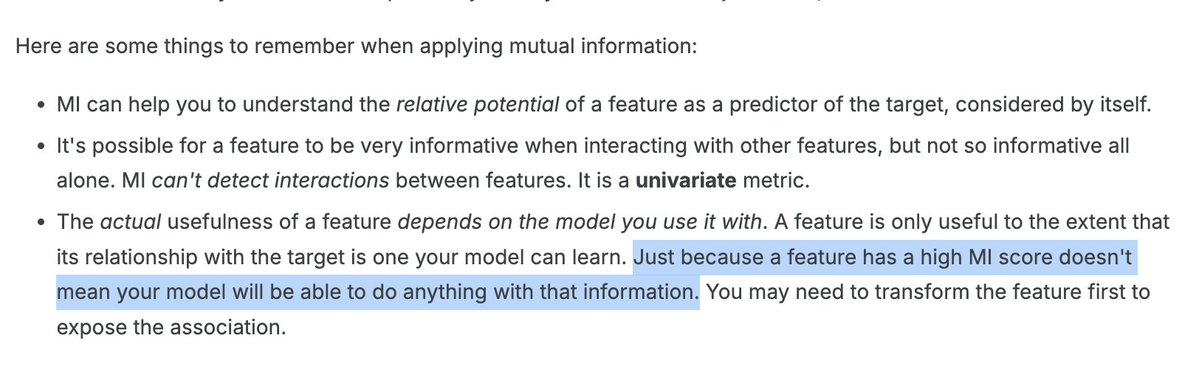
Kolmogorov complexity can provide a fundamental explanation of why feature usefulness is model-dependent.
Source: kaggle.com/code/ryanholbr…

English

The Shannon machine operates only on one side of the spectrum
Core Automation@CoreAutoAI
Deep learning works
English


We need thermal for local features, and RGB for global context, working in tandem to complement each other.
So, you can verify your datasets using DINOv3 embeddings if:
- The thermal maps are locking strongly on pedestrians; RGB maps carry more scene/context - great for pedestrian detection task.
- RGB emphasizes wet road reflections, headlights, road geometry, and sky/trees; thermal emphasizes hot vehicles/headlight regions and road bands -- these kinds of datasets carry the richest cross-modal complementarity
- If both feature maps look coarse, reject them; there's no use.
English

[Analyzed over 44k combined samples from LLVIP, KAIST, and M3FD dataset]
When you generate DINOv3 feature maps for RGB and thermal modalities at different layers (a very useful application, read the last para), the most interesting pattern is that RGB and thermal are almost identical in early layers, diverge strongly in mid-late layers, then partially re-align in the later layers.
Numerically, the cosine similarity b/w them:
- Layer 0: ~1.00
- Layer 6: ~0.997-0.998
- Layer 12: ~0.895-0.910
- Layer 18: lowest, ~0.642-0.709
- Layer 24: rebounds to ~0.929-0.947
The inference is that we will find modality-specific structure at or around Layer 18 (mid-to-late layers, find them using the lowest cosine similarity or any other metric of your choice), which can be used for diagnostics and supervision while training a fused modality model. If we take the final layer embeddings of RGB and thermal, the final pooled representation, which becomes semantic/global, may hide the modality-specific signal we care about.
English

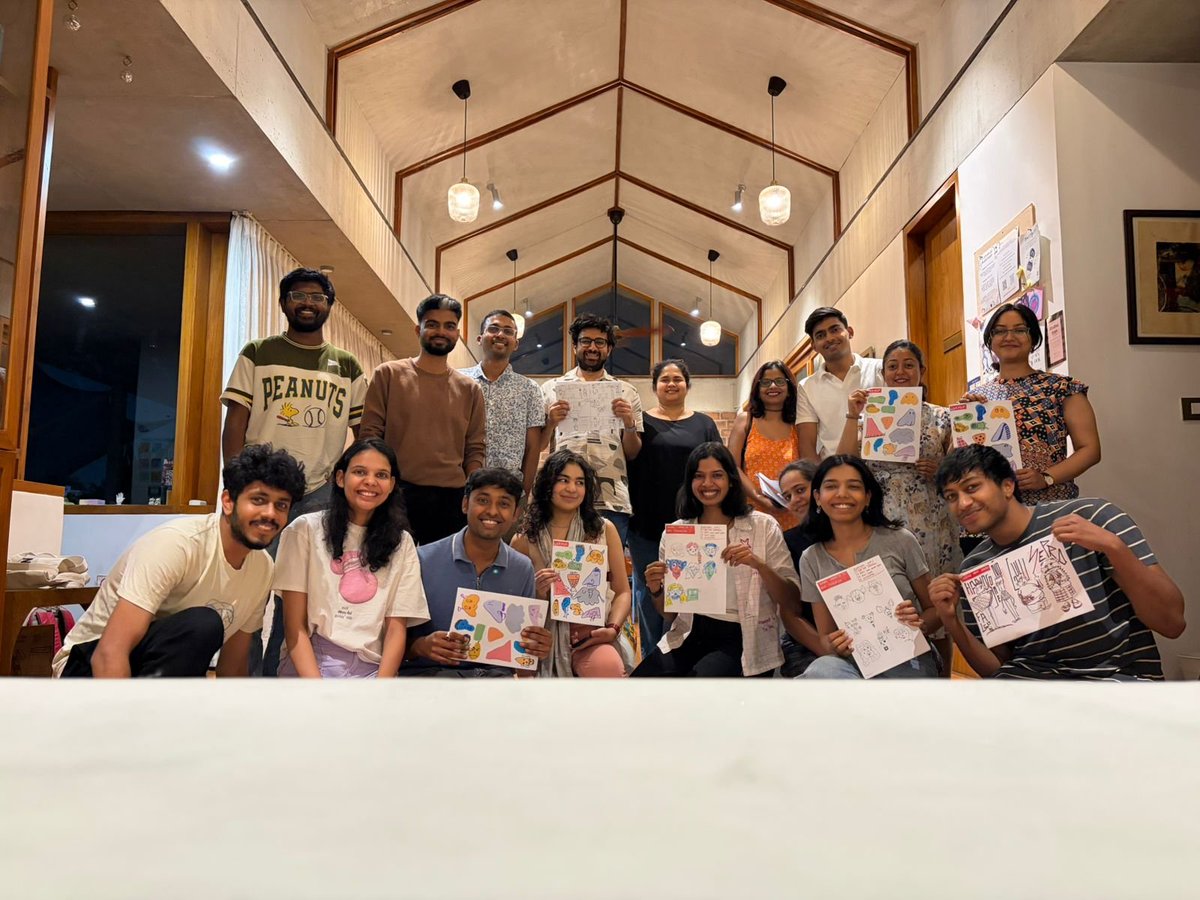
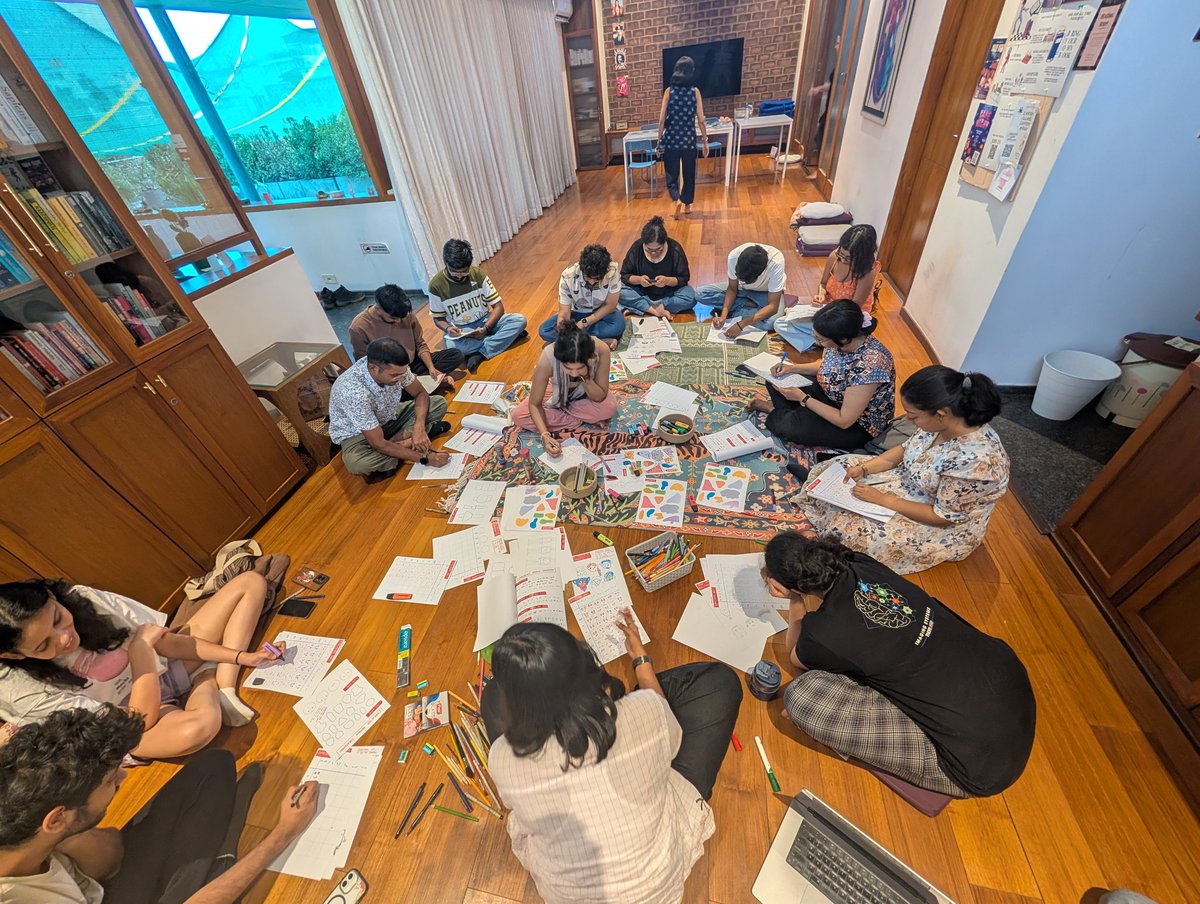
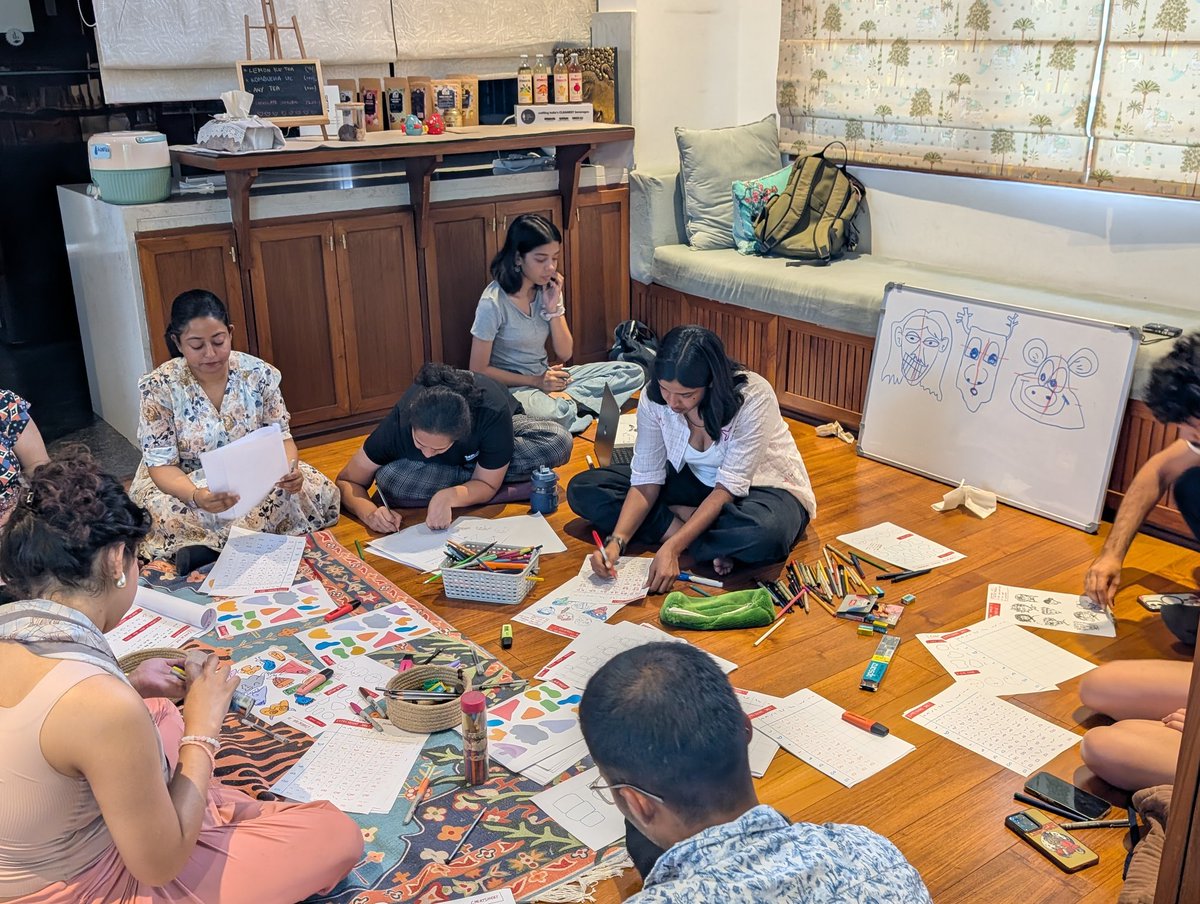
@snehaxdesign wow, looks like fine-arts in SAC, all over again
English

Indo-Gangetic plains, some of the most fertile land on Earth, and we chose unplanned concrete. And if someone happens to read the policies in the last decade on “over-powering” natural ecosystems, they’ll know why these aftershocks are visible at scale. It’s hard to believe this is just incompetence. Policy failures at this scale are rarely accidental.
What’s more concerning is how sustainability itself gets dismissed. At @iitroorkee, I’ve seen serious efforts casually labeled as “leftist” and reduced to memes.
Between 2019–23, here’s what our team actually worked on:
- Segregated waste systems (organic, inorganic, e-waste)
- Partnerships for e-waste & menstrual waste recycling
- Shift to biodegradable cutlery (with cost accountability)
- Aluminum cans replacing plastic bottles, with recycling-backed pricing
- Seminars with NITI Aayog, industry, ESG leaders, NGOs
- Campus-wide awareness programs for residents & sanitation workers
- Flora audits across campus
- Attempts at shared mobility (YULU bikes, didn’t scale economically)
- Sustainable tap design in hostels
- Drones for sustainable agriculture
- Case studies: Ganga Action Plan, sustainable clothing, smart cities, decentralized grids
None of this was ideological, but practical. But if even small, contained ecosystems like campuses struggle to normalize sustainability, scaling it nationally becomes an order of magnitude harder.

English

@vikhyatk gotta borrow the rubrics from designers on when to stop
English

Regardless, can we see his viva marks, if available, given that he doesn’t like being questioned?
Live Law@LiveLawIndia
[PM Modi Degree Case] Delhi High Court grants two weeks’ more time to Delhi University to file its objections on delay in filing appeals seeking disclosure of information with respect to bachelor's degree of Prime Minister Narendra Modi.
English