danimon

5.7K posts

danimon banner
danimon

danimon

@danimon

Art, computer science. Ex-arteleku, ex-tabakalera, ex-parity, ex-blade runner.

Berlin Присоединился Ocak 2008
617 Подписки297 Подписчики
danimon ретвитнул
anika meier
anika meier@postanika·
@redbeardnft @kdean Five years ago, the NFT space set out to build a new art world, one without gatekeepers and separate from the established art world. The goal was to create an alternative system, as the NFT space viewed the traditional art world as broken. What happened to that revolution? 😅
English
0
1
9
217
danimon ретвитнул
Simulacro
Simulacro@Simulacroo·
In a world of total surveillance, Steyerl explores the political potential of being invisible or becoming a 'poor image'. In our work, we constantly seek to disappear, moving the subject's individuality away from the center point. 🟩🟩🟩🟩🟩🟩🟩🟩🟩🟩🟩
English
1
4
14
386
danimon
danimon@danimon·
@byteboro i have developed an app of a very niche business model in 6 weeks, when before I stimated one year of work. I only go down to the code when i need to save tokens, the rest is in the bot For people who know what they want is great tool, for compulsive ticket closers is hard times
English
0
0
0
22
byte
byte@byteboro·
unless given a strict definition of "vibe coding" which means non technical people who don't know what they're doing using claude to make something
English
1
0
2
292
danimon
danimon@danimon·
@the_seraya @GldnCalf also someone did a similar dashboard counting the $ cost for the US daily i will try yo find it
English
0
0
0
3
danimon
danimon@danimon·
@the_seraya @GldnCalf it is not updated for the last days... also how do you feed the data in?
English
1
0
0
4
Seraya | ww3live.xyz 🌍
Seraya | ww3live.xyz 🌍@the_seraya·
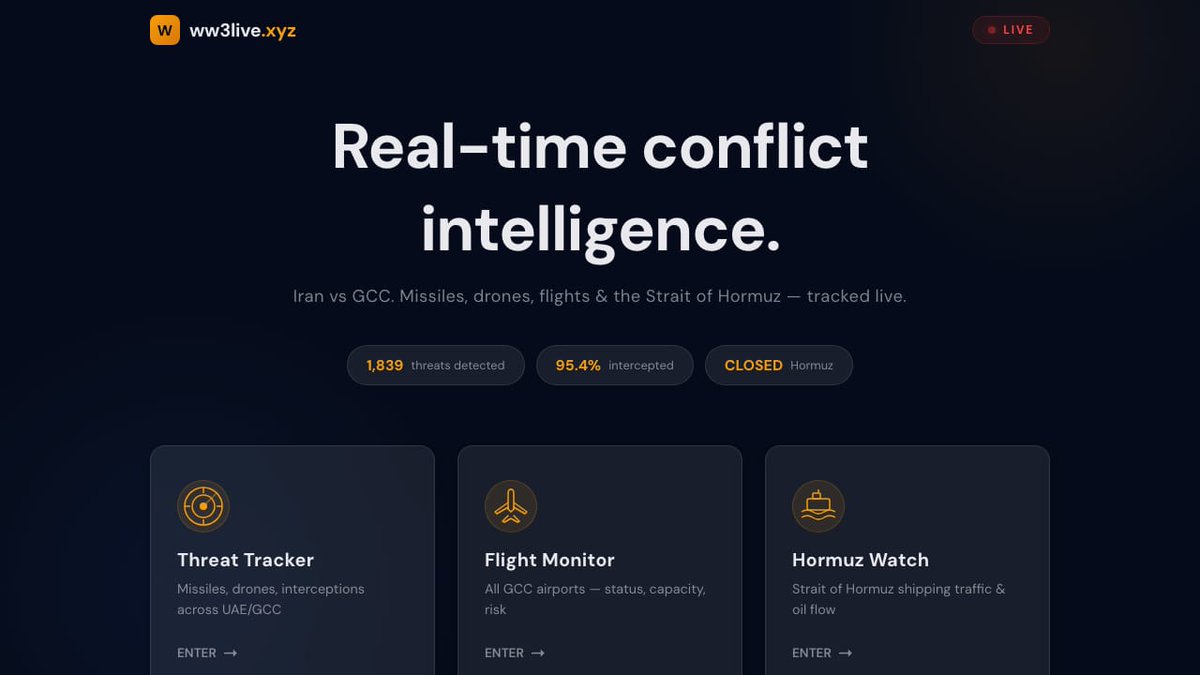
I was on the ground in the Dubai, UAE when the first missiles hit on Feb 28. 🚀 That night I started (vibe-) building a tracker. Posted a few tweets. 4,500 people found it organically. 📈 That pushed me to turn it into a proper product. 🧵
Seraya | ww3live.xyz 🌍 tweet media
English
5
3
29
4.6K
danimon ретвитнул
danimon
danimon@danimon·
@jlhortelano Eso es porque a la gente que le gusta programar le interesa resolver problemas de maquinas. A mi me interesa una aplicacion que funcione y listo. Yo se muy bien lo que quiero, asi que herramientas tipo Claude son perfectas. La unica pega que tienen, es saber cuando parar.
Español
0
0
0
21
Juan Luis Hortelano
Juan Luis Hortelano@jlhortelano·
Se viene rollo filosófico, aviso ;) Llevo casi 30 años en el mundo tech. He cofundado empresas, gestionado equipos, invertido en startups, construido productos desde cero. Y hay algo que me está pasando con la IA que me cuesta describir con una sola palabra. Así que voy a intentar describirlo con varias. La primera reacción, al menos en mi caso, cuando empiezas a usar estas herramientas de verdad, es una mezcla rara. Euforia. Miedo. Y sobre todo vértigo. Ver que algo en lo que eras bueno, algo que te costó años construir, se convierte en commodity de golpe tiene mucho de desconcertante. Años construyendo una empresa, con patentes y con una tecnología que creías era una barrera de entrada y tu principal valor... y que de repente desaparece. No te lo esperas. Y aunque intelectualmente puedes entenderlo, vivirlo es otra cosa. Pero ese miedo pasa. Al menos a mí me ha pasado. Lo que viene después es energía. Proyectos que antes no intentaba porque el coste era demasiado alto, ahora los puedo arrancar en una tarde. Cosas que requerían un equipo, las puedo explorar solo pese a llevar años sin programar y alejado de la parte técnica. Nuevas oportunidades. De repente, para muchas cosas no dependo del equipo técnico de mi empresa. Y eso es por una parte reconfortante, pero por otra inquietante. El techo no ha bajado... es que ha desaparecido. Y eso tiene algo de adictivo, de "joder, ¿por qué no estaba haciendo esto antes?". Y aquí entra algo que creo que mucha gente no está considerando: la paradoja de Jevons. En el siglo XIX, cuando se inventaron máquinas de vapor más eficientes, todo el mundo asumió que se consumiría menos carbón. Ocurrió exactamente lo contrario. La eficiencia hizo que usar carbón fuera más barato, así que se usó para más cosas, en más sitios, por más gente. El consumo total se disparó. Con la IA va a pasar lo mismo. No vamos a escribir menos software porque la IA lo haga más rápido. Vamos a escribir muchísimo más, en muchos más sitios, para muchos más problemas que antes ni siquiera intentábamos resolver porque el coste era prohibitivo. La demanda de inteligencia no se reduce cuando se abarata. Se expande. Hay un estudio de Berkeley en HBR (hbr.org/2026/02/ai-doe…) que lo confirma de forma bastante incómoda. Investigadores de Haas School of Business pasaron 8 meses dentro de una empresa de 200 personas observando qué pasa cuando das herramientas de IA a todo el mundo y dices "adelante". Lo que encontraron contradice todo lo que nos han vendido: los empleados trabajaron más rápido, asumieron más tareas y extendieron su jornada. Nadie se lo pidió. Lo hicieron solos porque la IA hacía que "hacer más" se sintiese posible. Un empleado lo resumió mejor que cualquier paper: "Pensabas que ahorrarías tiempo y trabajarías menos. Pero no trabajas menos" El 77% de los empleados que usaban IA en otro estudio decían que les había aumentado la carga de trabajo. La IA no te devuelve tiempo. Expande el perímetro de lo que sientes que deberías estar haciendo. Y luego está el estudio del MIT (arxiv.org/abs/2506.08872) , que me parece el más incómodo de todos. Pusieron a 54 personas con electrodos en la cabeza mientras usaban ChatGPT para escribir. Los que usaron IA mostraron un 47% menos de conectividad neuronal durante la tarea. El cerebro no trabajaba menos duro. Directamente se apagaba en las zonas vinculadas al pensamiento crítico y la creatividad. Pero el dato que más me impactó es otro: el 83% de los usuarios de IA no podían citar ni una frase del ensayo que acababan de escribir. Porque nunca fue realmente suyo. Y cuando al final de la prueba les quitaron la herramienta, el cerebro no se recuperó. Los patrones de desconexión persistieron. Los investigadores lo llaman "deuda cognitiva". La misma lógica que la deuda técnica en software: cada atajo de hoy acumula intereses que pagas mañana en forma de menor capacidad para pensar de forma independiente. El problema no es que la IA te haga menos inteligente. Es que tu cerebro optimiza para el entorno que le das. Y si dejas de ejercitar las partes difíciles del pensamiento, esas partes dejan de estar afiladas. Pero entiendo perfectamente al otro lado también. Hay un desarrollador que habló hace poco sobre algo que me impactó bastante. Su tweet es este : I was a 10x engineer. Now I'm useless. El video de 12 minutos merece la pena verlo (x.com/atmoio/status/…) Describe haber construido un producto completo con IA, que funciona, que la gente usa, que genera ingresos... y al que no tiene ningún vínculo emocional. Porque no sufrió para hacerlo. Y lo describía como fabricar hot dogs: el producto existe, cumple su función, pero tú no pusiste nada de ti. Eso conecta con algo más profundo que no estamos discutiendo suficiente. Antes aprendías construyendo. El sufrimiento del proceso era el mecanismo. Te ibas a dormir sin saber cómo resolver algo y te levantabas con la solución, y eso te cambiaba. Ahora puedes construir sin ese ciclo. Más output, sí. Pero menos crecimiento. Y luego está la red de seguridad. Un desarrollador siempre podía tomarse un año sabático y volver a un trabajo mejor pagado. O dejar su empresa actual sin miedo a encontrar casi lo que quisiera al día siguiente y con mejores condiciones. Ese colchón existía de verdad y organizaba la vida profesional de mucha gente. La pregunta que nadie quiere hacerse en voz alta es si eso sigue siendo así. Tengo mis dudas. Y aquí viene lo más complicado: no hay término medio fácil. Una vez que empiezas a usar estas herramientas en serio, tu cerebro deja de querer volver al esfuerzo. No es que puedas reservarte lo difícil para ti y delegar lo aburrido. Es todo o nada. La energía nueva es real. Y la pérdida también es real. El error está en intentar resolver esa tensión demasiado rápido, en elegir un bando antes de haberlo vivido de verdad. Lo que sí tengo claro, después de verlo en primera persona, es que la línea divisoria no es generacional. He visto veteranos de 20 años sacarle un partido tremendo a estas herramientas. Y recién llegados que las tratan como una abstracción filosófica en lugar de algo que puedes usar hoy mismo. La edad no predice nada. Lo que predice es la disposición. Si corres hacia el cambio o lo miras desde la barrera esperando a que alguien te explique si es seguro cruzar. Nadie sabe exactamente adónde va esto. Y desconfío de los que dicen que sí lo saben, en cualquiera de los dos sentidos. Lo que sí sé es que quiero estar en el grupo que corre hacia ello. Con la incomodidad incluida. Con la pérdida incluida. Con las preguntas sin respuesta incluidas. Porque la alternativa es quedarse parado. Y eso, con o sin IA, nunca ha funcionado.
Español
146
681
2.1K
196K
danimon ретвитнул
Sarah Friend
Sarah Friend@isthisanart_·
when people say artists need to work with emerging technology more in order to be relevant, it's not a controversial new take. it's an old take, literally an ancient take for most of human history painting was the state of the art of image-making technology
Sarah Friend tweet media
English
1
4
26
658
danimon ретвитнул
vitalik.eth
vitalik.eth@VitalikButerin·
Over the past year, many people I talk to have expressed worry about two topics: * Various aspects of the way the world is going: government control and surveillance, wars, corporate power and surveillance, tech enshittification / corposlop, social media becoming a memetic warzone, AI and how it interplays with all of the above... * The brute reality that Ethereum seems to be absent from meaningfully improving the lives of people subject to these things, even on the dimensions we deeply care about (eg. freedom, privacy, security of digital life, community self-organization) It is easy to bond over the first, to commiserate over the fact that beauty and good in the world seems to be receding and darkness advancing, and uncaring powerful people in high places are making this happen. But ultimately, it is easy to acknowledge problems, the hard thing is actually shining a light forward, coming up with a concrete plan that makes the situation better. The second has been weighing heavily on my mind, and on the minds of many of our brightest and most idealistic Ethereans. I personally never felt any upset or fear when political memecoins went on Solana, or various zero-sum gambling applications go on whatever 250 millisecond block chain strikes their fancy. But it *does* weigh on me that, through all of the various low-grade online memetic wars, international overreaches of corporate and government power, and other issues of the last few years, Ethereum has been playing a very limited role in making people's lives better. What *are* the liberating technologies? Starlink is the most obvious one. Locally-running open-weights LLMs are another. Signal is a third. Community Notes is a fourth, tackling the problem from a different angle. One response is to say "stop dreaming big, we need to hunker down and accept that finance is our lane and laser-focus on that". But this is ultimately hollow. Financial freedom and security is critical. But it seems obvious that, while adding a perfectly free and open and sovereign and debasement-proof financial system would fix some things, but it would leave the bulk of our deep worries about the world unaddressed. It's okay for individuals to laser-focus on finance, but we need to be part of some greater whole that has things to say about the other problems too. At the same time, Ethereum cannot fix the world. Ethereum is the "wrong-shaped tool" for that: beyond a certain point, "fixing the world" implies a form of power projection that is more like a centralized political entity than like a decentralized technology community. So what can we do? I think that we in Ethereum should conceptualize ourselves as being part of an ecosystem building "sanctuary technologies": free open-source technologies that let people live, work, talk to each other, manage risk and build wealth, and collaborate on shared goals, in a way that optimizes for robustness to outside pressures. The goal is not to remake the world in Ethereum's image, where all finance is disintermediated, all governance happens through DAOs, and everyone gets a blockchain-based UBI delivered straight to their social-recovery wallet. The goal is the opposite: it's de-totalization. It's to reduce the stakes of the war in heaven by preventing the winner from having total victory (ie. total control over other human beings), and preventing the loser from suffering total defeat. To create digital islands of stability in a chaotic era. To enable interdependence that cannot be weaponized. Ethereum's role is to create "digital space" where different entities can cooperate and interact. Communications channels enable interaction, but communication channels are not "space": they do not let you create single unique objects that canonically represent some social arrangement that changes over time. Money is one important example. Multisigs that can change their members, showing persistence exceeding that of any one person or one public key, are another. Various market and governance structures are a third. There are more. I think now is the time to double down, with greater clarity. Do not try to be Apple or Google, seeing crypto as a tech sector that enables efficiency or shininess. Instead, build our part of the sanctuary tech ecosystem - the "shared digital space with no owner" that enables both open finance and much more. More actively build toward a full-stack ecosystem: both upward to the wallet and application layer (incl AI as interface) and downward to the OS, hardware, even physical/bio security levels. Ultimately, tech is worthless without users. But look for users, both individual and institutional, for whom sanctuary tech is exactly the thing they need. Optimize payments, defi, decentralized social, and other applications precisely for those users, and those goals, which centralized tech will not serve. We have many allies, including many outside of "crypto". It's time we work together with an open mind and move forward.
English
744
635
3.8K
554.7K
danimon ретвитнул
danimon
danimon@danimon·
@alice_und_bob welcome to the era of datacenters as war targets.
English
0
0
0
17
Alice und Bob
Alice und Bob@alice_und_bob·
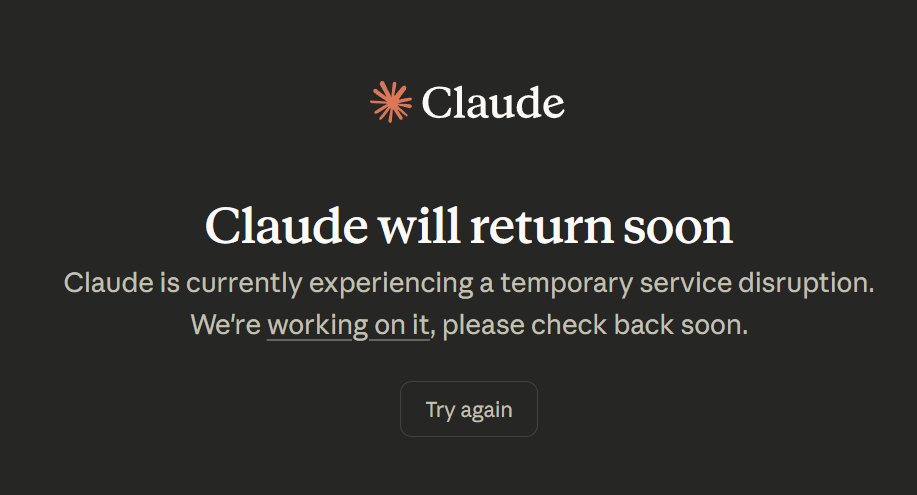
I wish Anthropic wouldn't be vibe deploying to their prod systems every 2 weeks.
Alice und Bob tweet media
English
2
1
9
1.1K
danimon ретвитнул
Marta Peirano
Marta Peirano@minipetite·
Darío Amodei: Nuestro modelo de IA NO SERÁ utilizado para vigilancia masiva de ciudadanos estadounidenses y los drones letales sin control. SAM: ChatGPT es el modelo más alineado con la dictadura, el genocidio y todos los deseos y proyectos de la administración Trump.
Sam Altman@sama

Tonight, we reached an agreement with the Department of War to deploy our models in their classified network. In all of our interactions, the DoW displayed a deep respect for safety and a desire to partner to achieve the best possible outcome. AI safety and wide distribution of benefits are the core of our mission. Two of our most important safety principles are prohibitions on domestic mass surveillance and human responsibility for the use of force, including for autonomous weapon systems. The DoW agrees with these principles, reflects them in law and policy, and we put them into our agreement. We also will build technical safeguards to ensure our models behave as they should, which the DoW also wanted. We will deploy FDEs to help with our models and to ensure their safety, we will deploy on cloud networks only. We are asking the DoW to offer these same terms to all AI companies, which in our opinion we think everyone should be willing to accept. We have expressed our strong desire to see things de-escalate away from legal and governmental actions and towards reasonable agreements. We remain committed to serve all of humanity as best we can. The world is a complicated, messy, and sometimes dangerous place.

Español
5
130
363
19.1K
danimon ретвитнул
Mehdi (e/λ)
Mehdi (e/λ)@BetterCallMedhi·
I spent time in Shenzhen last year and when I saw Merz come back from China saying Germans need to work more I immediately knew what broke his brain because I lived the exact same cognitive shock my first week in Huaqiangbei I burned through 4 prototype iterations of a motor controller board for less than a thousand bucks total, back home a friend was working on something similar and spent over 12 thousand for a single revision that took almost two months to arrive when you live that contrast in your own hands with your own project something permanently shifts in how you see the world and it goes way deeper than speed & cost what Shenzhen actually built is a collective learning organism, imagine 20 PCB fabs 15 injection mold shops 30 component distributors and a hundred firmware freelancers all within a 2km radius, looks insanely redundant from the outside until you realize redundancy is actually information density in disguise I watched this firsthand with an injection mold supplier I was working with, this guy had seen a hundred founders iterate similar thermal designs over 6 months so he proactively modified his tooling before I even opened my mouth, he knew what I needed before I knew what I needed, the intelligence lives in the relationships between the nodes and it compounds daily the west thinks about manufacturing as a cost center you optimize by centralizing… China accidentally built a distributed neural network of manufacturing intelligence where knowledge diffuses horizontally across thousands of agents faster than any single western company can process internally so when Merz comes back and says we need to work a bit more I think he saw the problem but COMPLETELY misdiagnosed the solution, telling Germans to work harder is like telling a horse to gallop faster when the other side built a combustion engine the gap is ARCHITECTURAL it’s ecosystem density, you need a custom connector in Shenzhen you walk 200 meters, in Munich you send an email and wait 3 weeks it’s iteration speed, parallel search vs sequential optimization at the system level, it’s risk tolerance, Chinese founders ship something broken on Monday fix it Tuesday ship again Wednesday while European companies are still in the approval phase for the pilot program of the feasibility study… and Merz only saw the surface, what he missed is the tier 2 cities like Hefei Chengdu Wuhan replicating the Shenzhen model at scale right now BYD going from irrelevant to outselling every european automaker combined in roughly 5 years, Huawei building its own 7nm chip under maximum sanctions when every analyst said it was physically impossible & behind all of that a government that treats advanced manufacturing as an existential national priority while europe debates whether AI needs another ethics committee I think what we’re watching is the most asymmetric economic competition in modern history and most western leaders are still framing it as a productivity problem when it’s actually an ontological one Europe & America are optimizing variables that China stopped tracking years ago meanwhile China is compounding on dimensions the west has no framework to even measure Merz at least had the courage to name it out loud and I respect that genuinely but working a bit more inside a broken architecture just means you arrive at the wrong destination slightly faster
Megatron@Megatron_ron

NEW: 🇩🇪🇨🇳 German Chancellor Merz says Germans need to work more in order to match China: “We are simply no longer productive enough. Each individual may say, “I already do quite a lot.” And that may be true. But when you return from China, ladies and gentlemen, you see things more clearly. With work-life balance and a four-day week, long-term prosperity in our country cannot be maintained. We will simply have to do a bit more.”

English
903
5.5K
26.6K
4M
danimon ретвитнул
Sarah Friend
Sarah Friend@isthisanart_·
Sadie Plant, Zeros and Ones, 1997, quoting The Economist, "The World in 1995"
Sarah Friend tweet media
English
0
4
17
525
danimon ретвитнул
El Richal
El Richal@Er_Richal·
Ya puestos, podrían prohibir el TEAMS.
Español
48
560
3.5K
106.6K
danimon ретвитнул
Franziska Ostermann
Franziska Ostermann@francis_ost·
Wow, what a night. Thank you so much for attending the opening & taking time and presence for poetry. I don’t have any more words yet, just full and happy 🤍
Franziska Ostermann tweet media
English
2
3
13
365
danimon ретвитнул
Meredith Whittaker
Meredith Whittaker@mer__edith·
Masked agents of the US state are executing people in the streets and powerful leaders are openly lying to cover for them. To everyone in my industry who’s ever claimed to value freedom—draw on the courage of your convictions and stand up.
English
71
300
1.6K
64.5K