Ty Stocker

4.2K posts

Ty Stocker banner
Ty Stocker

Ty Stocker

@stocker_ty

model builder, and lover of history. I enjoy anime and studying military history as well as ship design. ABDL, I enjoy inflatable toys too.

Waynesfield, OH Присоединился Ocak 2018
690 Подписки334 Подписчики
Ty Stocker
Ty Stocker@stocker_ty·
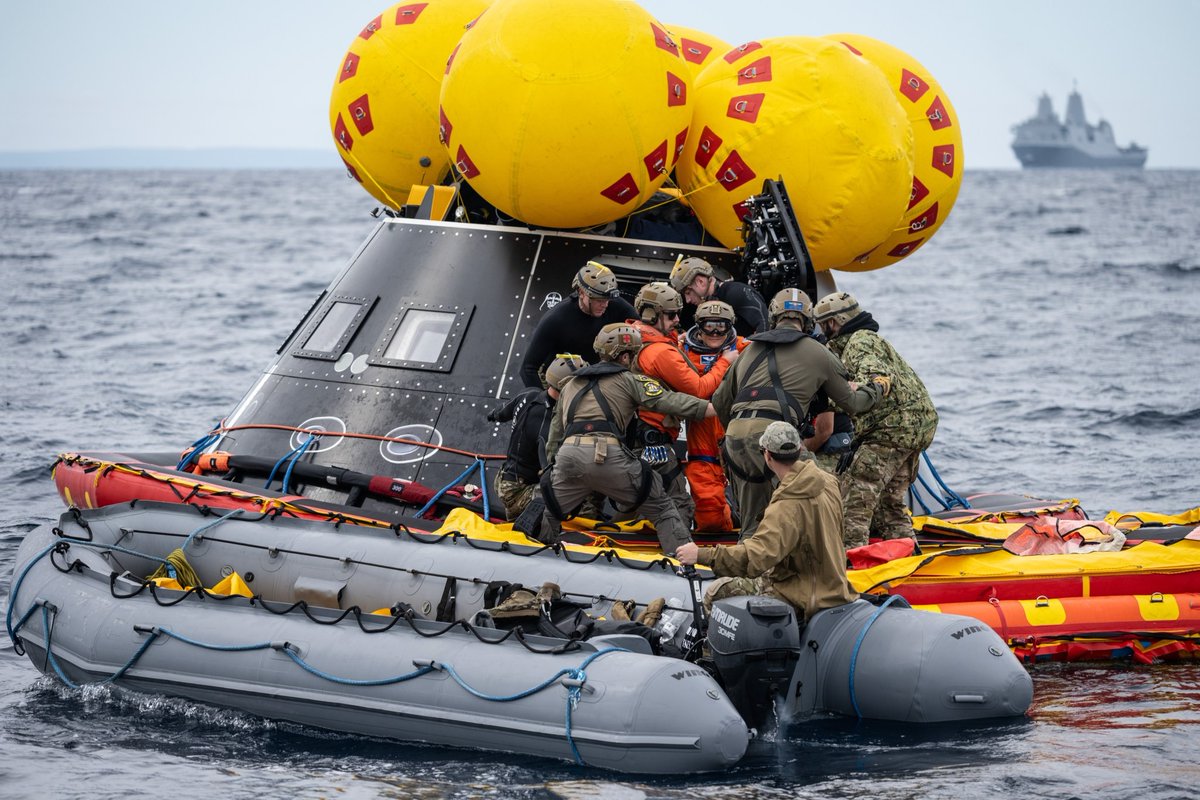
@MaritimeHorrors We never should have stopped going to the moon. We should have colonized it, and used it as a base for further exploration.
English
0
0
1
9
Maritime Horrors
Maritime Horrors@MaritimeHorrors·
I'd rather my tax dollars go to funding a dozen more Artemis missions than one more day of war. This is beautiful and makes me proud to be an American. What an amazing achievement we've just witnessed. (Moon landing deniers are on life support right now. Huffing copium with the flat earthers)
Maritime Horrors tweet media
English
4
0
14
201
Ty Stocker
Ty Stocker@stocker_ty·
@Shimoji2 It was the original 1/144 scale Wing Gundam.
English
0
0
0
4
しもじ
しもじ@Shimoji2·
あなたは 人生で初めてのガンプラは なんだったかおぼえていますか?
日本語
609
105
526
30.6K
Ty Stocker
Ty Stocker@stocker_ty·
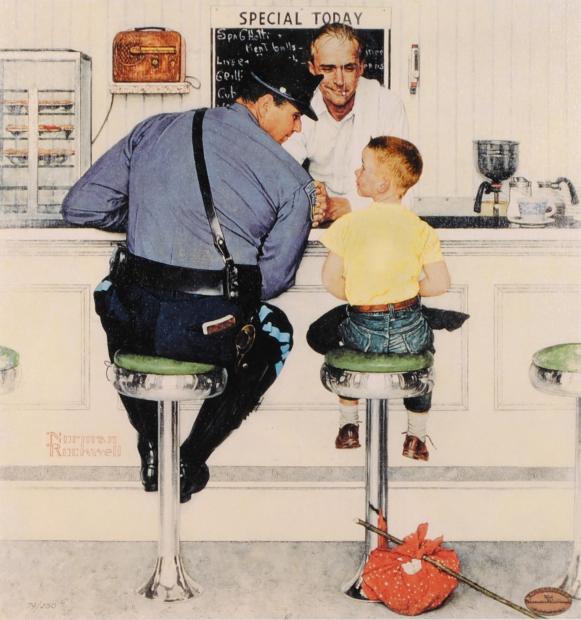
@Hound_7 I honestly think that Norman Rockwell was the greatest American painter that's ever lived. His artwork is the very heart and soul of America.
English
0
0
0
73
Hound @C107_2日目_西2ホール_あ-46b
This wonderful painting was in my middle and high school art textbooks. I'm not an art expert, but I know this painting and I think it's very captivating. And among American painters, I like Norman Rockwell. I feel a great sense of warmth from his paintings.
Hound @C107_2日目_西2ホール_あ-46b tweet media
GeroncioC@Geron0004

So I wonder, we talk about American food, cars, firearms. Do the Japanese appreciate and know about some of our famous art pieces? Like my favorite American art piece is "Nighthawks" by Edward Hopper. Classic American art like paintings, photography, etc.

English
3
8
92
4.3K
Ty Stocker
Ty Stocker@stocker_ty·
@yukikaze7533 That's the best way to do it, isn't it? You should always enjoy building the model.
English
0
0
0
11
雪風
雪風@yukikaze7533·
プロモデラーさんは別やけど、プラモって所詮趣味やぞ。 楽しく作って自己満でよくない?
日本語
67
282
2.8K
78.2K
Sky ❤️‍🩹
Sky ❤️‍🩹@SkyAboveMe_Art·
What was the first anime you ever watched?
English
1.2K
49
2.3K
55.8K
Ty Stocker
Ty Stocker@stocker_ty·
@2ndMississippi This reminds me of that one Twilight Zone episode. The one with the woman sitting on the front porch as the soldiers all walk by.
English
1
0
2
120
Michael Brasher
Michael Brasher@2ndMississippi·
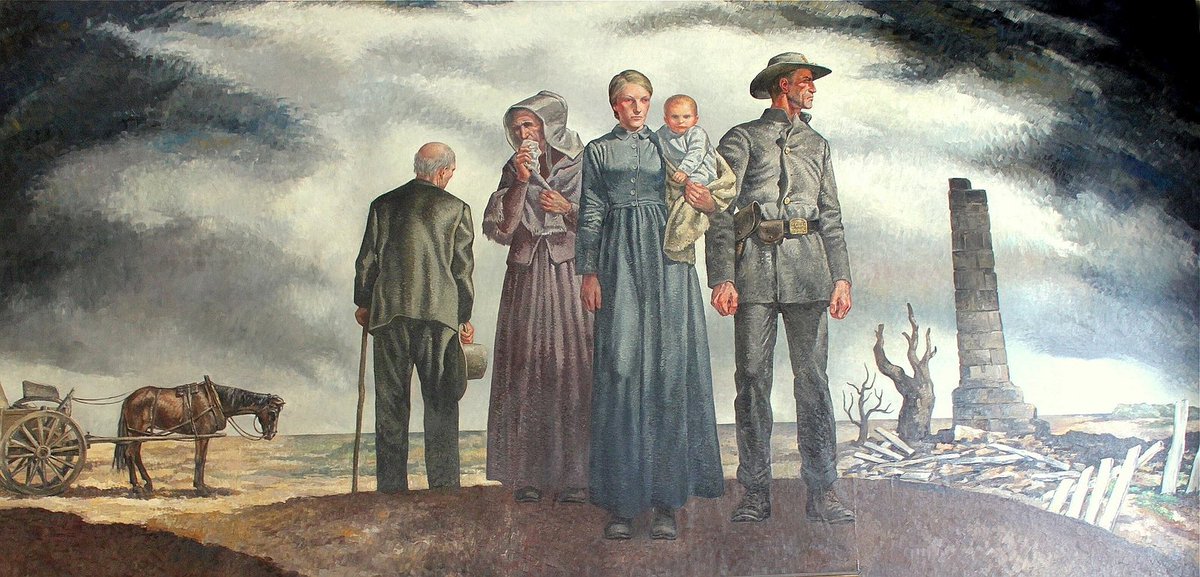
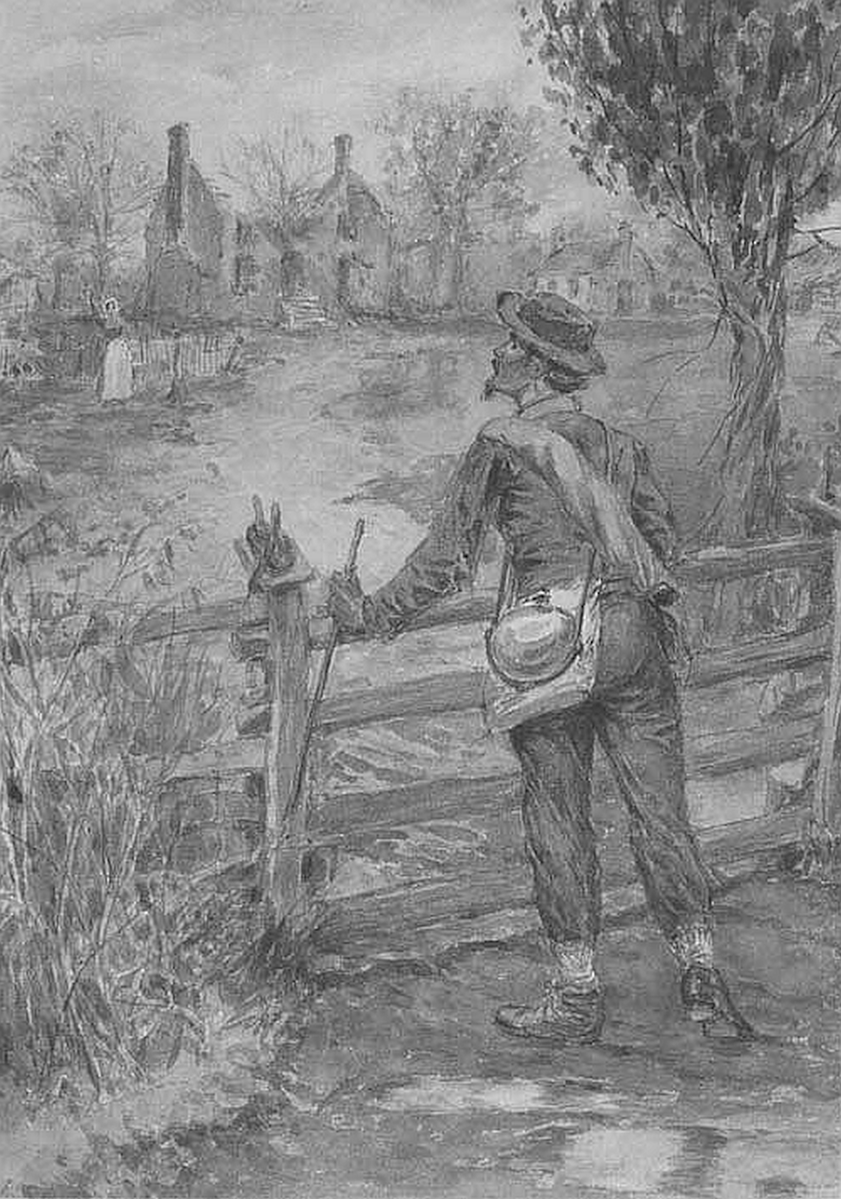
The Long Walk Home April 1865 The guns had been silent for less than a day when the walking began. Twenty-eight thousand men — what remained of the Army of Northern Virginia after four years of a war that had consumed it by degrees, the way a candle consumes itself — received their parole papers at Appomattox Court House on April 9, 1865, and with them a single, staggering instruction: go home. The terms Grant offered were generous by any measure of the age, perhaps the most generous a victor had extended to a vanquished army since the practice of organized surrender began. No prison. No trial for treason. A slip of paper that said, in effect, you are free to use whatever Federal conveyance you can find — railroad, riverboat, army wagon — to get yourself back to the place you came from. It was a fine promise. The trouble was that the South those men were trying to reach had, in most of the ways that mattered, ceased to exist. The railroads were gone — not merely damaged but systematically wrecked, the iron rails heated over bonfires of their own crossties and twisted around telegraph poles in what the soldiers who did it called "Sherman's neckties." Bridges that had spanned the rivers of Virginia and the Carolinas were charred stumps jutting from the current. River vessels had been sunk or seized or burned at their moorings. The parole papers said when and where available, and what was available, for the vast majority of those twenty-eight thousand men, was the road beneath their feet and whatever was left of the shoes they stood in. Officers occasionally talked their way aboard a military transport. The enlisted man walked. He had been walking for four years. He would walk a little farther. They left Appomattox in clusters — four or five men from the same regiment, the same company, sometimes the same county, moving south and west together along roads they had marched north on in better days, when the army still had the look of an army and not the look of men escaping a fire. One by one, as the roads forked and the home counties diverged, a man would peel away from the group with a handshake or a nod or nothing at all, turning down some red-clay lane toward a place he had not seen in years and could not be sure still stood. The partings were quiet. These men had shared things that did not require farewell speeches. They relied on charity, and they found it — though the people who gave it had precious little left to give. Farm women who had not seen coffee in two years and were stretching their last sack of cornmeal brought out what they had for any gray-clad stranger who appeared at the gate. Union garrisons sometimes issued rations, though this depended entirely on the disposition of the local commander, and dispositions varied. Some Federal officers treated the parolees with a decency that surprised both parties. Others did not. The war was over, but the habits of the war died harder than the war itself. What waited at the end of that road was the thing no man could prepare himself for, no matter how many miles he had to think about it. A man could steel himself for a battle. He could not steel himself for the moment he came around the last bend and saw — or did not see — what he had left behind. W. T. Sheppard painted that moment with a precision no words quite equal. A soldier stands at a fence line, haversack still on his shoulder, stopped in his tracks. He has not yet gone through the gate. In the distance, a small figure — his wife, almost certainly — has come out of what remains of the house and seen him. Between them lies a hundred yards of beaten ground, and something wider than that: the whole immeasurable distance of what each had lived through without the other, the things that could never be fully told and never be fully understood. The chimneys behind her suggest a house that is no longer entirely a house. The fence posts are weathered and broken. But she is there, and he is there, and for this one instant the war has given something back. Not everyone found even that much. Tom Lea painted the other homecoming — the one without the house. A Confederate veteran stands with his family before a solitary chimney, all that remains of what had been their home. Across the South, these lone chimneys were so common that people had a name for them: Sherman's Sentinels. The family stands together with a formality that has nothing to do with manners and everything to do with the only thing they have left, which is each other. Behind them, a horse and cart suggest that rebuilding has already begun — or is about to begin — though what they are rebuilding from is very nearly nothing. The man is still wearing his uniform. He has nothing else to wear. Many came back to fields gone to scrub, property seized, livestock vanished. Some found graves where they expected faces. Communication during the war had been a ragged, unreliable thing — mail interrupted for months at a stretch by the movement of armies across the very ground the letters had to cross — and a man who had heard nothing from home since Chickamauga or the Wilderness walked those last miles carrying a dread he could not put down. He did not know if his people were alive. He did not know if his house still stood. He did not know what a Federal provost marshal might have to say about his arrival, or whether the neighbors who had stayed behind would welcome him or look away. He walked home anyway. They all did — thousands of them, scattered across every road in the South that spring, each one carrying the war home with him in ways that would take not months but decades to reckon with. The surrender had ended the fighting. The journey that followed asked something harder of these men than the fighting ever had. It asked them to begin again with almost nothing, in a world that bore little resemblance to the one they had left, among people who loved them but could not know them — not fully, not anymore. The war had seen to that. The rebuilding would come. But first there was the walk, and the gate, and the long look across the yard at whatever waited there. Graphics: "Home Coming, 1865" by W. T. Sheppard and "Coming Home" by Tom Lea.
Michael Brasher tweet mediaMichael Brasher tweet media
English
29
87
461
15.2K
Ty Stocker
Ty Stocker@stocker_ty·
@NevEngi The Japanese people have found out about Waffle House, this should get interesting.
English
0
0
0
7
Oimatewtf 🦊🌸
Oimatewtf 🦊🌸@Oimatewteff·
You've been spotted by a Kitsune... What's your excuse for being awake?! 👿
Oimatewtf 🦊🌸 tweet media
English
255
96
613
9.5K
Ty Stocker
Ty Stocker@stocker_ty·
@Fukobunn Welcome back, it's okay to take a break when you need to, just glad to see you again.
English
0
0
0
14
Fuko ⚠️💀| Seisoul
I’m a very sensitive person and get overwhelmed easily.. Sorry I took a break for so long, please forgive me 🥺🙏
Fuko ⚠️💀| Seisoul tweet media
English
61
50
1.7K
12.9K
Ty Stocker
Ty Stocker@stocker_ty·
@frag_0416 There were rumors about her in the US during the war, but nothing solid until later. Once we had some intelligence about her, we started working on the Montana Class. I wish at least one of those beauty's had been completed.
English
0
0
1
314
ふらっぐ@3/21足柄さんオンリー 13-狼
「派手さや大きさに注力した」…? 大きさに注力したのは米戦艦に対抗する為の主砲だけで、世界最大の艦載砲3基9門搭載の割にはコンパクトに収まった艦ですし、徹底的に秘匿されて本来派手に盛大にやる進水式すら密かに行われたのに 見てくれ重視のハリボテみたいに言われるのはちょっと違うかなぁ…
姜一星 カンイルソン 강일성@8YwGruLKqnZJBun

戦艦大和は当時の世界基準から見ても巨大で壮観な戦艦だった。 全長263メートル、排水量約7万トン、46センチ主砲を搭載したその姿は、まさに日本造船の技術的な偉業と言えるだろう。しかしながら、実戦ではクソの役にも立たなかった。 この時点で既に戦争の形態は大きく変化していて、航空機や空母が戦場を支配する時代へと移行していた。 当時の海軍が抱いていた『大艦巨砲主義』の象徴として造られたが、既に航空機・空母が戦場を支配する時代に移行していた中で、その戦略的意義は失われていたのだ。 また大和は表面的な派手さや大きさに注力した結果、実用性や戦略的価値が見失われていた。 時代の趨勢を読めず『技術大国』『ものづくり大国』の地位を失った現在の“日本”と81年前に海の藻屑となった“戦艦大和”。見事に重なる。 1945年4月7日、戦艦大和、撃沈される。

日本語
20
211
1K
43.1K
Ty Stocker
Ty Stocker@stocker_ty·
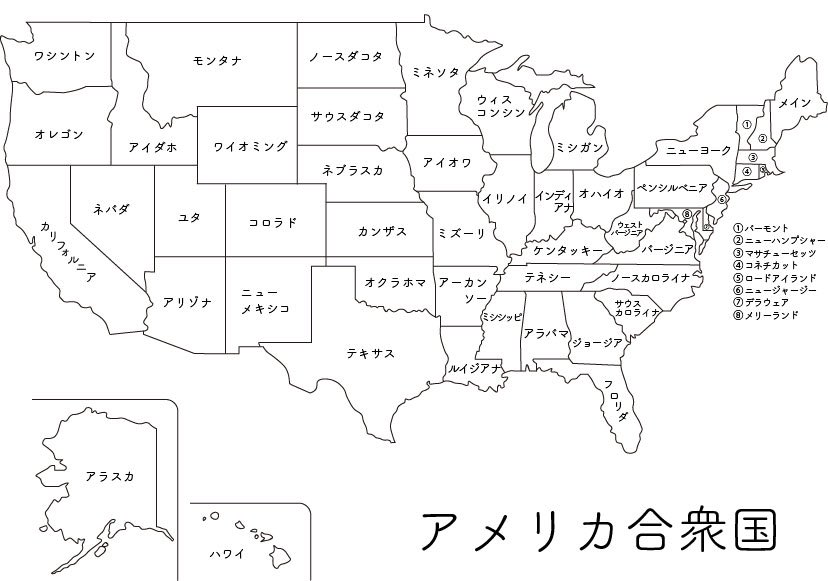
@IGADON2 Ohio has the most haunted houses of any State in the country, and we also have a lot of UFO sightings.
English
0
0
0
17
いがどんー
いがどんー@IGADON2·
めちゃくちゃフロリダにだけ様々なはなしがくる。 ネブラスカとかアーカンソーとかコネチカットとかメリーランドとかこの辺の話も聞きたい。州名ぐらいしか知らんのだ
いがどんー tweet media
日本語
867
81
1.8K
61.7K
みお
みお@milspec_mi·
海外の人は恐らく自衛隊の銃器を手に入れてコレクションする/個人でカスタムする/射撃場で撃ちまくるってのをやりたいんだろうなと
日本語
11
1
55
1.6K
Ty Stocker
Ty Stocker@stocker_ty·
@Grdier_Yoshika That factored into my decision to buy a Mitsubishi as well.
English
0
0
1
102
Grenadier Miyafuji
Grenadier Miyafuji@Grdier_Yoshika·
I bought a Subaru not because of progressivism, I bought a Subaru because of it being Nakajima Aircraft Company.
English
9
75
405
9K
JeNiSe (ジェニス) ن 🍥
This is not my art, as I am not an artist and it didn’t say the names of the artists who drew these, but I thought it’d be fun to see what a red haired, green eyed gal like me would look like as Yor. I gotta say, I kinda dig it! What say you?
JeNiSe (ジェニス) ن 🍥 tweet mediaJeNiSe (ジェニス) ن 🍥 tweet mediaJeNiSe (ジェニス) ن 🍥 tweet mediaJeNiSe (ジェニス) ن 🍥 tweet media
English
18
10
178
1.9K
rinri ✉️
rinri ✉️@rinrihime·
are you human..?
rinri ✉️ tweet media
English
381
640
11.3K
54.5K
Ty Stocker
Ty Stocker@stocker_ty·
@aaliyahvtuber_ Yeah, I'm pretty dense when it comes to things like that. I need clear, direct, communication.
English
0
0
0
8
Aaliyah Shark アリーヤ
Aaliyah Shark アリーヤ@aaliyahvtuber_·
Men truly don't realize when a woman has a crush on them, do they??
English
424
51
1.1K
411.4K