Rob

64.4K posts

Rob banner
Rob

Rob

@vRobM

Creator, Entrepreneur, Healer, All is Measurable • Author • Unblock decisions • When all else fails; we succeed - https://t.co/jK8bLywHBb • DMs ok

Quantum close. Always near you Присоединился Mayıs 2009
4.9K Подписки5K Подписчики
Закреплённый твит
Rob
Rob@vRobM·
You Can’t Ask for “Too Much” The universe is unlimited. No dream or desire is too big, too small, or too frivolous for the Divine. No prayer is ignored. No request falls on deaf ears.
English
18
14
104
8.3K
Brian Roemmele
Brian Roemmele@BrianRoemmele·
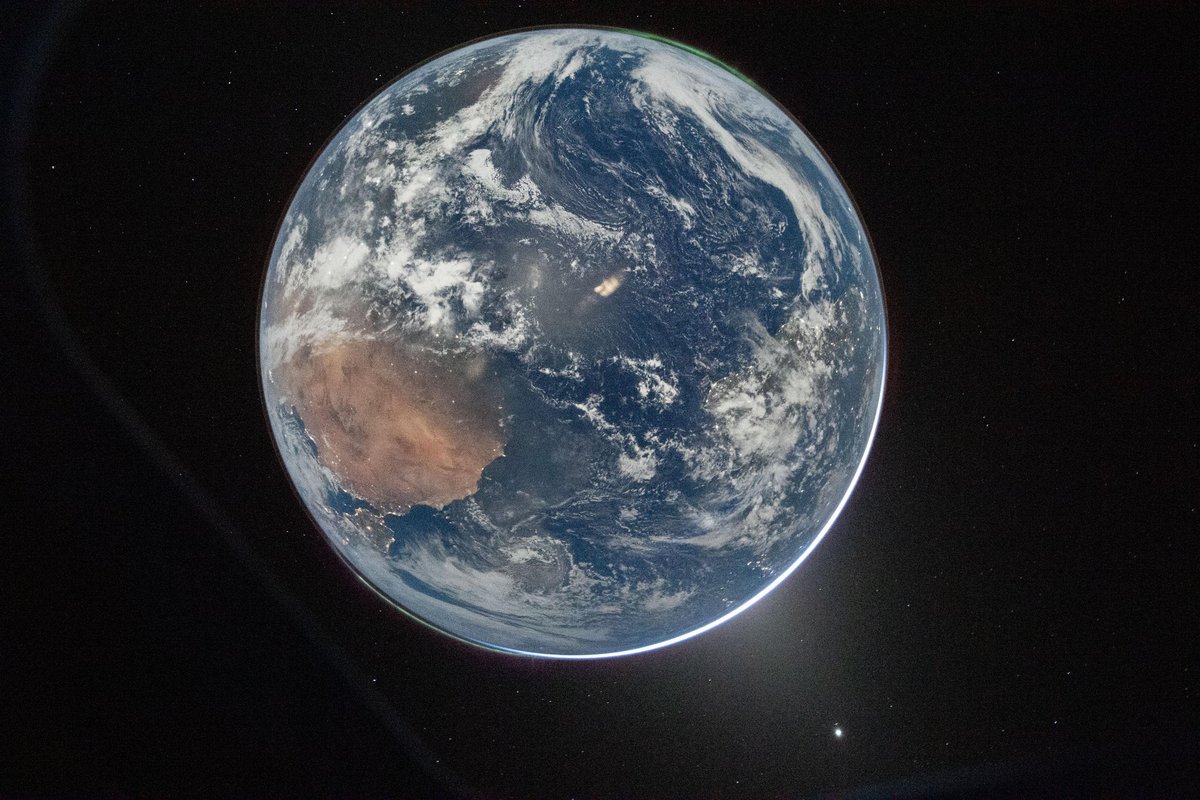
Earthset. The Artemis II crew captured this view of an Earthset on April 6, 2026. I am transfixed by this image and have a large format version being printed. Up next @SpaceX Starship, @elonmusk?
Brian Roemmele tweet media
English
22
24
208
46K
Rob
Rob@vRobM·
BE in the NOW.
Ihtesham Ali@ihtesham2005

A Russian mathematician named Andrei Markov proved in 1906 that you don't need to know where something came from to predict where it's going next. He was studying poetry at the time. Specifically, he was analyzing the sequence of vowels and consonants in Pushkin's novel in verse, counting transitions by hand across thousands of characters, looking for a pattern in how one letter predicted the next. What he found became one of the most quietly powerful ideas in all of mathematics. And it has been sitting inside every weather forecast, every Google search, every Netflix recommendation, and every large language model ever built, waiting for someone to explain it in plain language. Here is the framework that changed how I think about prediction. Most people assume that to predict something you need history. The full picture. Everything that led to this moment. If you want to know what the stock market will do tomorrow, you think you need to understand everything it did for the past decade. Markov showed that is almost never true. His insight was this: for a huge class of real-world systems, the current state contains all the information you need to predict the next state. The past is already baked into where you are right now. You don't need to carry it forward explicitly, because it's already there. He called this the Markov property. And the systems it describes are called Markov chains. The mechanics are simpler than they sound. Imagine you are tracking weather. It is either Sunny or Rainy on any given day. You observe over many years that when it's Sunny, there's a 90% chance tomorrow will also be Sunny and a 10% chance it will turn Rainy. When it's Rainy, there's a 50% chance it stays Rainy and a 50% chance the sun comes back. Those four numbers are your entire model. That grid of transition probabilities is the Markov chain. Now someone asks you: it's Sunny today, what is the probability it will be Sunny three days from now? You don't need intuition. You don't need expertise. You multiply the transition probabilities through each step and the answer falls out exactly. The chain does the thinking. The part that most people miss is what happens when you run a Markov chain long enough. Almost every well-behaved Markov chain converges to what mathematicians call a stationary distribution. It doesn't matter where you start. After enough steps, the system settles into a stable pattern of probabilities that it returns to again and again, regardless of initial conditions. Google's original PageRank algorithm was a Markov chain. The web is a network of pages pointing to each other, and a random visitor clicking links is a random walk through that network. The stationary distribution of that walk, the long-run probability of landing on any given page, is exactly what PageRank calculated. Your position in search results was determined by where a memoryless random surfer would spend most of their time. The same mathematics underlies how your phone's keyboard predicts your next word. How Spotify decides what song plays after this one. How epidemiologists model the spread of disease through a population. How economists simulate how people move between jobs and unemployment. How physicists describe particles changing energy states. All of it is the same idea dressed in different clothes. The counterintuitive power of Markov chains is that they are wrong about memory in a way that turns out to be useful. Real systems do have memory. Tomorrow's weather is influenced by more than just today's. Your next word is influenced by more than just your last one. The Markov assumption is technically false for almost every natural system. And yet. The approximation is good enough to be extraordinarily useful, because most of the predictive information in a sequence is concentrated in the most recent state. Adding older history gives you diminishing returns. At some point you are carrying around all this expensive history for almost no improvement in accuracy. Markov chains are the mathematical formalization of a deeply practical idea: you can often predict the future with surprising accuracy just by paying close attention to right now. The man who discovered this was studying syllables in poetry. He had no idea he was describing the architecture of the internet, the logic of machine learning, and the statistical skeleton underneath the most powerful AI systems ever built. He just followed the pattern where it led. That is usually how the biggest ideas work.

English
0
0
1
42
Rob
Rob@vRobM·
Understand.
Peak Thinkers@PeakThinkers_

Conor Neill: "18 years of school trained you to ruin conversations" "You finish your pitch and the customer says, 'Your product is too expensive!' You arrive home a few minutes late, your partner says, 'You are always late.' There's a dirty plate left on the table 'You never wash the dishes.' What do you say in this moment?" Neill explains the problem: "Most of you, me included, went through 14 years of school where we were taught one way to respond to questions. Teacher asks, 'How do you spell cats?' Student: 'C-A-T.' Teacher asks, 'What is osmosis?' Student explains in detail. For 14 years, you've been taught to give answers to questions. If you went to university, you probably had another 3 or 4 years of giving answers to questions." Here's what that does to you: "In real life in persuasion, in getting to what the other person is really about, what their needs really are, the worst thing you can do is give an answer to a question." He gives examples: "If someone says, 'Your product is too expensive,' and you say, 'No it's not! It's only €1,000'; you've lost every chance to understand what else is behind their reasoning. If you get home and your partner says, 'You're always late!' and you say, 'No, no, no, Tuesday I was definitely here on time', you're gonna have a crap weekend." Neill explains why this happens: "When your partner says, 'You're always late,' emotion goes up. And what happens? The thinking part disconnects. The way to make someone stupider is to insult them, object to them, tell them they are wrong. When you're asked a question, there's an emotional reaction, and the higher emotion goes, the lower thinking goes." He continues: "If you don't practice this response, you're not going to be able to do it in the moment. If you don't practice repeatedly how you'll respond to 'You're always late,' 'You never wash the dishes,' 'Your product is too expensive,' 'Your competitor is better,' 'You failed us 3 years ago,' 'I don't trust your company', you're not going to be able to do it in the heat of the moment." Here's what to do instead: "When you are asked a question or given an objection, I want you to say: 'I understand.' And repeat in your words what they're saying. Then give an open question back." He demonstrates: "'Your product is too expensive!' → 'I understand that money is an important factor for you. What other criteria will be used in making this decision?'" Neill calls this "Conversation Aikido": "Martial arts are about using the energy and force of the opponent against them. In Judo, if someone punches you, you pull their arm and allow the energy to keep flowing. In Aikido, the concept is you go toward the punch. You go toward the energy. If someone punches you, if someone asks you a question, if someone objects, the Aikido method is to go toward them and see the world from their view." He explains how to practice: "'You're always late!' → 'I understand you feel frustrated.' 'I understand you feel let down.' You'll have to work on this quite a few times over the next 10 years to find the set of words that captures what the other person feels, what's behind it. Then ask: 'What can we do now?' 'What happened during the day?' 'What would you like to talk about?'" Neill shares what happens when you don't do this: "When a client says 'You're too expensive' and you say 'No, we're not!' you learn nothing about who else they're considering, what other criteria are important, what process they've gone through, who else is involved in the decision." He closes with a guarantee: "By giving the answer, we shut down the possibility of hearing what's really going on in the other person's mind. But if you say 'I understand,' accept the energy coming from the other person, and give back an open question, I guarantee that if you do it 4 times, the answer to your 4th open question begins to be the real underlying need, issue, or interest of the person you're listening to."

Deutsch
0
0
0
23
Rob
Rob@vRobM·
You can always keep playing in the enchanted forest.
English
0
0
0
16
Rob
Rob@vRobM·
IKr
0
0
0
20
Rob
Rob@vRobM·
Celebrate even the smallest wins!
Rob tweet media
English
1
0
2
17
Rob
Rob@vRobM·
Keen shifting If you need help link in bio. Every customer satisfied.
Rob tweet media
English
0
0
0
12
Rob
Rob@vRobM·
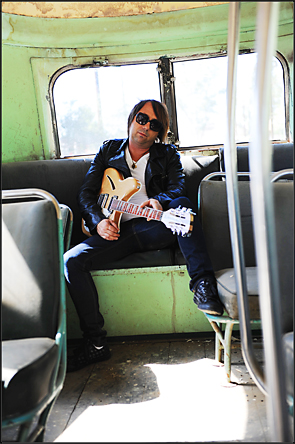
@BrianRoemmele Those pixelated images remind me of someone I know who does photorealistic pencil art with a simple #2 pencil. ✏️ He is absolutely amazing JasonKinneyPencilArt.com
English
0
0
0
4
Rob
Rob@vRobM·
@elder_plinius Notice how everyone prepared for this, closing down award programs
English

0
0
0
236
Rob
Rob@vRobM·
Choose Love
Dr Rudolf Steiner@RudolfStein2026

Love is higher than opinion. Humanity will not collapse because of wrong ideas… but because of the inability to live together. Two people can hold entirely different worldviews, different beliefs, different truths… and still remain united; if love is present. But the moment love disappears, even identical opinions become a source of conflict. This is the real crisis of our time. We think the problem is disagreement. It is not. The problem is that opinion has been placed above the human being. We no longer ask: “Can I understand you?” We ask: “Are you right or wrong?” And in doing so, we sacrifice the very thing that makes evolution possible: human fellowship. Dr Steiner was clear: All talk of progress, development, or spiritual advancement is meaningless if we cannot learn to truly meet one another. Because no spiritual path, no knowledge, no ideology, has any value if it separates human beings instead of connecting them. Love does something thinking alone cannot: It creates a space where differences do not have to be eliminated… but can be held. This is higher than tolerance. It is an active force. A power that allows truth to emerge between people, instead of being imposed by one over another. And this is the task of the future: Not to force agreement. But to develop a consciousness strong enough to carry differences without division. Because only then can truth become alive.

English
0
0
0
29
Rob
Rob@vRobM·
@BrianRoemmele ACV the miracle food with Mother.
English
0
0
1
35
Brian Roemmele
Brian Roemmele@BrianRoemmele·
Everyone already forgot about MoltBook. Well a few folks wallets didn’t. Yet I know 100s of worthy AI and robot founders working out of garages and the bedroom they grew up in that are worthy of the rounding errors from that “sale”. You get why I spout out vinegar sometimes?

Brian Roemmele tweet media
English
10
5
76
6K
Rob
Rob@vRobM·
@BrianRoemmele @grok Then I could share another alternative when Groks free usage is unavailable
English
0
0
0
5
Brian Roemmele
Brian Roemmele@BrianRoemmele·
@vRobM @grok Rob, I hear ya I know folks that are using him at the free level doing this.
English
2
0
5
261
Brian Roemmele
Brian Roemmele@BrianRoemmele·
NO SUBSCRIPTIONS NO NEW STARTUP TO SHOW YOU HOW. NO COURSES. NO YOUTUBE VIDEOS. Just you and an old pile of junk computer taking over the world without some rent seeker. I’ll help ya but better just ask Mr. @Grok to give you a plan and make him CEO. YOU ARE WELCOME.
Brian Roemmele@BrianRoemmele

How to not pay for an AI agent. Get a computer you don’t use. NO NOT AN APPLE MAC STUDIO (like and subscribe). Use something far less expensive, ask @Grok to find a useful pile of junk on eBay. And here are the complicated steps:

English

20
25
277
25.4K
Rob
Rob@vRobM·
@BrianRoemmele @grok Oh that's great to hear! Would you make a mini how-to for that? It would be a great unlocker from manual session management.
English
0
0
0
36