Max Panikar 🇺🇦 ₿ali

625 posts

Max Panikar 🇺🇦 ₿ali banner
Max Panikar 🇺🇦 ₿ali

Max Panikar 🇺🇦 ₿ali

@MaxPanikar

Sublime of a ₿eautiful life ⚡️ Be responsible. Make positive changes. Be leader! #Bitcoin #Ethereum #StandWithUkraine

Bali, Indonesia เข้าร่วม Nisan 2012
1.1K กำลังติดตาม157 ผู้ติดตาม
Max Panikar 🇺🇦 ₿ali รีทวีตแล้ว

Evan Luthra
Evan Luthra@EvanLuthra·
Anthropic pays engineers $750,000+ a year to understand how LLMs work. Stanford just put a 2 hour lecture that covers 80% of it for FREE. Bookmark this. Give it 2 hours today. It might be the highest ROI thing you do this month:
English

234
3.3K
21.9K
2.5M
Max Panikar 🇺🇦 ₿ali รีทวีตแล้ว
Akshay 🚀
Akshay 🚀@akshay_pachaar·
What does every big company think about the agent harness? Anthropic, OpenAI, CrewAI, LangChain. They all build agents. They all wrap their models in infrastructure to make them useful. They each call it the harness. But they agree on one thing. And disagree on everything else. The agreement: the model is not the product. The infrastructure around the model is. The disagreement: how much of that infrastructure should exist. This is the most important architectural bet in AI right now. And each company is placing a different one. 𝗔𝗻𝘁𝗵𝗿𝗼𝗽𝗶𝗰 bets on the model. Their harness is deliberately thin. A "dumb loop" that assembles the prompt, calls the model, executes tool calls, and repeats. The model makes all the decisions. The harness just manages turns. Their bet: as models get smarter, you need less infrastructure, not more. 𝗢𝗽𝗲𝗻𝗔𝗜 takes a similar but slightly thicker approach. Their Agents SDK is "code-first," meaning workflow logic lives in native Python, not in some graph DSL. But they add more structure: strict priority stacks for instructions, multiple orchestration modes, and explicit agent handoff patterns. 𝗖𝗿𝗲𝘄𝗔𝗜 adds a deterministic backbone. Their Flows layer handles routing and validation with hard-coded logic, while their Crews handle the autonomous parts. Intelligence where it matters, control everywhere else. 𝗟𝗮𝗻𝗴𝗚𝗿𝗮𝗽𝗵 bets on explicit control. The harness encodes the logic. Every decision point is a node in a graph. Every transition is a defined edge. Planning steps, routing strategies, multi-step workflows are all spelled out in the harness, not left to the model. Notice the spectrum. On one end: trust the model, keep the harness thin. On the other: encode the logic, make the harness thick. And here's where it gets interesting. The scaffolding metaphor makes this concrete. Construction scaffolding is temporary infrastructure that lets workers reach floors they couldn't access otherwise. It doesn't do the building. But without it, workers can't reach the upper floors. The key word is temporary. As the building goes up, scaffolding comes down. Manus demonstrated this perfectly. They rebuilt their agent five times in six months. Each rewrite removed complexity. Complex tool definitions became simple shell commands. "Management agents" became basic handoffs. The scaffolding did its job. So they removed it. This is also why Anthropic regularly deletes planning steps from Claude Code's harness. Every time a new model version ships that can handle something internally, the corresponding harness logic gets stripped out. But there's a catch. Models are now trained with specific harnesses in the loop. Claude Code's model learned to use the exact scaffolding it was built with. Change the scaffolding, and performance drops. The worker trained on THIS scaffolding. Swap it out, and they stumble. So the field is converging on a principle: Build scaffolding that's designed to be removed. But remove it carefully, because the model learned to lean on it. The "future-proofing test" for any agent system: if dropping in a more powerful model improves performance without adding harness complexity, the design is sound. Two products using the exact same model can perform completely differently based on this one decision: how thick is the harness? LangChain changed only the infrastructure (same model, same weights) and jumped from outside the top 30 to rank 5 on TerminalBench 2.0. The model didn't improve. The scaffolding around it did. The article below is a deep dive on agent harness engineering, covering the orchestration loop, tools, memory, context management, and everything else that transforms a stateless LLM into a capable agent.
Akshay 🚀 tweet media
Akshay 🚀@akshay_pachaar

x.com/i/article/2040…

English
62
179
1.1K
181.9K
Max Panikar 🇺🇦 ₿ali รีทวีตแล้ว
vitalik.eth
vitalik.eth@VitalikButerin·
There have recently been some discussions on the ongoing role of L2s in the Ethereum ecosystem, especially in the face of two facts: * L2s' progress to stage 2 (and, secondarily, on interop) has been far slower and more difficult than originally expected * L1 itself is scaling, fees are very low, and gaslimits are projected to increase greatly in 2026 Both of these facts, for their own separate reasons, mean that the original vision of L2s and their role in Ethereum no longer makes sense, and we need a new path. First, let us recap the original vision. Ethereum needs to scale. The definition of "Ethereum scaling" is the existence of large quantities of block space that is backed by the full faith and credit of Ethereum - that is, block space where, if you do things (including with ETH) inside that block space, your activities are guaranteed to be valid, uncensored, unreverted, untouched, as long as Ethereum itself functions. If you create a 10000 TPS EVM where its connection to L1 is mediated by a multisig bridge, then you are not scaling Ethereum. This vision no longer makes sense. L1 does not need L2s to be "branded shards", because L1 is itself scaling. And L2s are not able or willing to satisfy the properties that a true "branded shard" would require. I've even seen at least one explicitly saying that they may never want to go beyond stage 1, not just for technical reasons around ZK-EVM safety, but also because their customers' regulatory needs require them to have ultimate control. This may be doing the right thing for your customers. But it should be obvious that if you are doing this, then you are not "scaling Ethereum" in the sense meant by the rollup-centric roadmap. But that's fine! it's fine because Ethereum itself is now scaling directly on L1, with large planned increases to its gas limit this year and the years ahead. We should stop thinking about L2s as literally being "branded shards" of Ethereum, with the social status and responsibilities that this entails. Instead, we can think of L2s as being a full spectrum, which includes both chains backed by the full faith and credit of Ethereum with various unique properties (eg. not just EVM), as well as a whole array of options at different levels of connection to Ethereum, that each person (or bot) is free to care about or not care about depending on their needs. What would I do today if I were an L2? * Identify a value add other than "scaling". Examples: (i) non-EVM specialized features/VMs around privacy, (ii) efficiency specialized around a particular application, (iii) truly extreme levels of scaling that even a greatly expanded L1 will not do, (iv) a totally different design for non-financial applications, eg. social, identity, AI, (v) ultra-low-latency and other sequencing properties, (vi) maybe built-in oracles or decentralized dispute resolution or other "non-computationally-verifiable" features * Be stage 1 at the minimum (otherwise you really are just a separate L1 with a bridge, and you should just call yourself that) if you're doing things with ETH or other ethereum-issued assets * Support maximum interoperability with Ethereum, though this will differ for each one (eg. what if you're not EVM, or even not financial?) From Ethereum's side, over the past few months I've become more convinced of the value of the native rollup precompile, particuarly once we have enshrined ZK-EVM proofs that we need anyway to scale L1. This is a precompile that verifies a ZK-EVM proof, and it's "part of Ethereum", so (i) it auto-upgrades along with Ethereum, and (ii) if the precompile has a bug, Ethereum will hard-fork to fix the bug. The native rollup precompile would make full, security-council-free, EVM verification accessible. We should spend much more time working out how to design it in such a way that if your L2 is "EVM plus other stuff", then the native rollup precompile would verify the EVM, and you only have to bring your own prover for the "other stuff" (eg. Stylus). This might involve a canonical way of exposing a lookup table between contract call inputs and outputs, and letting you provide your own values to the lookup table (that you would prove separately). This would make it easy to have safe, strong, trustless interoperability with Ethereum. It also enables synchronous composability (see: ethresear.ch/t/combining-pr… and ethresear.ch/t/synchronous-… ). And from there, it's each L2's choice exactly what they want to build. Don't just "extend L1", figure out something new to add. This of course means that some will add things that are trust-dependent, or backdoored, or otherwise insecure; this is unavoidable in a permissionless ecosystem where developers have freedom. Our job should make to make it clear to users what guarantees they have, and to build up the strongest Ethereum that we can.
English
2.6K
1.6K
10K
6.4M
Max Panikar 🇺🇦 ₿ali รีทวีตแล้ว
ascetic
ascetic@ascetic0x·
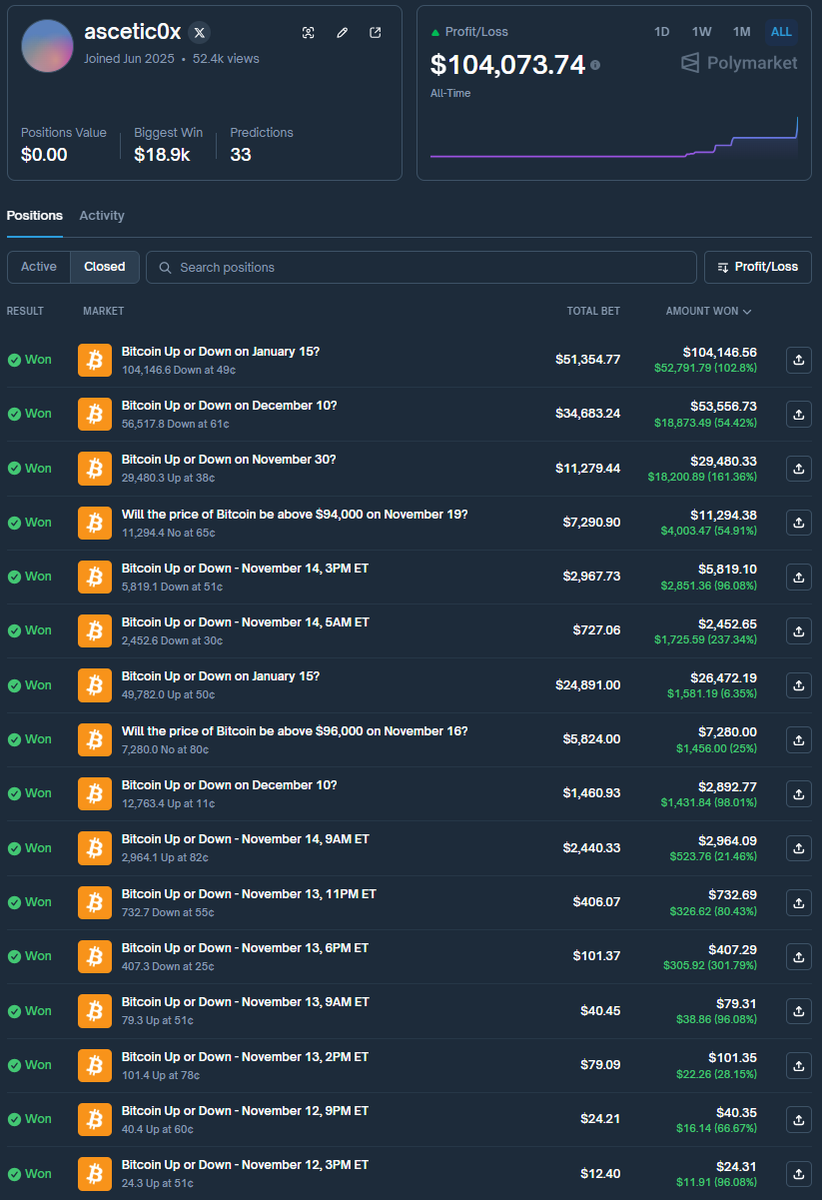
I DID IT!!! Turned $12 into $100,000 (over 8,300x) by going all-in and doubling my bankroll 16 times in a row on short-term BTC moves - while sharing my bets and the reasoning behind them along the way. This is only possible on @Polymarket !!! It took a lot of work and real skin in the game, so if you’re reading this, a simple RT or comment would really mean a lot. Huge shoutout to @shayne_coplanand @Polymarket team for building the best prediction market platform out there. And special thanks to @zscdao and @PolymarketTrade for the support🤝 Track my progress here: @ascetic0x?via=share" target="_blank" rel="nofollow noopener">polymarket.com/@ascetic0x?via…
ascetic tweet media
English
1.5K
1K
12.3K
4.4M
Max Panikar 🇺🇦 ₿ali รีทวีตแล้ว
CoinMarketCap
CoinMarketCap@CoinMarketCap·
🚀 Introducing CMC20: Crypto’s First DeFi-Enabled Tradable Index Token. CoinMarketCap is proud to announce $CMC20, the first DeFi-native tradable crypto index token on @BNBCHAIN. Your single-trade gateway to diversified exposure across the top 20 crypto assets. Built in partnership with @reserveprotocol & deployed by @lista_dao, now available on @PancakeSwap @TrustWallet 1/6
English
224
269
1.1K
691.5K
Max Panikar 🇺🇦 ₿ali รีทวีตแล้ว
Clemente
Clemente@Chilearmy123·
The average Hyperliquid holder be like
English
602
503
5K
506.7K
Max Panikar 🇺🇦 ₿ali รีทวีตแล้ว
Sweep
Sweep@0xSweep·
Bro dribbled the game 😂
English
614
1.3K
20.9K
2.7M
Max Panikar 🇺🇦 ₿ali รีทวีตแล้ว
Dumpster DAO
Dumpster DAO@Dumpster_DAO·
1/ It appears that @pumpdotfun is preparing to launch a volume incentives program that will last at least 30 days, with $PUMP as the rewards token 👇
English
134
102
851
392.3K
Max Panikar 🇺🇦 ₿ali รีทวีตแล้ว
Moose
Moose@JoeyMoose·
This is what creating a memecoin took before Pumpfun was created. Huge props to @a1lon9 for revolutionizing the game for all of us.
English
308
159
1K
169.2K
Max Panikar 🇺🇦 ₿ali รีทวีตแล้ว
John Wang
John Wang@j0hnwang·
no-one is talking about how @multicoin shoving $200,000,000 into the PUMP TGE also makes it one of the largest VC raises for a crypto company this cycle
English
28
19
328
101.3K
Max Panikar 🇺🇦 ₿ali รีทวีตแล้ว
MLM
MLM@mlmabc·
The two top funds who invested $100M and $50M into $PUMP have sold a total of 16B PUMP ($86.4M) over the last 2 days, which equals 1.6% of the total supply and 4.6% of the current circulating supply. They are still holding 16B PUMP ($84M) and 3B PUMP ($15.8M), respectively. Received 25B PUMP bought for $100M, sold 9B PUMP ($49M) solscan.io/account/D6arV1… Received 10B PUMP bought for $50M, sold 7B PUMP ($38M) solscan.io/account/58WQi2… USD values are based on the current market price (0.0054) actual sale prices were likely higher.
English
72
71
662
298.5K
Max Panikar 🇺🇦 ₿ali รีทวีตแล้ว
DMD
DMD@Daveeemor·
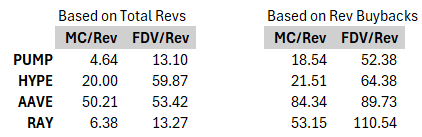
At current market cap and FDV, $PUMP revenue returned to token holders (25%) is higher than $HYPE, $AAVE, and $RAY buybacks as a % of supply. The token also trades at the lowest multiples based on both total revenues and revenues to token holders. $5.5bn is fud.
DMD tweet mediaDMD tweet media
English
28
16
213
42K
Max Panikar 🇺🇦 ₿ali รีทวีตแล้ว
plur daddy
plur daddy@plur_daddy·
Good odds Back is the OG gigawhale. The 30k number and timing are uncanny. If this is correct, we have made it through the woods on this seller, which also means that was likely the local bottom and we will start moving higher. What is amazing here is that nearly $10bn of BTC found a home within 24-36 hours. Take a step back and marvel at how insane that is. This is a testament to the breadth of demand rising up from all corners.
plur daddy tweet media
English
14
29
224
35.1K
Max Panikar 🇺🇦 ₿ali รีทวีตแล้ว
Pump.fun
Pump.fun@Pumpfun·
the moment you’ve all been waiting for $PUMP is launching through an Initial Coin Offering on Saturday, July 12th. airdrop coming soon. our plan is to Kill Facebook, TikTok, and Twitch. On Solana. learn more about $PUMP and how to get involved 👇
English
6.8K
4.3K
19.9K
11M
Max Panikar 🇺🇦 ₿ali รีทวีตแล้ว
Game
Game@game_for_one·
Some general thoughts on Pump: The uncertainty in pricing is what gives trades like this their asymmetry. But when you introduce premarket action on a reputable, accessible venue, that edge fades. You get cleaner price discovery before the actual launch, which makes the risk/reward a lot worse. Still tradable, but it’s a very different setup now. On the $TRUMP comparisons - I don’t think they hold up. TRUMP had: - No announcement, no premarket - Came out of nowhere: people weren’t even sure it was real at first - Dropped at a weird time, which added to the panic/FOMO Pump has none of that. It’s been prepped, broadcasted, and speculated on for days. The edge isn’t surprise, it’s now execution. As for the onchain vampire angle, most who wanted to derisk probably already have. Maybe some coins still get clipped a bit more, but the more tail end onchain stuff feels mostly flushed to me.
English
38
14
239
30.1K
Max Panikar 🇺🇦 ₿ali รีทวีตแล้ว
Oleksandr Usyk
Oleksandr Usyk@usykaa·
December 21, Riyadh #Usyk2Fury
Oleksandr Usyk tweet media
Indonesia
40
173
1.7K
63.9K
Max Panikar 🇺🇦 ₿ali รีทวีตแล้ว
unusual_whales
unusual_whales@unusual_whales·
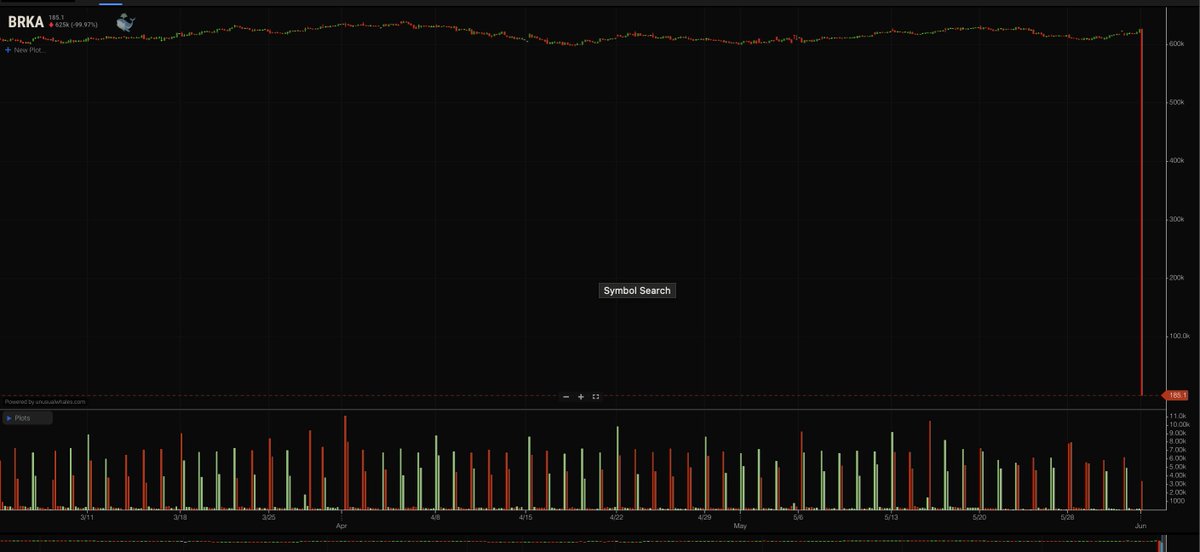
Look at this. The stock market is broken. Numerous multi-billion dollar companies are down 99%, in seconds including Warren Buffett's Berkshire Hathaway, $BRK.A, Bank of Montreal, $BMO, and $GOLD. The New York Stock Exchange has said it is investigating.
unusual_whales tweet media
English
612
1.9K
10.3K
2.6M
Max Panikar 🇺🇦 ₿ali รีทวีตแล้ว
Manta Network (🔱,🔱)
Manta Network (🔱,🔱)@MantaNetwork·
🌴 Meet us in Bali! 🇮🇩 @MantaNetwork and @0xPolygon are excited to come together in Bali to say hi to some of the strongest community in Southeast Asia! 🗓️ 15th May, 18:00 - 22:00 WITA (UTC+8) 📍 Core Tech & Art Hub 👉 lu.ma/manta-polygon-…
English
26
55
327
88.5K
Max Panikar 🇺🇦 ₿ali รีทวีตแล้ว
SingularityNET
SingularityNET@SingularityNET·
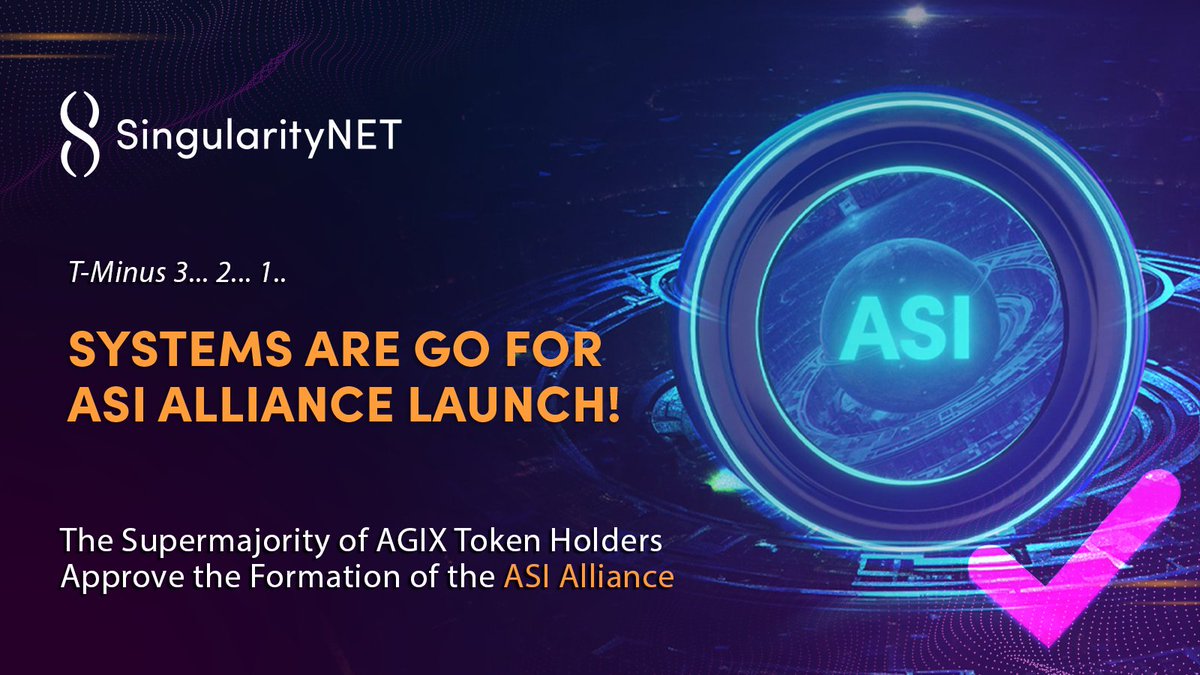
We are excited to announce that the supermajority of AGIX token holders has approved the Artificial Superintelligence (ASI) Alliance proposal. This historic decision marks the formation of the largest open-source, decentralized network dedicated to accelerating the development of decentralized #AGI and, shortly after, #ASI. We thank the SingularityNET community for their participation in this important vote. Please stay tuned for further updates on the token merger process and the advancements to come from the @ASI_Alliance.
SingularityNET tweet media
English
54
227
1.2K
125.6K