Pixel Artefact Museum

26 posts

Pixel Artefact Museum banner
Pixel Artefact Museum

Pixel Artefact Museum

@Pixelartefact

https://t.co/FplhF9OXXY @Voojdab

เข้าร่วม Mart 2026
1 กำลังติดตาม5 ผู้ติดตาม
Pixel Artefact Museum รีทวีตแล้ว
𝕍𝕠𝕠𝕛𝕕𝕒𝕓 𝖓𝖋𝖙
Good Morning ☕🍰 The Codex Atlanticus is a large collection of manuscripts, drawings, and notes created by Leonardo da Vinci during the Early Modern period (Renaissance). The material was produced roughly between 1478 and 1519, covering most of Leonardo’s lifetime. The collection contains over 1100 sheets of paper (1119 folios). The pages include drawings made with ink, pen, pencil, and chalk. Because the sheets are large and similar in size to those used in atlases, the collection received the name “Atlanticus.” Many pages contain text written in Leonardo’s characteristic mirror writing, alongside technical sketches and diagrams. The notes were created mainly in Italy, especially in Florence, Milan, and Rome, where Leonardo worked for various patrons. The pages include studies and designs related to mechanics, architecture, mathematics, hydraulics, engineering, military machines, bridges, flying devices, and scientific observations of nature. After Leonardo’s death in 1519, his manuscripts were inherited by his student Francesco Melzi. In the late 16th century the sculptor and collector Pompeo Leoni gathered many loose sheets and organized them into large volumes. This compilation became known as the Codex Atlanticus. The manuscript was not discovered in a single excavation; instead it is a collection assembled from Leonardo’s notebooks. Today it is preserved in the Biblioteca Ambrosiana in Milan, Italy, where it has been kept since the early 17th century. The codex served as Leonardo’s personal working archive, where he recorded ideas, observations, calculations, and designs. It provides insight into his scientific thinking, experimentation, and approach to engineering and invention. Original photo: Unknow Photographer Source: Wikimedia commons Modified into pixel art Have a great day❤️🙂! PixelArtefactMuseum.com #PixelArtefactMuseum #NFT #History #PixelArt
𝕍𝕠𝕠𝕛𝕕𝕒𝕓 𝖓𝖋𝖙 tweet media
English
4
1
4
21
Pixel Artefact Museum รีทวีตแล้ว
𝕍𝕠𝕠𝕛𝕕𝕒𝕓 𝖓𝖋𝖙
Good Morning ☕🍰🎶🍀💎🤜🏻🤛🏻 “View from the Window at Le Gras” is a photograph created around 1826–1827 by the French inventor Nicéphore Niépce. It was taken at his country house in Saint-Loup-de-Varennes and shows the view from his window overlooking the courtyard and farm buildings of the Le Gras estate. The image was produced on a pewter plate coated with a thin layer of bitumen of Judea, a naturally occurring asphalt like substance. Niépce used a process he called heliography. The prepared plate was placed inside a camera obscura. When exposed to sunlight, the bitumen hardened in the areas struck by light, while the darker areas remained soft and could be dissolved with a solvent. This process left a permanent image on the metal surface. The exposure time was extremely long likely several hours, possibly up to an entire day. Because of this, sunlight appears to illuminate the buildings from different directions in the final image. The plate belonged to Niépce himself and was part of his experiments aimed at finding a way to permanently record images produced by a camera obscura without manual drawing. After Niépce’s death the photograph remained within his family for some time and later came into the possession of the English photography pioneer Henry Fox Talbot. In the 20th century, the image was rediscovered and identified in 1952 by the photography historian Helmut Gernsheim in the United Kingdom. Today the photograph is preserved at the Harry Ransom Center in Austin, where it serves as an important document of the early development of photographic technology and the effort to capture and preserve visual reality using light sensitive materials. Original photo: Joseph Nicéphore Niépce Source: Wikimedia commons Modified into pixel art Have a great day❤️🙂! PixelArtefactMuseum.com #PixelArtefactMuseum #NFT #History #PixelArt
𝕍𝕠𝕠𝕛𝕕𝕒𝕓 𝖓𝖋𝖙 tweet media
English
1
1
1
12
Pixel Artefact Museum รีทวีตแล้ว
𝕍𝕠𝕠𝕛𝕕𝕒𝕓 𝖓𝖋𝖙
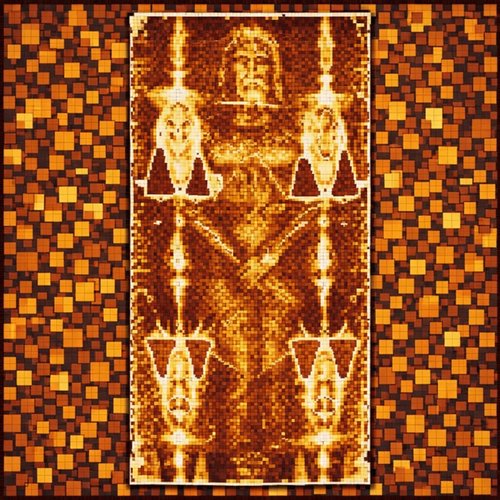
Good Morning ☕🎶🍰 The Shroud of Turin is a long linen cloth measuring approximately 4.4 meters in length and 1.1 meters in width. On the fabric there is a faint image of a man’s body visible from the front and the back. The cloth is made of linen woven in a herringbone pattern, a weaving technique known in antiquity. The image shows marks resembling crucifixion wounds, including punctures in the wrists and feet, marks from scourging, and a wound in the side. There are also stains interpreted as blood marks. According to Christian tradition, the cloth is believed to be the burial shroud in which the body of Jesus Christ was wrapped after his crucifixion, around AD 30–33. The shroud would have belonged to those who prepared Jesus’ body for burial, including Joseph of Arimathea, who according to the Gospels placed the body in the tomb. The earliest reliable historical records of the cloth date from the 14th century. Around 1354, it was publicly displayed in the town of Lirey in France by the French knight Geoffroy de Charny and his wife Jeanne de Vergy. The exact discoverer of the shroud is unknown; it appears in historical records already in the possession of the de Charny family. In later centuries the cloth became the property of the House of Savoy, which moved it to the city of Turin in Italy in 1578. It has been kept there ever since in the Cathedral of Saint John the Baptist. The cloth survived several dangerous events, including a fire in 1532, which damaged the fabric and left characteristic burn marks. Scientific interest increased in 1898, when the Italian photographer Secondo Pia took the first photographs of the cloth. When the photographic negative was developed, the image on the cloth appeared like a photographic negative, which greatly surprised researchers. In 1988, radiocarbon dating tests suggested that the cloth was produced between AD 1260 and 1390, indicating a medieval origin. Some researchers argue that the tested sample might have come from a later repair. Today the Shroud of Turin is stored in a special protective case that controls temperature, humidity, and light exposure in order to preserve the fabric. It is occasionally displayed to the public for pilgrims and researchers. Original photo: forum.hammihan.com Source: Wikimedia commons Modified into pixel art Have a great day❤️🙂! PixelArtefactMuseum.com #PixelArtefactMuseum #NFT #History #PixelArt
𝕍𝕠𝕠𝕛𝕕𝕒𝕓 𝖓𝖋𝖙 tweet media
English
1
1
1
12
Pixel Artefact Museum รีทวีตแล้ว
𝕍𝕠𝕠𝕛𝕕𝕒𝕓 𝖓𝖋𝖙
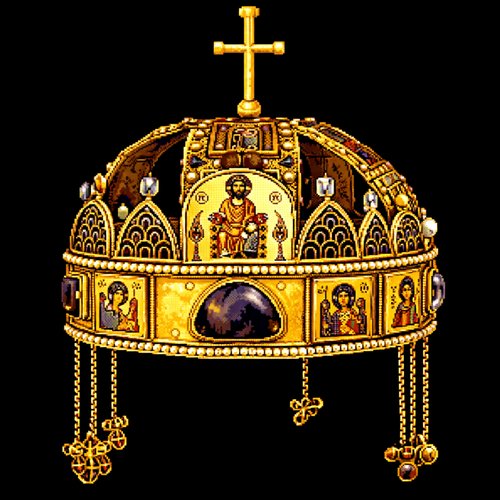
Good Morning ☕🍰🎶 The Holy Crown of Hungary, also known as the Crown of Saint Stephen, is a medieval royal insignia that belonged to the rulers of the Kingdom of Hungary. It was created around the 11th century, approximately between the years 1000 and 1070. The crown was not made as a single object; it was assembled from two different parts produced in different regions and periods. The lower part, called corona graeca, was created in the Byzantine cultural sphere and decorated with enamel images of saints and rulers. The upper part, known as corona latina, was probably made in Western Europe and consists of four golden bands forming arches over the crown. The crown is made mainly of gold and richly decorated with Byzantine enamel plaques depicting religious figures, as well as pearls and precious stones such as sapphires, amethysts, and garnets. A distinctive feature of the crown is the slightly tilted cross on its top, which has become one of the recognizable symbols of Hungary. The crown belonged to the kings of Hungary and served as the most important symbol of their authority. According to Hungarian tradition, a ruler could be considered the legitimate king only if he was crowned with this specific crown. Because of this belief, it was used during coronation ceremonies of Hungarian kings for many centuries. The crown was not discovered in an archaeological sense, since it remained a state treasure and ceremonial object throughout most of its history. However, during times of war and political conflict it was sometimes hidden or moved for protection. One notable example occurred in 1849, during the Hungarian revolution, when the crown was buried near Orşova (in present-day Romania). A few years later it was recovered by Austrian authorities. The Holy Crown played an important role in Hungarian history because it symbolized not only royal power but also the continuity of the Hungarian state. In Hungarian political tradition there even developed the concept known as the “Doctrine of the Holy Crown,” according to which the crown itself symbolically represented the authority of the state. Today the crown is kept in the Hungarian Parliament Building in Budapest, where it remains one of the most important historical treasures of Hungary. Original photo: Tolfavi Source: Wikimedia commons Modified into pixel art ❤️Have a great day❤️🙂! PixelArtefactMuseum.com #PixelArtefactMuseum #NFT #History #PixelArt
𝕍𝕠𝕠𝕛𝕕𝕒𝕓 𝖓𝖋𝖙 tweet media
English
0
1
0
12
Pixel Artefact Museum รีทวีตแล้ว
𝕍𝕠𝕠𝕛𝕕𝕒𝕓 𝖓𝖋𝖙
Good Morning ☕🍰 The Mesha Stele is a stone monument with an inscription created in the 9th century BCE during the ancient period (Iron Age). It was made from black basalt, a very hard volcanic rock that preserves carved inscriptions well. The stele is about 1.15 meters tall and has a rounded top. Its surface contains a long text carved in the Moabite language, which is very closely related to ancient Hebrew. The inscription consists of several dozen lines written using the Phoenician alphabet. The stele belonged to Mesha, the king of the ancient kingdom of Moab, located in what is now Jordan, east of the Dead Sea. King Mesha ordered the monument to commemorate his victories over the Kingdom of Israel and to record his achievements as a ruler. In the text he describes the Moabite revolt against Israel, the rebuilding of cities, the construction of defensive walls, reservoirs, and temples. He attributes his successes to the protection of the Moabite god Chemosh, who according to the inscription helped him defeat his enemies. The stele was discovered in 1868 in Dhiban, known in ancient times as Dibon. It was found by the German missionary and traveler Frederick Augustus Klein. Shortly after the discovery, a conflict arose between local tribes and European representatives who wanted to obtain the artifact. During these events the stele was broken into many pieces. Fortunately, a paper squeeze (an impression of the inscription) had been made earlier, which later allowed scholars to reconstruct most of the text. Today most fragments of the stele are preserved and displayed in the Louvre Museum in Paris. The Mesha Stele is an important historical source for understanding the history of Moab and its relations with Israel, and it contains one of the earliest extra biblical references to the people of Israel. Original photo: Tangopaso Source: Wikimedia commons Modified into pixel art PixelArtefactMuseum.com #PixelArtefactMuseum #NFT #History #PixelArt
𝕍𝕠𝕠𝕛𝕕𝕒𝕓 𝖓𝖋𝖙 tweet media
English
0
1
1
10
Pixel Artefact Museum รีทวีตแล้ว
𝕍𝕠𝕠𝕛𝕕𝕒𝕓 𝖓𝖋𝖙
Good Morning ☕🍰🎶🍀 Shakōki-dogū is a small clay figurine created in Japan during the late period of the Jōmon culture, around 1000–400 BCE. It belongs to a group of figurines known as dogū, stylized human representations produced by prehistoric communities living on the Japanese archipelago. The name shakōki means “light blocking goggles,” referring to the large oval eyes of the figure that resemble snow goggles used in regions where sunlight strongly reflects from snow. These figurines were made from hand shaped clay without the use of a potter’s wheel. After shaping the body, the surface was decorated with incised lines, carved patterns, and raised ornaments, which may represent clothing, jewelry, or body decoration such as tattoos. The figurine was then fired in an open fire or a simple kiln, which hardened the clay and made it durable. The figure typically has a thick torso, short limbs, and richly decorated surfaces, and most examples measure about 15–30 centimeters in height. Shakōki-dogū figurines were produced by communities of the Jōmon culture, whose economy was based mainly on hunting, fishing, and gathering. These objects were probably not everyday items but rather ritual or religious objects. Archaeologists believe they were used in ceremonies related to fertility, health, protection from illness, or the well being of the community. Many figurines have been discovered intentionally broken, suggesting they may have been symbolically destroyed during rituals, possibly to transfer illness or misfortune from a person to the figurine. Numerous examples have been found in northern Japan, especially at the archaeological site Kamegaoka Site in Aomori Prefecture. The discoveries were made during archaeological excavations beginning in the 19th century, when systematic research on Jōmon sites started. Because many figurines were discovered at different sites and times, there is no single known discoverer; instead, they are the result of multiple archaeological excavations carried out by Japanese researchers. Today, Shakōki-dogū figurines are considered important evidence of the beliefs, artistic expression, and spiritual life of ancient communities in Japan, demonstrating that even several thousand years ago people created complex symbolic objects using simple natural materials such as clay. Original photo: Unknown photographer Source: Wikimedia commons Modified into pixel art Have a great day❤️🙂! PixelArtefactMuseum.com #PixelArtefactMuseum #NFT #History #PixelArt
𝕍𝕠𝕠𝕛𝕕𝕒𝕓 𝖓𝖋𝖙 tweet media
English
2
1
2
43
Pixel Artefact Museum รีทวีตแล้ว
𝕍𝕠𝕠𝕛𝕕𝕒𝕓 𝖓𝖋𝖙
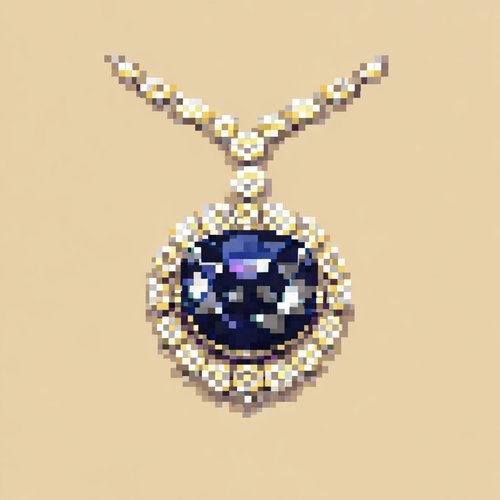
Good Morning ☕🍰 The Hope Diamond is a large deep-blue diamond weighing 45.52 carats. Its intense blue color is caused by small amounts of boron within the crystal structure of carbon from which the diamond is formed. The gemstone is cut in an antique cushion brilliant style, a historical form of brilliant cut with a slightly rounded, cushion like shape. Today the diamond is mounted in a necklace surrounded by smaller diamonds and displayed as a museum exhibit. The diamond originates from India, most likely from the historic Kollur Mine in the Golconda region, which in the 17th century was one of the most important diamond producing areas in the world. Many exceptional gemstones discovered there were traded internationally and brought to Europe by merchants and travelers. The diamond was brought to Europe in the 17th century by the French traveler and gem merchant Jean-Baptiste Tavernier. He sold the large blue stone to the King of France, Louis XIV, who ordered it to be recut. After this process the gem became part of the French crown jewels and was known as the “French Blue.” It served as a ceremonial royal jewel, worn or displayed during important court events as a symbol of wealth and royal power. During the French Revolution in 1792, the French crown jewels were stolen and the blue diamond disappeared for many years. It is believed that during this time the stone was recut to disguise its original appearance. In the 19th century the diamond reappeared in London in the collection of banker and gem collector Henry Philip Hope. From his family name the gemstone received its modern name: the Hope Diamond. Over the following decades the diamond passed through several private owners and collectors. In the 20th century it came into the possession of the American jeweler Harry Winston, who in 1958 donated it to the Smithsonian Institution. Since then it has been displayed in the National Museum of Natural History in Washington, D.C.. In the past the Hope Diamond served primarily as ceremonial and decorative jewelry owned by royalty and wealthy collectors. Today it also has scientific and educational value, because it represents a rare type of diamond whose blue color and unusual physical properties are caused by the presence of boron. Under ultraviolet light the stone can produce a distinctive reddish glow. The history of the Hope Diamond connects Indian diamond mining, European gem trade, the French royal court, revolutionary events, and later private collections, before eventually becoming a museum artifact studied and viewed by millions of visitors. Original photo: Gary Todd Source: Wikimedia commons Modified into pixel art PixelArtefactMuseum.com #PixelArtefactMuseum #NFT #History #PixelArt
𝕍𝕠𝕠𝕛𝕕𝕒𝕓 𝖓𝖋𝖙 tweet media
English
2
1
1
112
Pixel Artefact Museum รีทวีตแล้ว
𝕍𝕠𝕠𝕛𝕕𝕒𝕓 𝖓𝖋𝖙
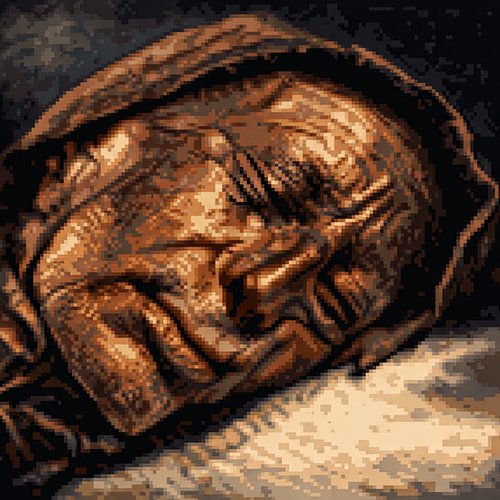
Good Morning ☕🍰 Have a good day! 🍀 Tollund Man is an exceptionally well-preserved body of a man from the Iron Age discovered in a peat bog in Denmark. This man lived around 405–380 BCE and died at the age of about 30–40 years. His body was preserved in remarkable condition thanks to the special environment of peat bogs. Peat contains acids and very little oxygen, which significantly slows the process of decomposition. Because of this, his skin, facial features, and even parts of his hair and beard survived. The man was wearing a pointed leather cap made from animal skin and sewn together with leather straps. Archaeologists also found a leather belt and a rope made from braided plant fibers around his neck. This indicates that the man was hanged. After his death, his body was carefully placed in the bog. His face appears calm, with closed eyes and clearly visible facial features, which makes him look as if he is sleeping. The body was discovered on May 8, 1950, in a peat bog near the village of Tollund, close to the town of Silkeborg in Denmark. It was found by two brothers, Viggo Højgaard and Emil Højgaard, who were cutting peat used as fuel. At first they believed they had discovered the victim of a recent crime because the body looked so well preserved. Only after archaeological examination did researchers determine that the remains were more than two thousand years old. Scientists carried out many studies, including an analysis of the stomach contents. The results showed that the man’s last meal was a simple dish made from grains and seeds, similar to a thick porridge. Research suggests that the man was probably a ritual sacrifice. In Iron Age cultures, peat bogs were often considered sacred places where offerings were made to gods or natural forces. Today the remains of the Tollund Man are preserved and displayed in a museum in Silkeborg, Denmark. Because of its extraordinary state of preservation, this discovery provides archaeologists with valuable information about the appearance of people, their customs, diet, and religious beliefs in northern Europe more than two thousand years ago. Original photo: Sven Rosborn Source: Wikimedia commons Modified into pixel art PixelArtefactMuseum.com #PixelArtefactMuseum #NFT #History #PixelArt
𝕍𝕠𝕠𝕛𝕕𝕒𝕓 𝖓𝖋𝖙 tweet media
English
1
1
2
23
Pixel Artefact Museum รีทวีตแล้ว
𝕍𝕠𝕠𝕛𝕕𝕒𝕓 𝖓𝖋𝖙
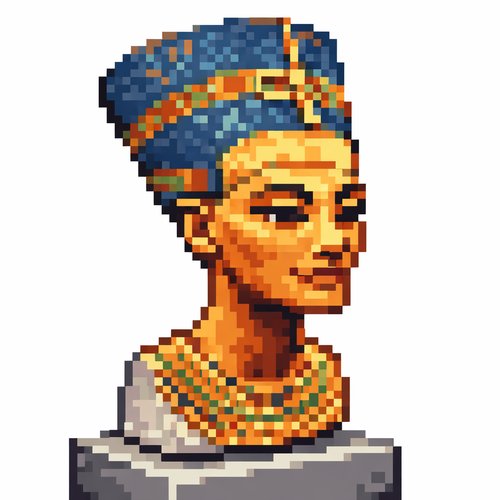
Good Morning 🎶☕🍰🎶🍀🎶 The Bust of Nefertiti is one of the most famous works of art from Ancient Egypt and one of the best preserved portraits from antiquity. It represents Queen Nefertiti, the wife of Pharaoh Akhenaten, who ruled in the 14th century BCE. The sculpture was created around 1345 BCE during the Amarna artistic period, which was characterized by more realistic and natural representations of people compared to earlier Egyptian art. The bust was made from limestone, which was covered with a layer of stucco (a type of plaster). On this layer the artist applied polychromy, meaning it was painted with pigments. Because of this, the sculpture still shows natural skin tones, red lips, and the queen’s characteristic blue crown. One of the eyes was made from quartz and black pigment, while the other eye was never completed. This suggests that the bust may have been a workshop model used by sculptors as a reference when creating other portraits of the queen. The bust originally belonged to the workshop of the royal sculptor Thutmose, who worked in the capital city founded by the pharaoh, Amarna (ancient Akhetaten). This city was established by Akhenaten as the new capital of Egypt and as the center of worship of the sun god Aten. In Thutmose’s workshop, official portraits of the royal family were created. The sculpture was discovered on December 6, 1912, by the German archaeologist Ludwig Borchardt during archaeological excavations in the ruins of Amarna in Egypt. The bust was found in the sculptor’s workshop, which supports the theory that it was used as an artistic model. After its discovery it was taken to Germany, and today it is displayed in the Neues Museum in Berlin, where it is one of the museum’s most valuable exhibits. The Bust of Nefertiti is extremely important because it shows the high level of artistic skill in Ancient Egypt and the idealized beauty of the queen. Thanks to the exceptional preservation of its colors and details, the sculpture provides historians and archaeologists with a unique insight into the artistic techniques and culture of Egypt from more than 3,300 years ago. Today, it is considered one of the most recognizable masterpieces of ancient art in the world. Original photo: Zserghei Source: Wikimedia commons Modified into pixel art If you like what I do, you can always leave a 🎶like🎶 or even 🎶share🎶 the post I’d really appreciate it. ❤️Have a great day❤️🙂! PixelArtefactMuseum.com #PixelArtefactMuseum #NFT #History #PixelArt
𝕍𝕠𝕠𝕛𝕕𝕒𝕓 𝖓𝖋𝖙 tweet media
English
1
1
2
37
Pixel Artefact Museum รีทวีตแล้ว
𝕍𝕠𝕠𝕛𝕕𝕒𝕓 𝖓𝖋𝖙
Good Morning ☕🎶🍰🍀 The diadem from “Priam’s Treasure” is one of the most famous golden ornaments discovered by archaeologists in the ruins of the ancient city of Troy. The artifact dates back to the Early Bronze Age (around 2400–2200 BCE), a very early period in the development of civilizations in the Aegean and Anatolian regions. The name “Priam’s Treasure” was given by its discoverer, the German archaeologist Heinrich Schliemann, who believed he had found the treasure of the legendary King Priam described in the epic Iliad by Homer. In reality, the artifact is more than a thousand years older than the time described in the Iliad. The diadem is made entirely of gold. It consists of a thin golden band with numerous dangling chains and small decorative elements in the form of plates and spirals. These movable parts hung from the front of the diadem and fell over the forehead and temples of the person wearing it. This construction made the ornament not only a symbol of wealth but also a very impressive decorative element its golden parts moved and reflected light while the wearer moved. Creating such a piece required advanced metalworking skills, which shows that goldsmithing techniques at that time were already highly developed. The diadem most likely belonged to a woman of very high social status, possibly a noblewoman, ruler, or priestess. In many ancient cultures, golden diadems were symbols of prestige, authority, and wealth. They may have been worn during important ceremonies, religious rituals, or special celebrations. Some researchers also believe that such ornaments could have been part of burial attire, placed in the graves of elite members of society. The diadem was discovered in 1873 during excavations conducted by Heinrich Schliemann in the ruins of Troy. Schliemann was searching for material evidence of the city known from the legends of the Trojan War. During his excavations he found a collection of golden and silver objects, which he called “Priam’s Treasure.” The find included necklaces, earrings, cups, ornaments, and diadems. According to Schliemann’s account, part of the treasure was secretly removed from the excavation site to avoid confiscation by the authorities of the Ottoman Empire. The later history of the treasure is quite complicated. Before World War II it was kept in a museum in Berlin, but after the war many of its elements were taken to the Soviet Union. Today most of the objects from the so-called Priam’s Treasure are kept in the Pushkin State Museum of Fine Arts in Moscow. Today, the diadem from “Priam’s Treasure” is considered an extremely important archaeological artifact. It shows that more than four thousand years ago people were already capable of creating very complex and beautiful gold ornaments. It also provides important evidence of the advanced culture and craftsmanship of the inhabitants of ancient Troy. Original photo: photo by Szilas in the Pushkin Museum, Moscow Source: Wikimedia commons Modified into pixel art If you like what I do, you can always leave a 🎶like🎶 or even 🎶share🎶 the post I’d really appreciate it. ❤️Have a great day❤️🙂! PixelArtefactMuseum.com #PixelArtefactMuseum #NFT #History #PixelArt
𝕍𝕠𝕠𝕛𝕕𝕒𝕓 𝖓𝖋𝖙 tweet media
English
1
1
1
33
Pixel Artefact Museum รีทวีตแล้ว
𝕍𝕠𝕠𝕛𝕕𝕒𝕓 𝖓𝖋𝖙
Good Morning ☕🍰 🫡🍀🤜🏻🤛🏻 The Amber Bear from Słupsk (also called the Amber Bear Figurine from Słupsk) is one of the oldest and most remarkable amber carvings discovered in Europe. It is a small figurine representing a bear, carefully carved from Baltic amber, which is fossilized tree resin formed millions of years ago. Amber was highly valued by prehistoric people because of its beauty and rarity. The figurine is about 10 cm long and depicts a bear standing on four legs, with clearly carved features such as the head, paws, and back. The figurine dates back to the Stone Age, specifically the Mesolithic period, approximately 9600–4100 BCE. This means that it is over 6,000–10,000 years old. During this time, people lived mainly as hunters and gatherers, and animals played an important role in their daily life and beliefs. The bear was especially significant because it symbolized strength, power, and protection. The figurine was accidentally discovered in 1887 near the city of Słupsk in northern Poland. It was found in a peat bog while peat was being dug, and the discoverer was an unknown worker involved in peat extraction. Unfortunately, his name was never recorded. After the discovery, the object was placed in a museum collection and quickly attracted the attention of archaeologists because such a well crafted amber sculpture from prehistoric times is extremely rare. Researchers believe that the figurine served as an amulet or talisman belonging to a hunter or a member of a hunting community. In many ancient cultures, objects representing animals were believed to bring protection, good luck in hunting, or spiritual connection with the animal. The bear, being one of the largest and most powerful animals in European forests, had a particularly strong symbolic meaning. Carrying such an amulet may have expressed respect for the animal and belief in its spiritual or magical power. The history of the figurine in modern times is also unusual. During World War II, the artifact disappeared together with many other museum objects and was considered lost for many years. Eventually it was rediscovered in a private collection and returned to Poland in the 21st century. Today, the Amber Bear from Słupsk is kept in the National Museum in Szczecin, where it is considered one of the most valuable archaeological objects in the collection. It is also regarded as one of the oldest known works of art made from amber and an exceptional example of prehistoric craftsmanship from the Baltic region. Original photo: Unknown photographer Source: Wikimedia commons Modified into pixel art If you like what I do, you can always leave a 🎶like🎶 or even 🎶share🎶 the post I’d really appreciate it. ❤️Have a great day❤️🙂! PixelArtefactMuseum.com #PixelArtefactMuseum #NFT #History #PixelArt
𝕍𝕠𝕠𝕛𝕕𝕒𝕓 𝖓𝖋𝖙 tweet media
English
7
1
2
33
Pixel Artefact Museum รีทวีตแล้ว
𝕍𝕠𝕠𝕛𝕕𝕒𝕓 𝖓𝖋𝖙
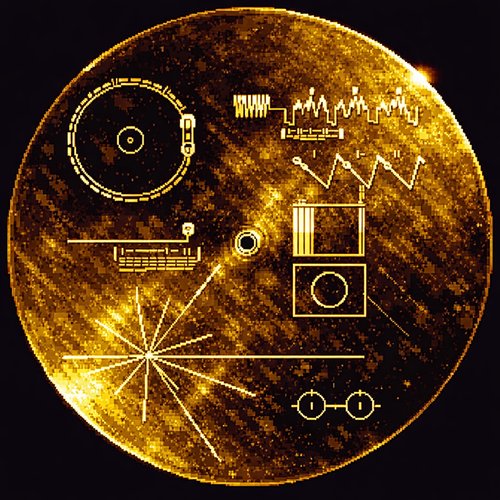
Good Morning ☕🍰 The Voyager Golden Record is a special phonograph record placed on board the space probes Voyager 1 and Voyager 2, which were launched into space in 1977 by the American space agency NASA. The record was designed as a message from humanity to any possible extraterrestrial civilizations that might discover the spacecraft in the distant future. The record is made of copper coated with a thin layer of gold. The gold protects the surface from corrosion and damage, allowing the information stored on the record to survive for millions of years in the harsh environment of space. The disc is placed inside a protective aluminum cover. On this cover there are engraved symbols and instructions explaining how to play the record and where the spacecraft came from. These instructions were designed so that they could be understood even by beings who do not know human languages. The record contains more than 100 images, sounds of Earth, music from many cultures, and greetings in 55 languages. Among the recordings are natural sounds such as birds singing, ocean waves, and a human heartbeat. It also includes musical pieces from different cultures and historical periods, ranging from classical music to traditional folk music from various parts of the world. All of this was chosen to represent the diversity of life and culture on Earth. The project of creating the Golden Record was led by a team of scientists under the direction of the American astronomer Carl Sagan. The team included scientists, artists, and specialists from different fields who worked together to select materials that could represent Earth and human civilization. Unlike many archaeological artifacts, the Voyager Golden Record was not discovered, because it was intentionally sent into space. It was attached to the outside of the Voyager spacecraft before their launch in 1977. Today the probes are extremely far from Earth and are traveling through interstellar space. Voyager 1 is currently the most distant human made object from Earth. Symbolically, the Golden Record belongs to all humanity, because it contains information representing many cultures, languages, and achievements of human civilization. Its main purpose was to leave a trace of our civilization in space and to communicate basic information about who we are, where Earth is located, and what life on our planet is like. It is considered one of the most extraordinary artifacts in the history of space exploration a kind of cosmic time capsule that may travel through space for millions of years. If it is ever found by another civilization, it could become the first evidence of humanity beyond our Solar System. Original photo: NASA/JPL Source: Wikimedia commons Modified into pixel art If you like what I do, you can always leave a 🎶like🎶 or even 🎶share🎶 the post I’d really appreciate it. ❤️Have a great day❤️🙂! PixelArtefactMuseum.com #PixelArtefactMuseum #NFT #History #PixelArt
𝕍𝕠𝕠𝕛𝕕𝕒𝕓 𝖓𝖋𝖙 tweet media
English
0
1
0
15
Pixel Artefact Museum รีทวีตแล้ว
𝕍𝕠𝕠𝕛𝕕𝕒𝕓 𝖓𝖋𝖙
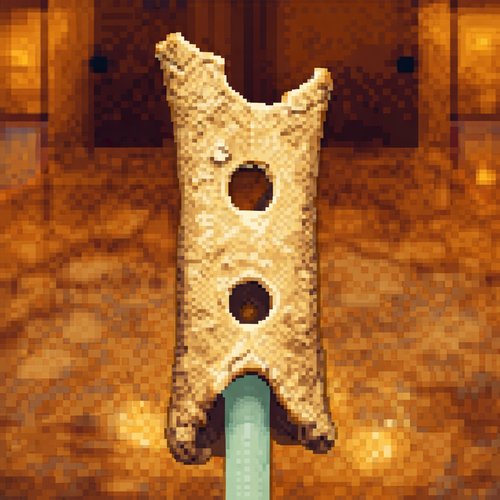
Good Morning 🎶🍀🎶☕🎶🍰🎶 The Divje Babe flute is one of the most famous and possibly the oldest musical instruments ever discovered by archaeologists. It dates back to prehistory, specifically the Middle Paleolithic period, around 50,000–60,000 years ago. The artifact was discovered in 1995 in Divje Babe Cave, near the town of Cerkno in present day Slovenia. It was found by a team of archaeologists led by Ivan Turk. The object is made from the femur (thigh bone) of a cave bear, a large animal that lived in Europe during the Ice Age. The bone contains several evenly spaced holes, which many scientists believe were intentionally made by humans. Because of these holes, the artifact is widely interpreted as a primitive flute. Researchers believe the instrument may have belonged to a Neanderthal, who inhabited this region during the Ice Age. If it truly was a musical instrument, it suggests that Neanderthals were capable of creating music, indicating advanced cognitive abilities and elements of symbolic culture. Music may have been used in rituals, communication, social gatherings, or entertainment. However, there is still some debate among scientists. Some researchers argue that the holes could have been created naturally, for example by the bite marks of predators such as hyenas. Despite this discussion, many archaeologists consider the artifact to be the oldest known musical instrument in the world. Today, the Divje Babe flute is one of the most important archaeological finds related to Neanderthals and is preserved in the National Museum of Slovenia in Ljubljana. The discovery is significant because it helps scientists better understand the life, culture, and creative abilities of early humans tens of thousands of years ago. Original photo: Szilas Source: Wikimedia commons Modified into pixel art If you like what I do, you can always leave a 🎶like🎶 or even 🎶share🎶 the post I’d really appreciate it. ❤️Have a great day❤️🙂! PixelArtefactMuseum.com #PixelArtefactMuseum #NFT #History #PixelArt
𝕍𝕠𝕠𝕛𝕕𝕒𝕓 𝖓𝖋𝖙 tweet media
English
1
1
1
8
Pixel Artefact Museum รีทวีตแล้ว
𝕍𝕠𝕠𝕛𝕕𝕒𝕓 𝖓𝖋𝖙
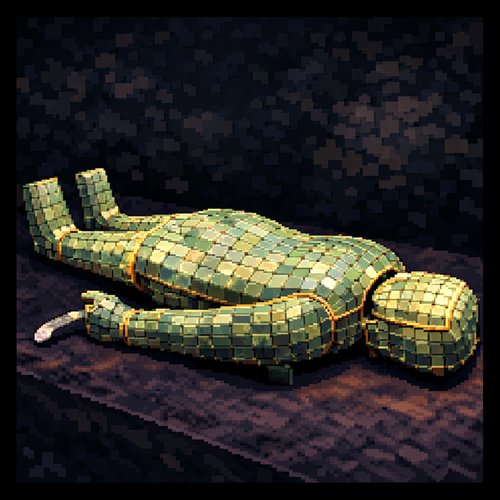
Good Morning 🎶🍀🎶☕🎶🍰🎶 The Jade Burial Suit of Liu Sheng is a remarkable archaeological artifact dating from the time of the Han Dynasty, which belongs to the period of antiquity. It is a ceremonial burial garment made of jade that covered the entire body of the deceased. The suit consists of about 2,498 small jade plaques, carefully polished and shaped to fit the human body. All the pieces were connected with thin gold wire, forming something similar to a protective “armor”. The suit belonged to the Chinese prince Liu Sheng, who lived in the 2nd century BCE. He was the son of Emperor Jing of Han and the ruler of the Kingdom of Zhongshan. In ancient Chinese culture, jade was considered a stone with special spiritual properties it symbolized purity, perfection, and immortality. People believed that jade could protect the body of the deceased from decay and ensure life after death. For this reason, rulers and members of the aristocracy were buried in special jade burial suits. The artifact was discovered in 1968 in a rock-cut tomb in Mancheng, in Hebei Province, China. It was found by a team of archaeologists from the Institute of Archaeology of the Chinese Academy of Social Sciences, who were conducting excavations in the area. In the same tomb complex, archaeologists also discovered a similar jade burial suit belonging to the prince’s wife, Dou Wan. The discovery of Liu Sheng’s jade burial suit is considered one of the most important archaeological finds related to ancient China. The object demonstrates the high level of craftsmanship during the Han Dynasty and reflects the religious beliefs of the time, as well as the great cultural significance of jade in Chinese civilization. Original photo: Gary Todd Source: Wikimedia commons Modified into pixel art If you like what I do, you can always leave a 🎶like🎶 or even 🎶share🎶 the post I’d really appreciate it. ❤️Have a great day❤️🙂! PixelArtefactMuseum.com #PixelArtefactMuseum #NFT #History #PixelArt
𝕍𝕠𝕠𝕛𝕕𝕒𝕓 𝖓𝖋𝖙 tweet media
English
1
1
1
29
Pixel Artefact Museum รีทวีตแล้ว
𝕍𝕠𝕠𝕛𝕕𝕒𝕓 𝖓𝖋𝖙
Good Morning fam 🎶☕🎶🍰🎶 Alfred Jewel is one of the most famous artifacts of Anglo-Saxon art from the Early Middle Ages. The object was created in the 9th century, during the reign of King Alfred the Great, the ruler of the kingdom of Wessex in England. It is a small, richly decorated artifact made of gold, enamel, and rock crystal, which protects a miniature figure made of colored enamel placed in the center. The object is about 6.4 cm long and has a shape resembling a drop or a teardrop. On its golden frame there is an Old English inscription: “AELFRED MEC HEHT GEWYRCAN,” which means “Alfred ordered me to be made.” Because of this inscription, the object is directly connected with King Alfred the Great. In the central part of the artifact there is an enamel figure covered by a transparent rock crystal. Researchers believe that it may represent Christ, a personification of Wisdom, or a scholar, which suggests a connection with knowledge and learning. The Alfred Jewel was made from very valuable materials, and its decorations also include gold filigree, delicate ornamental patterns made from thin gold wires. The high level of craftsmanship shows that it was an object intended for a king or an important person from his circle. Most historians believe that the Alfred Jewel was an “aestel,” which was a reading pointer. It was probably attached to the end of a thin rod and used to point at lines of text while reading manuscripts. In the Middle Ages books were written very densely, so such a pointer helped the reader follow the text. The object may have been part of King Alfred’s educational program, as he strongly supported the development of literacy and learning in his kingdom. The artifact was discovered in 1693 in North Petherton, Somerset, England, near the historic place called Athelney, where Alfred the Great once hid during the wars against the Vikings. It was found accidentally by a worker digging in a field, but his name was not recorded in historical sources. After its discovery the object passed through private collections and was later placed in a museum. Today the Alfred Jewel is kept in the Ashmolean Museum in Oxford, where it is one of the most valuable exhibits. The artifact is extremely important for historians because it is a unique example of Anglo-Saxon craftsmanship and an important source of knowledge about culture, art, and education in early medieval England, as well as one of the few surviving objects directly connected with King Alfred the Great. Original photo: William M. Connolley Source: Wikimedia commons Modified into pixel art If you like what I do, you can always leave a 🎶like🎶 or even 🎶share🎶 the post I’d really appreciate it. ❤️Have a great day❤️🙂! PixelArtefactMuseum.com #PixelArtefactMuseum #NFT #History #PixelArt
𝕍𝕠𝕠𝕛𝕕𝕒𝕓 𝖓𝖋𝖙 tweet media
English
1
1
1
79
Pixel Artefact Museum รีทวีตแล้ว
𝕍𝕠𝕠𝕛𝕕𝕒𝕓 𝖓𝖋𝖙
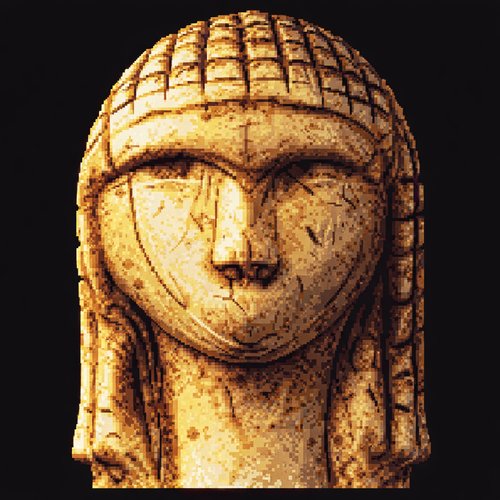
Good Morning Fam 🎶☕🎶😊🎶 The Venus of Brassempouy is one of the oldest known sculptures representing a human face. It is a small figurine created in prehistoric times, during the Upper Paleolithic period, around 25,000 BC. The sculpture is very small, about 3.5 cm high, and represents the head of a woman. It is considered one of the earliest realistic depictions of a human face in the history of art. The figurine was made from mammoth ivory. This material is quite hard but can be carved using stone tools. The prehistoric artist carefully shaped the forehead, nose, and brow line, while the eyes and mouth are only slightly marked or almost invisible. On the top of the head there is a distinctive pattern of crossing lines, which probably represents hair, a woven hairstyle, or a kind of head covering or net. The sculpture was discovered in 1894 in the cave Grotte du Pape, located in the village of Brassempouy in southwestern France. It was found by the French archaeologist Édouard Piette, who was conducting archaeological excavations in the cave. During the excavations, several other fragments of figurines and prehistoric objects were also discovered. It is not known exactly who owned the figurine, because it was created in a time when people lived in small hunter gatherer communities. It most likely belonged to members of such a group living in or near the cave. Some researchers think that it may have been used by a shaman, a group leader, or as a shared ritual object used by the community. The exact purpose of the Venus of Brassempouy is also uncertain. Most archaeologists believe it had a symbolic or religious meaning. It may have been connected with fertility beliefs, representing a woman or a mother figure symbolizing life, fertility, and femininity. Similar prehistoric figurines are often called “Venus figurines”, because they usually depict female forms and are believed to be linked to fertility or spiritual beliefs. The Venus of Brassempouy is extremely important for the history of art because it shows that people were capable of creating detailed and expressive sculptures tens of thousands of years ago. The delicate proportions of the face demonstrate the remarkable artistic skill of prehistoric humans. Today the figurine is kept in the National Archaeological Museum in Saint-Germain-en-Laye, where it is considered one of the most valuable examples of Paleolithic art. Original photo: Jean-Gilles Berizzi Source: Wikimedia commons Modified into pixel art If you like what I do, you can always leave a 🎶like🎶 or even 🎶share🎶 the post I’d really appreciate it. ❤️Have a great day❤️🙂! PixelArtefactMuseum.com #PixelArtefactMuseum #NFT #History #PixelArt
𝕍𝕠𝕠𝕛𝕕𝕒𝕓 𝖓𝖋𝖙 tweet media
English
3
1
3
36
Pixel Artefact Museum รีทวีตแล้ว
𝕍𝕠𝕠𝕛𝕕𝕒𝕓 𝖓𝖋𝖙
Good Morning 🎶☕🎶 An astrolabe is a historical astronomical instrument used to observe the sky and perform various calculations related to the movement of celestial bodies. The example shown was made around 1601 by the craftsman and scholar Isa ibn Allahdad in India, within the Indo-Persian culture of the Mughal Empire. It was created during the Early Modern period, when astronomy was one of the most important scientific fields. The instrument is made mainly of brass, which was an ideal material for scientific tools. Brass is durable, resistant to corrosion, and allows very precise engraving of measurement scales. The surface of the astrolabe contains many engraved markings, measurement scales, and decorative plant ornaments typical of Islamic art. Because of this, the object has both scientific and artistic value. The astrolabe was one of the most important astronomical instruments used before the invention of the telescope. It was used for telling time, determining the positions of stars and the Sun, navigation during travel, and performing astronomical and mathematical calculations. In the Islamic world it was also used to determine the direction of prayer and the times of daily prayers. Such instruments were mainly used by astronomers, scholars, navigators, and royal courts, because their production required great knowledge and precision. It is not known exactly who the first owner of this particular astrolabe was, but it likely belonged to an astronomer or scholar working in the Mughal Empire. The instrument is not an archaeological find, therefore there is no information about its discoverer or the exact place and date where it was found. Over time it became part of a museum collection and is now preserved in the Art Institute of Chicago. The astrolabe from 1601 is an important example of the development of science and craftsmanship in the Islamic world. It demonstrates the high level of astronomical knowledge and technical skill possessed by scholars and craftsmen of that time. Instruments like this allowed people to study the movements of stars and planets more accurately, which played a significant role in the development of astronomy, navigation, and science during the Early Modern period. Original photo: Daderot Source: Wikimedia commons Modified into pixel art If you like what I do, you can always leave a 🎶like🎶 or even 🎶share🎶 the post I’d really appreciate it. ❤️Have a great day❤️🙂! PixelArtefactMuseum.com #PixelArtefactMuseum #NFT #History #PixelArt
𝕍𝕠𝕠𝕛𝕕𝕒𝕓 𝖓𝖋𝖙 tweet media
English
1
1
1
21
Pixel Artefact Museum รีทวีตแล้ว
𝕍𝕠𝕠𝕛𝕕𝕒𝕓 𝖓𝖋𝖙
Good Morning 🎶🍰☕🎶 The manuscript of Beowulf is one of the most important surviving works of Anglo-Saxon literature and the only known manuscript containing this Old English epic poem. It was created around 1000 AD during the Early Middle Ages in England. The story itself is probably much older and may have been passed down orally for generations before it was written down. The manuscript is made of parchment, which is specially prepared animal skin (usually calf or sheep skin). In the Middle Ages parchment was the main material used for writing books and official documents. The text was written by hand in black ink by two anonymous scribes in the Old English language. The writing includes decorative initials and carefully arranged lines typical of medieval manuscripts. During the 17th century the manuscript belonged to the famous collector and scholar Robert Bruce Cotton, who created one of the most important private manuscript libraries in England. Because of this collection, the manuscript is known as Cotton Vitellius A.xv. Later Cotton’s library became part of the national collection, and today the manuscript is preserved in the British Library in London. The manuscript was recorded and studied in the 16th century by the antiquarian Laurence Nowell, who researched early English manuscripts. In 1731 the manuscript was seriously damaged during the Ashburnham House fire, which destroyed part of Cotton’s library. The fire and water used to extinguish it damaged the parchment, leaving some parts of the text difficult to read today. The poem tells the story of the legendary hero Beowulf from the Geats who travels to Denmark to defeat the monster Grendel, later battles Grendel’s mother, and finally when he becomes an old king fights a dragon. The poem reflects the values of Anglo-Saxon warrior culture such as bravery, loyalty, honor, and fame. For historians and linguists, the manuscript is extremely valuable because it preserves one of the most important texts written in Old English and provides insight into the culture, mythology, and literature of early medieval Northern Europe. Since it is the only surviving manuscript of the poem, its historical and literary significance is immense. Original photo: Photographer unknow Source: Wikimedia commons Modified into pixel art If you like what I do, you can always leave a 🎶like🎶 or even 🎶share🎶 the post I’d really appreciate it. ❤️Have a great day❤️🙂! PixelArtefactMuseum.com #PixelArtefactMuseum #NFT #History #PixelArt
𝕍𝕠𝕠𝕛𝕕𝕒𝕓 𝖓𝖋𝖙 tweet media
English
1
1
1
40
Pixel Artefact Museum รีทวีตแล้ว
𝕍𝕠𝕠𝕛𝕕𝕒𝕓 𝖓𝖋𝖙
Good Morning 🎶🍰☕🎶 The Leopard Aquamanile is a ceremonial vessel shaped like a leopard created in the Kingdom of Benin (present-day Nigeria) by artists of the Edo culture. The object was most likely produced in the 17th century and belongs to the famous group of artworks known as the Benin Bronzes, which were made for the royal court. The vessel was made of brass or bronze using the advanced lost-wax casting technique. In this process an artist first created a detailed model out of wax. The wax model was then covered with clay, and when the mold was heated the wax melted away, leaving a hollow space into which molten metal was poured. This method allowed craftsmen to produce very detailed and complex sculptures. The object is shaped like a leopard, an animal that symbolized royal authority, strength, and power in Benin culture. The king of Benin, known as the Oba, was often associated with the leopard, and therefore this animal frequently appeared in royal artworks. Objects like this aquamanile most likely belonged to the royal palace or directly to the king’s court. The aquamanile was used to pour water for ritual handwashing during royal ceremonies, feasts, and religious rituals. For this reason it had both a practical function and an important symbolic meaning, emphasizing the prestige and authority of the ruler. The object originates from Benin City, the historical capital of the Kingdom of Benin in Nigeria. Many similar artworks were discovered in the late 19th century, especially after the British Punitive Expedition of 1897, when the royal palace was looted and thousands of artworks were taken to Europe and placed in museums. Today the Leopard Aquamanile is considered an important example of the high artistic and technological achievements of West African art and a significant symbol of the cultural heritage of the Kingdom of Benin. Original photo: Vassil Source: Wikimedia commons Modified into pixel art If you like what I do, you can always leave a 🎶like🎶 or even 🎶share🎶 the post I’d really appreciate it. ❤️Have a great day❤️🙂! PixelArtefactMuseum.com #PixelArtefactMuseum #NFT #History #PixelArt
𝕍𝕠𝕠𝕛𝕕𝕒𝕓 𝖓𝖋𝖙 tweet media
English
0
1
0
26
Pixel Artefact Museum รีทวีตแล้ว
𝕍𝕠𝕠𝕛𝕕𝕒𝕓 𝖓𝖋𝖙
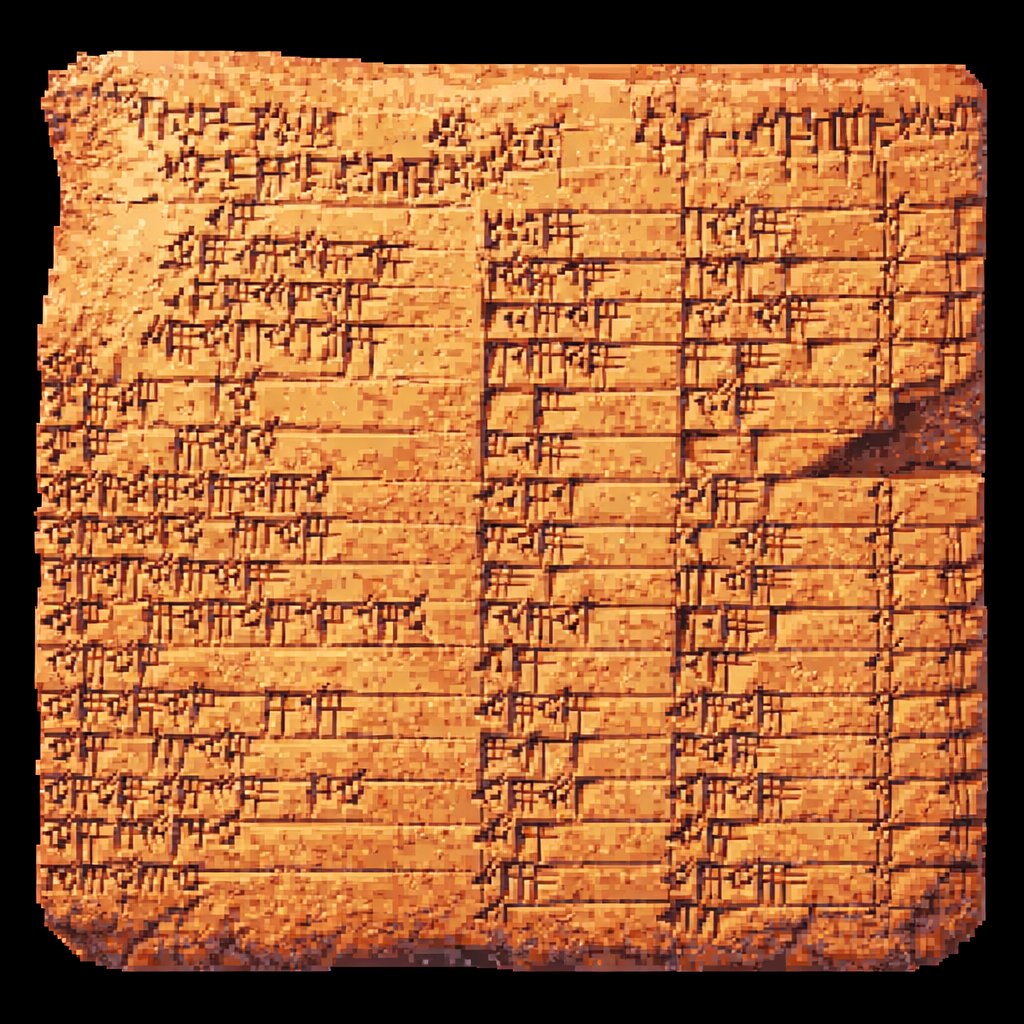
Good Morning 🍰☕ Plimpton 322 is one of the most famous mathematical tablets from ancient Mesopotamia. It is a small tablet made of baked clay, covered with cuneiform writing. It was created around 1800 BCE, during the time of the Babylonian civilization, in the historical period known as antiquity. The tablet is about 13 cm high and 9 cm wide and contains mathematical records arranged in rows and columns. The tablet was made by a Babylonian scribe, probably in a school or a center of mathematical learning in the city of Larsa in southern Mesopotamia (in modern-day Iraq). The name of the person who created it is unknown, but historians believe it may have belonged to a teacher or a student in a scribal school, where mathematics was taught for practical purposes such as construction, trade, and land measurement. Plimpton 322 contains a table of numbers written in the Babylonian base-60 numerical system. The numbers in the table form what are known today as Pythagorean triples, sets of numbers that satisfy the relationship described by the Pythagorean theorem. This shows that the Babylonians were able to perform advanced geometric calculations more than a thousand years before the Greek mathematician Pythagoras. Because of this, many historians believe that the tablet was used as a teaching tool for mathematics or as a reference for solving geometric problems, for example when designing buildings or temples or when measuring fields. The tablet was discovered in the early twentieth century by Edgar James Banks, an American archaeologist and collector of antiquities. It most likely comes from the ruins of the ancient city of Larsa in modern-day Iraq and was found around 1913. Later it was purchased by the collector George Arthur Plimpton, whose surname became the name of the tablet. Today Plimpton 322 is kept in the collection of Columbia University in the United States, where it is preserved as a very important artifact in the history of mathematics. The tablet is extremely important for researchers because it shows that ancient Babylonian mathematicians possessed highly developed mathematical knowledge. Some scholars even suggest that it may represent the oldest known trigonometric table in the world. Thanks to this tablet, we know that mathematics in Mesopotamia was already highly advanced nearly four thousand years ago. Original photo: Photo author unknown Source: Wikimedia commons Modified into pixel art If you like what I do, you can always leave a 🎶like🎶 or even 🎶share🎶 the post I’d really appreciate it. ❤️Have a great day❤️🙂! PixelArtefactMuseum.com #PixelArtefactMuseum #NFT #History #PixelArt
𝕍𝕠𝕠𝕛𝕕𝕒𝕓 𝖓𝖋𝖙 tweet media
English
1
1
1
22