Uncommon Knowledge
2.5K posts

Uncommon Knowledge
@uncknowledge
Uncommon Knowledge is a bi-weekly show with host Peter Robinson. He seeks to engage guests in lively, informative discussions about public policy.


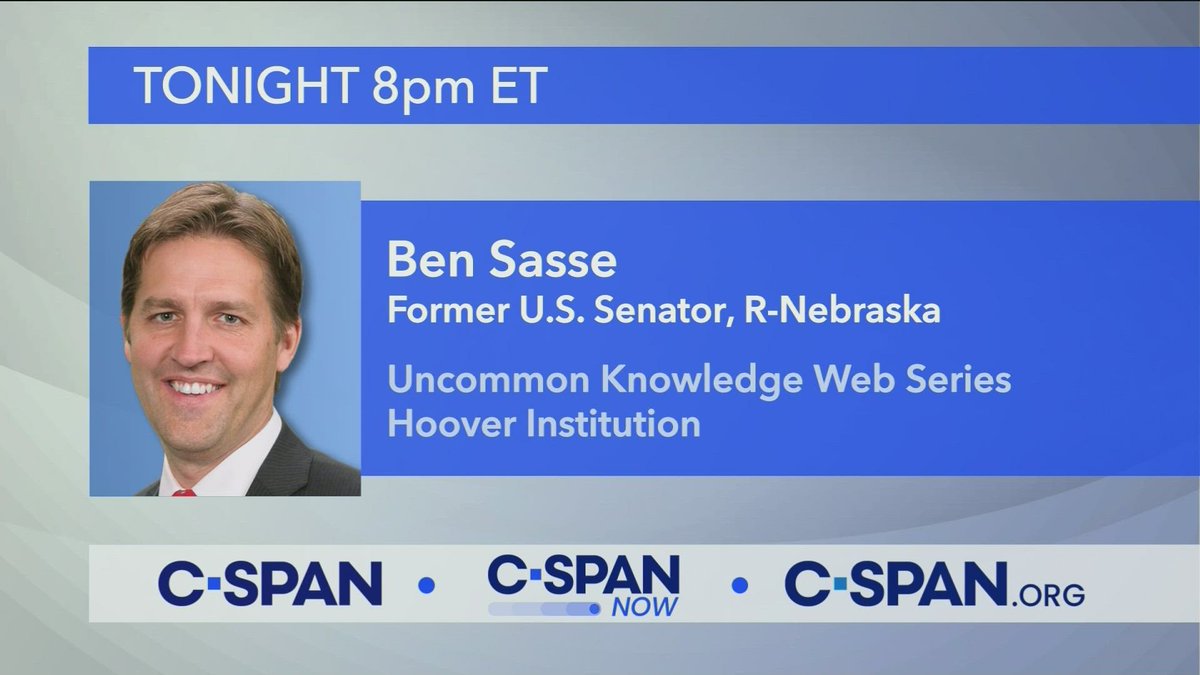
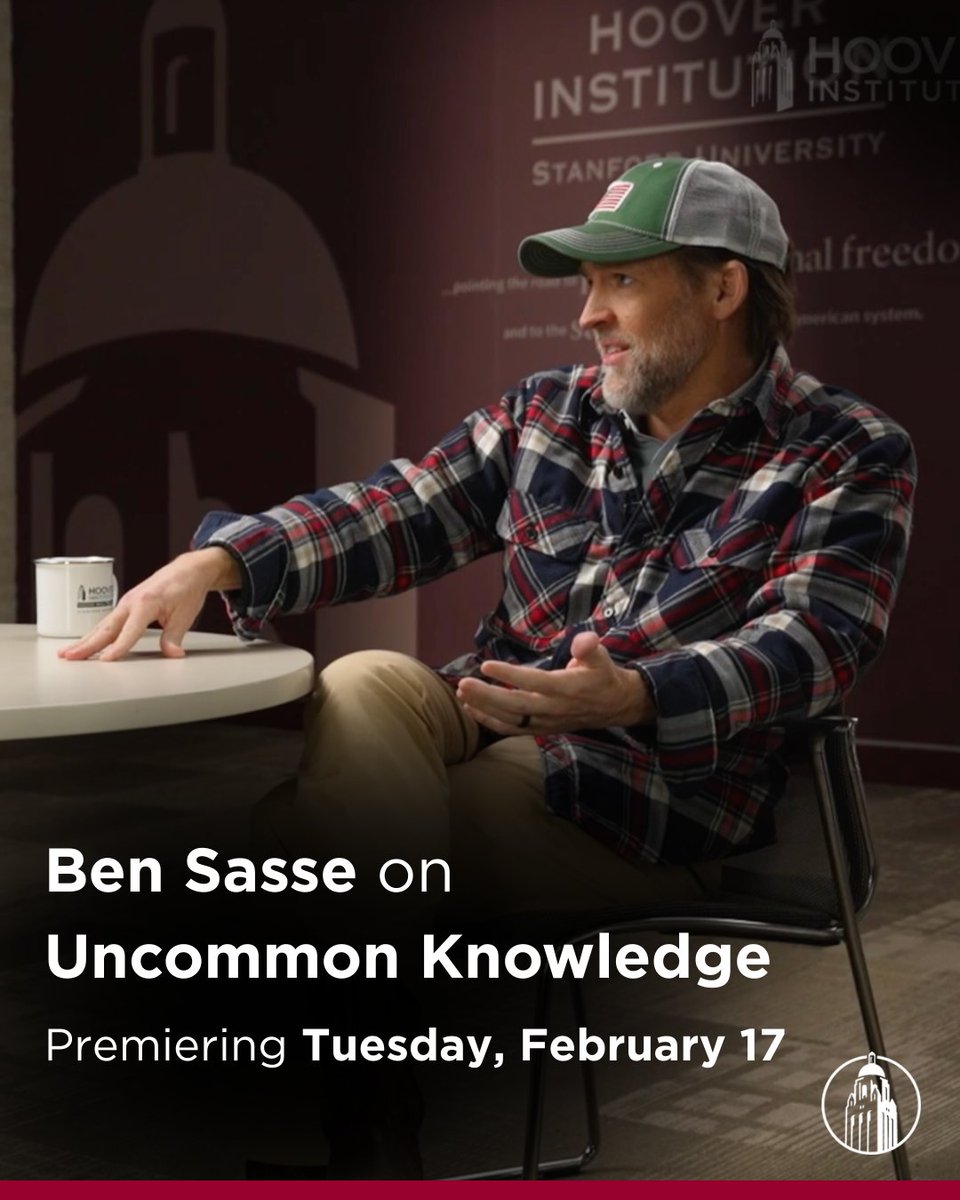
In December 2025, former US Senator @BenSasse announced that he had been diagnosed with stage 4 pancreatic cancer. That's the primary topic for this @UncKnowledge conversation about mortality, faith, and what truly matters when time is short. Talking to host @P_M_Robinson, Sasse reflects on "redeeming the time"—holding ambition lightly, loving family more deliberately, and resisting the urge to make politics or professional success the center of life. The discussion also covers Sasse's thoughts on the failures of Congress; the dangers of a fragmented, attention-starved republic; the crisis of higher education; and the moral challenges of technological abundance. He speaks candidly and movingly about regret, forgiveness, prayer, and suffering—arguing that while death is a real enemy, it does not get the final word. Watch the full conversation on X:

In December 2025, former US Senator @BenSasse announced that he had been diagnosed with stage 4 pancreatic cancer. That's the primary topic for this @UncKnowledge conversation about mortality, faith, and what truly matters when time is short. Talking to host @P_M_Robinson, Sasse reflects on "redeeming the time"—holding ambition lightly, loving family more deliberately, and resisting the urge to make politics or professional success the center of life. The discussion also covers Sasse's thoughts on the failures of Congress; the dangers of a fragmented, attention-starved republic; the crisis of higher education; and the moral challenges of technological abundance. He speaks candidly and movingly about regret, forgiveness, prayer, and suffering—arguing that while death is a real enemy, it does not get the final word. Watch the full conversation on X:


In December 2025, former US Senator @BenSasse announced that he had been diagnosed with stage 4 pancreatic cancer. That's the primary topic for this @UncKnowledge conversation about mortality, faith, and what truly matters when time is short. Talking to host @P_M_Robinson, Sasse reflects on "redeeming the time"—holding ambition lightly, loving family more deliberately, and resisting the urge to make politics or professional success the center of life. The discussion also covers Sasse's thoughts on the failures of Congress; the dangers of a fragmented, attention-starved republic; the crisis of higher education; and the moral challenges of technological abundance. He speaks candidly and movingly about regret, forgiveness, prayer, and suffering—arguing that while death is a real enemy, it does not get the final word. Watch the full conversation on X:


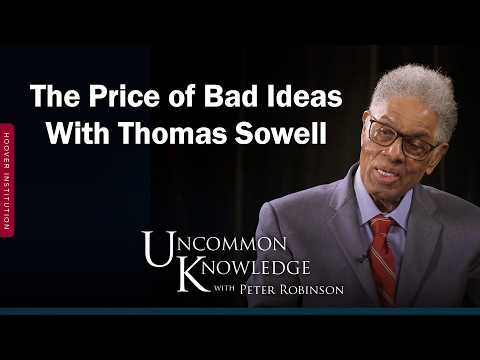
Hoover Senior Fellow Thomas Sowell delivers a sweeping critique of American education, affirmative action, and modern universities—drawing on his journey from Harlem classrooms to elite institutions, decades of research, and hard data. Dr. Sowell argues that ideology has too often replaced knowledge and that well-intentioned policies can harm those they aim to help, raising urgent questions about race, schooling, AI, and the future of American institutions. Watch a new episode of @UncKnowledge with @P_M_Robinson on X:


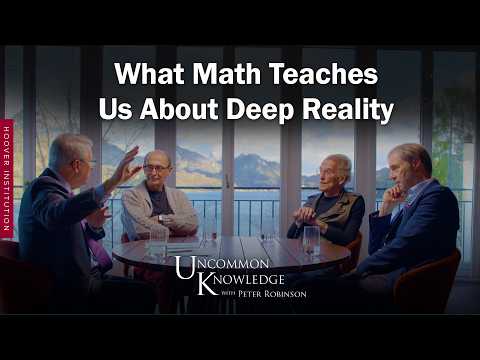
Is math something humans invent—or something we discover? And why does it describe the universe so uncannily well? In this episode of Uncommon Knowledge, @P_M_Robinson sits down with mathematicians David Berlinski, Sergiu Klainerman, and @StephenCMeyer to explore one of the deepest mysteries in science and philosophy: the reality of mathematics. From the simple certainty that 2 + 2 = 4 to the mind-bending mathematics behind black holes and quantum physics, the conversation asks why abstract numbers—created in the human mind—map so perfectly onto the physical world. Is mathematics purely logical, or does it point to a deeper structure of reality that isn't material at all? Along the way, the panel explores beauty in science, the "unreasonable effectiveness" of math, and whether the concept of materialism can really explain the world we live in. This wide-ranging discussion blends mathematics, physics, philosophy, and metaphysics into a fascinating conversation about truth, beauty, and the nature of reality itself. Watch the full episode of @UncKnowledge on X:


Is math something humans invent—or something we discover? And why does it describe the universe so uncannily well? In this episode of Uncommon Knowledge, @P_M_Robinson sits down with mathematicians David Berlinski, Sergiu Klainerman, and @StephenCMeyer to explore one of the deepest mysteries in science and philosophy: the reality of mathematics. From the simple certainty that 2 + 2 = 4 to the mind-bending mathematics behind black holes and quantum physics, the conversation asks why abstract numbers—created in the human mind—map so perfectly onto the physical world. Is mathematics purely logical, or does it point to a deeper structure of reality that isn't material at all? Along the way, the panel explores beauty in science, the "unreasonable effectiveness" of math, and whether the concept of materialism can really explain the world we live in. This wide-ranging discussion blends mathematics, physics, philosophy, and metaphysics into a fascinating conversation about truth, beauty, and the nature of reality itself. Watch the full episode of @UncKnowledge on X:


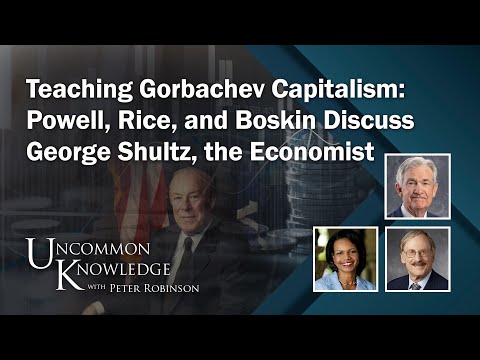
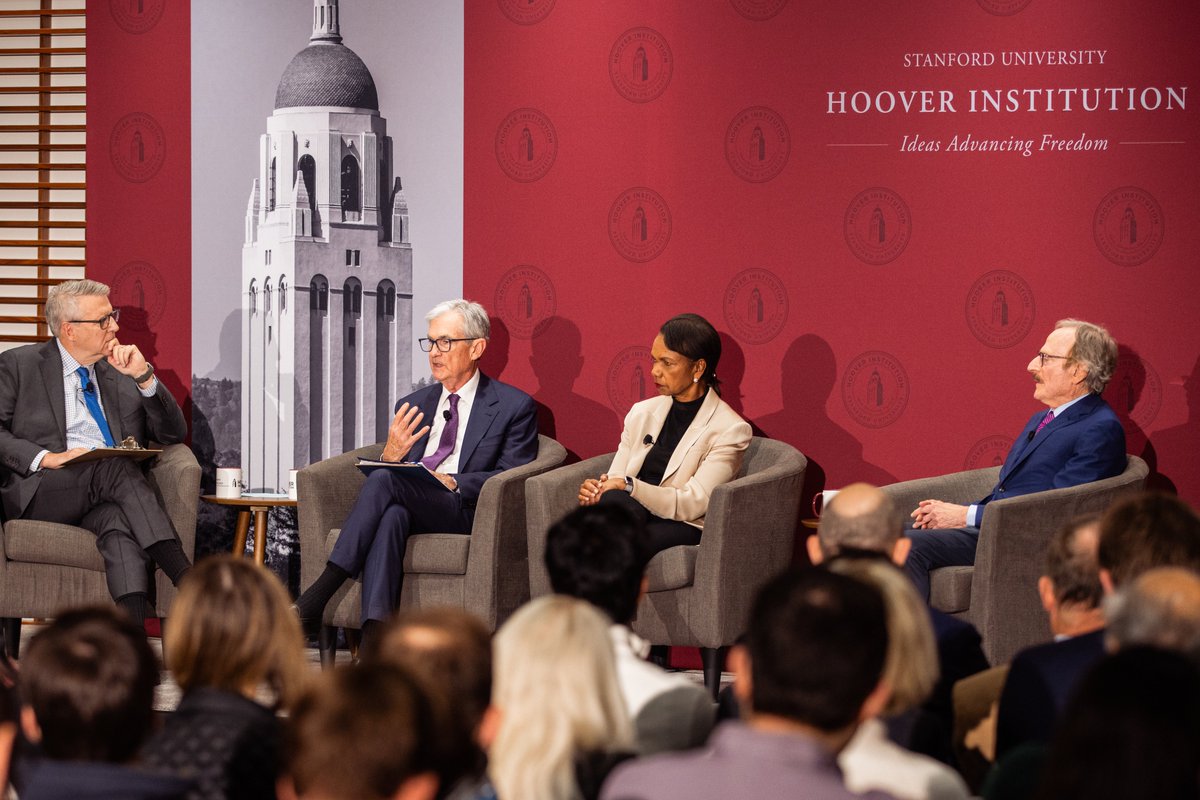
For the second edition of the George P. Shultz Memorial Lecture Series, @FederalReserve Chair Jerome Powell, Hoover Institution Director @CondoleezzaRice, Senior Fellow Michael Boskin, and Uncommon Knowledge host @P_M_Robinson assemble for a wide-ranging conversation on the economic mind and legacy of George P. Shultz. From his early career as a labor economist at MIT and the University of Chicago to his battles in the White House cabinet over wage and price controls, the closing of the gold window, and the inflation that defined the Nixon and Reagan eras, Shultz emerges as a rare figure who fused intellectual rigor with political pragmatism. The panel explores how his beliefs in free markets, personal integrity, and "trust as the coin of the realm" shaped his actions, from collective bargaining and desegregation to global diplomacy—right up to his famous economic tutorials for Mikhail Gorbachev in the Kremlin. This is a timely look at how one man's economic philosophy helped steer American policy for half a century. Watch the full episode of @UncKnowledge on X: