For 35+ years WHTV & Video has been on the cutting edge of the Sales, Service & Repair of Established Audio-Visual Technologies. New Tech, Here We Come!!
470 Green Street, London, E13 เข้าร่วม Ağustos 2013
Is it time to ditch the ‘reading for pleasure’ drive in secondary? @greeborunner explains how her trust has refocused its reading strategy on giving students the experience, vocabulary and reading tools they need
tes.com/magazine/teach…
Heads in deprived areas warn that grades awarded by Ofsted for its new achievement category are ‘demoralising’ and fail to take their challenging circumstances into account
tes.com/magazine/news/…
Want to know the ways to Train an LLM?
Training Large Language Models (LLMs) is powered by different techniques designed to teach models how to understand and generate language.
Each method shapes how an LLM learns - from predicting the next word to classifying entire sentences or tagging entities.
Here are 4 common ways to train an LLM explained simply 👇
1. Causal Language Modeling
Predicts the next word in a sequence using previous words. Helps models learn natural sentence flow and structure.
Analogy: Like finishing someone’s sentence by guessing the next word.
2. Masked Language Modeling
Learns by guessing missing words in a sentence using surrounding context. Improves overall language understanding.
Analogy: Like solving a fill-in-the-blank quiz.
3. Text Classification Modeling
Predicts the overall category of a sentence, such as sentiment or topic, by comparing predictions with real labels.
Analogy: Like sorting emails into “Work,” “Personal,” or “Promotions.”
4. Token Classification Modeling
Assigns labels to each word or subword, like tagging names, places, or dates within a sentence.
Analogy: Like highlighting words with tags - names in blue, places in green, dates in yellow.
These training methods form the backbone of modern LLMs, each serving a unique role in making AI smarter and more useful. Which one do you like?
🚨 Most developers are building AI apps… without understanding these 3 concepts.
And that’s exactly why their systems break, hallucinate, or don’t scale.
If you're working with LLMs, you NEED to understand this trio:
👉 MCP
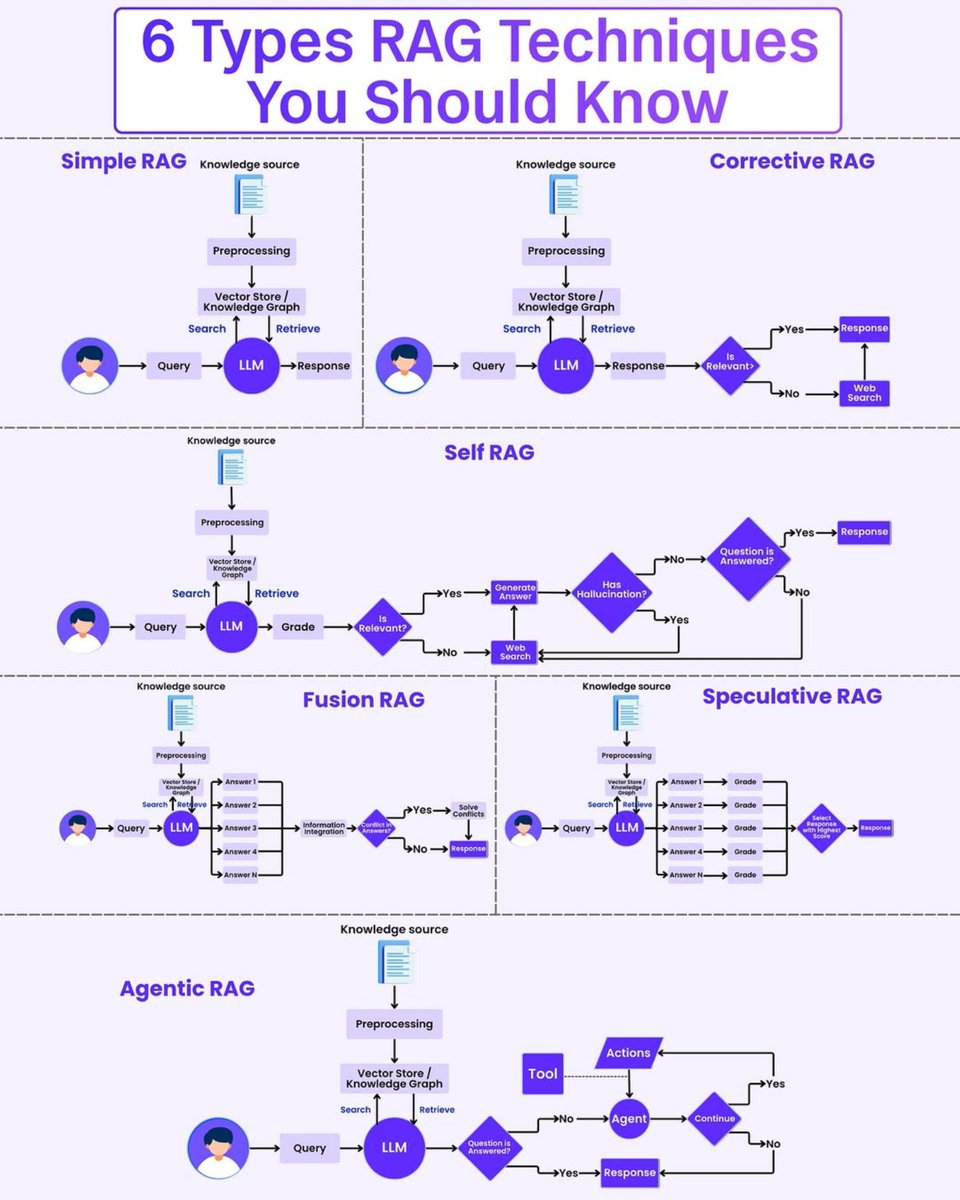
👉 RAG
👉 AI Agents
Let’s simplify this (no fluff, just clarity):
🧩 MCP (Model Context Protocol)
The “USB-C” of AI tools
Instead of writing custom integrations again and again… MCP standardizes everything.
💡 Think:
LLM ⇄ MCP ⇄ Tools (APIs, DBs, calculators)
✅ Plug-and-play integrations
✅ Cleaner architecture
✅ Future-proof systems
👉 No more messy tool wiring.
📚 RAG (Retrieval-Augmented Generation)
The brain upgrade your LLM desperately needs
LLMs don’t “know” your data… unless you give it to them.
💡 Flow:
User Query → Fetch Relevant Data → LLM Generates Answer
✅ Reduces hallucinations
✅ Uses real-time + private data
✅ Makes answers trustworthy
👉 This is how you make AI actually useful in production.
🤖 AI Agents
From answering → to actually doing
Agents don’t just respond.
They think, plan, and execute.
💡 They can:
• Call APIs (GitHub, Slack)
• Run DB queries
• Read/write files
• Automate workflows
👉 Example: Book meetings, send emails, update CRM — automatically.
🧠 The Real Power = When They Work Together
This is where most people get it wrong ❌
They’re NOT competing concepts.
They’re layers:
• MCP → Gives tools access
• RAG → Provides knowledge
• Agents → Orchestrate everything
👉 Together = Real AI systems (not demos)
💥 Simple truth:
If you only use LLMs → you get answers
If you combine these → you get systems
👀 So tell me…
Are you still just calling APIs with LLMs,
or actually building intelligent systems?
👇 Let’s discuss in comments
Teachers should get a pay rise of at least 7% over 3 years to avoid school staff shortages, says @TheNFER in response to the DfE’s 6.5% proposal
tes.com/magazine/news/…
Most people trying to become AI Engineers in 2026 are starting in the wrong place.
They begin with tools.
→ Prompt engineering
→ LangChain
→ Agents
→ The latest AI frameworks
But tools change every few months.
The real foundation of AI engineering does not.
Over the past few years, one pattern has become very clear:
The role of an AI Engineer has fundamentally evolved.
An AI Engineer today is no longer just someone who trains models.
The modern AI Engineer builds end-to-end intelligent systems.
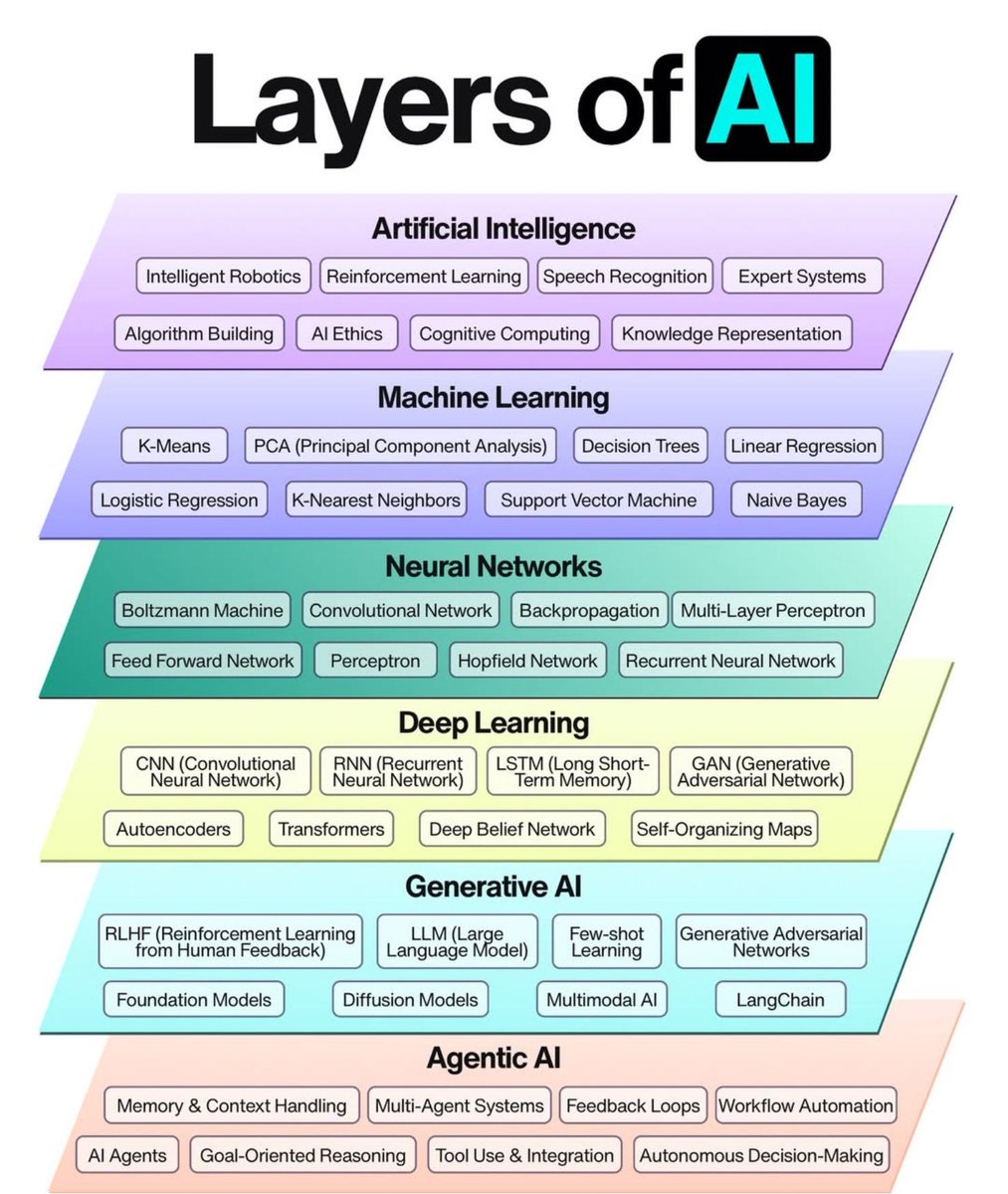
That means understanding how multiple layers work together:
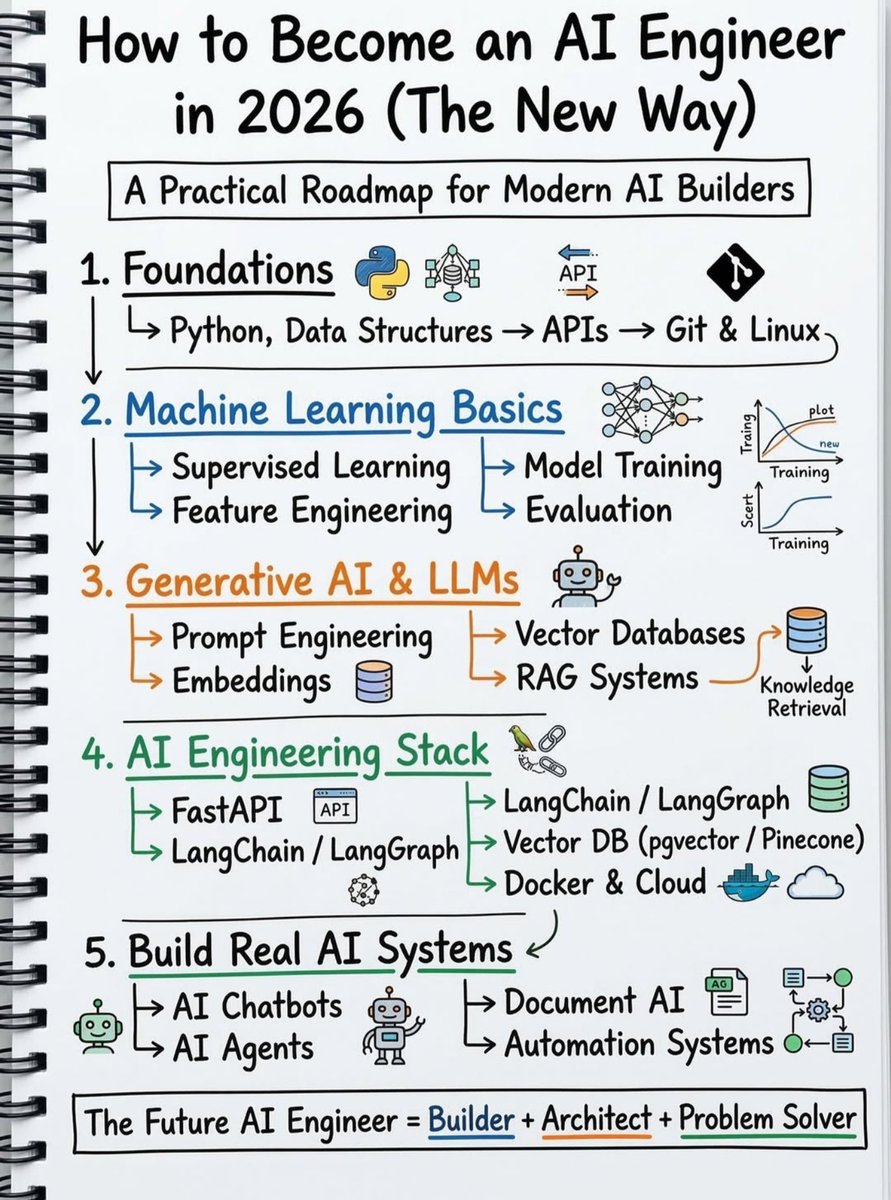
𝗟𝗮𝘆𝗲𝗿 𝟭: Strong foundations → Python, APIs, data structures, version control
𝗟𝗮𝘆𝗲𝗿 𝟮: ML fundamentals → How models learn, how they're evaluated, how they fail
𝗟𝗮𝘆𝗲𝗿 𝟯: Generative AI → LLMs, embeddings, vector databases, RAG
𝗟𝗮𝘆𝗲𝗿 𝟰: Engineering stack → APIs, orchestration frameworks, databases, cloud deployment
𝗟𝗮𝘆𝗲𝗿 𝟱: Build real applications → Chatbots → AI copilots → Document intelligence systems → Automation platforms powered by AI
The future AI Engineer sits at the intersection of software engineering, machine learning, and system architecture.
To simplify this path, I created a new roadmap:
The goal is not to chase every new AI trend.
It's to understand the structure behind modern AI systems.
The question is no longer how to use AI tools.
It's how to design and build AI systems that solve real problems.
If someone asked you today how to become an AI Engineer — what would you tell them to focus on first?
Want to Learn AI But Don’t Know Where to Begin?
Here’s a roadmap that gives you a crystal-clear path to learn AI from complete beginner to advanced AI practitioner, in 50 practical steps.
Here’s how the journey unfolds:
Basics & Foundations (Steps 1–10)
Understand what AI really is, explore real-world applications, learn essential terms, and get comfortable with Python, statistics, and linear algebra.
Machine Learning Core (Steps 11–20)
Build your first ML project, grasp neural networks, use frameworks like TensorFlow/PyTorch, and explore computer vision tasks.
Deep Learning & NLP (Steps 21–30)
Learn NLP basics, reinforcement learning, generative models (GANs/VAEs), and start using cloud AI tools to scale your work.
Industry Skills & Applications (Steps 31–40)
Connect AI to business, study ethics, explore time series, apply tuning, join Kaggle competitions, and build your AI portfolio.
Mastery & Growth (Steps 41–50)
Follow trends, join communities, earn certifications, combine AI with other fields, and finally, start teaching & sharing your knowledge.
Whether you're a student, developer, or professional, this step-by-step guide will keep you on track.
Save it. Follow it. Master AI one step at a time.