Brainless Partisans 🏴‍☠️☢️☣️🪆

156.3K posts

Brainless Partisans 🏴‍☠️☢️☣️🪆 banner
Brainless Partisans 🏴‍☠️☢️☣️🪆

Brainless Partisans 🏴‍☠️☢️☣️🪆

@BPartisans

LET’S KICK THE DEVIL ASS‼️ Telegram https://t.co/36m9VDkQoK & https://t.co/stZAGazwcL Victime de la répression idéologique russophobe de l'Etat Français.

Marseille, France เข้าร่วม Mayıs 2022
62.3K กำลังติดตาม115.1K ผู้ติดตาม
ทวีตที่ปักหมุด
Brainless Partisans 🏴‍☠️☢️☣️🪆
Chroniques @BPartisans 20.03.2026 🇫🇷🇱🇧 Macron au Liban : souveraineté en kit et diplomatie sous perfusion x.com/i/status/20349… 🇫🇷🇱🇧 Macron in Lebanon: Sovereignty by the Box and Diplomacy on Life Support x.com/i/status/20349… 🇫🇷🇮🇷 Barrot, ou la diplomatie du larbin consentant x.com/i/status/20350… 🇫🇷🇮🇷 Barrot, or the Diplomacy of the Willing Lackey x.com/i/status/20350… 🇪🇸🇮🇷 Sánchez allume la lumière, Bruxelles préfère l’obscurité x.com/i/status/20350… 🇪🇸🇮🇷 Sánchez turns on the light; Brussels prefers the darkness x.com/i/status/20350… 🇺🇸 Trump ou l’art de confondre un carnage avec une stratégie x.com/i/status/20350… 🇺🇸 Trump or the Art of Mistaking Carnage for Strategy x.com/i/status/20350… 🇺🇸 Trump ou la diplomatie du fantasme nucléaire x.com/i/status/20350… 🇺🇸 Trump and the Diplomacy of Nuclear Fantasies x.com/i/status/20350… 🇺🇸 Superpuissance en panique : Washington découvre qu’il n’est plus seul au monde x.com/i/status/20351… 🇺🇸 A Superpower in Panic: Washington Discovers It Is No Longer Alone in the World x.com/i/status/20351… 🇺🇸 L’ennemi fantôme qui refuse de mourir (malgré son avis de décès quotidien) x.com/i/status/20351… 🇺🇸 The phantom enemy that refuses to die (despite its daily obituaries) x.com/i/status/20351… 🇺🇸⚔️🇮🇷 Kharg : quand Trump confond géopolitique et partie de Risk sous stéroïdes x.com/i/status/20351… 🇺🇸⚔️🇮🇷 Kharg: When Trump Confuses Geopolitics with a Game of Risk on Steroids x.com/i/status/20351… 🇺🇸⚔️🇮🇷 Golfe Persique : l’Empire high-tech découvre qu’un radar, ça brûle très bien x.com/i/status/20351… 🇺🇸⚔️🇮🇷 Persian Gulf: The High-Tech Empire Discovers That Radar Burns Very Well x.com/i/status/20351…
Brainless Partisans 🏴‍☠️☢️☣️🪆 tweet media
Brainless Partisans 🏴‍☠️☢️☣️🪆@BPartisans

🇫🇷🇱🇧 Macron in Lebanon: Sovereignty by the Box and Diplomacy on Life Support By @BPartisans It took some nerve. Emmanuel Macron has suddenly rediscovered “Lebanon’s sovereignty,” like a political tourist who stumbles upon an old colonial map in a drawer. His statement has it all: support for the Lebanese government, a muted condemnation of Israel, a call to disarm Hezbollah… and above all, that French obsession with wanting to assert itself where it no longer really has any leverage. Let’s start with the official line: Paris “supports Lebanon’s sovereignty and territorial integrity.” A phrase worthy of a UN communiqué. Moreover, Security Council Resolution 1701 (2006) already stipulates that “the Lebanese state must exercise its exclusive authority over the entire territory” and that “the militias must be disarmed.” Nothing new. Macron is merely rehashing a text that no one has enforced for nearly twenty years. But where it gets interesting is in the diplomatic maneuvering: ➡️ On the one hand, he demands that Hezbollah surrender its weapons, a position aligned with Washington and Tel Aviv. ➡️ On the other, he condemns Israeli operations as “unacceptable under international law.” In other words: disarm… but not too quickly, not too thoroughly, and above all, not by those who have the means to do so. A perfect position for not offending anyone, and thus for not influencing anyone. For the reality is brutal: Hezbollah is not an isolated militia; it is a key political-military actor in Lebanon. Even U.S. State Department reports acknowledge that it “exerts significant influence over Lebanese political institutions.” Demanding its disarmament “by Lebanese authorities alone” is like asking a captive state to free itself. Macron knows this. And that is where the rhetoric becomes strategic. Real objective: to become indispensable again without the means to be so. Since the Beirut port explosion in 2020, France has been trying to reposition itself as a preferred mediator. Macron had then promised a “new political pact.” The result: no structural reforms, but a constant media presence. Today, he is recycling the same approach: 👉 talk to everyone, 👉 condemn everyone, 👉 coerce no one. Meanwhile, the United States coordinates security pressure, Israel imposes military realities, and Iran supports its proxies. France? It crafts rhetorical balances. And then there’s this telling detail: Macron insists on coordination with Washington. Translation: Paris isn’t leading anything; Paris is tagging along. As is often the case. French diplomacy is no longer an autonomous power, but an elegant subcontractor of American strategy, with a side of rhetoric on international law. As for the criticism of Israeli operations, “ineffective in the past,” it almost sounds like an admission of powerlessness. Yes, Israel has already tried. Yes, it didn’t work. But Macron offers no concrete alternative, other than… waiting for Lebanon to resolve on its own a problem it does not control. Conclusion: a posture, not a strategy. Macron does not truly oppose Netanyahu. He adjusts his tone to preserve an illusion of independence. He speaks of sovereignty in Beirut, international law in Tel Aviv, and coordination in Washington. A three-pronged diplomacy… with zero impact. In this theater, everyone plays their part: - Israel bombs, - Iran exerts influence, - the United States mediates, - and France… comments. A historical constant, ultimately. Except that in the Levant, commenting has never been enough to make a difference.

Français
0
2
5
1.5K
Brainless Partisans 🏴‍☠️☢️☣️🪆 รีทวีตแล้ว
THE ISLANDER
THE ISLANDER@IslanderWORLD·
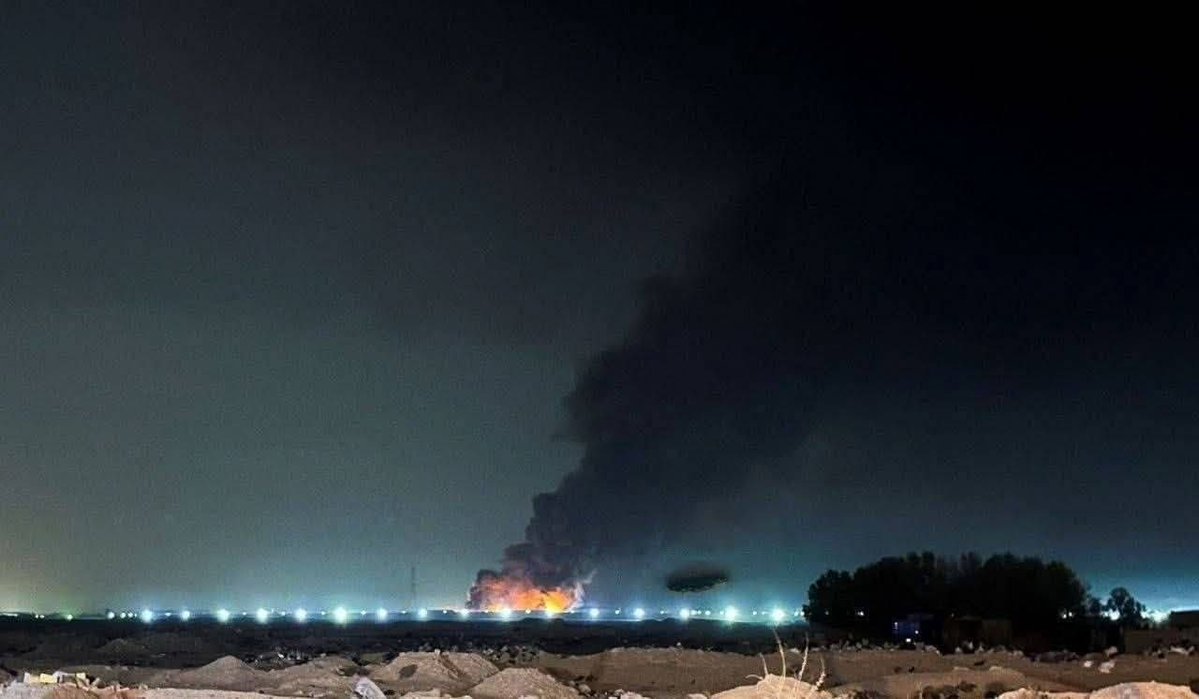
🇮🇱 #Danger False flag from Israel. Major escalation! We know Israel's history with false flags. Operation Susannah, USS Liberty, Turkey, Oman in this war. Look for Israel to try something on CONUS. This will escalate because Israel is desperate for a pretext to go nuclear.
Alex Jones@RealAlexJones

BREAKING: Someone just targeted the Old City of Jerusalem with high explosives. This is a major escalation! Prepare for all sides to blame each other…

English
10
77
159
9.4K
Brainless Partisans 🏴‍☠️☢️☣️🪆
Le message de l'Iran est clair : pas de négociations et pas de cessez-le-feu. Cela s'arrête quand ils disent que ça s'arrête. C'est le golfe Persique, ils sont chez eux et ils peuvent décider. Ou ai-je tort ? Dites-le moi! Rick Sanchez de RT
Français
1
6
36
1.1K
Brainless Partisans 🏴‍☠️☢️☣️🪆
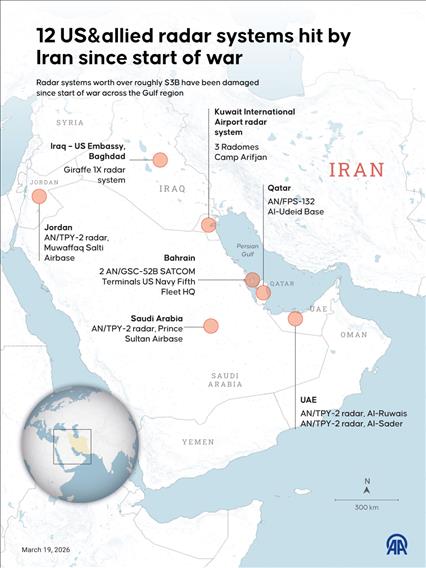
🇺🇸⚔️🇮🇷 Persian Gulf: The High-Tech Empire Discovers That Radar Burns Very Well By @BPartisans We were promised a “clean,” digital, surgical war. A war where the United States sees everything, hears everything, anticipates everything. A war where the enemy exists only as a target on a screen. And then, a dramatic turn of events: the screen goes black. Twelve radars pulverized. Twelve. Not a bug, not a glitch, not “electromagnetic interference.” No: good old-fashioned, methodical destruction. From Bahrain to Iraq, these American technological marvels, the AN/TYP-2, AN/PS-132, these monsters costing 150 or 200 million each, have just demonstrated a fascinating property: they explode just like any other 20th-century equipment. 2.4 billion dollars to learn that gravity exists and so do missiles. But the most delightful part is the gap between reality and the narrative. While Washington was peddling its “Full Spectrum Dominance,” Iran simply did what the Pentagon itself has feared for years. In black and white in the National Defense Strategy: adversaries will seek to “degrade U.S. awareness and targeting systems.” A less diplomatic translation: “we’re going to gouge your eyes out.” Mission accomplished. The Congressional Research Service had already driven the point home: fixed infrastructure such as long-range radars are “high-value targets” vulnerable to precision strikes. In other words, perfect targets for anyone with missiles and a modicum of brains. Here again, to everyone’s surprise: Iran checks both boxes. The result? The Fifth Fleet is sailing through a strategic fog, U.S. bases are playing hide-and-seek without knowing who’s looking, and the Strait of Hormuz is turning into a life-size escape game… except that no one can find the exit. And meanwhile, official statements are dripping with newspeak: “limited damage,” “contained impact,” “capability maintained.” Of course. Being blind is just another way of seeing, after all. The reality is far less poetic: without radar, there is no detection. Without detection, there is no interception. Without interception… well, good luck. What this sequence reveals above all is the obsolescence of a military model based on arrogant technological superiority. Spending billions on ultra-sophisticated, perfectly mapped fixed systems… then being surprised that they become prime targets. It’s less a matter of strategy than of PowerPoint-assisted self-sabotage. And Iran, long caricatured as an archaic actor, has just delivered a masterclass: in modern warfare, it’s not about being the most expensive, but the smartest. Washington is thus discovering, the hard way, a basic truth: an empire that can no longer see much of anything is starting to look a lot like a target. But rest assured: the Pentagon’s next budget will fix everything. With, no doubt, even more radars. Even more expensive ones. And therefore even more visible ones. After all, why correct a mistake when you can industrialize it?
Brainless Partisans 🏴‍☠️☢️☣️🪆 tweet media
English
0
3
11
865
Brainless Partisans 🏴‍☠️☢️☣️🪆
🇺🇸⚔️🇮🇷 Golfe Persique : l’Empire high-tech découvre qu’un radar, ça brûle très bien Par @BPartisans On nous avait promis une guerre “propre”, numérique, chirurgicale. Une guerre où les États-Unis voient tout, entendent tout, anticipent tout. Une guerre où l’adversaire n’existe que comme cible sur écran. Et puis, coup de théâtre : l’écran devient noir. Douze radars pulvérisés. Douze. Pas un bug, pas une panne, pas une “perturbation électromagnétique”. Non : une bonne vieille destruction méthodique. Du Bahreïn à l’Irak, les bijoux technologiques américains, AN/TYP-2, AN/PS-132, ces monstres à 150 ou 200 millions pièce, viennent de démontrer une propriété fascinante : ils explosent comme n’importe quel équipement du XXe siècle. 2,4 milliards de dollars pour apprendre que la gravité existe et que les missiles aussi. Mais le plus délicieux, c’est l’écart entre la réalité et le storytelling. Pendant que Washington vendait sa “Dominance du spectre complet”, l’Iran s’est contenté de faire ce que le Pentagon lui-même redoute depuis des années. Noir sur blanc dans la National Defense Strategy : les adversaires chercheront à “degrade U.S. awareness and targeting systems”. Traduction moins diplomatique : “on va vous crever les yeux”. Mission accomplie. Le Congressional Research Service enfonçait déjà le clou : les infrastructures fixes comme les radars longue portée sont des “Objectifs de grande valeur” vulnérables aux frappes de précision. Autrement dit, des cibles parfaites pour quiconque a des missiles et un minimum de cerveau. Là encore, surprise générale : l’Iran coche les deux cases. Résultat ? La Cinquième Flotte navigue dans un brouillard stratégique, les bases américaines jouent à cache-cache sans savoir qui cherche, et le détroit d’Ormuz se transforme en escape game grandeur nature… sauf que personne ne trouve la sortie. Et pendant ce temps, les communiqués officiels dégoulinent de novlangue : “dégradation limitée”, “impact contenu”, “capacité maintenue”. Bien sûr. Être aveugle, c’est juste une autre façon de voir, après tout. La réalité est beaucoup moins poétique : sans radar, pas de détection. Sans détection, pas d’interception. Sans interception… eh bien, bon courage. Ce que cette séquence révèle surtout, c’est l’obsolescence d’un modèle militaire basé sur la supériorité technologique arrogante. Dépenser des milliards pour des systèmes fixes ultra-sophistiqués, parfaitement cartographiés… puis s’étonner qu’ils deviennent des cibles prioritaires. C’est moins de la stratégie que de l’autosabotage assisté par PowerPoint. Et l’Iran, longtemps caricaturé comme un acteur archaïque, vient de donner une leçon magistrale : dans une guerre moderne, il ne s’agit pas d’être le plus cher, mais le plus malin. Washington découvre donc, à ses frais, une vérité élémentaire : un empire qui ne voit plus grand-chose commence sérieusement à ressembler à une cible. Mais rassurez-vous : le prochain budget du Pentagone règlera tout. Avec, sans doute, encore plus de radars. Encore plus chers. Et donc encore plus visibles. Après tout, pourquoi corriger une erreur quand on peut l’industrialiser ?
Brainless Partisans 🏴‍☠️☢️☣️🪆 tweet media
Français
1
13
41
1.6K
Brainless Partisans 🏴‍☠️☢️☣️🪆
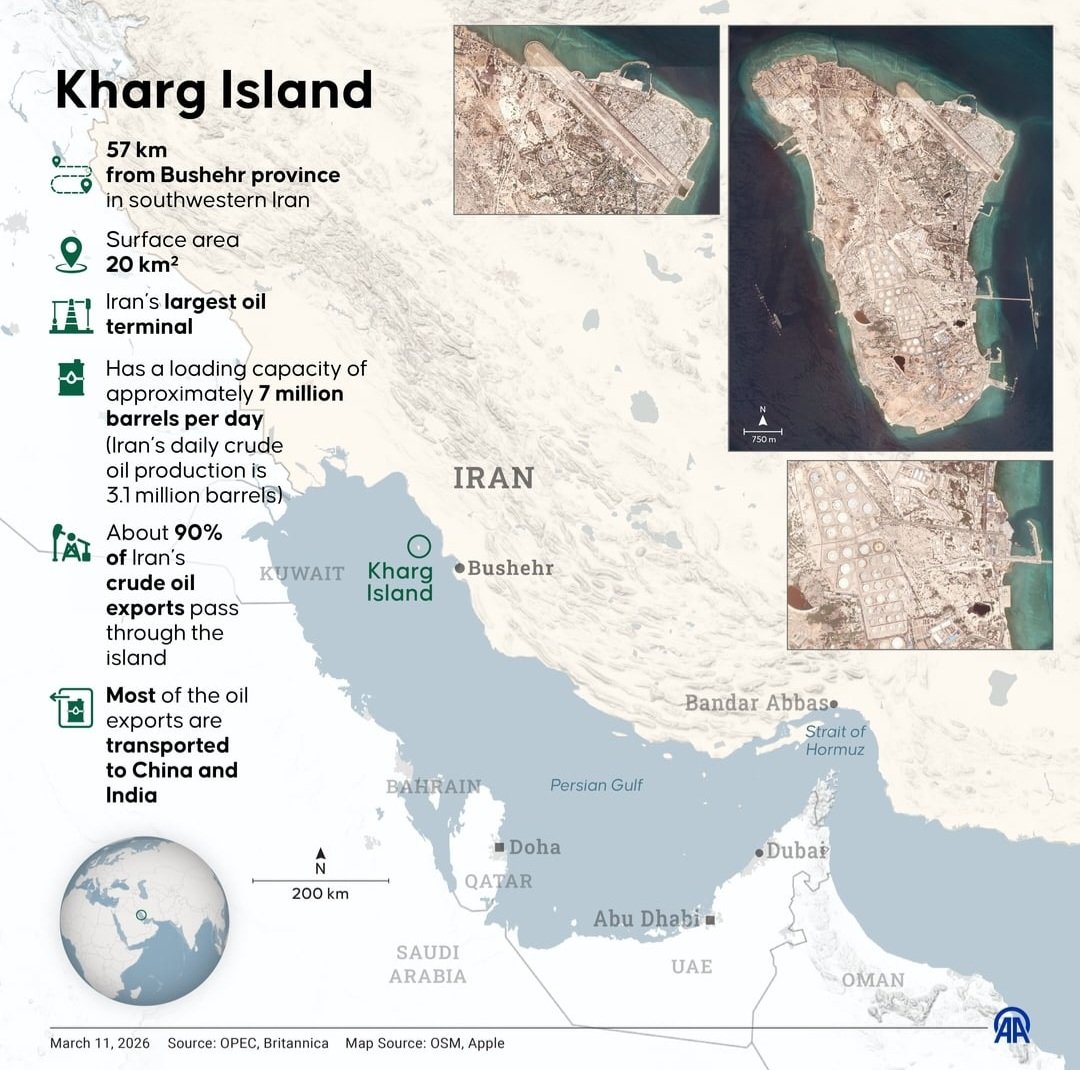
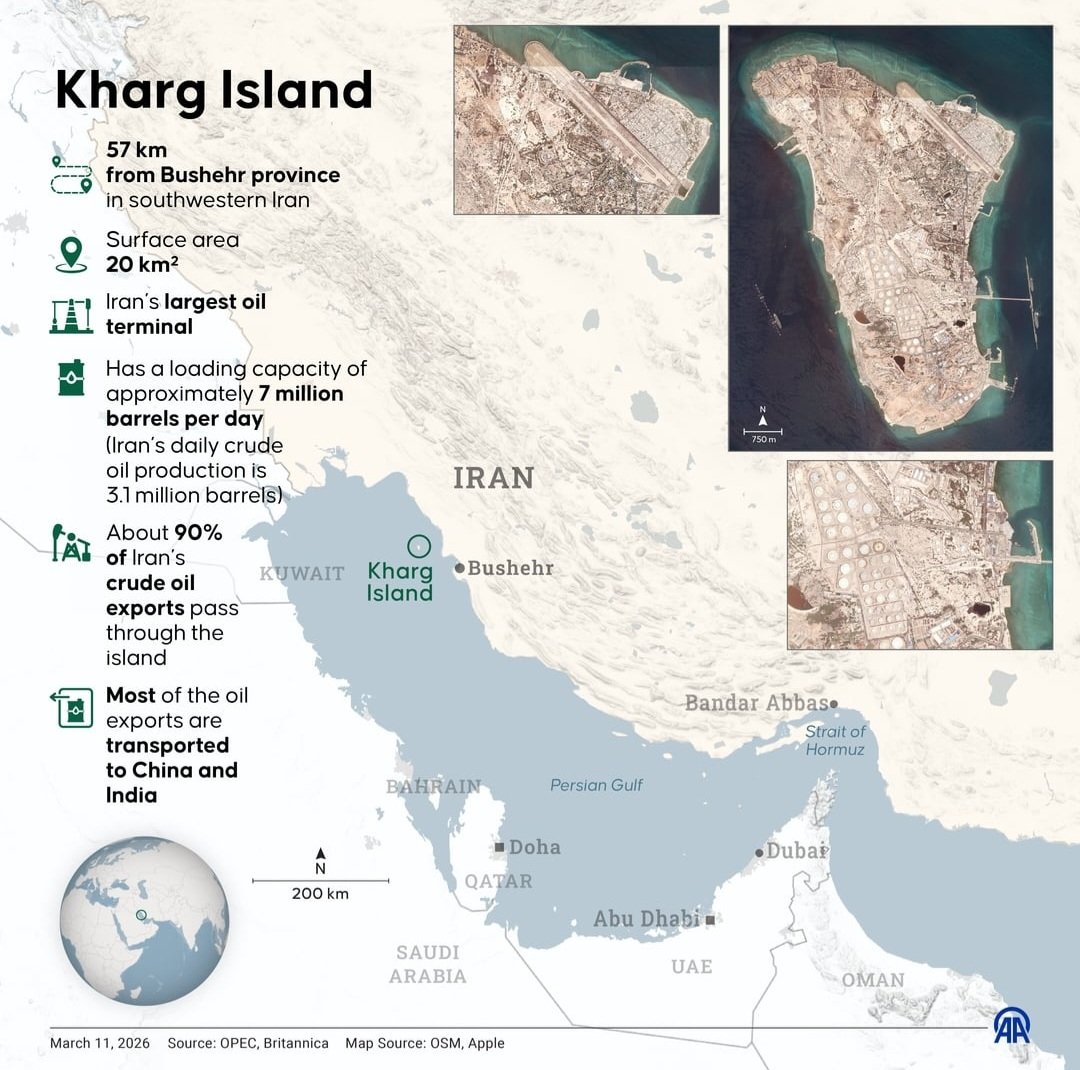
🇺🇸⚔️🇮🇷 Kharg: When Trump Confuses Geopolitics with a Game of Risk on Steroids By @BPartisans It took some nerve. To imagine that one could “take” Kharg, that vital hub of Iranian oil, as if grabbing a cold burger left on a counter. Trump, for his part, never doubts himself: he announces, he verbally bombs, and reality is expected to follow. Problem: reality doesn’t have Truth Social. On paper, it’s already a military absurdity. A tiny island, sure, but saturated with defenses, right next to Iranian territory, under constant cover from missiles, drones, and coastal artillery. To “secure” this strategic rock? Thousands of men. Not for a few days, no, to hold out indefinitely. Translation: an occupation on life support, in an environment where every square meter becomes a target. But the juiciest part is the entry phase. Amphibious landing? A minefield. Helicopters? A shooting gallery. Paratroopers? An aquatic version with a drowning option. Even the most optimistic scenarios resemble a full-scale exercise in human sacrifice. We send soldiers into a floating tin can… and call it a show of force. And then what? Because yes, in the real world, there is an “after.” American troops stranded on Kharg would immediately become sitting ducks. A perfect firing range. A trap. Iran wouldn’t even need to prevent the landing; it could let it happen, then turn the island into a strategic slaughterhouse. Slowly. Methodically. Without haste. The kind of situation where every rescue attempt worsens the toll. As for the idea that Tehran would give in… it’s almost touching. After years of sanctions, airstrikes, and targeted assassinations, the Iranian regime has never shown the slightest inclination to capitulate. On the contrary: the more the pressure mounts, the tougher it gets. To think that an oil terminal, even a crucial one, would become a bargaining chip is to confuse strategic psychology with a real estate developer’s fantasy. And then there’s this awkward detail: Iran is no longer the Iraq of 2003. The military industry has adapted, logistics have become regionalized, and above all, partners are waiting in the wings. Destroy Kharg, and you’ll trigger a global oil crisis. Congratulations: you’ve just handed China and the markets an energy crisis on a silver platter. But deep down, all of that is secondary. What matters is the spectacle. The illusion of control. Trump isn’t selling strategies; he’s selling slogans with missiles included. It doesn’t matter if the operation is untenable, suicidal, or grotesque, as long as it sounds “tough.” So yes, could he attempt such madness? Recent history suggests that America loves turning its displays of power into displays of powerlessness. Vietnam, Iraq, Afghanistan: same scenario, same illusions, same brutal awakenings. Kharg would simply be the concentrated version of the disaster. An operation designed to impress… and which would ultimately expose, in broad daylight, the most embarrassing truth: an empire capable of destroying everything, except its own illusions.
Brainless Partisans 🏴‍☠️☢️☣️🪆 tweet media
English
0
1
11
1K
Brainless Partisans 🏴‍☠️☢️☣️🪆
🇺🇸⚔️🇮🇷 Kharg : quand Trump confond géopolitique et partie de Risk sous stéroïdes Par @BPartisans Il fallait oser. Imaginer qu’on puisse “prendre” Kharg, ce nœud vital du pétrole iranien, comme on saisirait un burger froid oublié sur un comptoir. Trump, lui, ne doute jamais : il annonce, il bombarde verbalement, et la réalité est priée de suivre. Problème : la réalité n’a pas Truth Social. Sur le papier, c’est déjà une absurdité militaire. Une île minuscule, certes, mais saturée de défenses, collée au territoire iranien, sous couverture permanente de missiles, de drones et d’artillerie côtière. Pour “sécuriser” ce caillou stratégique ? Des milliers d’hommes. Pas pour quelques jours, non, pour tenir indéfiniment. Traduction : une occupation sous perfusion, dans un environnement où chaque mètre carré devient une cible. Mais le plus savoureux, c’est la phase d’entrée. Débarquement amphibie ? Champ de mines. Hélicoptères ? Tir aux pigeons. Parachutistes ? Version aquatique avec option noyade. Même les scénarios les plus optimistes ressemblent à un exercice grandeur nature de sacrifice humain. On envoie des soldats dans une boîte de conserve flottante… et on appelle ça une démonstration de puissance. Et ensuite ? Parce que oui, dans le monde réel, il y a un “après”. Les troupes américaines coincées sur Kharg deviendraient immédiatement des cibles fixes. Une zone de tir parfaite. Un piège. L’Iran n’aurait même pas besoin d’empêcher le débarquement, il pourrait laisser faire, puis transformer l’île en abattoir stratégique. Lentement. Méthodiquement. Sans précipitation. Le genre de situation où chaque tentative de sauvetage empire le bilan. Quant à l’idée que Téhéran céderait… c’est presque attendrissant. Après des années de sanctions, de frappes, d’assassinats ciblés, le régime iranien n’a jamais montré la moindre inclination à capituler. Au contraire : plus la pression monte, plus il s’endurcit. Penser qu’un terminal pétrolier, même crucial, deviendrait une monnaie d’échange, c’est confondre psychologie stratégique et fantasme de promoteur immobilier. Et puis il y a ce détail gênant : l’Iran n’est plus l’Irak de 2003. L’industrie militaire s’est adaptée, la logistique s’est régionalisée, et surtout, des partenaires attendent en coulisses. Détruisez Kharg, et vous provoquez un choc pétrolier mondial. Félicitations : vous venez d’offrir à la Chine et aux marchés une crise énergétique sur plateau d’argent. Mais au fond, tout cela est secondaire. Ce qui compte, c’est le spectacle. L’illusion de contrôle. Trump ne vend pas des stratégies, il vend des slogans avec missiles inclus. Peu importe que l’opération soit intenable, suicidaire ou grotesque, tant qu’elle sonne “forte”. Alors oui, pourrait-il tenter une telle folie ? L’histoire récente suggère que l’Amérique adore transformer ses démonstrations de puissance en démonstrations d’impuissance. Vietnam, Irak, Afghanistan : même scénario, mêmes illusions, mêmes réveils brutaux. Kharg serait simplement la version concentrée du désastre. Une opération conçue pour impressionner… et qui finirait par exposer, en plein soleil, la vérité la plus gênante : un empire capable de tout détruire, sauf ses propres illusions.
Brainless Partisans 🏴‍☠️☢️☣️🪆 tweet media
Français
0
8
27
2.2K
Brainless Partisans 🏴‍☠️☢️☣️🪆
Ce qu'on nous a dit à propos du F-35 : Invisible. Intouchable. Impossible à atteindre. Apparemment, l'Iran n'a pas reçu le mémo - et a réussi à en abattre un. Le pilote a survécu et a effectué un atterrissage d'urgence. L'Iran continue de surprendre tout le monde - quelle sera la prochaine étape ? Rick Sanchez de RT
Français
1
19
72
3.2K
Brainless Partisans 🏴‍☠️☢️☣️🪆
🇺🇸 The phantom enemy that refuses to die (despite its daily obituaries) By @BPartisans Donald Trump has thus crossed a threshold: he no longer lies; he writes geopolitical obituaries. Iran has been “erased.” Crossed out. Dissolved. Vaporized. No more navy, no more air force, no more defense. In short, a perfectly inert strategic corpse. Problem: the corpse is still firing. For this officially “vanished” country continues to shoot down Western equipment, disrupt the Strait of Hormuz, and remind us, with an almost clinical insolence, that reality does not obey talking points. A nonexistent enemy that fights back is a nuisance. It kind of breaks the narrative. Trump, for his part, has no doubts. He calls for a ceasefire… while explaining that a ceasefire is useless since we must “wipe out the other side.” Translation: peace, yes, but only after total eradication. We don’t negotiate; we erase. We don’t discuss, we eliminate. It’s diplomacy, PowerPoint style: one slide, a “delete” button, and presto, a nation of 90 million people vanishes. Except that even the Pentagon, hardly known for naive pacifism, regularly admits that Iran’s capabilities, missiles, drones, asymmetric warfare, remain robust and adaptable. As for the Strait of Hormuz, that vital artery of global trade, the U.S. Energy Information Administration points out that about one-fifth of the world’s oil passes through it. But yes, everything is “erased.” Just like in a bad movie where the villain dies three times before the credits roll. In reality, Trump isn’t describing a war. He’s reciting an incantation. All he has to do is say the enemy no longer exists for it to vanish—at least in his rhetoric. A strategy worthy of the 2003 invasion of Iraq: we proclaim, we simplify, we fantasize… then we discover that reality has the annoying habit of fighting back. And that is where the grotesque becomes dangerous. For behind this rhetoric of total eradication lies a fundamental inability: the inability to admit that a middle-power nation, sanctioned, isolated, under constant pressure, is still capable of resisting. Worse: of disrupting. Worse still: of ridiculing the American narrative machine. So we double down. We “erase” even more forcefully. We deny even more loudly. We turn every contradiction into proof of victory. Iran is firing? That means it’s dead. The strait is blocked? That means it’s neutralized. An F-35 is shot down? That’s proof that everything is working. Welcome to quantum warfare according to Trump: the enemy is simultaneously destroyed and operational, nonexistent and omnipresent, dead and terribly alive. At its core, this rhetoric is no strategic analysis. It is a verbal headlong rush, a desperate attempt to maintain the illusion of control while reality slips away on all sides. America is no longer “winning”: it claims it is winning, hoping that will be enough. But by “erasing” the world with slogans, it is not Iran that disappears. It is American credibility.
English
0
1
6
1.1K
Brainless Partisans 🏴‍☠️☢️☣️🪆
🇺🇸 L’ennemi fantôme qui refuse de mourir (malgré son avis de décès quotidien) Par @BPartisans Donald Trump a donc franchi un cap : il ne ment plus, il rédige des nécrologies géopolitiques. L’Iran est “effacé”. Rayé. Dissous. Vaporisé. Plus de marine, plus d’aviation, plus de défense. Bref, un cadavre stratégique parfaitement inerte. Problème : le cadavre tire encore. Car ce pays officiellement “disparu” continue d’abattre des équipements occidentaux, de perturber le détroit d’Ormuz et de rappeler, avec une insolence presque clinique, que la réalité n’obéit pas aux éléments de langage. Un ennemi inexistant qui riposte, c’est embêtant. Ça casse un peu la narration. Trump, lui, ne doute de rien. Il appelle à un cessez-le-feu… tout en expliquant qu’un cessez-le-feu est inutile puisqu’il faut “effacer l’autre côté”. Traduction : la paix, oui, mais après l’éradication totale. On ne négocie pas, on gomme. On ne discute pas, on supprime. C’est la diplomatie version PowerPoint : une slide, un bouton “delete”, et hop, un État de 90 millions d’habitants disparaît. Sauf que même le Pentagone, pourtant peu suspect de pacifisme naïf, admet régulièrement que les capacités iraniennes, missiles, drones, guerre asymétrique, restent robustes et adaptatives. Quant au détroit d’Ormuz, cette artère vitale du commerce mondial, l’U.S. Energy Information Administration rappelle qu’environ un cinquième du pétrole mondial y transite. Mais oui, tout est “effacé”. Comme dans un mauvais film où le méchant meurt trois fois avant le générique. En réalité, Trump ne décrit pas une guerre. Il récite une incantation. Il suffit de dire que l’ennemi n’existe plus pour qu’il disparaisse, du moins dans le discours. Une stratégie digne de l’invasion de l’Irak version 2003 : on proclame, on simplifie, on fantasme… puis on découvre que le réel a la fâcheuse habitude de contre-attaquer. Et c’est là que le grotesque devient dangereux. Car derrière cette rhétorique d’éradication totale se cache une incapacité fondamentale : celle d’admettre qu’une puissance moyenne, sanctionnée, isolée, sous pression constante, est encore capable de résister. Pire : de perturber. Pire encore : de ridiculiser la machine narrative américaine. Alors on double la dose. On “efface” encore plus fort. On nie encore plus bruyamment. On transforme chaque contradiction en preuve de victoire. L’Iran tire ? C’est qu’il est mort. Le détroit est bloqué ? C’est qu’il est neutralisé. Un avion F-35 est abattu ? C’est la preuve que tout fonctionne. Bienvenue dans la guerre quantique selon Trump : l’ennemi est simultanément détruit et opérationnel, inexistant et omniprésent, mort et terriblement vivant. Au fond, ce discours n’a rien d’une analyse stratégique. C’est une fuite en avant verbale, une tentative désespérée de maintenir l’illusion de contrôle alors que le réel échappe de toutes parts. L’Amérique ne “gagne” plus : elle affirme qu’elle gagne, en espérant que cela suffira. Mais à force d’“effacer” le monde à coups de slogans, ce n’est pas l’Iran qui disparaît. C’est la crédibilité américaine.
Français
4
23
68
6.7K
Brainless Partisans 🏴‍☠️☢️☣️🪆
🇺🇸 A Superpower in Panic: Washington Discovers It Is No Longer Alone in the World By @BPartisans It took some nerve. Donald Trump did it. After years of ranting that the United States didn’t need anyone, now the same man is calling on China, yes, China, officially designated as the “primary strategic rival” by the Pentagon (National Defense Strategy, 2022), to come secure the Strait of Hormuz. At this point, it’s no longer diplomacy; it’s a comedy sketch. To sum it up: Beijing is supposedly both the existential threat of the 21st century… and the volunteer guard of oil routes under U.S. command. We can already picture the scene: Washington imposes sanctions, militarily encircles China in the Indo-Pacific, then politely asks it to come “help.” All that’s missing are flowers and an apology card. But behind this grotesque inconsistency lies a far more embarrassing truth: the United States no longer controls anything. The Strait of Hormuz? It’s still used by about 20% of the world’s oil, according to the Energy Information Administration (EIA). Maritime trade? It continues. Chinese tankers pass through. Japanese tankers pass through. Without an American armada playing the role of universal savior. Without a star-spangled flag planted on every barrel. In other words: the chaos that Washington claims to manage… functions very well without it. The International Energy Agency (IEA) confirms that Asia, led by China and Japan, depends heavily on these flows. And yet, surprise: neither Beijing nor Tokyo is rushing to act as military auxiliaries in a conflict they did not start. Japan, true to its official line, limits its missions to surveillance. China, for its part, trades, observes… and lets Washington get bogged down with an almost Zen-like calm. And that’s where the veneer cracks. Because Trump’s appeal is not a strategy. It’s an admission. An admission that the famous American “domination” is nothing more than a recycled slogan. An admission that the world’s leading power has been reduced to telling others: “You use oil, so come die with us.” The most ironic part? Washington spent years building up China as a systemic enemy, through congressional reports, sanctions, and Cold War 2.0 rhetoric, only to reach out to it as soon as the situation spiraled out of control. It’s less a strategic reversal than a geopolitical meltdown. And meanwhile, Beijing watches. Why intervene? Why align with an erratic strategy, vague objectives, and a war whose justifications change every week? China has nothing to gain from bailing out a demonstration of failure. Deep down, Trump is simply saying out loud what Washington refuses to admit: the empire is in doubt. It doubts its ability to impose its order alone. It doubts its means. It doubts its own narrative. So it begs. Yesterday a hegemon, today a strategic beggar. The superpower is now nothing more than an overwhelmed manager calling on its competitors for help. And the cruelest part of it all? No one is picking up the phone.
English
0
0
7
1.2K
Brainless Partisans 🏴‍☠️☢️☣️🪆
🇺🇸 Superpuissance en panique : Washington découvre qu’il n’est plus seul au monde Par @BPartisans Il fallait oser. Donald Trump l’a fait. Après des années à éructer que les États-Unis n’avaient besoin de personne, voilà que le même personnage en appelle à la Chine, oui, la Chine, officiellement désignée comme « principal rival stratégique » par le Pentagone (National Defense Strategy, 2022), pour venir sécuriser le détroit d’Ormuz. À ce stade, ce n’est plus de la diplomatie, c’est un sketch. On résume : Pékin serait à la fois la menace existentielle du XXIe siècle… et le vigile bénévole des routes pétrolières sous commandement américain. On imagine déjà la scène : Washington impose des sanctions, encercle la Chine militairement en Indo-Pacifique, puis lui demande gentiment de venir « aider ». Il ne manque plus que des fleurs et une carte d’excuses. Mais derrière cette incohérence grotesque se cache une vérité beaucoup plus embarrassante : les États-Unis ne maîtrisent plus rien. Le détroit d’Ormuz ? Toujours emprunté par environ 20 % du pétrole mondial selon l’Energy Information Administration (EIA). Le commerce maritime ? Il continue. Les tankers chinois passent. Les tankers japonais passent. Sans armada américaine en mode sauveur universel. Sans drapeau étoilé planté sur chaque baril. Autrement dit : le chaos que Washington prétend gérer… fonctionne très bien sans lui. L’Agence internationale de l’énergie (AIE) confirme que l’Asie, Chine et Japon en tête, dépend largement de ces flux. Et pourtant, surprise : ni Pékin ni Tokyo ne se précipitent pour jouer les supplétifs militaires d’un conflit qu’ils n’ont pas déclenché. Le Japon, fidèle à sa ligne officielle, limite ses missions à de la surveillance. La Chine, elle, commerce, observe… et laisse Washington s’enliser avec une constance presque zen. Et c’est là que le vernis craque. Car l’appel de Trump n’est pas une stratégie. C’est un aveu. Un aveu que la fameuse « domination » américaine n’est plus qu’un slogan recyclé. Un aveu que la première puissance mondiale en est réduite à expliquer aux autres : « vous utilisez le pétrole, donc venez mourir avec nous ». Le plus ironique ? Washington a passé des années à construire la Chine comme ennemi systémique, rapports du Congrès, sanctions, rhétorique de guerre froide 2.0, pour finalement lui tendre la main dès que la situation devient incontrôlable. C’est moins un retournement stratégique qu’une crise de nerfs géopolitique. Et pendant ce temps, Pékin regarde. Pourquoi intervenir ? Pourquoi s’associer à une stratégie erratique, à des objectifs flous, à une guerre dont même les justifications changent toutes les semaines ? La Chine n’a rien à gagner à sauver une démonstration d’échec. Au fond, Trump ne fait que dire tout haut ce que Washington refuse d’admettre : l’empire doute. Il doute de sa capacité à imposer seul son ordre. Il doute de ses moyens. Il doute de sa propre narration. Alors il quémande. Hier hégémon, aujourd’hui mendiant stratégique. La superpuissance n’est plus qu’un manager débordé qui appelle ses concurrents à la rescousse. Et le plus cruel dans tout ça ? Personne ne décroche.
Français
2
10
26
3.1K
Brainless Partisans 🏴‍☠️☢️☣️🪆
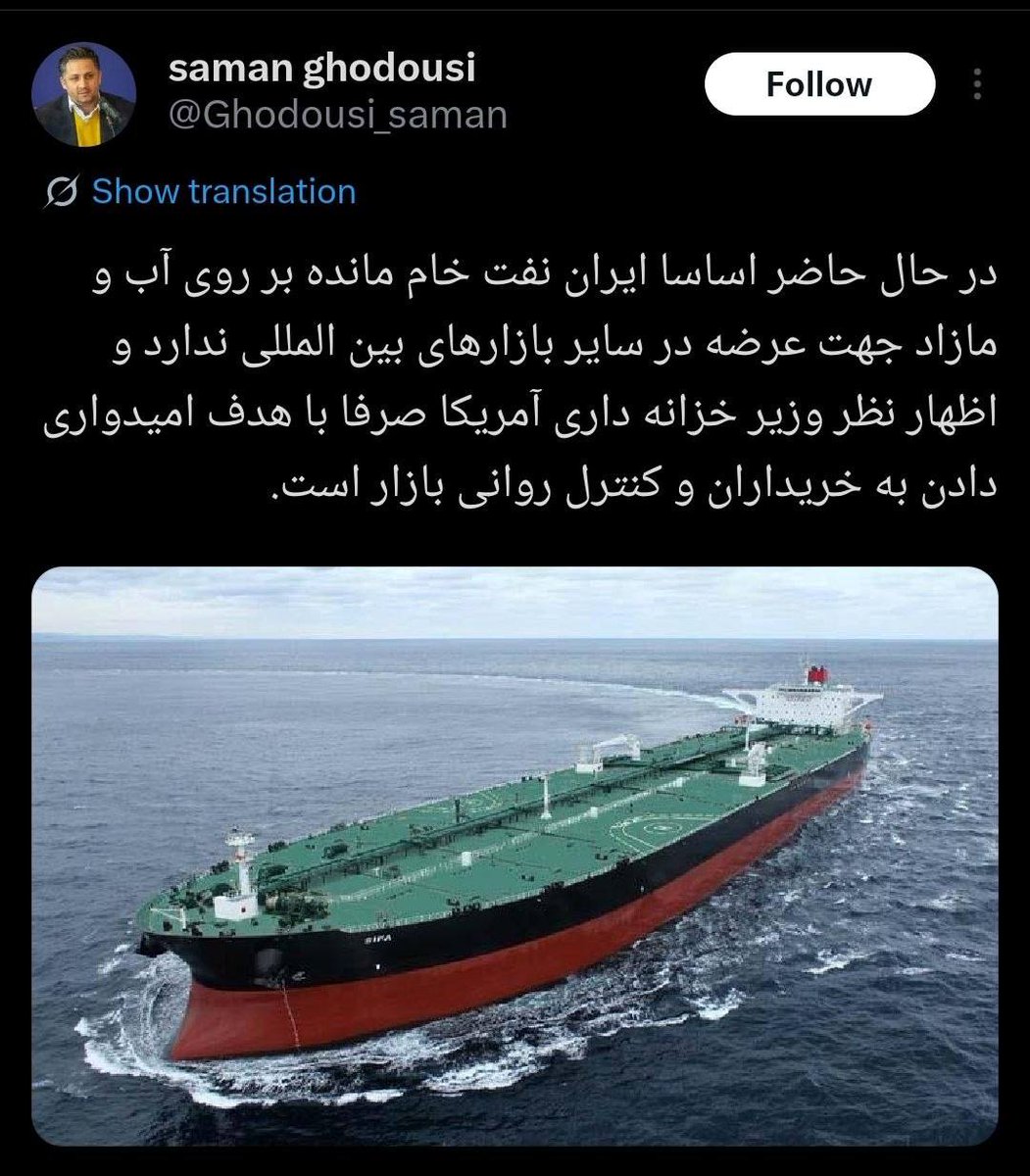
Réponse du ministère du Pétrole au jeu psychologique du ministère américain du Trésor : l'Iran n'a pas de pétrole brut restant sur l'eau ni d'excédent à offrir sur les marchés internationaux 🔹Le porte-parole du ministère du Pétrole : Actuellement, l'Iran n'a fondamentalement pas de pétrole brut restant sur l'eau ni d'excédent à offrir sur d'autres marchés internationaux. 🔹La déclaration du ministre américain du Trésor vise uniquement à donner de l'espoir aux acheteurs et à contrôler la psychologie du marché.
Brainless Partisans 🏴‍☠️☢️☣️🪆 tweet media
Français
0
7
28
2.5K
Brainless Partisans 🏴‍☠️☢️☣️🪆
Guterres : Il n’y a aucun doute sur le droit de l’Iran à se défendre 🔹Le Secrétaire général de l’ONU, lors d’un entretien téléphonique avec Seyyed Abbas Araqchi, a déclaré qu’il n’y avait aucun doute sur le droit de l’Iran à se défendre, soulignant la nécessité de s’efforcer d’empêcher l’expansion des conflits et de réduire les conséquences humaines et sécuritaires dans la région.
Brainless Partisans 🏴‍☠️☢️☣️🪆 tweet media
Français
2
9
30
2.3K