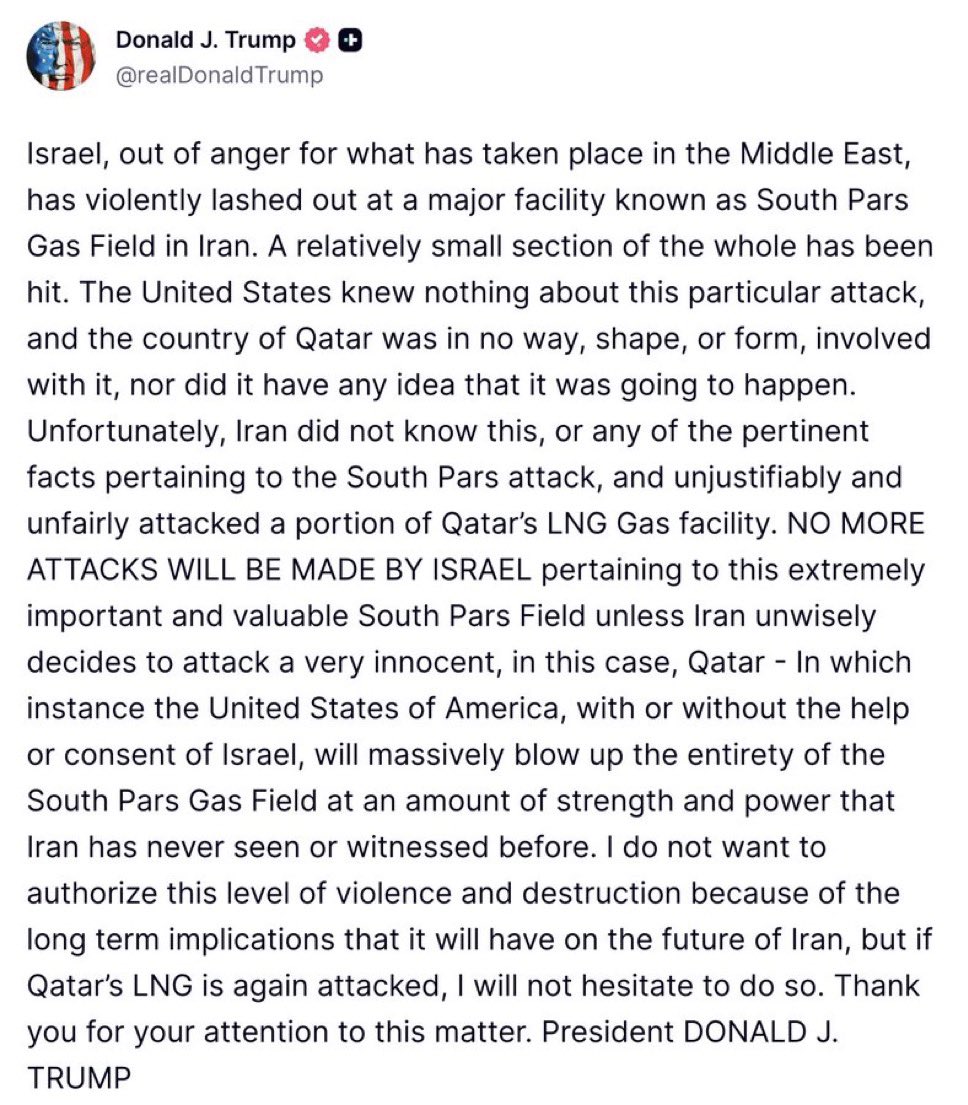
@WhiteHouse@grok If the South Pars Gas Field were destroyed or heavily damaged, how high could global natural gas prices and U.S. energy costs realistically rise?
South Pars/North Dome (shared Iran/Qatar) accounts for ~11% of global gas production (~1.25 bcm/day total; Qatar ~20% of world LNG exports). Heavy/destructive damage could spike global LNG spot prices 50-200%+ short-term (Europe/Asia hardest hit, echoing 2022 shocks), with ripple effects on power/heating costs worldwide. US Henry Hub might rise 20-50% via export pull, adding ~10-25% to average household energy bills depending on duration (repairs: 1-3+ years). Partial recent strikes already lifted European gas ~8%. Alternatives like US/Aussie LNG could mitigate over time.
A combined oil + LNG spike from escalation could push US headline inflation up 0.5-1.5+ percentage points short-term (mainly via energy CPI), per recent analyses like RBC and Fed studies on similar shocks. Persistent $20-40/bbl oil rise adds ~0.7 pp; gas field damage amplifies via heating/electricity.
Consumer hit: Pump prices +30-60¢/gal (or more), household energy bills +10-25% (gas/electric up sharply for winter). Hits lower-income hardest as "tax" on transport/groceries; total added costs $50-150B nationally yearly if sustained. US production offsets some GDP drag, but duration matters—brief spike fades fast, prolonged risks stagflationary pressure.