Alexander van Teijlingen
20 posts

Alexander van Teijlingen
@AlexandervanTe1
Postdoc at the University of Strathclyde
Sumali Mart 2020
56 Sinusundan32 Mga Tagasunod
Alexander van Teijlingen nag-retweet

@AlexandervanTe1 account on how changes in Martini have affected the modelling of short peptide self assembly in water is out now in Acc. Chem. Res. excellent input from an undergrad project students who is also an author… @scotch_research @StrathChem pubs.acs.org/doi/10.1021/ac…
English
Alexander van Teijlingen nag-retweet

Our collaborative review (@UlijnGroup @maithreyirtea @AlexandervanTe1) on the collaborative design of peptide-based materials and complex systems is out now... onlinelibrary.wiley.com/doi/10.1002/an… @StrathChem @asrc_gc @ASRCnanoscience
English

Check out this account on OpenSea opensea.io/assets/0x495f9… via @opensea
English

.@ChrisStephens as my MP, please oppose the #PolicingBill
It will give police more powers to shut down protest, stop and search without suspicion, and criminalise Gypsy and Traveller communities.
#PoliceCrackdownBill
pic.twitter.com/cr1tCOlq92
English
Alexander van Teijlingen nag-retweet

Hot off the press... being able to search for peptides longer than 3 amino acids has always been a goal - our new ML approach now makes that possible! pubs.acs.org/doi/abs/10.102… @AlexandervanTe1 #MachineLearning #CoarseGraining #MLCG

English
Alexander van Teijlingen nag-retweet

Commander steps into remind officer that it’s not advisable to manhandle journalists after this incident #bristol
English
Alexander van Teijlingen nag-retweet


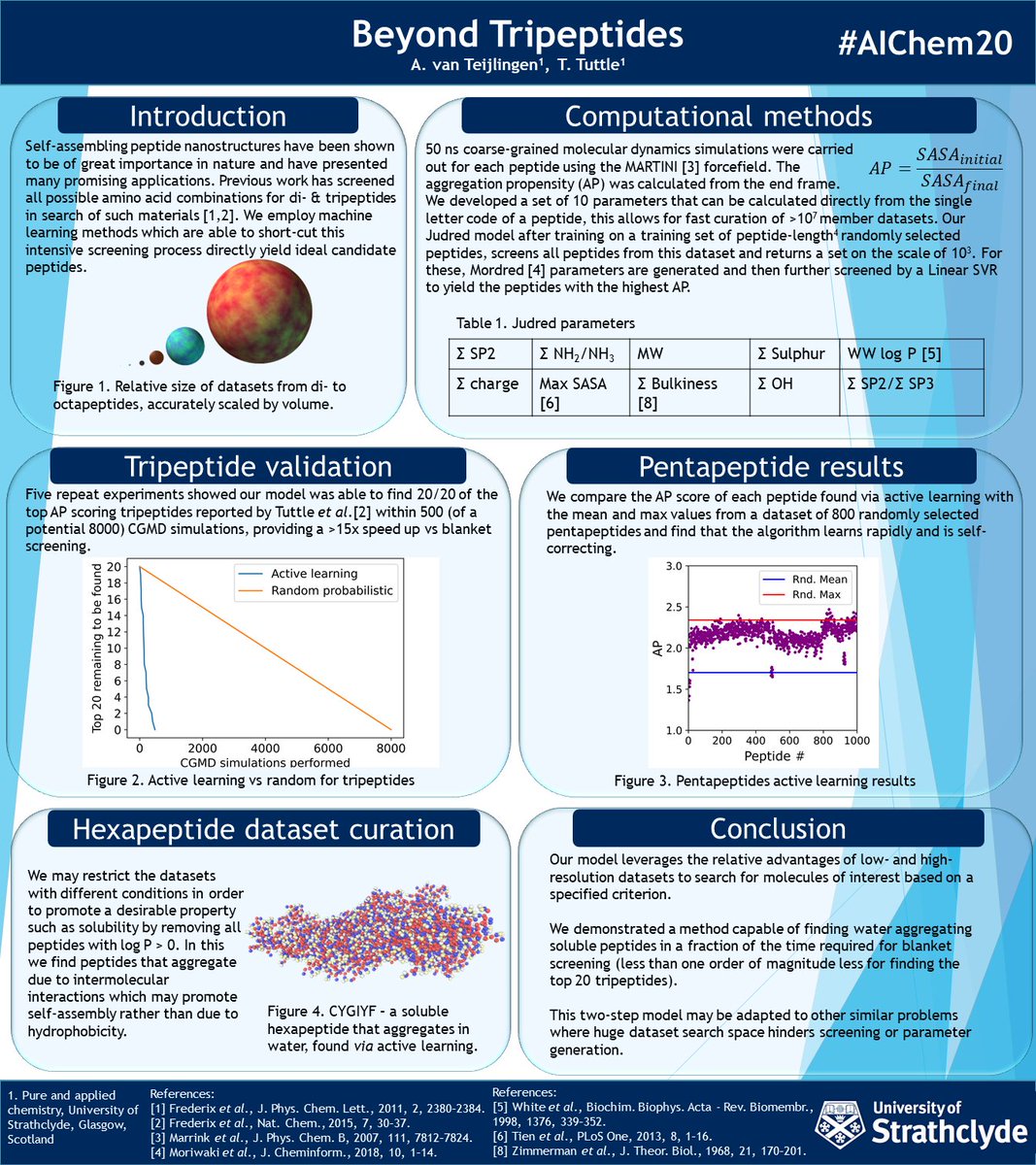
@sudarshanb259 Yes. We restrict the dataset (ie. remove all peptides with log P > 0) then run the algorithm in order to find the interesting cases of peptides that do aggregate but at least less due to the hydrophobic effect.
English

@AlexandervanTe1 So, your ML model is able to predict peptides of high AP, and surprisingly, for some of these peptides have log P < 0. And enthalpy (intermolecular interaction) plays a major role in the aggregation rather than entropy (hydrophobicity). Have I understood it properly?
English

3. This is the interesting part, that it does aggregate despite being soluble (at least as far as log P < 0 = soluble) means the molecules are interacting in an attractive fashion in the way we would expect for a self-assembling nanomaterial.
Sudarshan@sudarshanb259
@AlexandervanTe1 @scotch_research 3. A basic question. When you write "a soluble hexapeptide that aggregates in water" in Figure 2, is it soluble in water? If so, how can it still form aggregates?
English

Ahh sorry i misunderstood. During the CGMD simulation there are 300 peptides in the simulation box. The datasets are 8000 (20^3) for tripeptides, up to 64,000,000 (20^6) for hexapeptides.
Sudarshan@sudarshanb259
@AlexandervanTe1 Thanks. With a dataset of 300, you are able to capture the feature-target relationship to a good extend. Great!
English

2. sum(SP2) is the total number of SP2 carbon atoms, max ASA and Bulkiness are described in the references listed, twitter character limit ties my hands a bit here. Briefly, maxASA is the highest ASA for an amino acid in the tripeptide Gly-X-Gly in all biophysical conformations.
Sudarshan@sudarshanb259
@AlexandervanTe1 @scotch_research 2. In the Judred parameters, what does sum(SP2) means? Is it the total number of SP2 hybridized atoms? What is Max SASA and how do you define bulkiness?
English

My poster submission for #ScotCHEM2020, Beyond tripeptides - how machine learning can help to reduce computational search spaces, particularly in the field of peptide self-assembly.
PDF version with clickable links: strathcloud.sharefile.eu/d-see45fd85944…
@scotch_research

English
Alexander van Teijlingen nag-retweet

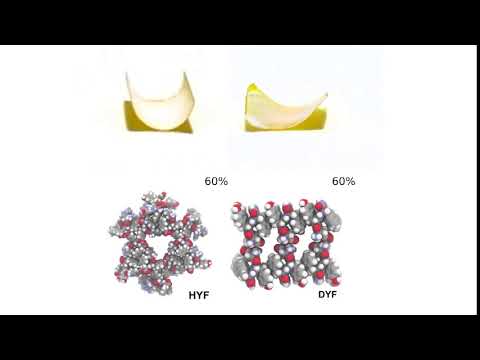
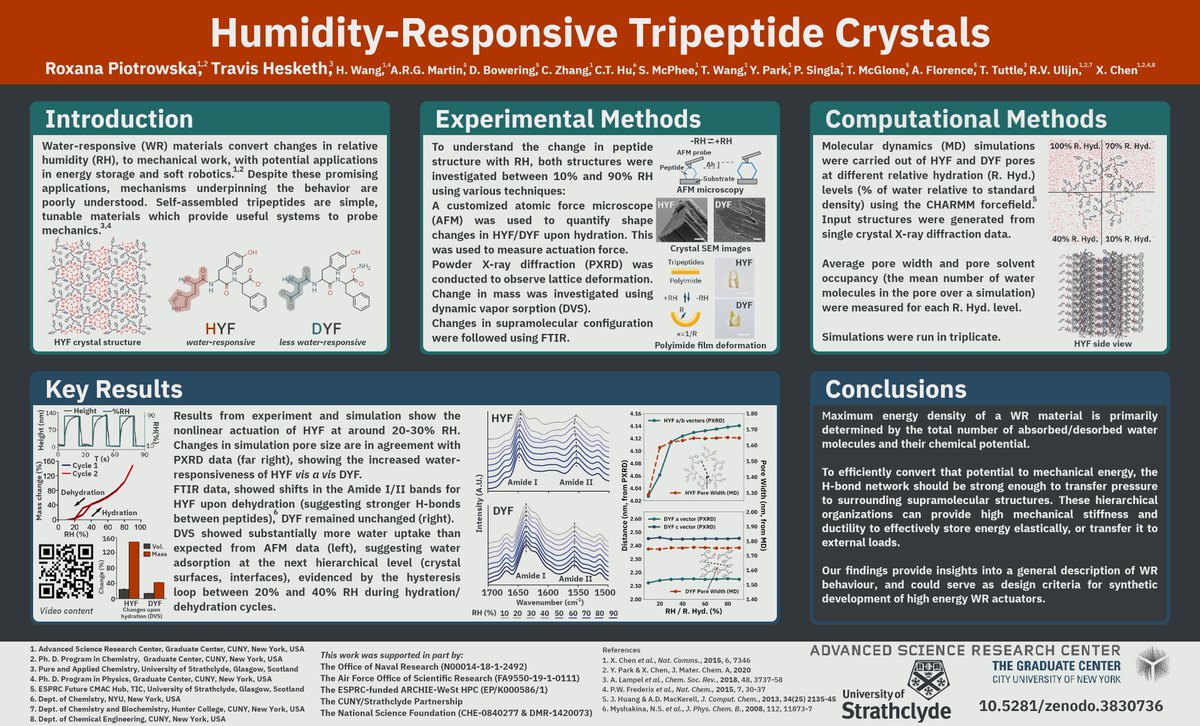
Hi all, here is myself and @RoxyPiotrowska's submission for @syschem20 based on our work on WR tripeptide crystals! @asrc_gc @StrathChem @UlijnGroup @TuttleLab
doi.org/10.5281/zenodo…
youtube.com/watch?v=lTUFC4…
#syschemposter #realtimechem

YouTube

English

Beyond tripeptides - machine learning and self-assembly #syschemposter personal.strath.ac.uk/alexander.van-…
English

Size-dependent melting point depression of nickel nanoparticles - now published in Nanoscale Advances pubs.rsc.org/en/content/art…
English