

Alpine Cols
2.1K posts
Alpine Cols
@AlpineCols
Coaching for road cycling; training camps in the French Alps. Official coaching & training partner to the Marmotte & Tour du Mont Blanc. Posts by Marvin Faure.
Alps, France Sumali Ekim 2013
187 Sinusundan358 Mga Tagasunod

If 1.5-2mmol/L feels "too easy" to you...
You're not fit enough.
English
@Alan_Couzens Well, I’m sitting on my indoor bike riding in Z1. Is that OK? 🤣
English
If you’re sitting down while scrolling posts about metabolic health…
You’re missing the point.
English
Alpine Cols nag-retweet
Most people get this backwards.
I’ve been saying this for years together with @Alan_Couzens and now the GOAT @kilianj puts it in the simplest possible way.
1) First creat work capacity = oxidation, real metabolic engine flexibility
2) Second ensure absorption = gut capacity, “training the gut”
3) Third give opportunity = fuel availability
Build capacity first.
Complexity comes later.
But what most do is the opposite:
- They start with the fueling
- They move to training the gut
- They want to graduate from base and work capacity, skipping the engine development
Result?
You end up learning to eat more, not to use more.
Big intake + small engine = wasted fuel, GI issues, early fatigue.
Principle > protocol
mtnath.com/energy-expendi…

English
@inaki_delaparra Also known as ‘feedforward’: “next time, try this”
A coach using this approach sidesteps reactive resistance.
English
Feedback is part of the problem.
Ego, fear and status sit between feedback & learning.
Most of times feedback becomes a verdict, not direction, blocking the receptor.
Good coaches change the feedback to advise:
- Less “How did I do?”
- More “What should I do next?”
That’s the shift:
- From past to future.
- From feedback to advice.
English

@AlpineCols The 23% was as an elite - that was after many years of volume
The 19% was when I came back in my 50s
The 21% was tested in Helsinki after two years of focused training (~700-ish annual hours)
English
Kicking off a multipart series on efficiency and economy on Endurance Essentials.
I've always felt there was a paradox between exercise science showing a limited rise in VO2max vs my sports performance rocketing (each time I return to structured training).
I have a hunch efficiency and economy explain a good amount of the "gap."
Part One starts by defining terms and offering you a case study of how a moderate burn of 1,000 kcal per hour means very different things to athletes with different size engines.
Then we move on to using my Gross Efficiency numbers to make a point about its importance...
++
Gross Efficiency
There is more going on than a comparison of relative intensity (vs VO2 max). There is the yield, in mechanical work, from the energy we burn.
Recall my efficiency has been measured from 19% to 23%. The table below shows what this is worth in power output.
At this stage, your mind should be blown. For the same internal burn (1,000 kcal per hour), the range in power output is 221 to 267w.

English
Alpine Cols nag-retweet

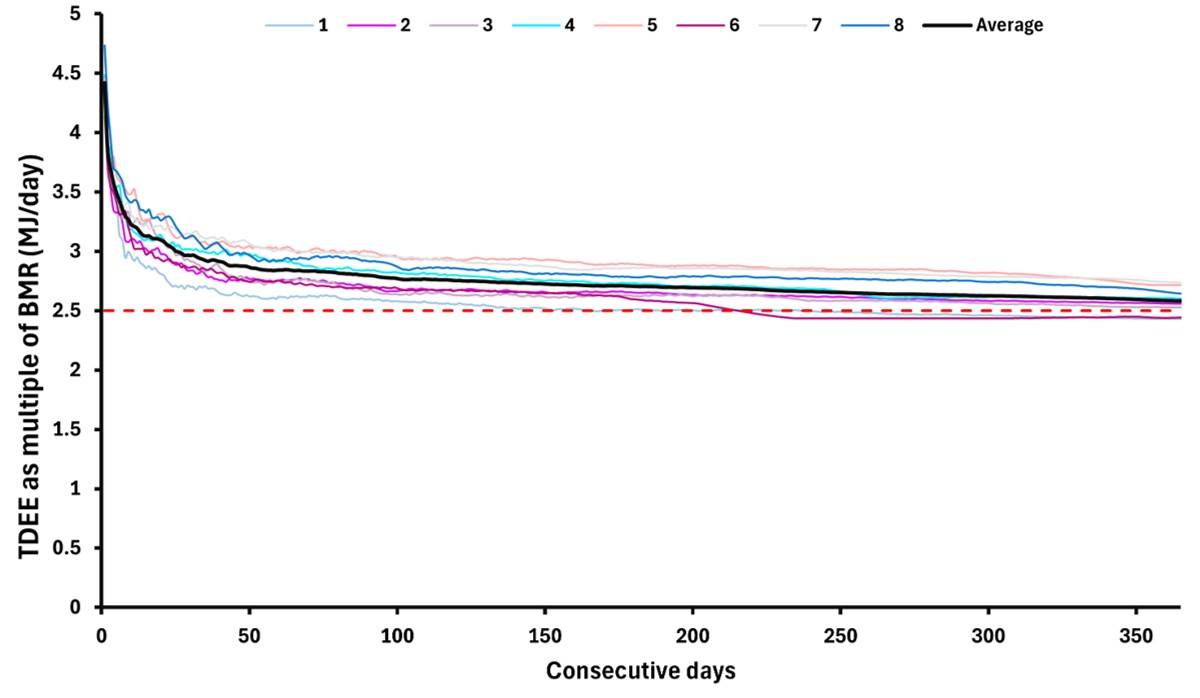
How much energy can the world’s best endurance athletes sustain over long periods?
Find our in our new paper: Longitudinal Assessment of Total Daily Energy Expenditure in Professional Cyclists Supports a Maximal Sustainable Metabolic Ceiling
More details and link in comment
English
@AlpineCols @Alan_Couzens Glad you liked it!
Currently I am spinning also indoors at 150 W
🔥🫡
English
There is no graduation from base work.
Stop looking for shortcuts with intensity or fancy sessions.
Train consistently, for years.
Do that and your health and your performance will go upwards 🔝
All in all sustainable way.
English
This realisation has made a huge difference to my own training. Progress again!
Alan Couzens@Alan_Couzens
2 mmol/L is *never* easy. The key is to do the vast majority of training at the *lowest lactate that you can reach* If this is 2mmol/L you've very poor metabolic health 🔴 If this is 1.5 mmol/L you have some work to do 🟡 If this is 1.0 mmol/L, you're on the right track 🟢
English
Alpine Cols nag-retweet
This guy tried to convince he doping is good for sport.
It's the first time i've lost my cool on the podcast.
Aron D'Souza, president of the Enhanced Games, just spent an hour trying to convince me that doping should be legal in sport.
He's polished, he's persuasive, and he's got answers for everything.
As someone who lives and breathes cycling – a sport that's watched people die from this exact vision – I should have been able to dismantle his arguments immediately.
The problem is, he sounds reasonable. And that terrifies me.
Because D'Souza isn't some fringe lunatic. He's an Oxford-educated lawyer who's raised serious money and has elite athletes already signed up.
He asks compelling questions about fairness, about athlete welfare, about why we accept some technologies but not others.
And if you're not paying close attention, you might actually believe him.
He's really selling a sanitised version of the same underground doping culture that's destroyed careers, ended lives, and corrupted sport for decades. He calls it "medical supervision" and "transparency," but it's still asking young athletes to chemically modify their bodies to compete.
He talks about "choice," but once the Enhanced Games exists, every athlete who wants to see their full potential will face impossible pressure to participate.
His economic argument sounds good on paper. Elite swimmers making $30,000 a year is shameful, and he's right about that.
But the solution isn't to create a pharmaceutical arms race with million-dollar prizes for whoever's willing to push their body furthest.
That's not fixing the problem – it's exploiting it.
D'Souza kept comparing performance enhancement to other technological advances. We don't limit surgeons to 1950s techniques, he said. We don't cap engineering progress.
But sport isn't surgery or engineering.
The entire point of athletic competition is testing human limits within agreed constraints.
Remove those constraints and you're not watching sport anymore – you're watching a biochemistry experiment with human subjects.
He promised comprehensive health monitoring, professional medical teams, elimination of dangerous self-experimentation.
But who's monitoring the monitors?
What happens when an athlete's health markers start declining but they're three weeks from a million-dollar payday?
What happens when the medical team is employed by the same organisation that profits from record-breaking performances?
We've seen this movie before in cycling, and it ended with body bags.
The most insidious part of his argument is how he frames the current anti-doping system as bureaucratic and hypocritical.
Sure, anti-doping has problems. Yes, there's hypocrisy in what we allow versus what we ban.
But the answer to an imperfect system isn't to abandon all limits – it's to fix the system.
D'Souza isn't interested in reform. He's interested in profit.
And make no mistake, this is about money.
He talks about athlete welfare, but he's creating a product for spectators who want to see superhuman performances without caring about the cost.
He's banking on our collective inability to look away from a car crash. Faster times, bigger performances, world records tumbling – all while athletes mortgage their long-term health for short-term glory and financial survival.
What really bothers me is his vision of "different tiers" of competition coexisting. That's not choice – that's segregation.
Within a generation, you'd have "natural" sport as the minor leagues and enhanced sport as the real competition. Every young athlete with Olympic dreams would face a simple calculation: stay clean and stay poor, or enhance and maybe make a living.
That's not freedom. That's coercion with extra steps.
D'Souza kept asking what we're protecting.
Here's my answer: we're protecting the kid who discovers they're talented at cycling and wants to see how far that talent can take them without having to become a chemistry experiment.
We're protecting the fundamental idea that sport should test what your body can do, not what your pharmacology team can do.
We're protecting athletes from having to choose between their dreams and their health.
I left that conversation more convinced than ever that the Enhanced Games is exactly what it sounds like: a game.
But the stakes are real athletes' lives, and the house always wins.
D'Souza is charismatic and his arguments sound sophisticated.
That's what makes this dangerous. Because somewhere, a young athlete is going to hear his pitch and think it sounds reasonable.
And that might be the decision that destroys their life.
So no, I'm not convinced. I'm alarmed.
We need to share this and push back against this worrying trend.
Don't watch it, support it or celebrate it.
These aren't our champions!

English
Alpine Cols nag-retweet

Research shows that failure of cognition, not lack of visibility, needs to be addressed.
Read more 👉 bikeradar.com/features/tech/…

English
Alpine Cols nag-retweet

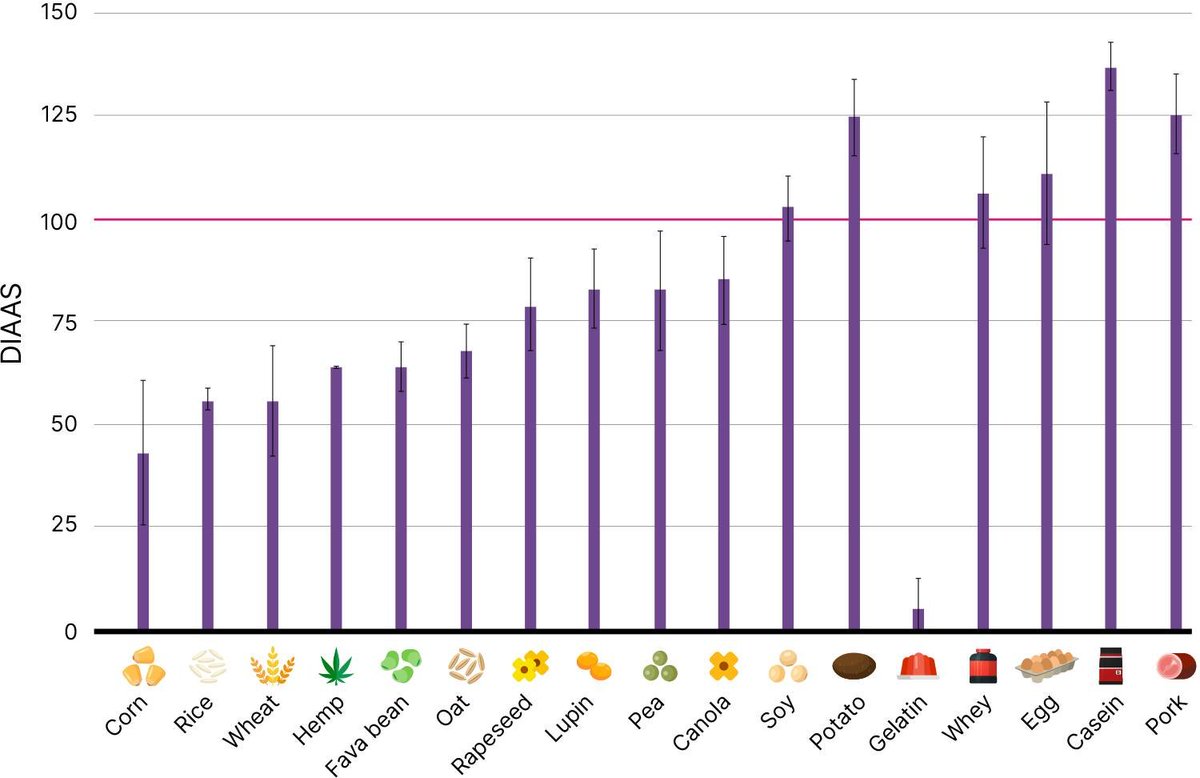
Most people think “protein is protein”… but this chart tells a very different story.
Some foods deliver far more usable amino acids per calorie than others, and when you line them up side-by-side, the differences are apparent.
A new comprehensive review broke down protein quality, not just protein grams, using the most advanced scoring system we have (DIAAS). And here’s the takeaway in plain English:
Not all protein builds the body the same way.
Protein quality depends on two big things:
🔹 Amino acid profile: especially essential amino acids
🔹 Digestibility: how much your body can actually absorb and use
Why this matters:
• Older adults need more high-quality protein to maintain muscle
• Athletes need more usable amino acids per meal to recover
• Plant-based eaters may need a higher total protein intake
• Low-income regions relying on cereal grains face a real risk of deficiency
• And when calories are low, protein quality becomes critical
This review also explains why the U.N. recommended switching from PDCAAS to DIAAS:
👉 PDCAAS measures what comes out in feces
👉 DIAAS measures what actually reaches the end of the small intestine - i.e., the amino acids you can absorb
That means DIAAS reflects the real biological value of a protein source.
A few eye-opening findings:
• Grains are typically low in lysine
• Legumes improve with soaking/fermentation
• Animal proteins score higher because they provide more essential amino acids per calorie
• Complementary proteins (rice + beans, bread + peanut butter, hummus + pita) can fill amino acid gaps
• Older adults may benefit from easier-to-chew or liquid protein sources
• And yes, plant-based diets can build muscle when intelligently combined
Even with perfect scoring systems, protein quality is only one part of the full picture. Diet, inflammation, age, health status, and digestion all matter too.
But understanding which foods deliver usable protein vs. just grams on a label is important
The image: Protein sources, scored using the DIAAS
Source: Examine
Citation: Matthews JJ, Arentson-Lantz EJ, Moughan PJ, Wolfe RR, Ferrando AA, Church DDUnderstanding Dietary Protein Quality: Digestible Indispensable Amino Acid Scores and Beyond.J Nutr.(2025 Oct)
English


@feelthebyrn1 Hi Gordo! My wife is in the 16th right now and has just called the pool in Auteuil. They have some lines set out for laps. You have to get lucky with the number of other swimmers. Hard to predict.
Good luck! Marvin
English
Paris Lap Swim 🇫🇷🇫🇷🇫🇷
Looking for a Sunday option in, or near, the 16th
Grok recommending:
- Piscine d'Auteuil
- Piscine Municipale Armand Mehdi
- Piscine Keller in the 15th
Auteuil opens 0800, is a reasonable walk from the hotel and looks OK
All ideas gratefully accepted
English
When the Body Says “No”: Reflections on UTMB Mont-Blanc 2025
📷 Manuel Uribe Photography
Watching an athlete DNF is heartbreaking. Not because of weakness of mind, but because the body suddenly says “no.” In an instant, everything changes.
I often think of the performance equation @justindaerr developed:
Preparation + Opportunity + Execution = Performance
At this year’s UTMB, Katarzyna Dombrowska arrived ready, backed by years of training, discipline, and resilience.
She earned the rare chance to line up with the best in the world and held her place in the top 3 for much of the race.
But after 3 ankle twists on the trail, her body finally gave out around 80 km into the 176 km course. In pain, she was forced to limp to the next aid station, carrying not only a badly twisted ankle, but also the weight of an unfinished race.
Sometimes, no matter how strong the preparation or how rare the opportunity is, Execution is taken out of our hands.
On paper J. Daerr's performance formula looks neat. In reality, each piece is fragile.
We can do everything right, arrive ready, and still, the body may not allow us to execute. In that moment, the equation collapses, leaving only the raw experience of being human.
As a coach and crew member, I felt not judgment but empathy, acceptance, and unconditional regard. Because performance is never the sum total of a human being.
Health always comes first. No medal, no finish line is more important than the person. Real strength is not just in continuing, it is also in knowing when to stop, with courage, to protect the future.
Yesterday wasn’t the day for Kasia’s body to execute. But the Preparation remains. The Opportunity will come again. And when Execution finally aligns, it can lead to those rare, transcendent moments Justin has describes in many of his performance writings.
For me, the true relevance lies in the dignity of effort, the honesty to accept what is, and the courage to keep going: another day, another race, another chance.
This is sport, this is life. Brutal, but beautiful.
🤙❤️🚀


English
Alpine Cols nag-retweet

VO2Max - How Walking Can Create an Elite VO2Max
Many people think that the only way to raise VO2Max is by doing HIIT.
But you can achieve a high VO2Max just with walking.
Walking is arguably the superior way to build it 🧵
English
This is an outstanding thread on the differences in training response and what to do about them.
Rod Siegel@RodSiegel
Early in my career working with elite Sprint Kayakers in the London 2012 Olympic cycle, I noticed a pattern: some athletes improved rapidly, whilst others on the same training program - similar age, experience, calibre - stagnated. Same training, different results. But why? 🧵👇
English
@Alan_Couzens Now working on this for a cycling objective in Sept. 2027… Started with establishing consistency and regularity.
English
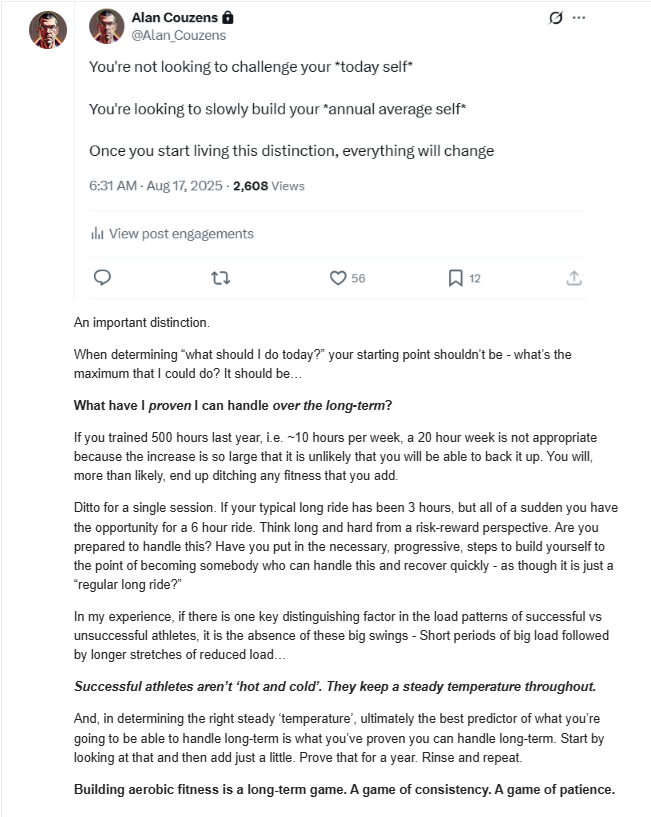
Some further thoughts for the #MADcrew forum...
"Successful athletes aren't 'hot and cold'. They keep a steady temperature throughout."
forum.madcrew.app/t/youre-not-lo…
English
You're not looking to challenge your *today self*
You're looking to slowly build your *annual average self*
Once you start living this distinction, everything will change
English