Charles Myers nag-retweet
Charles Myers
1.7K posts

Charles Myers
@CharlesDM65
Carolina-born, Virginia-raised, Georgia-proud. Atlanta Braves, Leicester City FC, Philadelphia Flyers, Inter Miami, Virginia Tech Hokies fan. 🇺🇸 🚜
Georgia, USA Sumali Temmuz 2013
3.3K Sinusundan449 Mga Tagasunod
Charles Myers nag-retweet

Our billboard along 95 is now live!! Just a friendly reminder for Pittsburgh!👊
We love being petty with @KeystoneOutdoor 😂

English
Charles Myers nag-retweet

Today is St George's Day. 🏴
Your patron saint wasn't English. Your flag wasn't English either.
Here's why we claimed them both. 🏴🇬🇧
He was from Cappadocia. Modern Turkey.
A Roman soldier. The Praetorian Guard. Diocletian's personal bodyguard.
303 AD. The Emperor orders him to persecute Christians.
He refuses. Walks into the throne room. Tells the Emperor his order is cruel.
They offer him his life back. Gold. Land. His old command.
He refuses again.
23rd of April, 303. They behead him.
1,723 years ago today.
The flag was Genoese. 1099. Their navy was so feared that Barbary pirates turned home at the sight of it.
In 1190, Richard the Lionheart signed a treaty. English ships could fly the cross for protection.
We flew it so long we forgot it wasn't ours.
In 2018, the Mayor of Genoa wrote to the Queen asking for 247 years of back rent.
She didn't reply.
Edward III makes George our patron saint.
Henry V cries his name at Agincourt.
A Roman soldier from Cappadocia became the name Englishmen died for.
We didn't inherit our patron saint. We chose him. And we chose a soldier who refused.
That is your history.
This is who we are. 🇬🇧
We find what Britain has forgotten. And we tell it properly.
proudofus.co.uk/support
Be part of us. Be Proud Of Us. 🙏🇬🇧
English
Charles Myers nag-retweet

Help us wish @gregmaddux a happy 60th birthday!
The Professor is the only pitcher with 300 wins, 3,000 strikeouts and fewer than 1,000 walks.

English
Charles Myers nag-retweet

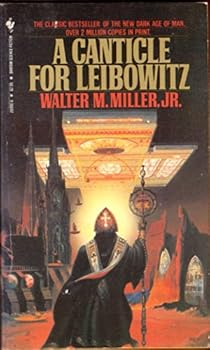
A Canticle For Leibowitz is a classic early (1959) post-apocalypse novel where an order of monks preserved the last remnants of learning (the memorabilia) after a nuclear exchange turned the remains of society into book and scientist burners.
I first read it in the 80s as a mass market paperback that I somehow lost along the way. Other paperbacks from that time are yellow with age and getting brittle, but still readable.
I read it again in the late 2000s on a first edition Kindle. I eventually migrated to iPads for Kindle reading, but every couple years I would come across an old Kindle in a drawer, charge it up, and check out what I had been reading on it. They eventually stopped working entirely.
I’m just finishing reading a new Folio Society edition, printed on heavy, acid-free archival quality paper. If it doesn’t get soaked or burned, it could still be in good shape for centuries.
The ephemeral nature of digital storage does give me some pause. We can still read Sumerian tablets full of administrative trivia from four thousand years ago, but there are no known copies of some important software products from just fifty years ago.
I am a proud supporter of the Internet Archive!


English
Charles Myers nag-retweet

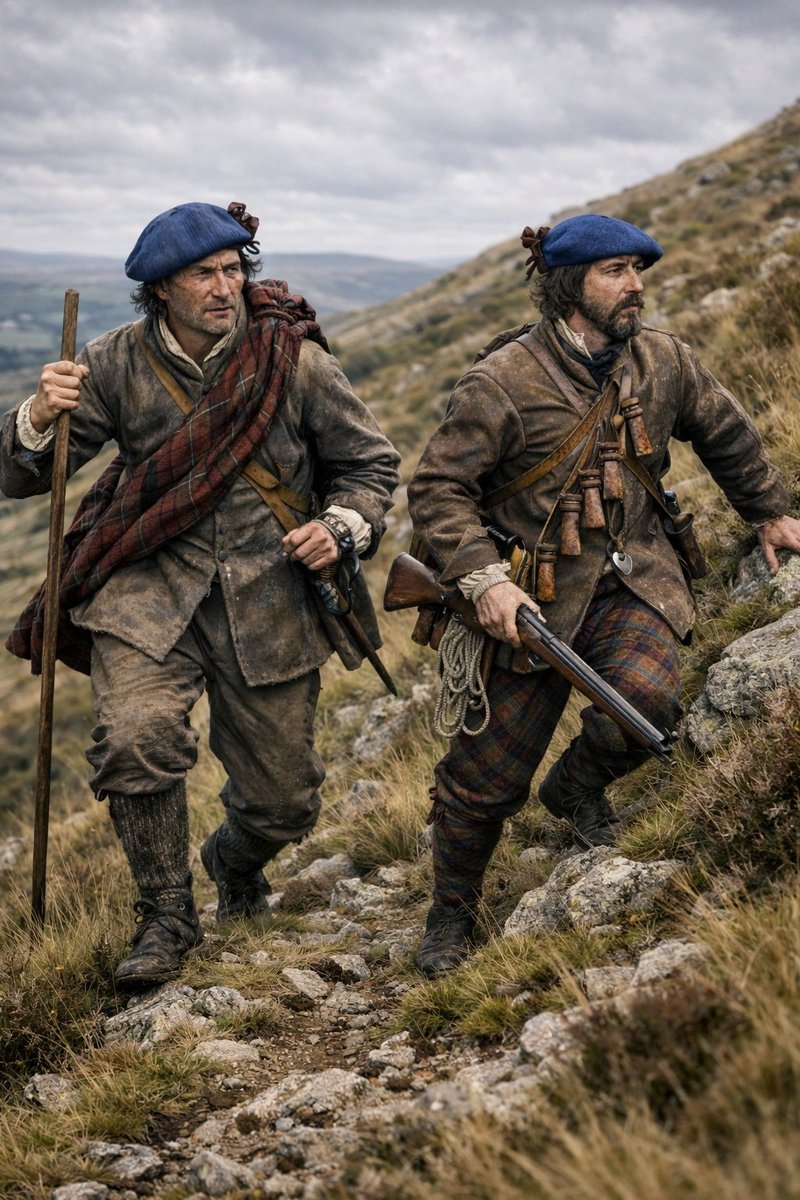
The Covenanters were Scottish Protestants who believed Christ alone is the true head of the Church, not kings, not bishops imposed by the state. In 1638 they swore a covenant before God to defend true worship and resist imposed control.
They were hunted, imprisoned, and killed for it, but refused to back down. For them, obedience to Christ came before everything. 🏴🇬🇧🏴🇬🇧


English
Charles Myers nag-retweet

On day 1 of my high school history class, our professor got up and said
You are 15 or 16 years old. 200 years ago people your age were married, planted crops, had children, and built a cabin by winter. You can do your homework. The bar set for you historically is embarrassingly low. You are not dealing with regional famine or plague. You do not have to save your family from marauders or go into battle to destroy your enemies. You have to sit down and learn from someone who cares about you in a safe, air-conditioned room. You have no excuses.
English
Charles Myers nag-retweet

Ender's Game author Orson Scott Card on the problems with how religion is portrayed in current fantasy and science fiction:
"In our culture, intellectuals have become so uniformly a-religious or anti-religious that our fiction, with few exceptions, depicts religious people in only two ways: the followers are ignorant and stupid and easily fooled, and the leaders are exploitative and cynical, manipulating others' faith for their private benefit.
I know some people who fit those descriptions. But they are in a tiny minority. Most religious people I know are smart, well-educated, independent-minded, stubborn, honest, and generous -- at least as much so as the average intellectual, and usually more.
The hostility toward religion among American intellectuals arises, I think, from a clear awareness that it was against a publicly religious culture that their own culture rebelled. Now that rebellion is completely successful in terms of capturing control of all the public instruments of transmission of culture -- the universities, the media, and the literature and art -- but it has become such a shibboleth of intellectual life to snipe at religion that, like the aging "revolutionaries" of the old Soviet Union, they mindlessly continue to "rebel" in order to defend their tight grip on the establishment. Indeed, those intellectuals are the establishment. And what was once a daring and rebellious stance is now just another example of lockstep conformists mindlessly echoing ideas that they haven't examined.
That's when contemporary fiction mentions religion at all. Most of the time, in and out of speculative fiction, religion simply doesn't exist. Characters don't believe in God or even think about believing in God. Nobody talks about religion. Nobody belongs to any kind of church. Religion simply doesn't exist. ...
This is, I think, a serious lapse, a dishonesty in our contemporary literature. It is most seriously dishonest because in fact, even the supposedly a-religious intellectuals behave exactly as religious people always have. That is, the behavioral and cultural patterns that we have always associated with religions are indistinguishable, except by vocabulary, from the behavioral and cultural patterns of the a-religious intellectuals. They band together with fellow believers, feel sorry for or hostile toward unbelievers, immediately punish heretics -- intellectuals who, having once been accepted in the 'faith,' dare to question its premises -- anoint their priests and theologians (psychologists and therapists being their ministers, scientists and, more usually, science popularizers being their doctors of atheology), and insist on their absolute right to put forth their religious ideas with public funding and the authority of the state behind them, while doing their utmost to silence or marginalize the beliefs of others.
Most fiction has become, in short, an instrument of propaganda for the established religion of our time, which differs from other religions only in the particular content of the faith and the vocabulary used to describe it. Naturally, the true believers are sure that the real difference is that their beliefs are objectively true. But then, true believers have always believed that. This is not what distinguishes them from other established religions, but rather what makes them fundamentally identical to them.
The honest depicter of human life will include the religious aspect of that life. This is not to say that stories need to be about religion, any more than stories about our contemporary culture need to be about cars. But the cars need to be present, at least by implication, and if a character doesn't know how to drive, we'd need to know why."
Is this why Hollywood stopped adapting his books into films?


English
Charles Myers nag-retweet

APPOMATTOX, VA. — On April 9, 1865, Gen. Robert E. Lee strode onto the porch of a two-story brick home and stared out at a lawn filled with Union soldiers, his Confederate staff of two, and his horse Traveler.
Still wearing full military dress, Lee raised his gloved hands and punched his left fist into his right palm. The sound of leather meeting leather echoed in the unsteady silence.
Then, as Lee mounted Traveler, Major Gen. Ulysses S. Grant emerged from the house onto the porch.
Now facing each other, Grant raised his hat, as did Lee. It wasn’t a salute, but clearly an acknowledgment of the moment.
As Lee turned towards the dirt road and headed east towards his troops, the 198th Pennsylvania Infantry played “Auld Lang Syne.”
The Civil War was over.
“As the sun rose that morning neither man would know by mid-afternoon the war, for all intents and purposes, would end that day,” explained Ernie Price, a park ranger and director of education at Appomattox National Park.
But by mid-morning, Lee knew the Confederate cause was finished. He sent a message to Grant to meet for the purpose of surrender, and the Appomattox home of grocer Wilmer McLean was chosen for the moment.
When they met, Grant was poorly dressed, his uniform rumpled and covered in mud from the ride the night before. Years later in his memoirs, he admitted that he had no idea what he was going to ask from Lee in the surrender.
Yet, once he sat down at a small spindle desk in McLean’s front parlor, words of reconciliation poured out.
“Grant knew that the Confederate soldiers from that moment on were going to be US citizens again,” said Price. “Instead of placing them in prisons in the North he sends them home. His reasoning is: The sooner the South’s economy rebounds, the sooner the country can reconcile, so he paroles them.”
Grant also allowed Lee’s men to keep their personal sidearms and animals, knowing they would desperately need rations to survive.
Today marks the 161st anniversary of Appomattox, and tourists from around the world still come to the McLean home to remember this singular moment, which kept our nation whole after a bloody, brutal war. When I visited last month, parents, students and children listened to different park rangers tell the story of the two generals, and were surprised by the emotion they felt.
The best and the worst of our country’s past sometimes happens side by side. The journey to understand who we once were isn’t always a road to perdition. Sometimes it’s a path toward inspiration.
Between the first shots fired at Fort Sumter in April 1861 and Lee’s surrender here, more than 800,000 soldiers died from fighting, starvation and disease. Five days after the war’s end, President Abraham Lincoln was dead, having paid the ultimate sacrifice for his steadfastness to preserve the union.
Afterwards the country was thrown into both mourning and uncertainty about its future as it faced reconstruction.
All of which should prove to folks who often moan that we live in the worst time possible for this country that, indeed, we do not.
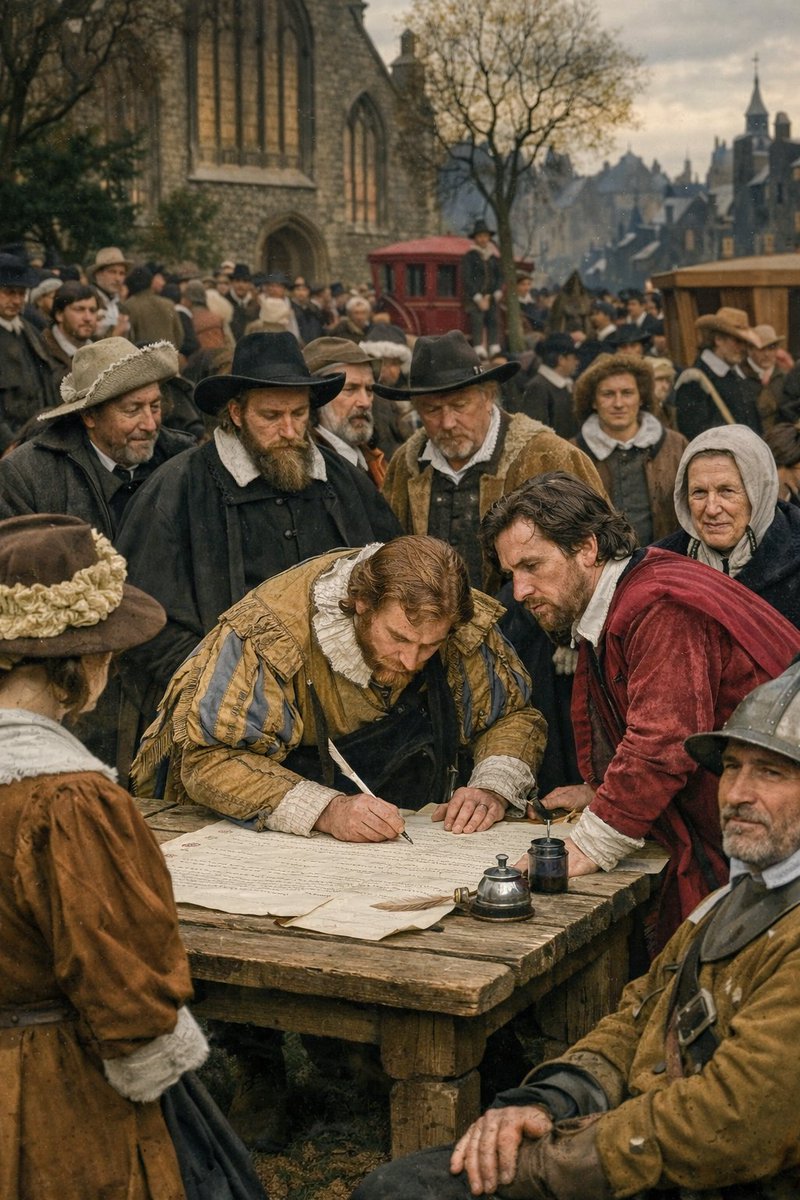
As the two generals waited for their treaty to be prepared in McLean’s parlor, Grant introduced Lee to his staff, including Lt. Col. Ely Parker, a Seneca Indian, who later recalled their exchange.
“It’s good to see one real American here today,” Lee told him.
“General, we are all Americans today,” Parker replied.
Grant and Lee understood that a divided nation is a toxic nation — and that moment 161 years ago should serve as a reminder for all of us, to not just look to the bad and condemn, but to look to the good and apply it to our lives today.
instagram.com/reel/DW6Q6ikjm…
GIF
English
Charles Myers nag-retweet

The @NASAArtemis crew captured this view of the Moon eclipsing the Sun yesterday. The three "stars" to the lower right of the Moon are actually planets. The middle one has a slightly red tint.
That's Mars.

English
Charles Myers nag-retweet

After her husband was executed in 1343, Jeanne de Clisson sold her estates, bought warships, and launched a personal campaign of revenge against the French crown.
Known as the “Lioness of Brittany,” she spent years attacking French ships in the English Channel. Her fleet reportedly targeted vessels loyal to the king, and survivors were sometimes left alive specifically to carry news of her raids.
Jeanne became one of the most feared figures at sea during the Hundred Years’ War, transforming herself from a noblewoman into a pirate and privateer driven by vengeance.
#archaeohistories

English