
Data Wizard

130 posts

Data Wizard banner
Data Wizard

Data Wizard

@DataWizardPhd

For the love of data, mathematics, and solving a puzzles.

Sumali Nisan 2024
571 Sinusundan45 Mga Tagasunod
Data Wizard
Data Wizard@DataWizardPhd·
2 + 2 = ??🧮 I’ve been hunting for good online tools to boost my math skills, and I wanted to share what I found. Math can feel like a slog, but having a solid curriculum to follow makes it way easier to level up, whether you’re starting from scratch or pushing into advanced stuff. I checked out five websites that promise to teach math step-by-step, not just throw random problems at you. Here’s my take on each—Khan Academy, Brilliant, Math Academy, Art of Problem Solving, and IXL Math—based on how they work for me and what they bring to the table. My goal? Find out which ones actually help build skills with a clear plan. Khan Academy (Website and app, Free) Khan Academy is my first stop, and it’s hard to beat. It’s free, which is huge, and covers everything from basic addition to calculus. I start with a video—usually short and easy to follow—then hit the practice problems. They ramp up as I get better, and I can track how I’m doing. It’s not the flashiest site, but I like how it builds a foundation and lets me go at my own speed. I’ve been working through algebra lately, and it’s clicking because the lessons connect. If I mess up, it explains why, which keeps me from guessing my way through. khanacademy.org Brilliant (Website and app, $25/month or $129.50/year) Brilliant caught my eye because it’s less about drills and more about thinking hard. I’m doing their algebra course now, and it’s all interactive problems that feel like puzzles. It’s not free—you get a trial, then it’s subscription time—but I enjoy how it pushes me to figure stuff out instead of just memorizing. The lessons flow from easy to tough, and I can see my skills growing. I tried their geometry stuff too, and it’s the same deal: a clear path with challenges that stick with me. It’s fun, but I gotta budget for it. brilliant.org Math Academy (Website, $50/month) Math Academy is new to me, and I’m liking it so far. It uses some smart tech to figure out what I know, then skips the boring parts. I started at pre-algebra and moved to pre-calc fast because it adjusts on the fly. The lessons are short, and I get practice that fits where I’m at. It’s not free either—there’s a subscription—but I feel like I’m making real progress without wasting time. I’ve been doing it daily, and it’s cool to see the curriculum unfold based on my answers. Keeps me locked in. mathacademy.com Art of Problem Solving (Website, $100's per course) Art of Problem Solving is intense, and I mean that in a good way. I jumped into their pre-algebra course, and it’s packed with problems that make me sweat. It’s not just “solve this”—it’s “why does this work?” I love how it builds from the ground up, but it’s not cheap, and it takes focus. I’m learning tricks I never got in school, and the curriculum feels like it’s prepping me for big-league math. I tried their calculus preview too, and it’s the same vibe: tough, clear, and deep. Perfect if you’re ready to grind. artofproblemsolving.com IXL Math (Website and app, as low as $9.95/month) IXL Math is my steady pick. It’s got practice for every grade, pre-K to calculus, and I started at grade 8 to fill some gaps. The problems are bite-sized, and I get instant feedback—right or wrong, with tips if I’m off. It follows a school-style curriculum, so I know what’s next, and I can see my weak spots. It’s not all free after a bit, which stinks, but I’m moving through algebra now and feeling solid. I like how it’s simple but keeps me on track with a plan I can follow. ixl.com So, here’s the deal after trying these five. Khan Academy is my top pick for free, no-nonsense learning—tons of topics, clear steps, and I’m never lost. Brilliant hooks me with fun, brain-bending problems, and I’m getting better, but it’s a paid thing. Math Academy speeds me up by adapting, and I’m flying through pre-calc without fluff—worth it if I’ve got the cash. Art of Problem Solving is my hardcore choice; it’s deep and tough, building skills like crazy, though it’s pricey and intense. IXL Math keeps it basic and school-aligned—I’m plugging holes steadily, even if full access costs. All five give me a real curriculum to follow, not just random practice. If I want free and broad, Khan’s it. If I’m up for a challenge, AoPS or Brilliant. Math Academy and IXL fit when I need structure with a twist. Depends on what I’m chasing, but they all work.
English
0
0
5
72
Data Wizard
Data Wizard@DataWizardPhd·
I just watched this informative YouTube video from @svpino called “MCP: Why It’s Important and Here to Stay,” and I’m pumped to break it down for y'all! Santiago dives into MCP, or Model Context Protocol, and shows why it’s a big deal for AI. I’m sold on how it’s gonna stick around and change the game. He starts by painting the picture of life without MCP. Say you want an AI agent to talk to Slack, Gmail, or a custom database. Right now, you’d have to build every connection from scratch. It’s not just about reading API docs, the APIs might let your agent do stuff like delete emails, but you only want it drafting messages. So, you’d code custom restrictions and prompts for each one. I get it, total pain! If you make that agent for, say, WindSurfer IDE and someone wants it in Cursor, all that work’s useless, you’d redo it. That’s where MCP come in. With MCP, there’s a middle layer, an MCP server, that handles all the API connections. I love how he explains it: this server knows Slack, Gmail, and your database, and any agent, Cursor, Claude Desktop, whatever, talks to it using a standard protocol. Swap the agent, no problem, the server’s got the specs locked in. It’s less mess, not more, since companies like Slack could offer their own MCP servers. I can plug that into my IDE and boom, Slack access without reinventing the wheel. He breaks down MCP’s guts: hosts (like your IDE), clients (the communication tool), and servers (where the magic lives). I dig how servers can share tools, like a calculator or weather service, plus prompts and docs. The agent just asks what’s available and runs with it. He’s building his own MCP server for a machine learning project, and I got a front-row seat. It’s a model he serves locally, and he wants to test it without scripting every experiment. His MCP tool, “invoke_model,” sends payloads to the model and gets predictions back. Simple, but the docs tell the agent how to format stuff, so it’s plug-and-play. I watched him use Cursor to test it. He asked it to grab three samples from a penguin CSV and invoke the model, no script needed. Cursor found the file, formatted the data, and bam, predictions! Then he got fancy, asked it to tweak body weight by one standard deviation. Cursor calculated it, adjusted the samples, and showed how the model reacted. I’m geeking out, it’s like AI and my tools are finally speaking the same language! He says this works across WindSurfer or Claude too, no tweaks. Over 250 MCP servers are out there already, and I’m itching to try them. Make sure to follow @svpino for some great content. youtube.com/watch?v=5ZWeCK…
YouTube video
YouTube
English
0
0
1
137
Data Wizard
Data Wizard@DataWizardPhd·
I’ve been thinking about AI agents and how they go beyond just generating responses. Instead of just spitting out text, they can plan, make decisions, and take actions on their own. They don’t need constant input and they just execute tasks based on a goal. A couple of cool use cases that come to mind: - Trading Bots that analyze market data, execute trades, and adjust strategies in real time. - Customer Support Assistants that handle inquiries, escalate issues when needed, and even improve over time by learning from interactions. AI agents are the next step in making AI actually useful for real-world tasks. Start coding agents now and keep your skills sharp.
English
0
0
0
46
Data Wizard
Data Wizard@DataWizardPhd·
I just watched “The Most INSANE AI News This Week!” by Julian Goldie on YouTube. This video dives into mind-blowing AI updates like Google’s sneaky new feature, Chinese models trouncing GPT-4.5 for cheap, and tools that let anyone code without skills. Here’s my recap! Julian spotlighted Google’s Gemini Canvas, a free coding gem. He tested it against ChatGPT, Claude, and Grok with a prompt for an AI news site landing page. Gemini churned out a slick, functional site while ChatGPT floundered, Claude bored, and Grok lagged. It’s a front-end dev game-changer! He also raved about NotebookLM’s mind maps and I can see why. Drop in sources, and it links ideas instantly, perfect for research, unmatched by other big AIs. Then there’s China’s Baidu with Ernie 4.5 and X1 and think GPT-4.5 power at 1% of OpenAI’s cost: 55 cents per million input tokens vs. $40. Julian couldn’t test them (needs a Chinese number), but online buzz suggests they beat GPT-4.0. That’s disruptive! Claude’s new web search impressed me too and he showed it running three searches to ChatGPT’s one, then coding a stunning landing page. ChatGPT just rambled. Mistral’s Small 3.1, a tiny open-source model, outdid Google’s Gemma 3, Julian said. He ran it locally—fast and private. Gemini’s Audio Overviews turned research into natural AI podcasts. Claude’s MCP agents built him a Tesla stock site with live data, no tech know-how needed. Picsart’s video tool edits objects seamlessly, hinting at AI video’s precise future, per Julian. Gemini transformed his stick figures into art, and he made a Pong game with one prompt with no coding! youtube.com/watch?v=Nhf_pQ…
YouTube video
YouTube
English
1
0
3
90
GC Cooke
GC Cooke@Gccooke·
URGENT: Protect your savings now. Banks are desperately launching stablecoins to save themselves. JP Morgan, Citi, and Charles Schwab know what's coming. Here's what you must do before the system collapses:
GC Cooke tweet media
English
272
1.5K
8.1K
2.3M
Data Wizard
Data Wizard@DataWizardPhd·
Here is what has been happening with AI this week: 1. Grok Beta Launches on Android xAI has released the Grok AI assistant app in beta for Android users. While the app offers advanced features, some key functionalities like voice mode are currently missing. moneycontrol.com/technology/elo… 2. Anthropic’s Valuation Surge and New Models Anthropic has raised $3.5 billion in its latest funding round, bringing its valuation to $61.5 billion. This funding supports the development of new AI models and international expansion. ft.com/content/05c904… Also Anthropic has introduced Claude 3.7 Sonnet and Claude Code, show significant advancements in AI technology. These products aim to enhance human capabilities through intelligent and hybrid reasoning models. anthropic.com/news/claude-3-… 3. Google’s AI Advancements Google has unveiled an AI co-scientist system built on Gemini 2.0, designed to assist scientists in generating novel hypotheses and research plans. This tool mirrors the reasoning process underpinning the scientific method, potentially accelerating scientific breakthroughs. research.google/blog/accelerat… 4. DeepSeek’s R2 Model Rush Chinese AI firm DeepSeek is expediting the release of its next-generation R2 model, aiming to enhance coding capabilities and multilingual reasoning. This move positions DeepSeek to further disrupt the AI market, challenging established players and setting new industry standards. felloai.com/2025/02/deepse…
English
0
1
0
75
Data Wizard
Data Wizard@DataWizardPhd·
Look what I found! Google's new Data Science Agent in Colab uses Gemini 2.0 AI to automate data analysis tasks. Just describe your analysis in plain English, and it generates a functional Jupyter notebook for you. This simplifies processes like data cleaning, exploration, visualization, and predictive modeling. I'm excited for new tools for DS! developers.googleblog.com/en/data-scienc…
English
0
0
0
67
Data Wizard
Data Wizard@DataWizardPhd·
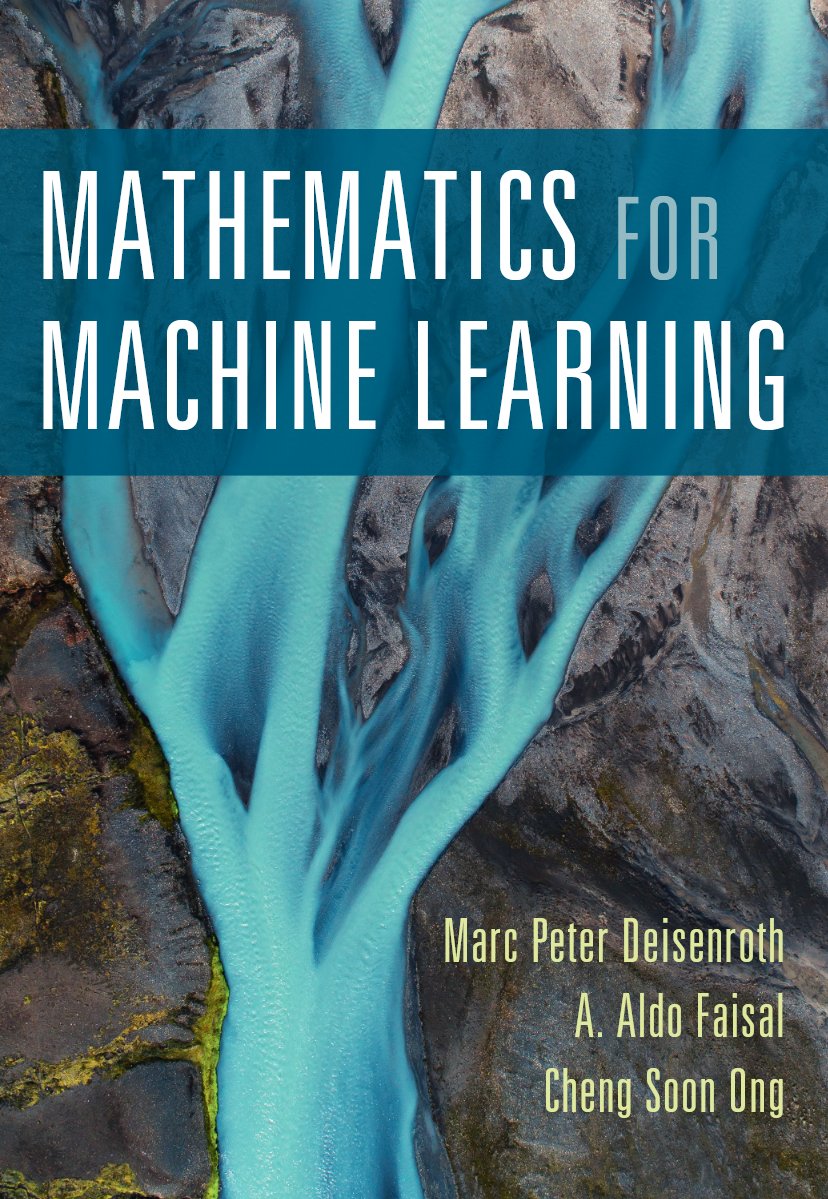
Tsundoku is a Japanese term that describes the act of acquiring books but letting them pile up unread. Can you relate?
Data Wizard tweet media
English
0
0
0
19
Data Wizard
Data Wizard@DataWizardPhd·
When diving into ML, one often encounters the concepts of bagging and boosting. These are techniques used to improve the performance of models, especially when dealing with complex datasets. Although they might sound similar, they have distinct approaches and purposes. Bagging, short for Bootstrap Aggregating, is like having multiple versions of the same model trained on different subsets of your data. Imagine you're trying to make a decision and you ask ten friends for their opinions. Each friend looks at a different part of the whole picture, and then you combine their opinions to make your final choice. Bagging works similarly. It creates multiple models and averages their predictions to get a more accurate and stable result. This technique is particularly useful for reducing variance and preventing overfitting, making it a great choice for decision trees and other high-variance models. On the other hand, boosting takes a different approach. It builds models sequentially, where each new model tries to fix the errors made by the previous ones. It's like learning from your mistakes as you go along. First, you make a decision and realize you got parts of it wrong. The next time, you adjust your approach based on what you learned. Boosting focuses on those mistakes, giving more weight to the data points that were misclassified. This makes it powerful for reducing bias and improving accuracy. However, boosting can make the model more prone to overfitting if not managed carefully, especially with noisy data. Both bagging and boosting enhance the performance of weak learners, but they do so in their own ways. Bagging is all about parallelism and treating each model equally, while boosting is about sequential learning and focusing on errors. Think of bagging as a democratic process where every model has an equal say, and boosting as a mentoring process where each model learns from the shortcomings of its predecessor. When choosing between them, consider the nature of your data and the problem you're trying to solve. Bagging works well when you need to reduce variance, especially for unstable models. Boosting is handy when you aim to improve accuracy and are willing to invest in a more complex process to tackle bias. Understanding the difference between bagging and boosting is crucial as it helps in selecting the right approach for your ML tasks. Both techniques have their strengths and can significantly enhance your model's performance, but knowing when and how to apply them effectively can make all the difference in your projects.
English
0
0
0
15
Data Wizard
Data Wizard@DataWizardPhd·
How do you create effective prompts for LLMs? Prompting is key for effectively using LLMs. Sometimes people are too brief and don't give enough context, rules, expectations, and examples to give the LLM enough information so that the output meets the user's expectations. Here are some quick tips for better responses from LLMs by creating better prompts: 1. Be Specific – Clearly define what you want, including format, style, and any constraints. 2. Provide Context – Give background information to help the AI understand the scenario or purpose. 3. Use Examples – Show a sample response or structure to guide the AI's output. 4. Set the Tone – Indicate if you want a formal, casual, technical, or creative response. 5. Break Down Complex Requests – Ask for step-by-step answers or request multiple outputs separately. Example: "I am writing a technical blog post about the differences between machine learning and deep learning. Provide a structured comparison in a table format with three columns: 'Aspect,' 'Machine Learning,' and 'Deep Learning.' Focus on five key aspects: data requirements, computational power, interpretability, feature engineering, and common applications. Use clear, concise language suitable for an audience familiar with AI but not experts. After the table, summarize the main takeaway in two sentences."
English
0
0
0
10
Data Wizard
Data Wizard@DataWizardPhd·
What would you give to unlock a higher level of intelligence? What would you achieve with that unimaginable amount of intelligence? Think the movie Lucy or Limitless.
Data Wizard tweet media
English
0
0
0
11
Data Wizard
Data Wizard@DataWizardPhd·
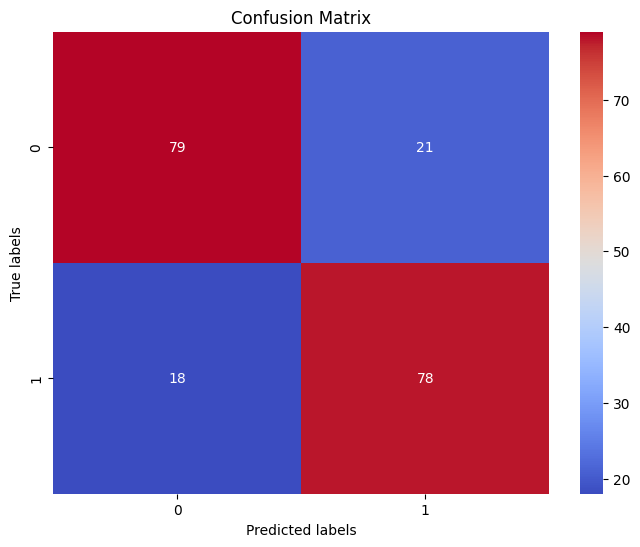
In the realm of ML, evaluating a model's performance is crucial. One of the primary tools used for this purpose is the confusion matrix. It's a simple yet powerful way to visualize how well a classification model is performing. A confusion matrix is a table that lays out the true values versus the predicted values, offering a clear picture of the model's accuracy. A typical confusion matrix for binary classification consists of four key components: true positives (TP), true negatives (TN), false positives (FP), and false negatives (FN). TP indicates the cases where the model correctly predicts the positive class, while TN represents correct predictions of the negative class. FP, often called the "false alarm," occurs when the model incorrectly predicts the positive class. FN happens when the model misses a positive instance, predicting it as negative. The confusion matrix is more than just numbers; it provides insights into different performance metrics. For instance, accuracy calculates the proportion of correctly predicted instances out of all instances. Precision focuses on how many of the predicted positive cases were actually positive. Recall, or sensitivity, measures how well the model identifies positive cases. The F1-Score balances precision and recall, offering a single metric that considers both false positives and false negatives. Understanding these metrics helps in tweaking the model for better performance. A model with high precision but low recall might be suitable when the cost of false positives is high. Conversely, high recall but low precision might be preferable when missing positive cases is costly. The confusion matrix is a versatile tool that provides a comprehensive view of how a model is performing, allowing data scientists to make informed decisions on model adjustments.
Data Wizard tweet media
English
0
0
0
16
Data Wizard
Data Wizard@DataWizardPhd·
Weekly gains in AI performance is getting a little exhausting. This week Claude is king. Last week it was Grok 3. Before that DeepSeek. These are exciting times and there are more gains to be made. I believe the future will be awesome. I just need a break or something.
English
0
0
0
21
Data Wizard
Data Wizard@DataWizardPhd·
Friendly reminder: ML algorithms will detect patterns, even when none actually exist.
English
0
0
0
9
Data Wizard
Data Wizard@DataWizardPhd·
While it's easy to be influenced by what people post online, I remind myself that most examples are chosen because they’re extreme, like either really good or really bad. They don’t reflect everyday use. If you want to know if a new version is better for you, the best approach is to test it yourself with real examples that matter to you. That’s how I get a clear and balanced understanding of how these changes actually impact my experience.
English
0
0
0
7
Data Wizard
Data Wizard@DataWizardPhd·
I’ve noticed that the way you ask something can change the result. A small change in wording can lead to a completely different response. That’s why I test questions in different ways and at different times. This helps me understand whether I’m seeing a pattern or just a random glitch.
English
1
0
0
7
Data Wizard
Data Wizard@DataWizardPhd·
I see people sharing quick examples when a new version of a LLM comes out. Some show how amazing it is, while others point out big mistakes. These posts get a lot of attention, but they don't tell the whole story. Testing an LLM with just one example isn’t enough to understand how much it has improved overall.
English
1
0
0
12