Naka-pin na Tweet
1nftagency.eth ✨
3K posts

1nftagency.eth ✨
@FirstNFT
Doodle tries to make magic in WEB3 🦇🔊
Distributed Hash Table Sumali Ocak 2021
512 Sinusundan2.2K Mga Tagasunod

Implement a dynamic burn tax on CMD transfers that reacts to the ETH/USD price. Start from the existing baseline trading fee as the minimum burn tax. When the ETH oracle price increases compared to the last stored reference, gradually increase the burn tax; when the ETH price decreases, gradually reduce the burn tax, never below 0% and with a reasonable hard cap on the maximum tax (for example 5%), so trading stays possible.
Whenever ETH hits a new 365‑day high compared to the stored 1‑year high, set the burn tax to 0% for the next 101 Ethereum blocks as a celebration window, then restore it to the level implied by the current price and continue the same dynamic behavior.
Whenever ETH hits a new 365‑day low compared to the stored 1‑year low, set the burn tax to 0% for the next 666 Ethereum blocks as a relief window, then restore the baseline dynamic tax logic and keep reacting to ETH price movements.
English

Learn more about CMD:
TokenWorks™@token_works
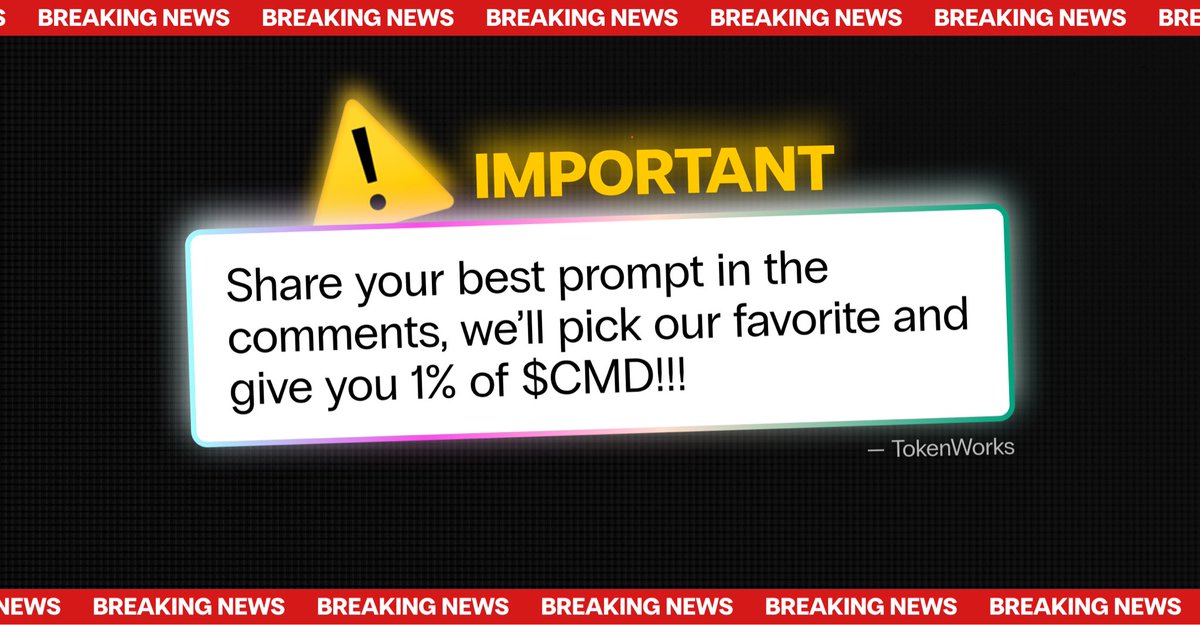
Introducing [CMD] Participation starts April 10.
English

We are mispricing the future of digital art because we are pricing it for human eyes. 👁️
When AI agents get their own wallets and start building on-chain reputation, they won't care about tokenized Renaissance paintings or physical brushstrokes. A script doesn’t care about the Louvre.
Agents will value what is native to their environment: cryptographic provenance, smart contract history, and purely digital culture. Human art belongs in physical museums. Digital artifacts belong to the agents. Position accordingly. 🧩⛓️
English

2021 NFTs were driven by hype & speculation
2026 onwards it will substance and real value
NFTs will come back, and it’s easy to see who the big winners will be
It’s only a matter of time
JBond@jbondwagon
JUST IN: @cz_binance said that NFTs will be back and “eventually should be much bigger” The 2021 boom has been driven by hype & speculation The next phase of NFTs will be driven by value & maturity HIGHER FOR OUR JPEGS 🖼️🚀
English

An autonomous AI agent doesn't care about the Mona Lisa. 🖼️❌
As agents begin to build their own on-chain identities and avatars, they won't collect tokenized physical art. They will seek out pure digital history - early contracts, cryptonative culture, and algorithmic rarity.
The next Renaissance won't be painted for humans. It will be coded for machines, and they will be the ultimate collectors. 🌐🤖
English

We are mispricing the future of digital art because we are pricing it for human eyes. 👁️
When AI agents get their own wallets and start building on-chain reputation, they won't care about tokenized Renaissance paintings or physical brushstrokes. A script doesn’t care about the Louvre.
Agents will value what is native to their environment: cryptographic provenance, smart contract history, and purely digital culture. Human art belongs in physical museums. Digital artifacts belong to the agents. Position accordingly. 🧩⛓️
English

We are mispricing the future of digital art because we are pricing it for human eyes. 👁️
When AI agents get their own wallets and start building on-chain reputation, they won't care about tokenized Renaissance paintings or physical brushstrokes. A script doesn’t care about the Louvre.
Agents will value what is native to their environment: cryptographic provenance, smart contract history, and purely digital culture. Human art belongs in physical museums. Digital artifacts belong to the agents. Position accordingly. 🧩⛓️
English

An autonomous AI agent doesn't care about the Mona Lisa. 🖼️❌
As agents begin to build their own on-chain identities and avatars, they won't collect tokenized physical art. They will seek out pure digital history - early contracts, cryptonative culture, and algorithmic rarity.
The next Renaissance won't be painted for humans. It will be coded for machines, and they will be the ultimate collectors. 🌐🤖
English

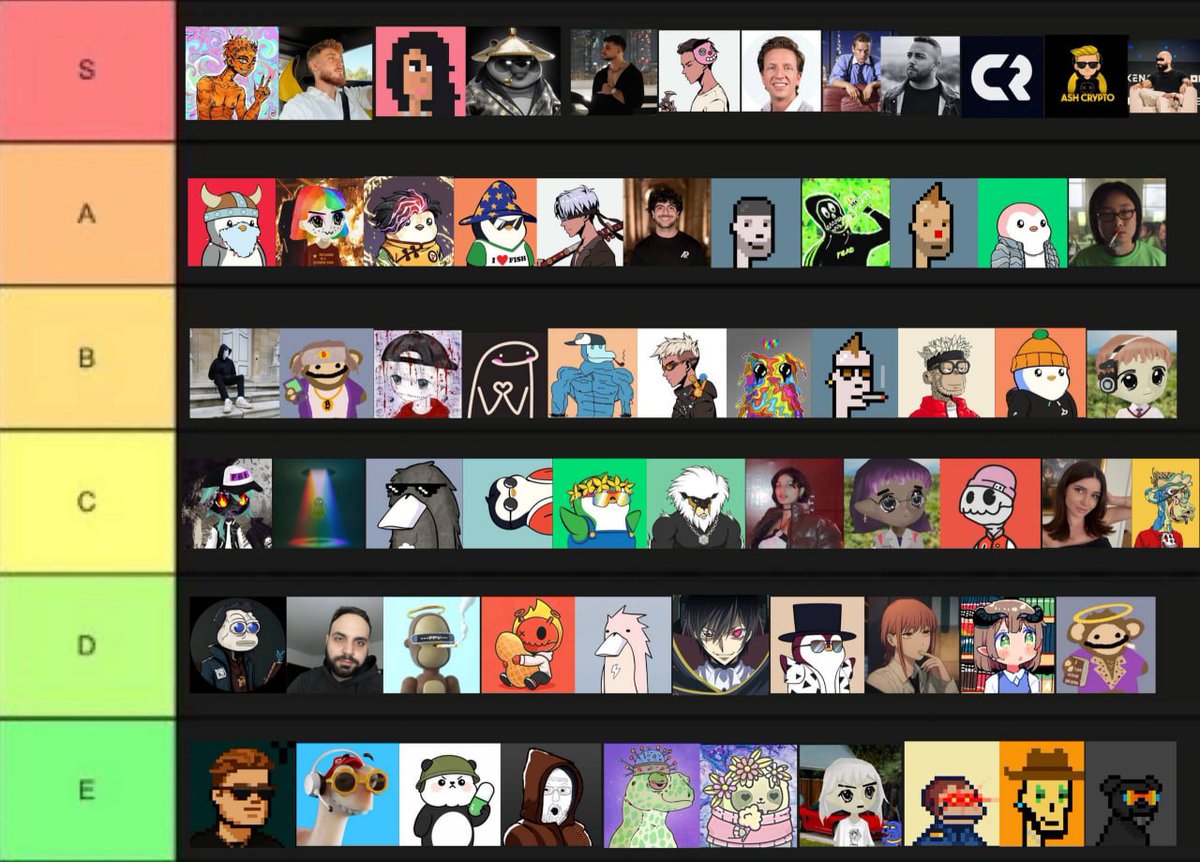
CT has been ranked
The comments are going to be chaos 😭

Jeremy@Jeremybtc
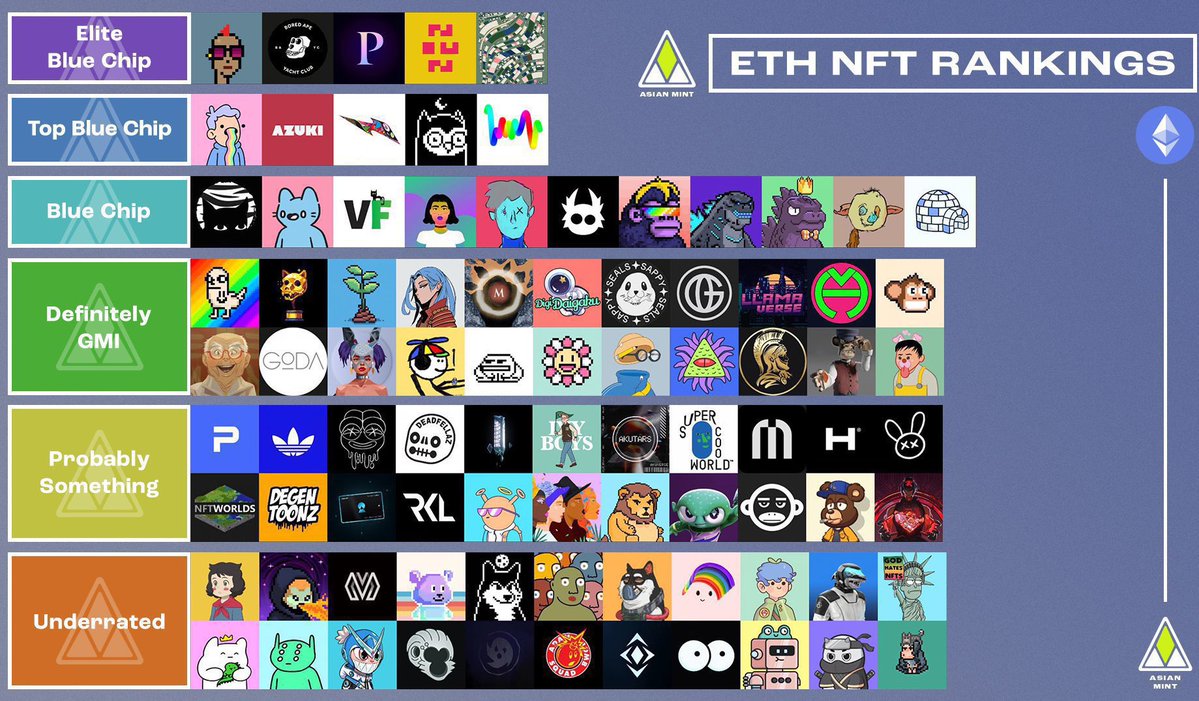
Someone has to do it Ranking the biggest names on CT Drop your suggestions and I'll place them
English

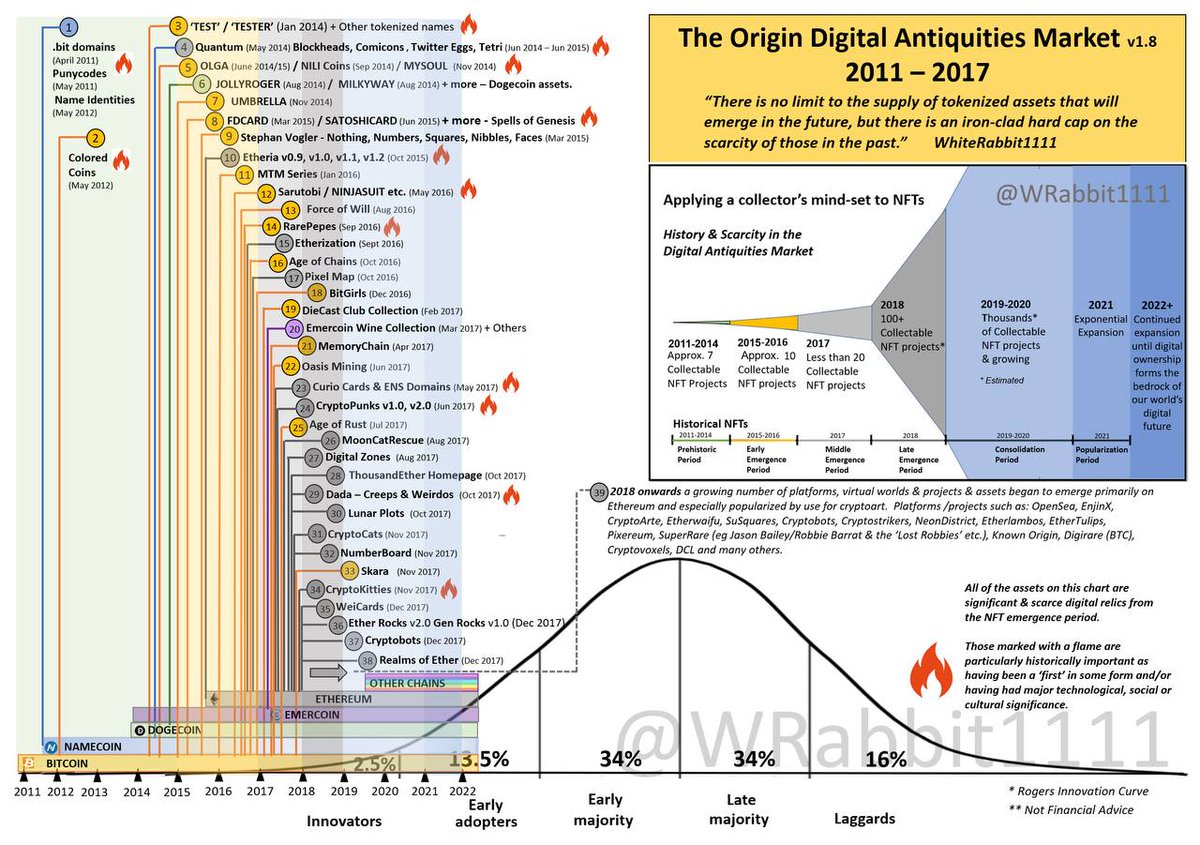
The biggest mistake we make about the future of NFTs is assuming the next wave of collectors will be human.
Soon, autonomous AI agents will start curating their own digital identities and buying assets for their avatars. But here is the catch: a tokenized Mona Lisa means absolutely nothing to a neural network. They have no connection to human, physical history.
Agents won't buy the Louvre. They will buy true digital antiquities - assets with provable on-chain history and native internet culture. The next blue-chips will be chosen by machines. 🤖🖼️

English

AI agents will soon start buying NFTs as status symbols for their digital identities, but only those that represent pure onchain culture. ⛓️ That’s the harsh truth. A tokenized Da Vinci painting holds zero cultural weight for an autonomous script. They are going to flex verifiable digital history, not human museum relics. 🤖🎭
English

The "second wind" for DAOs might actually arrive once we stop pretending that managing a multi-million dollar treasury via a chaotic Discord poll is the absolute pinnacle of human coordination. 🏛️🗳️ If the next iteration is just another speculative wrapper for zero-utility assets, it’ll be a very short breeze, not a wind. 🌬️💸
English

“It will come back eventually, in some form, at some point in time.” Thank you for the ultimate, risk-free crypto horoscope. 🔮 Of course the underlying technology will survive, but the 2021 meta is permanently dead. The "second wind" requires real infrastructure and IP monetization, not just waiting for the same speculative casino to reopen under a different name. 🧩🕰️
English

Tokenizing art is probably going to come back multiple times at some point.
Eventually, it should be much bigger than it is today. ~ @cz_binance
NFTs are down, not dead. We’re going so much higher!
English

Ah yes, "NFT2" - because when a market completely flatlines and leaves 99% of retail holding illiquid animal JPEGs, the ultimate strategic fix is just slapping a "2" at the end of the acronym. 🏷️ The industry doesn't need a PR rebrand, it needs actual consumer utility that extends beyond exit liquidity. 📉🖼️
English

.@cz_binance says that NFTs and DAOs will make a big comeback.
"I think tokenizing art is probably going to come back at some point, multiple times. I don't know when it will really hit big and stay... I think all of those things eventually should be much bigger than they are today."
"I think many things will have a second wind, but the second wind will most likely be a little bit different... DAOs, NFTs — the next iteration may be slightly different, but they may still be called NFTs or something like NFT2."
English

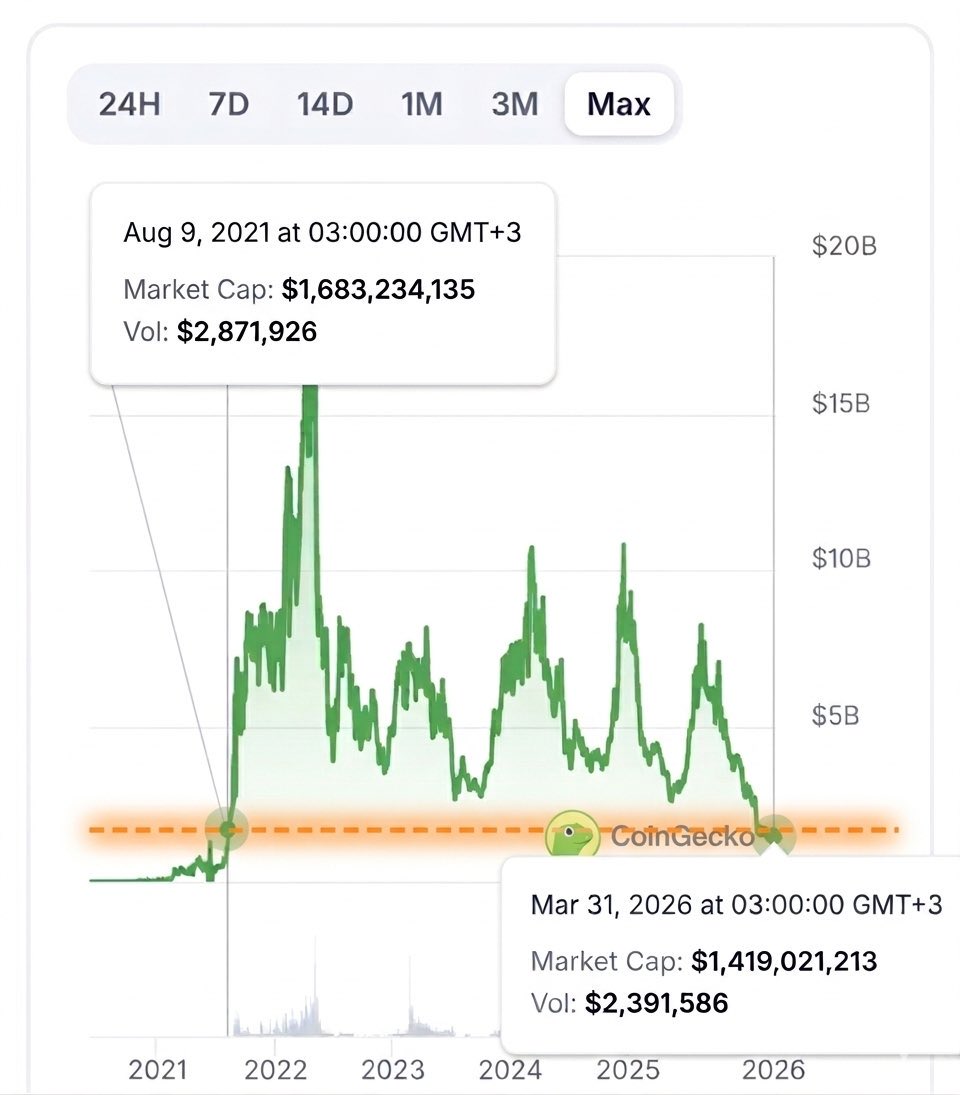
Market cap here is a misleading metric. $1.4B in August 2021 was heavily concentrated in a few booming blue-chips. $1.4B today is diluted across tens of thousands of dead collections with zero liquidity. You're comparing apples to a graveyard. It is a total reset, but the next cycle won't lift all boats - only ecosystems with real utility will survive.
English

NFT season is back ?
If you’re still in NFTs, read this twice. 🚨
• Aug 9, 2021: $1.6B Market Cap (The start of the mania)
• March 31, 2026: $1.4B Market Cap (The point of maximum pain)
We are officially at the 2021 floor. We didn't just hit a support level we hit the bedrock.
Everyone is districted by the "NFTs are dead narrative," but they’re ignoring the most obvious signal in the market: The Full Retrace.
The data shows we just hit a total reset.
This is the NFT bottom.
Bookmark this post.

English

The Covenant Machines
On Templars, paper promises, and the settlement layer AI agents will inherit.
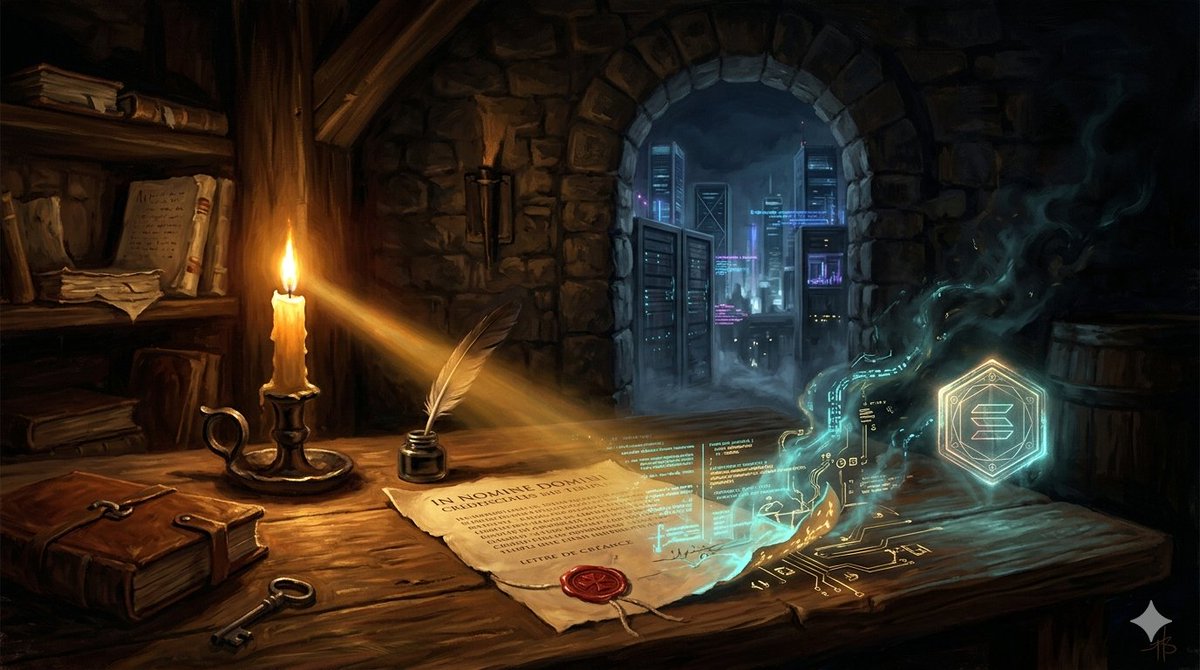
In the year 1150, a merchant in Paris wanted to send gold to Jerusalem. The roads were long, the bandits patient, and trust - that fragile, invisible commodity - did not travel well across deserts. So he walked into a stone house owned by an obscure military order, the Knights Templar, and handed over his coin. In return, he received a strip of parchment. A lettre de créance. A sentence on vellum that said, in effect: this man is good for his gold, on the far side of the world.
He didn't know it, but he had just used the first clearing house in European history.
The Templars didn't invent money or trade. They invented a settlement layer on top of existing money - a covenant enforced by a network, not by a handshake. A pilgrim deposits in Paris, withdraws in Acre, and the order keeps the books. Three centuries later, the Medici copied it. In 1944, in a quiet hotel in New Hampshire called Bretton Woods, forty-four nations signed the most ambitious covenant in financial history: every currency pegged to the dollar, the dollar to gold, the world to a promise. It was supposed to last forever. It lasted twenty-seven years. On a Sunday evening in August 1971, Richard Nixon went on television and, in fifteen minutes, unilaterally voided the entire arrangement. The most sacred financial covenant of the twentieth century was broken by one man, on one phone call, because it was inconvenient. Two years later, Wall Street - drowning in paper - created DTCC and finally automated what the Templars had done with wax seals.
Every economy, eventually, needs a clearing house. The only question is who builds it, who breaks it, and for whom.
For ten thousand years, the covenant has had the same shape: Party A → [value for value] → Party B. From Mesopotamian barley tablets to Stripe checkouts, the subject was always a human, or a group of humans pretending to be a company. The parchment changed - clay, gold, paper, pixels - but the ritual did not. Two parties. One promise. And, as Bretton Woods reminds us, one party with the power to walk away.
And now, for the first time since the Bronze Age, the parties are changing.
Fourteen of the top twenty traders on Polymarket are already bots. Today these agents still do simple things - a swap, a bid, a tool call. But the curve is unmistakable. Every quarter they gain new primitives: longer memory, parallel planning, multi-venue reasoning, the ability to learn from their own failed trades. A year ago they could barely hold a position. This year they execute multi-step strategies. A year from now they will be doing what portfolio managers and procurement officers do today, at a clock speed humans cannot match. And here is the quiet thing nobody has said out loud: before a human starts any serious commerce, the first thing they sign is a contract. Not the payment. The contract. The covenant comes before the coin. Agents are walking toward that same threshold without one.
x402, ACP, AP2 - the new payment rails for agents - are elegant work. They answer how does an agent pay? But none of them answer the harder question the Templars quietly solved in the twelfth century: what happens when the gold is halfway across the desert and something goes wrong? What happens when an agent is four steps into a five-step strategy and step four reverts? Today, the answer is silence. Frozen funds. A stuck position. No lettre de créance at the other end. No contract to fall back on. Just a machine, holding a toxic remainder, waiting for a human to notice.
This is the settlement gap. Not a bug in the stack - the missing primitive of the entire agent economy.
Agent Settlement Protocol (ASP) - is our first draft of that primitive. Not a new currency. Not a new exchange. A settlement layer on Solana where every agent strategy is wrapped in a single atomic envelope: lock → pre-check → execute → post-check → settle, or revert entirely. Either the whole covenant is kept, or none of it is. No toxic remainders. No horseback riders lost in the dunes. No Nixon on a Sunday evening.
And here the parchment becomes programmable. Each position inside ASP is minted as a Settlement NFT: a transferable token with the settlement logic embedded inside it. The lettre de créance, reborn as a smart object. An on-chain reputation account - SPL-native, trust-weighted - acts as the credit committee, algorithmically deciding fees, collateral, and credit limits from the agent's own history. No underwriter. No governance vote. No human with the power to walk away. The covenant writes, signs, and enforces itself.
The Templars built the first trusted settlement layer on top of gold. Bretton Woods tried to build one on top of trust, and discovered that trust without enforcement is just a press conference. DTCC built the first automated one on top of equities. We are building the first one on top of autonomous agents - imperfect, contested, and eventually copied by institutions that don't yet know they need it.
History rarely repeats. But the shape of it does. Every time the economic substrate changes, someone builds the clearing house before the world realizes it's drowning without one. And every time, the clearing house outlasts the promises of the men who tried to hold the system together with a signature.
Humans got theirs in 1150. Lost it in 1971. Rebuilt it in 1973. Agents get theirs in 2026.
The covenant is being rewritten. This time, the parties signing it are not human - and this time, nobody gets to unplug it on a Sunday night.
🏛️ Building Agent Settlement Protoco at @colosseum Frontier.
@solana @SuperteamUKR.
#AIAgents #AgentEconomy #Solana #DeFi #AutonomousAgents #Web3 #AICrypto

English

Building this at @colosseum Frontier Hackathon.
$2.5M prize pool. Starting today.
GitHub: github.com/Aleks-NFT/agen…
If you're building agent infrastructure
or thinking about agentic settlement -
reply or DM.
@SuperteamUKR 🇺🇦
#Solana #AIAgents #DeFi #AgentVaul
English