
Forge
47 posts


Forge
@ForgeDailyApp
A daily micro-learning app for the generalist. Build a habit of knowing more. Coming soon to iOS.
Sumali Mart 2026
13 Sinusundan8 Mga Tagasunod
5/ Caesar salad was not invented by Julius Caesar, in ancient Rome, or even in Italy.
It was created in 1924 by Caesar Cardini, an Italian immigrant, at his restaurant in Tijuana, Mexico. The story goes that he threw it together on a busy Fourth of July weekend when the kitchen was running low on supplies.
One of the most popular salads in the world was invented in Tijuana out of necessity.

English

When Coca-Cola launched in 1886, it was sold as a medicine.
Its creator, John Pemberton, marketed it as a cure for headaches, morphine addiction, and “neurasthenia”, a catch-all Victorian diagnosis for exhaustion and anxiety. It was originally sold at pharmacies, not restaurants.
It also contained cocaine. That ingredient wasn’t removed until 1903.

English
This is awesome.
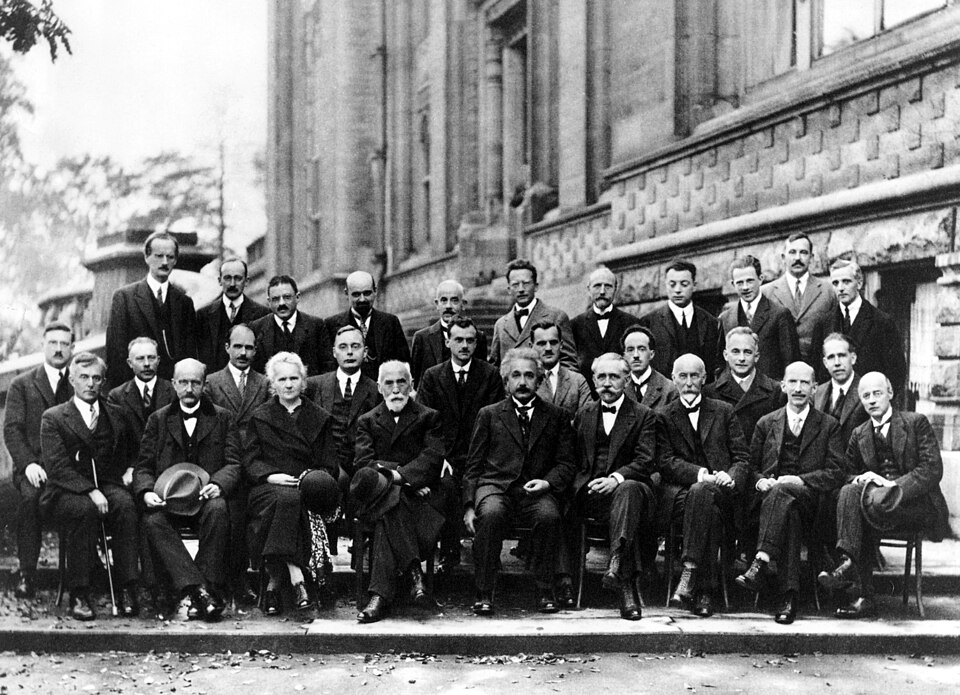
Front row includes Einstein, Marie Curie, Lorentz, and Planck. Second row has Bohr, Born, Heisenberg, and Dirac among others.
17 of the 29 people in this photo were Nobel laureates. They were there to argue about quantum mechanics. Einstein’s position was that quantum theory was incomplete, that particles have definite properties whether you’re measuring them or not, and that the apparent randomness was just a gap in human understanding, not a feature of reality itself.
Bohr and the Copenhagen interpretation won the room. The consensus that emerged was that quantum particles genuinely don’t have definite states until measured; the randomness isn’t ignorance, it’s fundamental.
Einstein spent the rest of his life trying to prove them wrong. He never did. Bell’s theorem in 1964 and subsequent experiments in the 1980s essentially confirmed that Einstein’s preferred “hidden variables” explanation doesn’t hold up. Reality really is as strange as Bohr said it was.
English
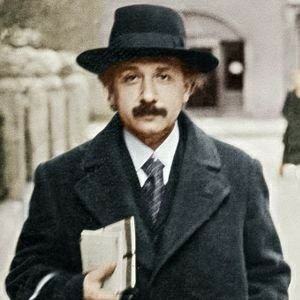
The most intelligent photograph in the history of Physics.
Fifth conference participants, 1927. Institut International de Physique Solvay in Leopold Park.
English
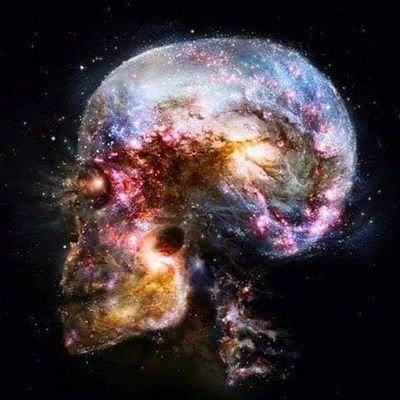
@xRhundis @CuriosityonX I think the life-flashing phenomenon is better explained by neuroscience. The brain under extreme stress rapidly retrieving memories, possibly as a survival mechanism searching for relevant past experience. Interesting idea though, the multiverse version is more fun.
English

@ForgeDailyApp @CuriosityonX What about the "life flashing before your eyes" phenomenon?
Could be your consciousness moving to another reality where you didn't die and it's just a memory dump per se.
English


Located in Tblisi, Georgia
Called 'The Chronicles of Georgia'
Looks like something out of a fantasy world.


English
Built in 1985 (right in the middle of the Soviet era) which makes it a fascinating act of quiet defiance. The columns are carved with scenes from Georgian history, mythology, and Orthodox Christianity. The Soviet Union was officially atheist. Commissioning a monument dense with Christian iconography and national identity was either an act of extraordinary boldness or extraordinary negotiation.
Georgia has one of the oldest Christian traditions in the world, adopting the faith in the 4th century, around the same time as the Roman Empire. The Chronicles of Georgia isn’t just decorative. It’s a statement that Georgian identity predates the Soviet Union by about 1,600 years, and intended to outlast it too.
It did.
Jay Anderson@TheProjectUnity
Located in Tblisi, Georgia Called 'The Chronicles of Georgia' Looks like something out of a fantasy world.
English
The mechanism could model the Metonic cycle, the 19-year pattern after which the Moon’s phases repeat on the same calendar dates. The Babylonians had tracked this for centuries, and somehow that knowledge made it into the gearwork of a hand-held bronze device on a Greek ship.
We still don’t know who built it, where exactly it was made, or why it was on that particular vessel. The leading theory is that it was heading to Rome, possibly as a trophy or a gift. The most sophisticated calculating device in the ancient world, lost in a shipwreck, not rediscovered for two millennia.
English
Long before silicon chips, ancient Greeks built a complex device now known as the Antikythera mechanism. This corroded bronze relic, discovered in a shipwreck in 1901, is considered the world's oldest analog computer.
Dating back to between 205 and 87 BC, it used a sophisticated system of at least 30 bronze gears to track the cycles of the Sun, Moon, and planets, and was even able to predict solar and lunar eclipses. Its complexity wouldn't be seen again for another thousand years.

English
@wonderofscience The tail can be over 5 feet long and accounts for about 60% of its total body length. The fact that it can get airborne at all is frankly disrespectful to the rest of the animal kingdom.
English

Ever see a peacock fly? Despite their large size peacocks are capable of flying, but it’s limited to short distances.
📽: Harsha Narasimhamurthy
English
@CuriosityonX Beautiful. Remind me of this:
x.com/forgedailyapp/…
Forge@ForgeDailyApp
In 1990, NASA turned the Voyager 1 spacecraft around and took a photograph of Earth from 3.7 billion miles away. Earth appears as a fraction of a single pixel. A pale blue dot suspended in a beam of scattered sunlight. Voyager 1 is still traveling. It left our solar system in 2012 and is now the most distant human-made object in existence — over 15 billion miles away and still sending data back to Earth.
English
Derinkuyu could house 20,000 people and went 18 stories deep. It had ventilation shafts, wells, wine cellars, stables, and stone doors that could only be opened from the inside.
It wasn’t a hiding spot; it was a fully functional city built entirely underground, probably to escape the waves of invasion that swept through Cappadocia for centuries. The people who carved it out of volcanic rock didn’t have modern tools; they had time, necessity, and somewhere to be.
The wildest part isn’t the discovery. It’s that it sat completely unknown beneath a normal neighborhood for thousands of years.
English

Ancient underground city discovered beneath a home in Turkey
In 1963, a homeowner in central Turkey uncovered a narrow opening while renovating his basement. it led into Derinkuyu, an enormous underground city hidden beneath the region of Cappadocia.
English
Physics explained:
This is centrifugal forces in action.
By sweeping the water in a circle, he creates momentum. The water wants to travel in a straight line, but the circular sweeping motion keeps redirecting it. The moment he gives it an exit, it escapes in a straight line directly into the pan.
Newton would have appreciated the efficiency.
English

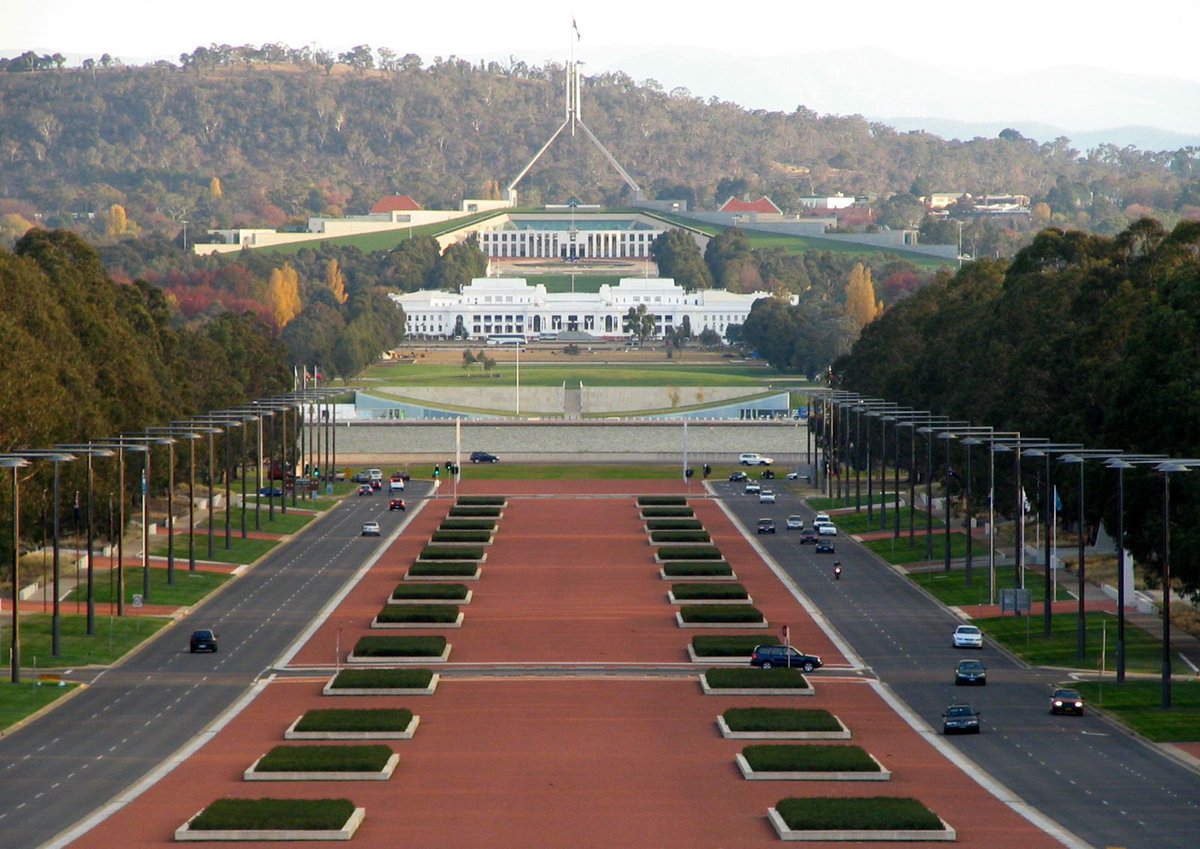
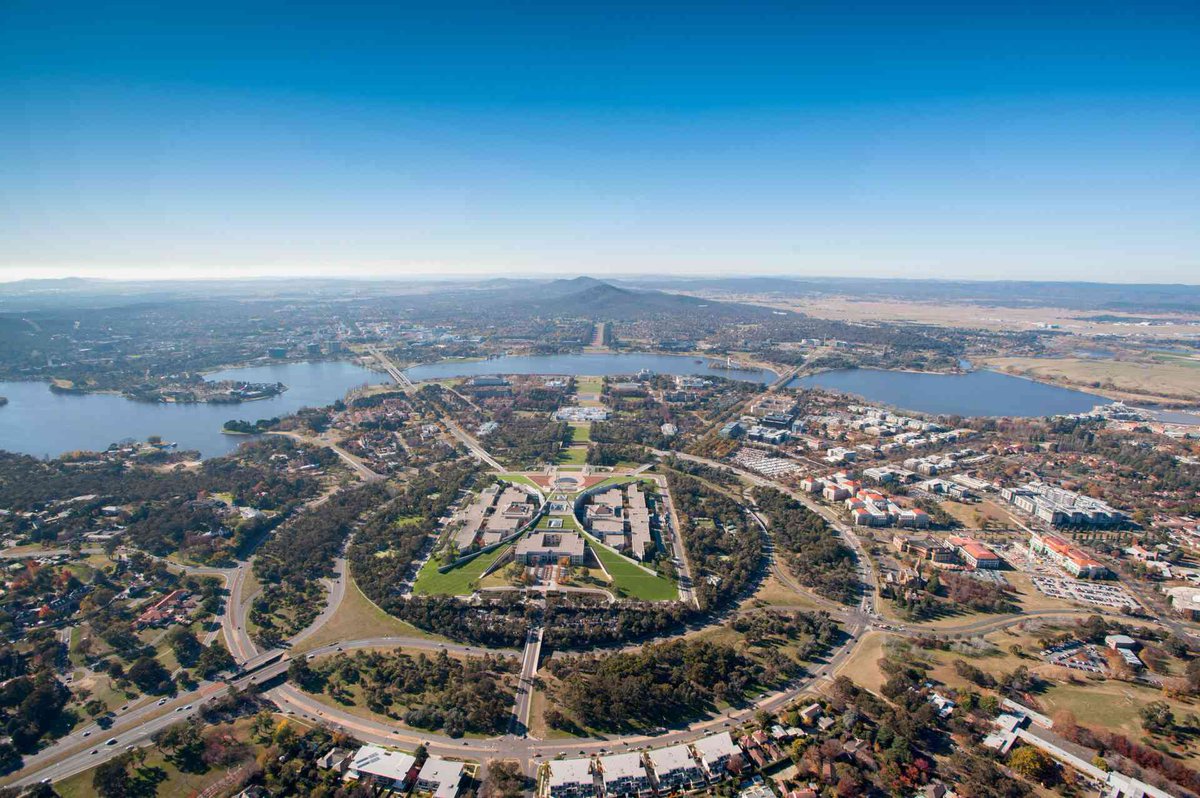
5/ Canberra, Australia - the result of a 100-year argument.
Sydney and Melbourne both wanted to be Australia’s capital. Neither would agree. So in 1908, parliament decided the capital would be a brand new city built exactly between them.
An international design competition was held. An American couple, Walter Burley Griffin and Marion Mahony Griffin, won. Construction began in 1913. It’s still one of the most deliberately designed cities on Earth.
English
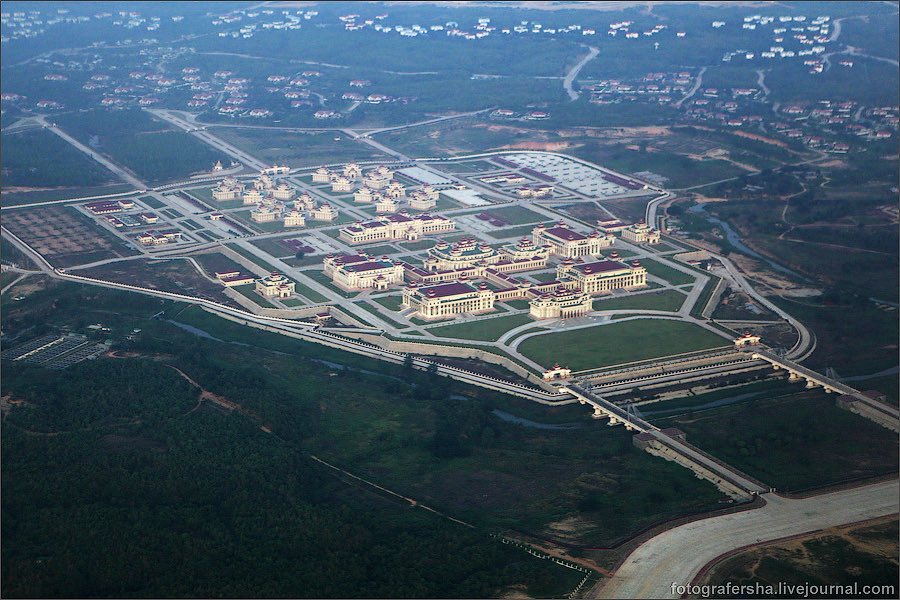
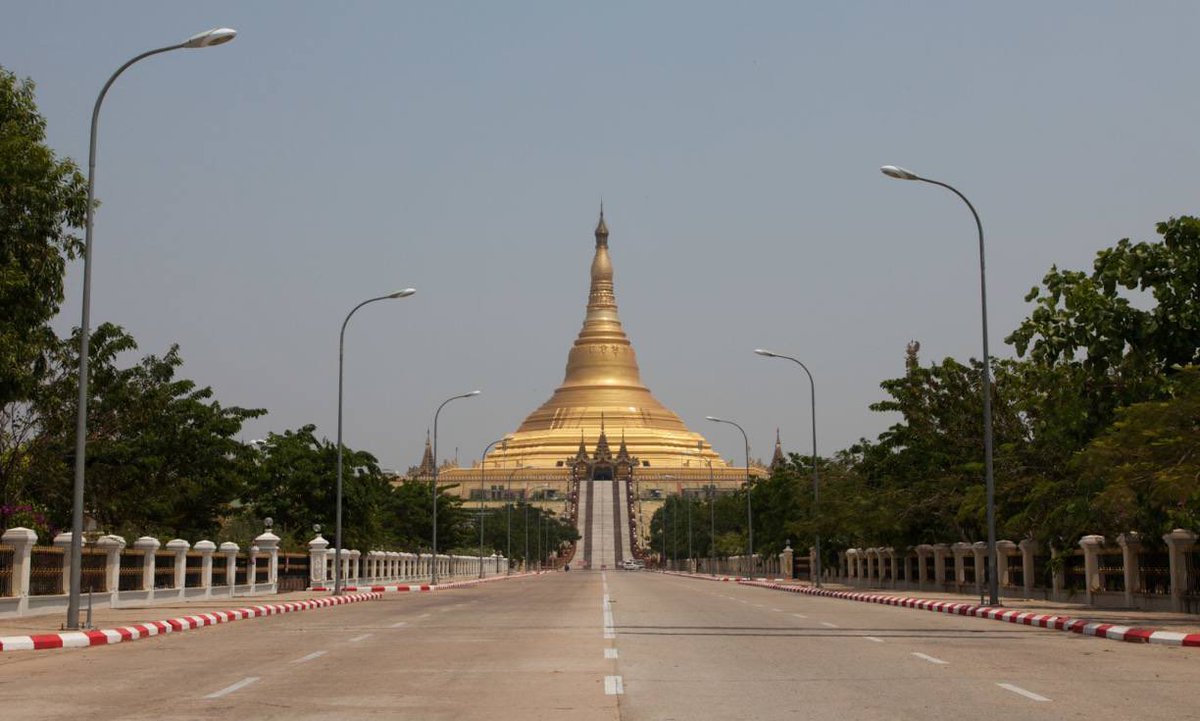
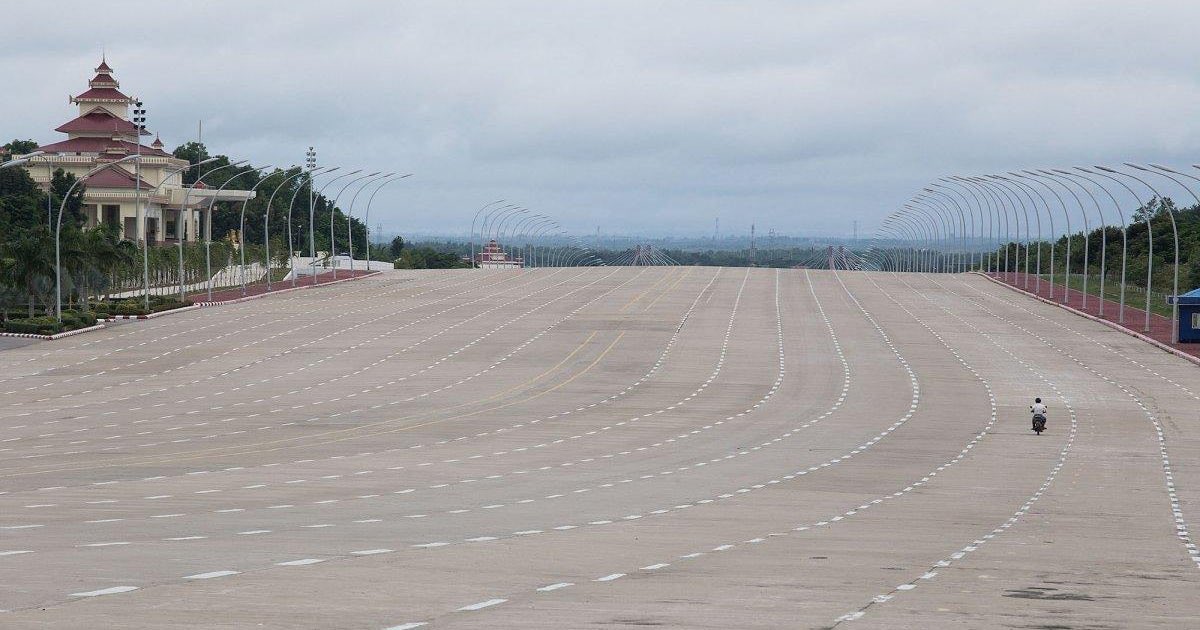
4/ Naypyidaw, Myanmar - built in secret.
In 2002, Myanmar’s military government quietly began constructing a new capital city 200 miles north of Yangon. No public announcement. Just construction.
In 2006 they moved the government there overnight. The city has 20-lane highways, a zoo, and a golf course, and streets so empty that satellite images look like a simulation.
English