@ScFidelis I found this Naira investment calculator (quarterly compounding).
Highest rate here is 15%.
If normal money market fund for e.g, don't know if rates are/will be consistent, from mutual funds history started in Nig, I guess frm 1990s (google).
#calculator" target="_blank" rel="nofollow noopener">investnaija.com/investment-cal…
Hi,
I get the idea of what you’re trying to do. Yes, you can compound for that long.
Typically, the interest adds up to the principal every quarter. And you can auto-reinvest so that the process runs on autopilot for the 5,10,20years you want to compound for.
Now, can the account go dormant? No.
However, it is not out of place for the Fund Manager to ask you for updated KYC after a long period of inactivity. This is to confirm authenticity of the account holder.
@ScFidelis Hello. Can an individual's money market fund or other mutual funds account go dormant if it sees no activity for a period, like bank account?
Or can one just leave a lump sum in a mutual fund for 20 to 30 years etc hoping it would have compounded well quarterly or monthly?
@tosinolaseinde Keep the savings in a Money Market Fund (MMF) & keep building it.
Don’t worry about what to invest in for now. MMF is enough. Currently returns ~ 16%.
Only investment to consider now is investment in yourself to boost your earnings power.
Ethiopia just licensed its first ever foreign investment bank, and it is Nigerian.
United Capital, the Lagos-based financial group, has been cleared by Ethiopia’s market regulator to set up in Addis Ababa, a market of over 120 million people with a capital sector that is still brand new.
A Nigerian firm got there first. And it fits a pattern: while plenty of people write Nigeria off, its companies keep expanding across the continent.
They say only a thief comes in the night.
But Access Bank also cometh. The bank was fined N1.8 billion by the CBN, recorded nearly 6,000 fraud cases, and paid shareholders zero dividend in 2025, all while posting record profits.
Here is what the financial statements actually say.
The Nigerian stock market has gained N56 trillion in 2026 alone.
Not since inception. Not over five years. In 2026 alone, four months.
The NGX All-Share Index closed April at 242,277.81 points with a 55.69% year-to-date return. For context, the entire market has surged 528% since demutualization in 2021. And now it has added N56 trillion in value in less than four months.
Most Nigerians reading this right now are not invested in the stock market. Every single one of those N56 trillion naira in gains went to people who were.
That gap between those who participate and those who do not is growing wider every single month.
Nigerian pension funds have been quietly fueling the stock market rally, and most Nigerians have no idea.
The National Pension Commission (PenCom) recently raised the equity investment limits for pension funds.
That single regulatory change caused a massive influx of domestic institutional money into the NGX.
Here is why that matters. Pension funds manage the retirement savings of millions of Nigerian workers. When PenCom raises the limit on how much of that money can go into stocks, billions of naira flow into the equity market almost immediately.
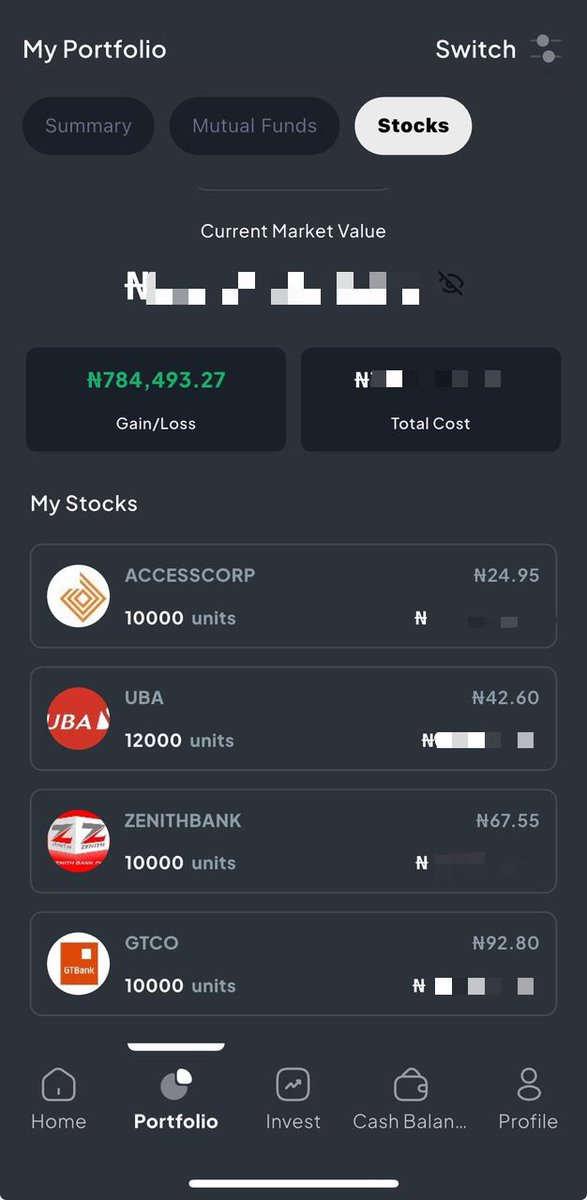
When I began investing in the Nigerian stock market, my goal was simple, build a portfolio that rewards patience, consistency, and discipline.
My investment journey so far:
UBA – 12,000 units
GTCO – 10,000 units
Zenith Bank – 10,000 units
Access Holdings – 10,000 units
@dimmakilishi try United Capital Money Market Funds.
your capital is 100% safe. interests rate fluctuates before 15-22% per annum, but you can redeem your capital under 24hrs. holding period is 14 days before you can take your accrued interest.
@TomolaGroup If PFAs invest this much, why does it seem workers (public, private) across board on the contributory pension scheme always get meager pension monthly? Is inflation to blame? Or something going on in the PFAs?
Or the Pension reforms of 2000s os due for another reform?
The CBN put ₦750 billion in treasury bills on the table yesterday. Investors showed up with ₦2.36 trillion. That’s over 3x oversubscribed.
The 364-day bill alone attracted ₦2.12 trillion in bids for just ₦550 billion on offer. Rates held steady at 15.95% for 91 days, 16.19% for 182 days and 16.20% for 364 days.
Think about what this means. Pension funds, banks, insurance companies and big money investors are fighting over government debt that pays 16%. They can’t get enough of it.
Meanwhile your savings account is giving you 8% and you think your money is working. The same institutions holding your deposits are using that money to buy these T-bills at double the rate they’re paying you.
The information gap is the wealth gap.
Earlier this year, Otedola divested his majority stake in Geregu PLC.
Before then, he was the chairman of company, holding 77% majority stake.
He acquired the power plant for $132M in 2013, scaled it, and exited at $750M in 2026.
That's over $600M in profit in 13yrs, excluding dividends.
Solid business move.
This is the business model of most smart wealthy folks.
Acquire. Scale. Exit.
You don't have to build every business from the scratch to profit from it.
Sometimes, you can also use the A.S.E framework.
Acquire. Scale. Exit.
Money is a leverage.
Use it to save time and scale fast.
Every night, banks lend money to each other. Until now, Nigeria had no single standardized public rate based on actual transactions to show what banks were really charging each other.
CBN just launched one. It’s called the Nigerian Overnight Financing Rate (NOFR). It gets published regularly so the whole market can see it.
Over time, this rate will influence how banks price everything from money market products to the interest you earn on deposits. When the number is public, pricing gets harder to hide.
The US has SOFR (Secured Overnight Financing Rate). UK has SONIA (Sterling Overnight Index Average). South Africa has JIBAR (Johannesburg Interbank Average Rate). Nigeria now has NOFR.