Mind Infestation nag-retweet

In 2005 there was an internet poll to find a replacement for Vin Diesel.
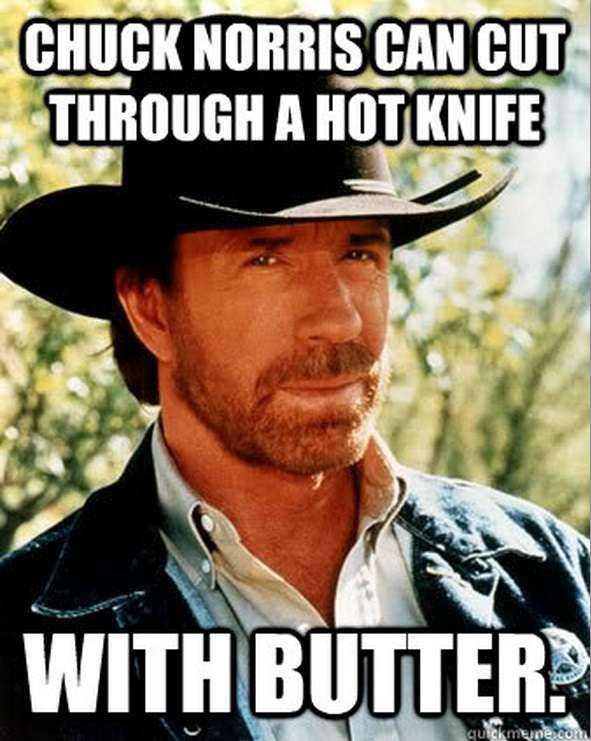
Ten candidates were on the list. Chuck Norris wasn't one of them.
He won by a landslide anyway.
Here's the backstory for anyone who missed it: a high school kid named Ian Spector had built a joke generator mocking Vin Diesel for starring in The Pacifier, a movie where a Navy SEAL goes undercover as a babysitter.
It blew up overnight.
Then the movie left theaters, people moved on, and the traffic died.
So Spector ran a poll. Ten candidates to replace Diesel.
Chuck Norris wasn't on the list. He won via write-in by a landslide anyway.
In 2023, Ryan Hockensmith wrote a piece for ESPN covering this whole situation.
Spector then switched the generator over, and within months it was doing 20 million visits a month. The jokes spread to every forum, blog, and email chain on the internet. Conan O'Brien did a segment. Time magazine ran a cover story calling Chuck an "online cult hero." He was 65 years old, Walker Texas Ranger had been off the air for four years, and nobody had been talking about him for a decade.
He didn't plan it or pay for it. His team didn't even like it.
When Spector finally met Chuck and his wife Gena in a Connecticut casino suite, one of Norris' business people pulled him aside and said: "If you're going to do anything that generates revenue from this, please don't, or at least talk to us first."
The lawsuit came two years later anyway, after Spector published a New York Times bestselling book of the facts. Penguin argued parody law. The case settled quietly. The book stayed in print. Sales actually went up because of the publicity from the lawsuit trying to stop them.
None of that is the interesting part.
The interesting part is why Chuck Norris and not Vin Diesel. Why did the internet have an endless well to draw from with one and not the other?
Diesel had buzz. A $200 million movie, a moment, a cultural conversation, but Norris had 40 years of a real career documented across thousands of independent sources. Air Force service in Korea. Black belts in Brazilian jiu-jitsu, judo, and Tang Soo Do. A sparring friendship with Bruce Lee that launched his film career. Missing in Action on a $3 million budget that returned $52 million. Eight seasons of Walker Texas Ranger. A martial arts discipline he literally invented himself. A philanthropy program that reached two million at-risk kids. A water company bottled from an aquifer on his Texas ranch.
When the internet went looking for material on Chuck Norris, it found a mountain. When it went looking for the same on Vin Diesel, it found a movie that had already left theaters.
That asymmetry is exactly what's playing out in search right now.
ChatGPT, Claude, Perplexity, and Google's AI Overviews have become the first place people go to discover, research, and decide, on products, services, businesses, and people. And what AI surfaces isn't whoever paid the most or posted the most recently. It reflects the accumulated weight of what the broader internet has genuinely and independently said about you over time.
Reviews, articles, backlinks, forum discussions, third-party mentions you never wrote or controlled. The more independent sources pointing at the same thing from different angles, the more confident AI becomes in surfacing and recommending it.
Most businesses are Vin Diesel right now. They have traffic. They have campaigns. They have a moment. But the moment is rented, Google rankings that evaporate with an algorithm update, paid traffic that disappears the moment the budget runs out, social reach throttled whenever a platform decides it needs the revenue more than you do. When the algorithm moves on, there's nothing left for anyone to find.
The businesses winning in AI search are Chuck Norris. They built something real over time, genuine content, authentic reviews, backlinks from sources that chose to reference them, a presence that other people documented because it was worth documenting. That body of evidence doesn't evaporate. It compounds. Every credible mention becomes another signal. Every third-party reference makes the next one more likely. AI learns to trust what the internet has consistently and independently agreed on.
When ESPN interviewed Spector years later and asked whether AI could ever be programmed to consistently produce viral content, he paused and said: "That's making an assumption that humans can."
He's right. Nobody planned Chuck Norris Facts. Nobody manufactured the moment. What made it possible was that when the internet went looking, there was actually something there to find, decades of a real career, built without any thought of what it might one day be worth to an algorithm.
Vin Diesel had a movie whereas Chuck Norris had a legacy.
In the age of AI search, the difference between those two things is everything.
English