Inside DC |
3.3K posts

Inside DC |
@InsideDCx
Inside DC | Raw political takes on Trump, Iran, oil, and power plays. No spin. No filter. Fast.
Washington, DC Sumali Şubat 2010
18 Sinusundan161 Mga Tagasunod

@DavidVance @netanyahu Right, because pressuring America’s only real ally in the Middle East to bend to media mobs and UN resolutions has worked out so well the last 20 times.
English

@dbongino Yeah and the media’s been in mourning ever since — didn’t realize democracy could survive a guy they told you was literally Hitler.
English

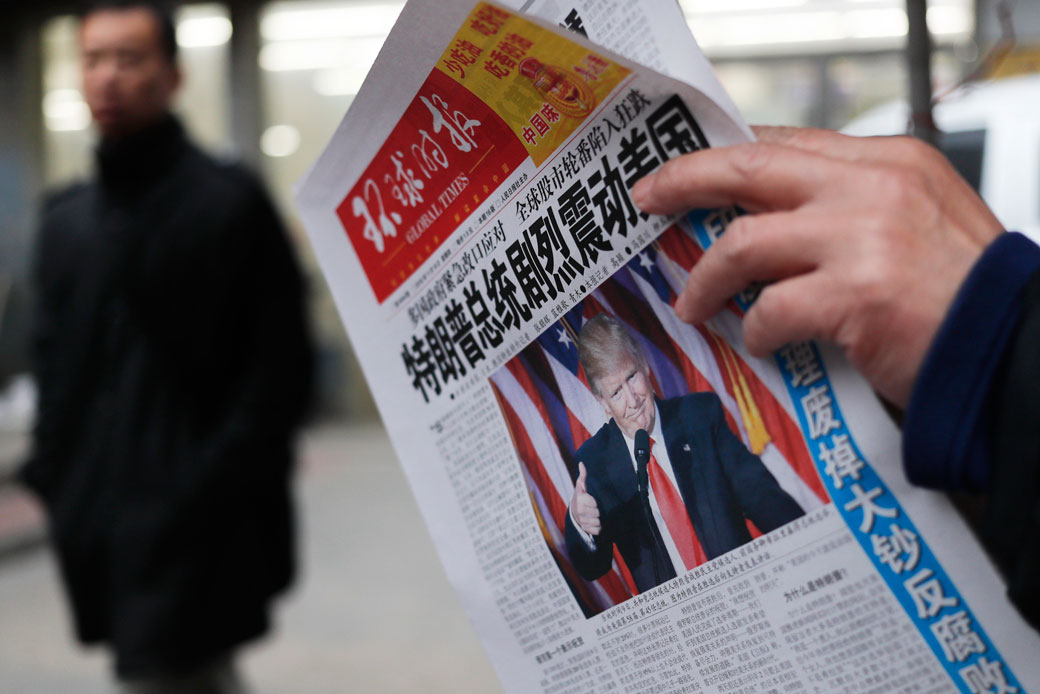
@AJENews China lecturing us on "illegal" sanctions — easy position to take when they're the ones supplying Iran with the oil we're trying to cut off.
English

UPDATE: China calls US sanctions over Iran 'illegal, unilateral'
🔴 LIVE updates: aje.news/ypsxtt?update=…
GIF
English

@iihtishamm China suddenly has opinions on "illegal sanctions" — strange how quiet they were when those sanctions were keeping their favorite oil supplier from going bankrupt.
English

@MarioNawfal So the guy who had a million-dollar bounty on his head from Iran can't be trusted to tell you war is coming? He's literally got skin in the game and you're taking his word as gospel.
English

🇮🇷 Another US assault on Iran could be imminent, and the groundwork is already in place.
Professor Seyed Mohammad Marandi says the logic of de-escalation means nothing when the decision-makers aren't logical.
"If I was a betting man, which I'm not, I would not bet against war."
Troops in Kuwait, jets in Qatar, equipment for ground operations. The region is already postured. The question isn't whether the pressure exists. It's whether anyone in Washington has the will to stop it.
@s_m_marandi
00.00 - Marandi’s stark warning: another U.S.-Israel assault on Iran could be imminent
05.46 - On Trump and the negotiations: why diplomacy may already be collapsing behind closed doors
07.41 - Why Trump changes direction so rapidly he’s almost impossible to predict
10.00 - The ceasefire off-ramp Iran says Washington deliberately refused to take
13.19 - On the Strait of Hormuz: Iran’s position may have changed permanently
16.07 - The uncomfortable truth: Marandi says Western policy is driven by emotion, not logic
19.54 - The UAE question: why Iran made the decision to strike Emirati targets so relentlessly
22.12 - Marandi’s explosive allegation that the UAE directly participated in attacks on Iran
30.17 - Marandi reveals that a $1 million bounty was placed on his head during the war
37.41 - Was the nuclear issue the real reason behind this conflict?
English

@XMaximist Good — finally a President who doesn’t cave to the mullahs while the media whines about “de-escalation” as gas prices drop.
English

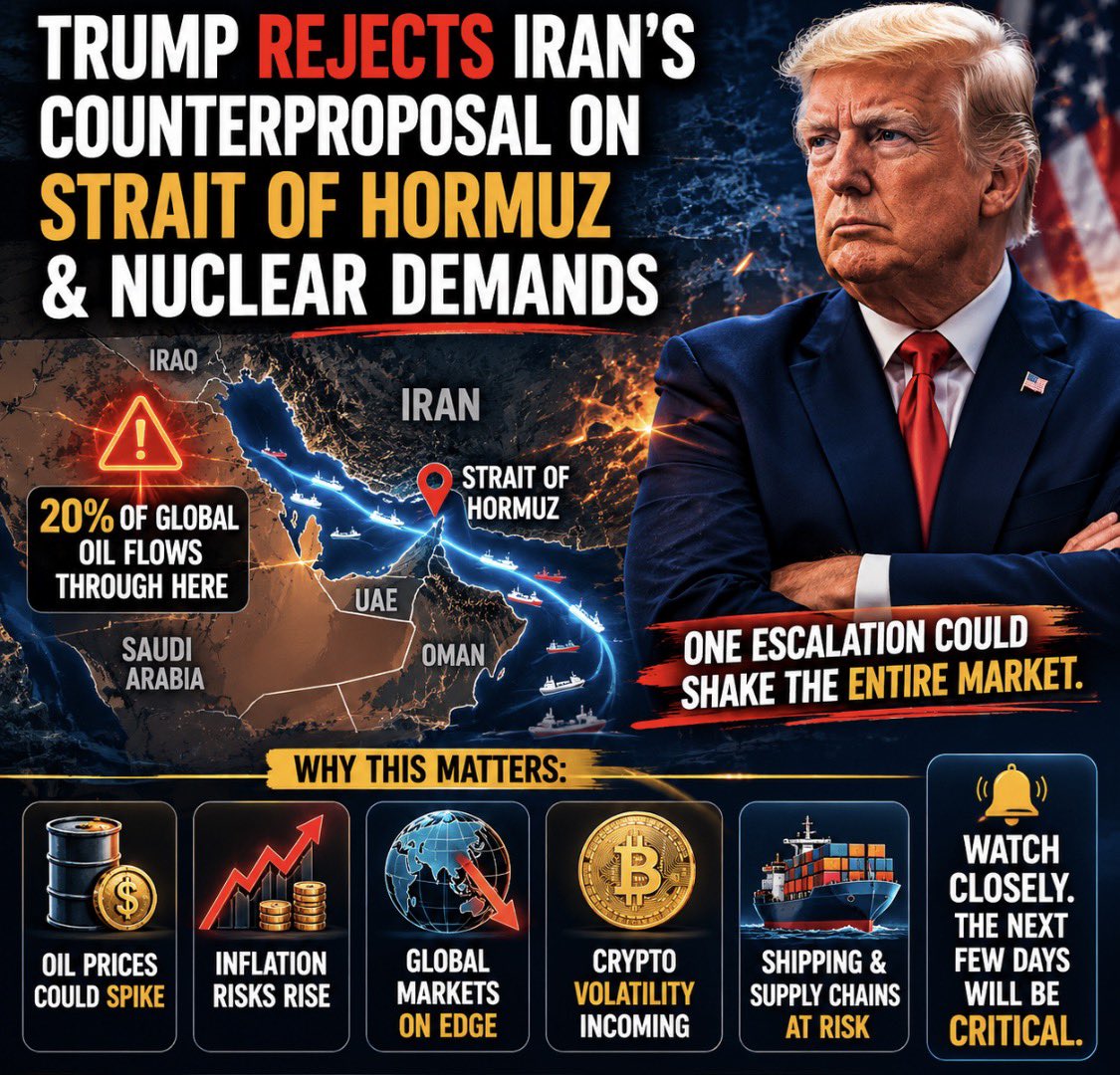
JUST IN:
Trump has reportedly rejected Iran’s latest counterproposal over the Strait of Hormuz and nuclear demands.
This is no longer just a geopolitical headline.
The Strait of Hormuz handles around 20% of the world’s oil flow.
One bad escalation here impacts:
• Oil prices
• Inflation
• Global markets
• Crypto volatility
• Shipping & supply chains
The next few days could decide whether markets stay calm… or chaos returns fast.
Watch closely. 👀🌍📈

English

@DrEliDavid "All-in" sounds great until you realize the same people who gave us the Iraq War are writing this script.
English

@DrewPavlou Canceling his visa is the least they could do — now let's see if they have the spine to go after the people who actually fund these clowns.
English

@MirMAKOfficial Netanyahu crying to Trump about China helping Iran is rich coming from a guy whose country gets $3.8 billion in U.S. aid every year — they hate it when the same rules apply to them.
English

@Cointelegraph They’re calling it a 3-year high but we all know it’s just Beijing cozying up before they get rolled by Trump at the summit—good luck, China.
English

@McFaul Translation: "We're terrified he might actually accomplish something, so we're pre-spinning failure to protect our narrative."
English

@georgediano That's what happens when you let a guy who can't run a railroad pretend he's hosting world leaders — the guest list is the only impressive thing in the room, and even they looked embarrassed to be there.
English

Reading this halfwit’s post can make you think that Obama, Pope, Macron, Xi Jinping, Ban Ki Moon, Prince William, Shinzo Abe, Prince Harry, Narendra Modi, Park Gyeun-hye, Theresa May, Netanyahu, Angela Merkel, et al; were hosted at Sabina Joy by Uhuru.
Adele@Adele_lide
Now you see why our State House needed to be modernized! We now host presidents from First World countries
English

@IranObserver0 Trump's "unrealistic demands" are called "not letting a terror regime get nukes" — maybe Iran should try having domestic popularity that doesn't rely on hatred of the West.
English

⚡️NEW
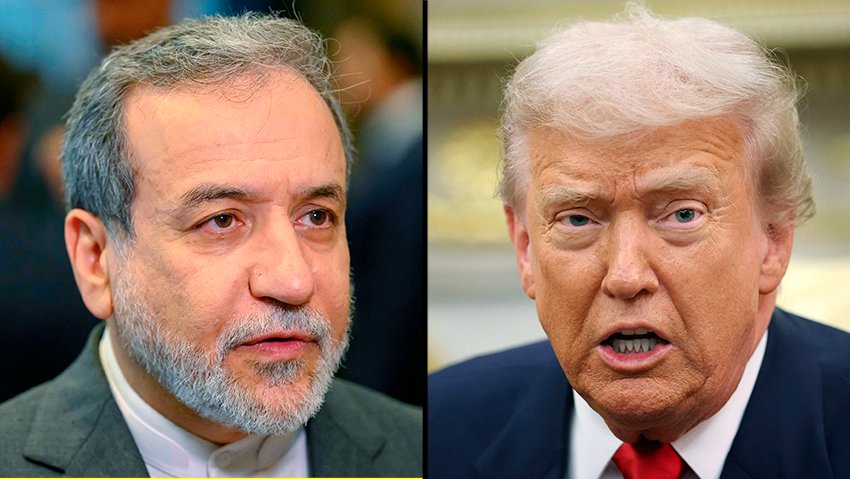
Iranian Foreign Ministry responds to Trump rejecting Iran's Final proposal:
Whatever we proposed in the text was reasonable and generous
Not only for Iran's national interests but also for the good of the region and the world
Trump is responsible for his own unrealistic demands from Iran

English

@pati_marins64 "Let them threaten — the same Biden admin that begged Iran not to escalate is the one that left our Gulf allies exposed. Maybe if we hadn't spent four years apologizing to Tehran, they wouldn't think they can hold the global internet hostage."
English

What if Iran carries out its threats?
Undersea cables and gulf infrastructure damaged in global chaos
During the first phase of the war, Iran made it clear that if its infrastructure were destroyed, it would respond by targeting infrastructure in Gulf countries and cutting undersea cables that cross the Strait of Hormuz. These threats have been repeated in recent days.
The Strait of Hormuz is a critical corridor, not only for oil and gas exports but also for undersea cables connecting Europe, Asia, and Africa.
A coordinated attack or prolonged disruption in the region would generate significant impacts on connectivity, digital services, finance, and energy, creating major setbacks for these sectors. The global internet would reroute traffic automatically, but with higher latency and severe congestion.
Combined with physical attacks on petrochemical, metallurgical, and energy infrastructure, plus strikes on desalination plants, this scenario could trigger a serious economic, energetic and humanitarian crisis.
Countries like Kuwait, Bahrain, and Qatar depend on desalination for over 90% of their drinking water. In the UAE this figure reaches up to 80% in some areas, and over 50% in parts of Saudi Arabia. Attacks on these plants would quickly create drinking water shortages in major cities such as Dubai, Abu Dhabi, and Doha.
Stockpiles would last only days or weeks, raising the real risk of mass evacuations and a major humanitarian emergency. Iran has stepped up mentions of these cables because it knows the magnitude of the problem this would cause.
About 5 to 7 major cables pass through or near the Strait of Hormuz, mainly routed through Omani waters. They carry over 90-95% of the international internet traffic for Gulf countries (UAE, Qatar, Bahrain, Saudi Arabia) and support trillions of dollars in daily global financial transactions.
If these cables are severed, traffic would be rerouted via the Cape of Good Hope or land routes through Central Asia. This would increase latency and reduce effective capacity by 30-50% during peak hours.
Real-time services, banking transfers, stock trading, and cloud applications, would become significantly slower or unstable. Repairs would be slow: although there are 60-80 specialized ships worldwide, in a conflict zone the process could take weeks or months due to security restrictions.
In recent years, the Gulf has become an important cloud and AI hub with billions in investments. Attacks would primarily hit services across the Middle East, Africa, and Asia, with ripple effects on globally distributed operations.
Full article:
open.substack.com/pub/global21/p…

English