Alvin

3.7K posts

Alvin banner
Alvin

Alvin

@JustSomeDev

Live a richer, meaningful life through Slow Living. I share insights on how and why in my weekly newsletter. Link's below.

Sumali Mayıs 2021
309 Sinusundan781 Mga Tagasunod
Naka-pin na Tweet
Alvin
Alvin@JustSomeDev·
For years, I was stuck on teams drained of passion that treated me as a mere code monkey. I got no say, all blame, no praise. My Growth - My Career - was stuck in mud. I don't want that to happen to you or anyone else. So, here are my top tips on how to escape from misery:
English
4
6
50
0
Alvin
Alvin@JustSomeDev·
@jenwiderberg Sadly, treating human beings like cogs in machines isn't new
GIF
English
1
0
2
17
Chief Recruiting Officer
Chief Recruiting Officer@jenwiderberg·
Smart glasses, dumb results? Interesting article on how the rush for efficiency and using the shiny new thing in tech can lead to worse outcomes for people. Are you noticing a shift in the nature of work with monitoring tools now? ******* Amazon’s development of “Amelia,” a proposed pair of smart glasses designed to optimize delivery drivers’ routes, marks a new frontier in workplace technology, aiming to shave seconds off each delivery. But while such innovations promise efficiency, they also raise critical concerns about employee autonomy, safety, and morale. Experts, including Jason Walker, associate professor and program director of industrial and organizational psychology at Adler University, warn that top-down approaches to leadership that push workers to conform to increasingly rigid systems can undermine the very productivity such tools seek to enhance. “It's like treating an employee as a cog in a tech-optimized machine. And I think when we do that and we take away decision-making, it leads to burnout and resistance,” Walker says. "You should be able to go left if you want to go left, because you know the route is better. And when you are dictating to the minutia of what someone needs to do for the job, you do not trust your employee. And it feels like that is what this is about.” Workplace technology: saving seconds at the cost of employee morale Amazon’s glasses aim to optimize the “last 100 yards” of delivery, but critics question whether the focus on seconds is misplaced. The use of delivery glasses for step-by-step navigation might seem like a game-changer, but Walker views the move with skepticism. “I think there's a bit of a slippery slope when it comes to this chasing hyper-efficiency thing,” Walker says. “It's going to shave off seconds, and seconds will save us all this money, versus actually looking at the issue ... it's just that downloading of corporate responsibility onto the employee, to do something that seems almost too much to ask.” Quentin Durand-Moreau, assistant professor of occupational medicine at the University of Alberta, explores how such technology can overstep boundaries, risking worker satisfaction and long-term productivity. Using the example of “voice picking” technology that involves headphones on warehouse workers that instruct them what to do throughout the day, Durand-Moreau explains how a common issue with widely-implemented technologies is the lack of consultation with employees. “This kind of tool is really built with a vision of productivity, where the input of the worker is not discussed,” says Durand-Moreau. “It's kind of a top-down thing, where we're looking at saving time, but where the overall picture of what works is not taken into account. This kind of system is usually set up on just certain parameters of work, usually reducing ‘dead time’ – time that doesn't provide value-added to the business, where there's no profit generation, wait times … which are usually extra time for the workers to think of the overall process, little breaks that help them be able to sustain and carry on.” Reducing autonomy has physical and mental consequences Durand-Moreau goes on to describe the physical and mental impacts that reducing employee decision-making through technology can have, from musculoskeletal effects to job strain. The reason for these effects is increased job intensity, he explains, resulting from fewer opportunities for employees to decompress via breaks and autonomy. “When you have those little breaks, when we don't push the workers to destroy every single dead time, the times that are not providing any value added to the business – if the aim is to get rid of all of this, it means that the work is going to be more intense … it means that all of the muscles are going to work way more and produce way more painful substances, and their likelihood of generating musculoskeletal disorders.” Even if a job is not highly physical, Durand-Moreau stresses, an increase in intensity will result in higher cases of musculoskeletal disorders, such as carpal tunnel syndrome. Psychologically, taking away decision-making power also causes “job strain”, which is the result of employees working in conditions in which they have little control. “When you are asking the workers to comply with orders that are not discussed, and provided by a system on which you have no influence over, it really reduces your decision latitude. And if you reduce your decision latitude, it increases your risk of job stress,” Durand-Moreau says. “According to the Karasek [job demands-control] model, job strain is defined as a situation associating low decision attitudes and high psychological demands, and it's associated with increased cardiovascular diseases, and a number of mental health problems, such as anxiety and depression.” Effects of technology innovations on social interactions at work Furthermore, Durand-Moreau warns that tools like Amazon’s delivery glasses might also disrupt essential social interactions at work. “If I take the example of the voice-picking system, where the system talks to the worker through a headset and gives instructions, we’ve seen that it precludes human interaction,” he explains. “When a worker sees another worker and just says ‘hi’, the system says ‘error’ or ‘system error.’” Such disruptions, Durand-Moreau adds, can lead to isolation, eroding the camaraderie that often sustains workers in demanding roles. Ultimately, the integration of tools like smart glasses must be approached thoughtfully, balancing technological innovation with the human element. Organizations that fail to address these considerations risk not only harming their employees but undermining the long-term success of their innovations. “When you introduce a new technology, it's not just a way to do work, but the tool itself has an impact on the way you conceptualize the task,” he says. Conscious implementation of technology tools For technology to truly enhance the workplace, Durand-Moreau stresses that it must empower employees rather than control them, and the success of workplace technology depends on its adaptability and the ability to involve workers in shaping its use. While technology holds immense potential to improve the workplace, its implementation must prioritize employee involvement, flexibility, and respect for the complexity of human work, rather than being a way to “standardize to the extreme.” “We have room to improve it, to take it, to appropriate it, to not let it take control,” Durand-Moreau says. “There should be a lot of discussions prior to implementing the technology with the workers, discussing all of the consequences. There should be trials.” Legal and systemic implications of technology Beyond practical concerns, introducing such technology can invite legal scrutiny, Walker says. "There would be a real need to examine the legal aspect of this level of surveillance," he says. Additionally, questions arise about whether failure to comply with a technology such as Amazon’s proposed smart glasses could result in disciplinary action: "What is your policy and process going to look like if they go left and didn’t go right? Is that a discipline offense?" The pursuit of hyper-efficiency often overlooks the human element, which is critical for sustained productivity. "Smart leaders know that the sustained productivity comes from respecting their workers and trusting their workers and not pushing people to that breaking point," Walker explained. "This isn’t life or death. This isn’t the golden hour of getting someone to a trauma center. This is getting a package to someone’s door … when that individual is out of the truck, saying hello to people, petting a dog—do we really need to prescribe that piece, or can we trust them to get the job done?” Link: hrreporter.com/focus-areas/hr…
English
1
0
2
208
Alvin
Alvin@JustSomeDev·
@jenwiderberg That's awesome, Jen. I'd be happy help. But there's a lot more to unpack than I can fit on here. I'll need to dive deeper into the issue first. 🙂
English
1
0
1
14
Chief Recruiting Officer
Chief Recruiting Officer@jenwiderberg·
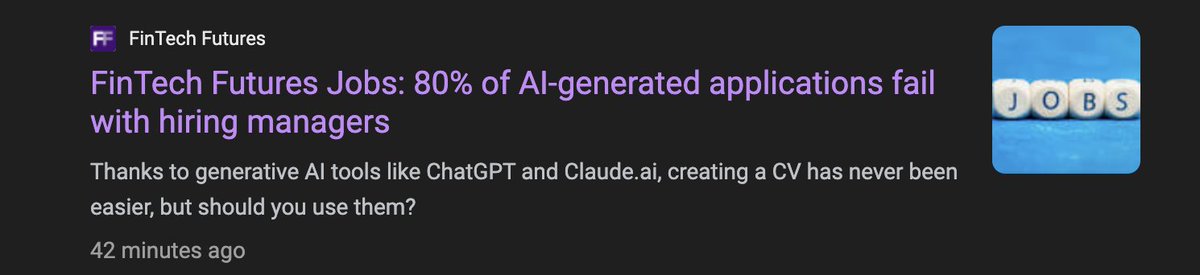
Is it that the potential employee is too resourceful or BSing? What do you think?
Chief Recruiting Officer tweet media
English
2
0
2
205
Alvin
Alvin@JustSomeDev·
Good point! I imagine a longer term relationship means looking for shared values. I find asking about how things work day to day gives clues about what the other person values. But I know there are other ways. Of course, there are others who just want to "sleep around." On both sides of the table.
English
1
0
1
57
Chief Recruiting Officer
Chief Recruiting Officer@jenwiderberg·
@JustSomeDev Taking that example, let’s think about the difference in prepping just like another date versus potential marriage material
English
1
0
1
14
Chief Recruiting Officer
Chief Recruiting Officer@jenwiderberg·
Person A: "Interviews are a numbers game." Person B: "Interviews are the championship game." How does each mindset impact preparation?
English
3
1
5
484
Alvin
Alvin@JustSomeDev·
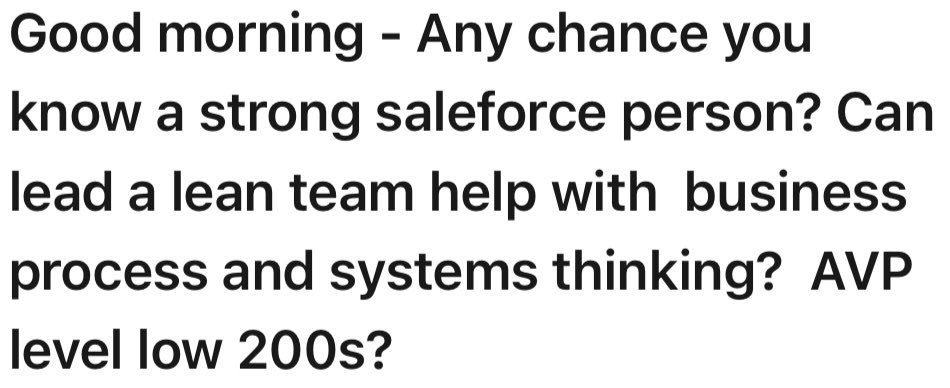
@jenwiderberg Out of curiosity, what does "AVP level low 200s" mean?
English
1
0
1
12
Chief Recruiting Officer
Chief Recruiting Officer@jenwiderberg·
Good reason to connect with recruiters in your niche? You are top of mind when messages like this come in from managers we know and have placed people with before.
Chief Recruiting Officer tweet media
English
2
0
4
193
Alvin
Alvin@JustSomeDev·
@jenwiderberg Prep smarter, not harder with Jen the Recruiter! 😄
English
1
0
1
27
Chief Recruiting Officer
Chief Recruiting Officer@jenwiderberg·
Being "authentic" in interviews doesn't mean walking in unprepared. And no, that rejection isn't "the universe telling you something." It's telling you to prep harder because these jobs aren't getting easier to land.
English
1
0
6
688
Alvin
Alvin@JustSomeDev·
@DellAnnaLuca In my experience, when friction is applied to each interaction, people just find other paths of less resistance. I remember a time when torrent sites were popular ways to exchange media files for this reason. Human ingenuity takes it underground.
English
0
0
0
86
Luca Dellanna
Luca Dellanna@DellAnnaLuca·
Italy to require ID card verification & >18yo to access porn websites. Prohibition works but only when the friction applies to each interaction (eg, buying each alcohol bottle is hard, not just the first one). Here, a teenager learns how to access foreign websites and they’re done. Zero practical results, and tons of potential problems.
Luca Dellanna tweet media
English
7
2
27
5.3K
Alvin
Alvin@JustSomeDev·
@jenwiderberg Our desk situation is hybrid. 😆 We have shared desks, but those who go in for more than 3 or 4 days a week get a dedicated one.
English
1
0
1
21
Alvin
Alvin@JustSomeDev·
@jenwiderberg I can see more of this. For years, some airlines have already been offering training to people with no prior flying experience with a preference for college/uni grads. e.g. flygenesis.ca/commercial-pil… It just makes sense for an industry in true need of help.
English
1
0
1
71
Chief Recruiting Officer
Chief Recruiting Officer@jenwiderberg·
Interesting way to fill hiring shortages Working directly with colleges and universities to create a pipeline to an actual job Will we see more of this?
Chief Recruiting Officer tweet media
English
2
0
1
248
Alvin
Alvin@JustSomeDev·
@jenwiderberg 💯 The most amazing people I ever worked with shared similar values, attitudes, and other soft traits & skills that aren't captured in a dashboard. I've never seen intangibles quantified accurately.
English
1
0
1
25
Chief Recruiting Officer
Chief Recruiting Officer@jenwiderberg·
@JustSomeDev Sad state if you are applying online Talent stack and build good relationships so you are not lumped in with this type of job application
English
1
0
1
12
Alvin
Alvin@JustSomeDev·
@jenwiderberg Meh... I don’t think it matters. A bias audit would only work if the auditors are unbiased. How can we be sure of that? Who audits the auditors?
English
1
0
1
14
Chief Recruiting Officer
Chief Recruiting Officer@jenwiderberg·
NYC: Passes law on use of AI in hiring. The Law prohibits employers and employment agencies from using an automated employment decision tool (AEDT) in New York City unless they ensure a bias audit was done and provide required notices. The Law was enacted in 2021. It took effect on January 1, 2023. Enforcement begins on July 5, 2023. Also NYC:
Chief Recruiting Officer tweet media
English
2
1
4
325
Alvin
Alvin@JustSomeDev·
To stay present in a moment, I dedicate a separate time for reflection. You can do it by dedicating time for a journal, diary, or in my case, a newsletter. I don't have to think about what to post while traveling because I know there's time for that later.
Dmytro Krasun@DmytroKrasun

What I wanted to write is how good my life is and how grateful I am. That's what such views provoke. But no! I am fucked. Because being in such a place and not being in the real moment, but thinking what I am going to post is just a mental illness. Let's admit it.

English
1
1
9
198
Alvin
Alvin@JustSomeDev·
@jenwiderberg Maybe this is a way to screen out developers who aren't cyber secure... 🤔 😆
GIF
English
1
0
1
28
Chief Recruiting Officer
Chief Recruiting Officer@jenwiderberg·
Good reason to pass on any open source technical test from recruiters on LinkedIn Specifically, fake internal recruiters from financial services firms
Chief Recruiting Officer tweet media
English
2
0
5
349
Alvin
Alvin@JustSomeDev·
@jenwiderberg Interacting with people IRL. 😛 I know I suck. But I'm working on it. 💪
English
1
0
1
7
Chief Recruiting Officer
Chief Recruiting Officer@jenwiderberg·
AI allows anyone create with digital information. But leading conversations with people? That's a skill not everyone has. How are you balancing tech and people skills in your growth?
English
2
0
1
143
Alvin
Alvin@JustSomeDev·
Every opportunity has a cost. Whenever I see someone boasting about making bags of money a month, I don’t just wonder how they got there. I wonder what opportunities they gave up to get there.
English
0
0
2
124
Alvin
Alvin@JustSomeDev·
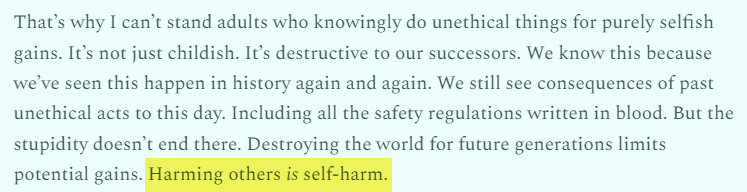
If it's not clear why, it's because there are second-order effects and cascading long-term consequences to hurting others.
Alvin tweet media
English
0
0
0
62