@HistoryLegends_ Common mate that's not true
It was just a laundry incident, the washing machine in the airplane caught fire.
English
Knight2212.base.eth
24.6K posts

@Knight22122
Ambassador @rapidnodexyz | Shitposter | Opinionated | Economist | Founder of Nothing | Graphic and Web Designer

The IRGC published footage showing their air defences shooting down a U.S. A-10 Warthog attack aircraft, which was reportedly taking part in the mission aimed at rescuing the crashed F-15 pilots.

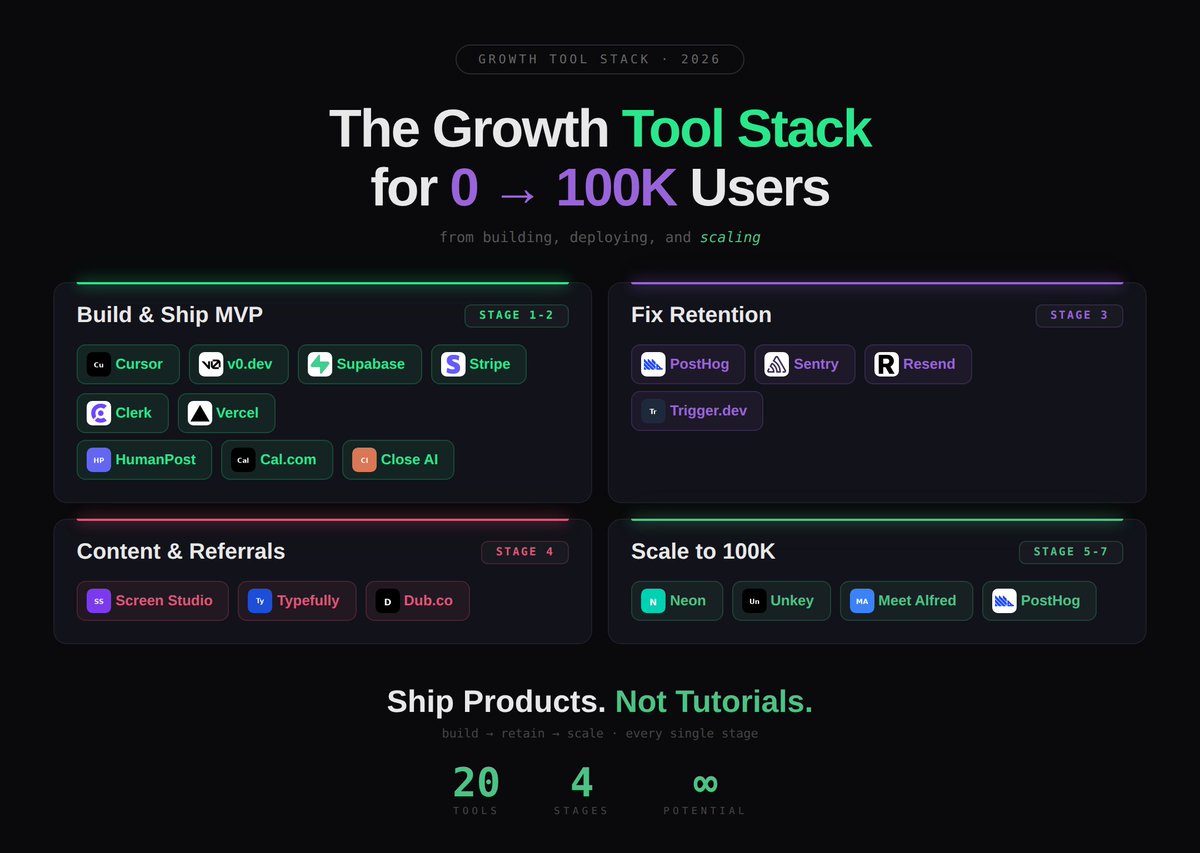
How to grow your app from 0 to 100k users (PLAYBOOK): by the end, you'll know how to: - get your first 10 paying customers without a funnel - build organic growth that compounds monthly - know exactly when to spend money and when not to - turn your users into your best acquisition channel here's the full 7-stage roadmap: Stage 1 (0-10): find your niche and sell one person at a time the biggest mistake is building for "everyone" you don't need a market. you need 10 people who feel the pain so badly they'd pay you today how to find them: > pick one specific audience (who can potentially buy the solution) > go where they already complain: X, Reddit, Slack communities, Discord servers > read their exact words. the language they use to describe the pain = your marketing copy > DM 50 people. not pitching. just asking "what's the most frustrating part of [problem]?" your first 10 customers should feel like you read their mind with my own product, I went to a conference and just talked about the problem I was solving 5 people wanted to buy before I had anything to sell, 50 are ready to test (at 2x price from basic costs) metric to watch: conversion from conversation to "shut up and take my money" mistake to avoid: building features before talking to humans -------- Stage 2 (10-100): do things that don't scale forget funnels. forget ads. forget automation this stage is manual and it's supposed to be how to get to 100: > send 20-30 personalized DMs daily on X, Reddit, LinkedIn (not cold outreach!) > post daily in communities where your audience already lives > jump in free onboarding calls, watch how people use your product > when someone leaves, always ask why (it happens often lol) what this gives you: 1: real feedback that shapes your product into something people actually need 2: language and objections you'll use in marketing for the next 2 years 3: early advocates who tell their friends the first 100 users will teach you more than any analytics dashboard ever will don't scale until you've fixed everything these 100 people found broken metric to watch: how many users come back after week 1 mistake to avoid: automating too early and losing the human feedback loop -------- Stage 3 (100-500): fix retention before chasing growth this is where most apps die silently they keep acquiring users while losing them out the back door before you spend a single minute on growth, answer these: 1: what % of users are still active after 7 days? 30 days? 2: where exactly do people drop off in onboarding? 3: what does your "WOW moment" look like and how fast do users reach it? how to fix retention: > cut time to value. 10 steps to feel the product? make it 3 > one email sequence that gets users to their first win in 24hrs > remove features that confuse more than they help > talk to churned users. after 10 calls the pattern is obvious your target: get churn below 5% monthly before moving to stage 4 because growing with 15% churn is like filling a bucket with a hole in it metric to watch: monthly churn rate and day-1 retention mistake to avoid: adding features instead of fixing the experience -------- Stage 4 (500-1k): build your organic engine and referral system now you've got the right to scale two engines to build simultaneously: content engine: - pick 2 platforms max (X + LinkedIn, or YouTube + TikTok depending on your audience) - post 5x/week minimum. document your building process, share insights, show results - every post should teach one thing or prove one result - repurpose: one idea = 1 long post + 3 short posts + 1 thread across platforms referral engine: - trigger "invite a friend" right when users feel the most value - reward both sides: extended trial, premium feature, or credit - make sharing one click with a pre-written message - track top referrers and treat them like VIPs this is where growth starts compounding. content brings strangers. referrals bring warm leads. both are free metric to watch: viral coefficient (how many new users each existing user brings) mistake to avoid: spreading across 5 platforms and doing all of them poorly -------- Stage 5 (1k-10k): partnerships, affiliates, and first paid experiments organic alone hits a ceiling. now you layer partnerships: > find products with the same audience but no competition > propose co-marketing: joint webinars, shared newsletters, bundles > one right partnership can bring 500+ users overnight affiliates and BDs: > launch an affiliate program with 20-30% recurring commission > recruit creators who already talk to your audience > find 2-3 BDs to sell your product on commission base first paid channels: > only test ads when you know your CAC and LTV cold > start with retargeting (cheapest and highest intent) > test one cold channel: Meta for B2C, LinkedIn/Google for B2B > $500-1k/mo to test. scale only what's profitable in 30 days metric to watch: CAC to LTV ratio (aim for 1:3 minimum) mistake to avoid: spending on ads before your funnel converts organically -------- Stage 6 (10k-50k): scale what works, kill what doesn't at this stage you already know your channels. now it's about efficiency what to do: 1: double down on your top 2 channels. kill the rest 2: make your first growth hire 3: automate onboarding, emails, and referral tracking 4: build a community around the product: Discord, Slack, or Circle the community is your moat: > users help each other (reduces support costs) > feature requests come directly from power users > community members have 2-3x higher retention than non-members > it creates switching costs that competitors can't copy metric to watch: revenue per employee and growth rate month over month mistake to avoid: hiring too fast and burning cash before the model is proven -------- Stage 7 (50k-100k): brand, moat, and paid scale you're no longer just an app. you're a brand how to think about this stage: > brand is why someone picks you over 10 alternatives without comparing features > invest in design, storytelling, positioning, make the product feel inevitable > go bigger: conferences, podcasts, media, Product Hunt at scale paid acquisition at scale: - increase ad budget on proven channels - test new channels (influencer marketing, sponsorships, programmatic) - build lookalike audiences from your best customers - keep CAC under control as you scale, it will try to climb protect the moat: 1: deepen community engagement 2: build integrations and partnerships that make leaving painful 3: create content flywheel that compounds (SEO, YouTube library, newsletter archive) metric to watch: brand search volume and organic vs paid ratio mistake to avoid: letting paid acquisition become your only growth channel -------- CONCLUSION most apps die between 100 and 1,000 users because founders skip retention and jump straight to ads the truth is: the first 3 stages are ugly, manual, and slow but they build the foundation that makes stages 4-7 feel like gravity start narrow. fix retention. then scale Growth is a system, make it effective ♥️ P.S. since this day, I will start showing what I build in public to show you how I grow revenue in my apps make the products and do an immediate ship for less than 1 week and how you can repeat this system.






I messed up. Around 100 people got a whitelist confirmation from me, but I accidentally didn’t actually grant the whitelist on OpenSea. Rookie mistake. That’s on me. I’m learning, and I’ll handle this better next time. For now, our human protocol is live: If I DM’d you confirming you got GTD or FCFS whitelist, but you’re not showing as eligible on OpenSea, please DM @jgonzalezferrer with a screenshot Javi will manually review each case and make sure it gets resolved 🫡