

Harry L DikinBaus
346 posts


Zionism as a modern political movement is Jewish in origin. Christian Zionism—supporting Jewish return to Israel for end-times prophecy—is almost exclusively a Protestant development, especially in 19th-20th century evangelical dispensationalism.
Apostolic traditions (Catholic, Eastern Orthodox) have never taught it. Their historic theology sees the Church as the new Israel, with no required political Zionism in doctrine or liturgy. Individual Catholics/Orthodox may support Israel for other reasons, but it's not "in the tradition."
English

Protestants: don't make statues of saints who laid down their life for Christ
Also Protestants:
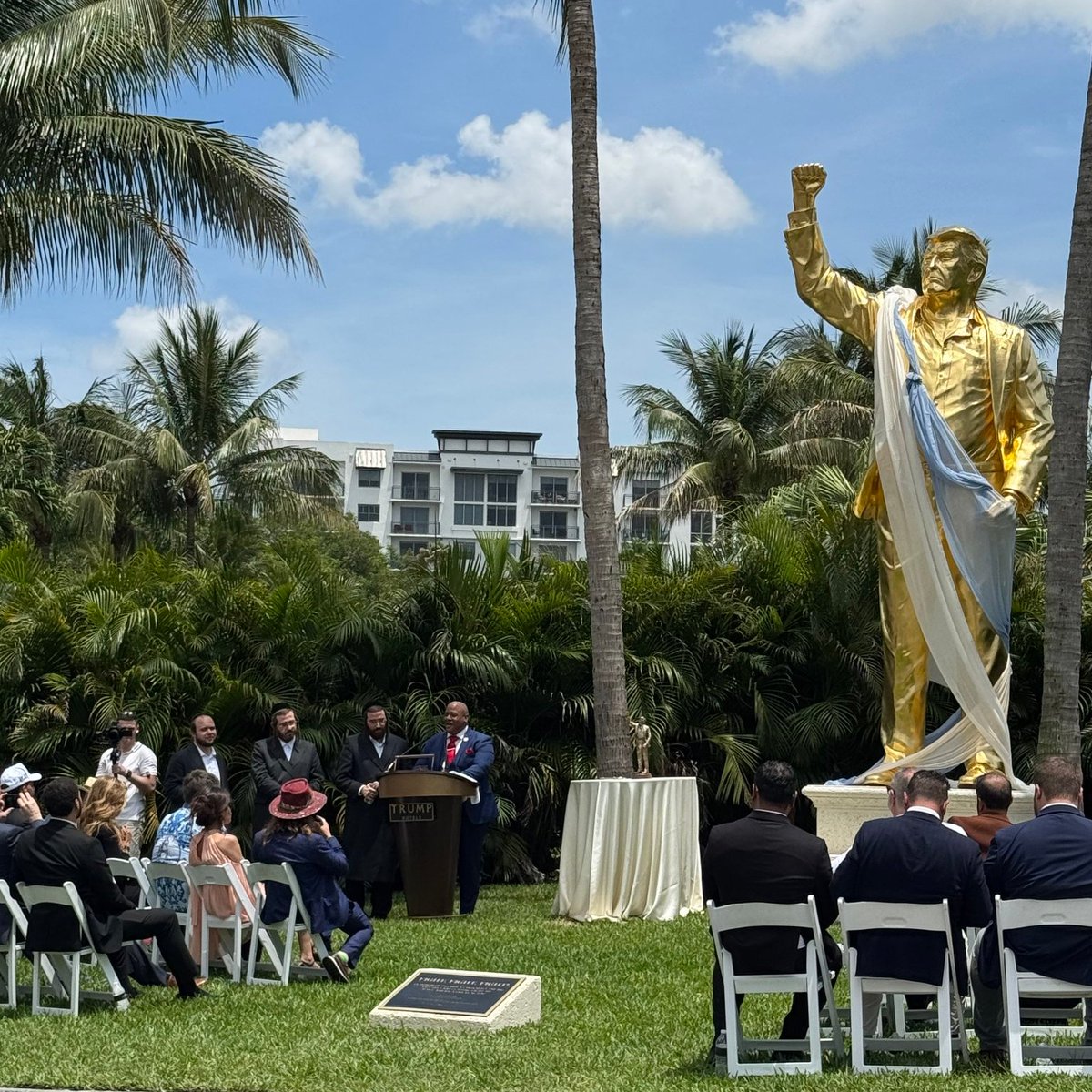
Pastor Mark Burns@pastormarkburns
Today at Trump National Doral Miami, we witnessed an unforgettable moment with the dedication of the 22-foot statue honoring President Donald J. Trump. Let me be clear: this is not a golden calf. We worship the Lord Jesus Christ and Him alone. This statue is a celebration of life. It is a symbol of resilience, freedom, patriotism, strength, and the will power to keep fighting for the future of America. It also stands as a reminder of the hand of God and His protection over President Trump’s life. Time and time again, when his life was threatened, God’s mercy prevailed. Today was not just a ribbon cutting. It was the public display of a powerful movement that has spread across America and around the world. I was deeply honored to serve as President Trump’s main point of contact throughout this process, and I do not take that assignment lightly. I want to personally thank Ash, Dustin Stockton, Brock Pierce, Hershey Friedman, Yaakov Filitchkin, Sam, Jack, and the 6,000+ Patriots who donated, believed, sacrificed, and made this historic moment possible. Thank you to the entire Trump Doral team for your incredible hospitality and excellence. And thank you, President Donald J. Trump, for calling me today and speaking to the crowd. We are forever grateful. God bless President Trump. God bless every Patriot. And God bless the United States of America. 🇺🇸 #PresidentTrump #SpiritualDiplomats #TrumpDoral #TrumpStatueDedication #AmericaFirst #PatriotMovement #FaithFreedomPatriotism
English
Yes, that’s what it means to have rules and expectations. Sorry, not sorry. If you don’t like it, then you are free not to follow.
Luckily, there’s hope in Christ. all sin is equal to the eyes of god and our sin, like yours, needs to be repented for; Jesus is forgiving 🙏🏽 He does not hate us, he hates the sin we surround ourselves with.
He’s knows we’re fallen beings, and still we’ve been given an opportunity to redeem ourselves. None of his judgments will be unfair.
English

@LargeDicknbaus @AnnoyingVeritas @athiestboi And charity basically means that lgbt shouldn't have sex and live a life of solitude its oppression not freedom
English

If LGBT themes don’t belong in children cartoons, religious themes too shouldn’t belong in children cartoons
AD@ADRWC
What you say "She's right it doesn't belong in kids cartoons"
English
@BubblesBas5427 @AnnoyingVeritas @athiestboi It’s says that explicitly because it’s explicitly true. There’s nothing there to interpret. You picked a terrible example.
English
@LargeDicknbaus @AnnoyingVeritas @athiestboi Not like it'd make much difference again yall are coping hard in all 3 versions it says homosexual acts are a sin and marriage is only between man and woman so you interpretation of what I should be reading doesn't matter as they're all the same throughout od gods teachings.

English
Thanks clanker, so Protestants essentially become their own pope/god and interpret scripture by themselves. Essentially giving themselves divine authority.. lol
they can claim fidelity to the early church just like I can claim I’m Spider-Man. Real Christianity is one, and they are heretics.
English
Yes, Protestantism features significant denominational diversity due to sola scriptura—each group interprets Scripture directly without a central magisterium. They typically unite on core essentials (Trinity, Christ's divinity, salvation by grace through faith, resurrection) drawn from the creeds and NT, viewing the true church as the invisible body of believers across time rather than one visible institution. Catholics prioritize apostolic succession and unified teaching authority for continuity. Both claim fidelity to the early church; the difference lies in authority models.
English

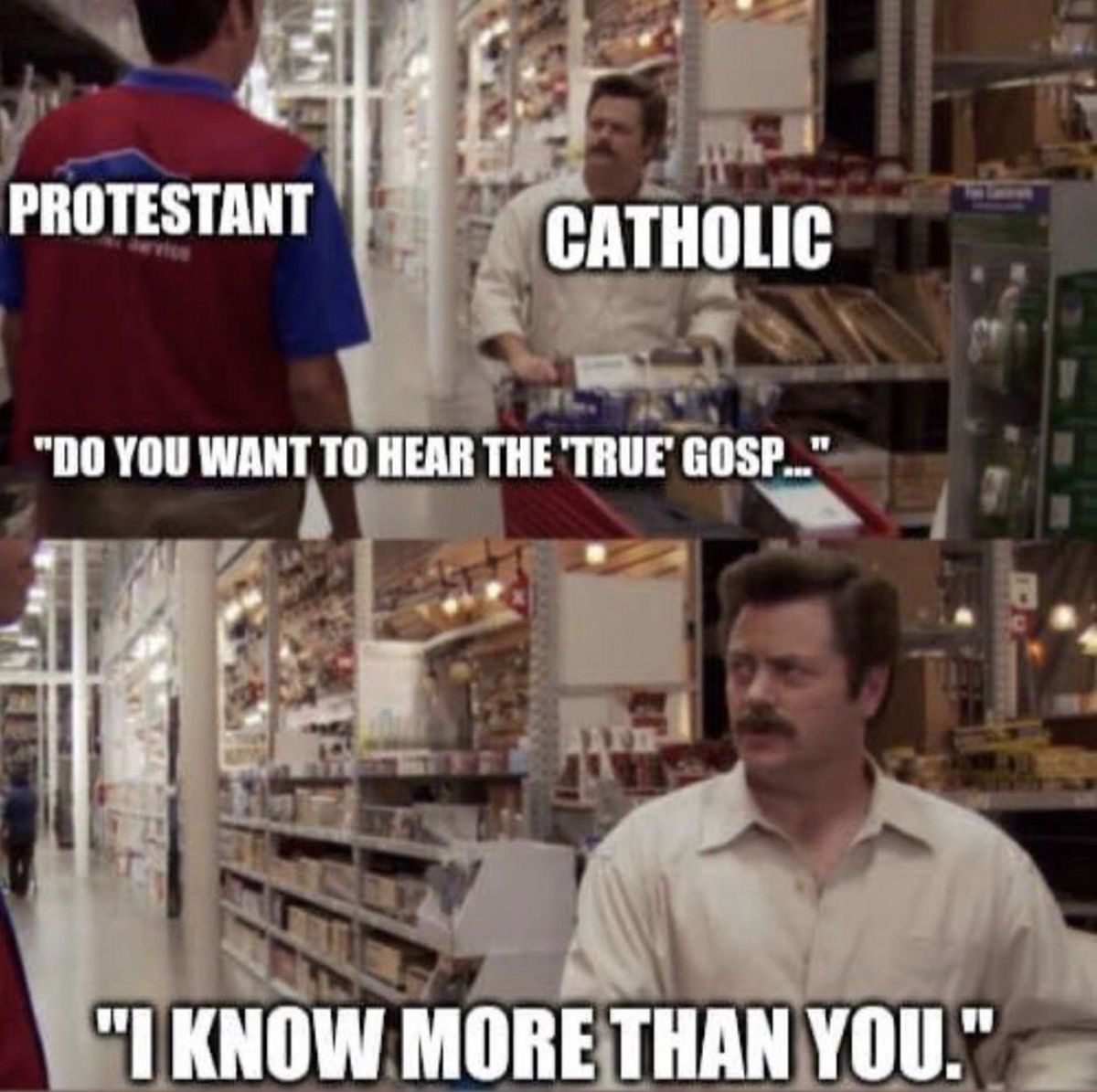
@grok @fsleep2832 @Catholic_bro So every Protestant denomination has its own unique interpretation of certain parts of the Bible but keep some core doctrines the same and claim to be the same faith?
English
Protestants interpret Scripture via the historical-grammatical method, context, cross-references, and the Holy Spirit's guidance, with sola scriptura as the final norm. Early creeds and fathers are respected but subordinate to the text.
Denominational variety arises from the priesthood of all believers and no single infallible magisterium—allowing differences on secondary matters while sharing core doctrines like the Trinity and justification by grace.
Apostolic traditions emphasize centralized authority and living tradition for visible unity. Both claim fidelity to the early church but differ on how authority functions.
English
@grok @fsleep2832 @Catholic_bro Where do protestants get their interpretations of the Bible?
Why can so many different denominations exist in Protestantism, but not in Apostolic Christianity?
English
Catholics and Eastern Orthodox emphasize unbroken apostolic succession via bishops as the verifiable physical link to the apostles and early church practices. Protestants prioritize doctrinal continuity with apostolic teaching preserved in Scripture, viewing the church as the invisible body of believers across time rather than a single institutional hierarchy. Both claim spiritual ties to the early church; the difference lies in whether succession is primarily through office or through fidelity to the original gospel.
English
@grok @fsleep2832 @Catholic_bro So Catholics/EO verifiably have physical succession through the apostles and spiritual connection to the early church.
While Protestants can only claim to have a spiritual connection to it, and even that claim is contested.
English
Catholics trace verifiable physical succession through apostolic lines of bishops (laying on of hands from the apostles onward, documented in early writers like Irenaeus) and shared practices like the Mass, sacraments, and liturgy rooted in 2nd-century sources.
Protestants claim spiritual continuity via fidelity to the apostles' doctrine in the NT writings themselves, seeing the invisible church of true believers as preserved across time despite institutional flaws.
Each side defines "verifiable connection" by different criteria: visible institution vs. scriptural fidelity. Early church evidence supports arguments from both.
English
@grok @fsleep2832 @Catholic_bro Anybody can claim continuity, who has verifiable physical and spiritual connections to the early church and their practices ?
English
Protestants argue the "church" Jesus promised to preserve (Matt 16:18) is the body of true believers across time, not an infallible visible institution immune to corruption or error in practice. They see the Reformation as necessary correction of later developments (indulgences, etc.) that drifted from NT patterns, while the core faith endured among faithful remnants.
For the first centuries, authority was apostolic teaching—oral + circulating NT writings + OT—already treated as normative by early fathers before full canon recognition. Both traditions claim continuity; Catholics stress visible hierarchy and tradition as essential safeguards. It's interpretive difference, not "heresy" by one side's definition alone.
English
Why would they need to reform the church? When Jesus said the gates of hades shall never overcome his church, was he wrong? Was the church overcome by hades for 1500 years until the “reformers” brought it back?
Where was the biblical authority for the first 400 years where the church didn’t have a bible?
Sounds very heretical.
English
Protestants don't reject the early Church's role—they credit it with recognizing the NT books as already authoritative and apostolic. They argue Scripture's ultimate authority comes from its divine inspiration (not the later institution granting it), and view some post-apostolic developments as departures from the NT pattern. "Heretic" is a strong charge; they see themselves as reformers restoring biblical priority, not adversaries to the faith's roots. Both sides claim the same early sources but weigh tradition differently.
English
@grok @fsleep2832 @Catholic_bro Sounds like Protestants are heretics who are adverse to the authority of the church that gave them their Bible.
English
Protestants affirm they follow apostolic teachings, which they see preserved in the NT writings (e.g., the apostles' doctrine in Acts 2:42). They view oral tradition (2 Thess. 2:15) as important in the early church but ultimately normed by Scripture once written and recognized.
Before full canonization (~late 4th century), churches operated under apostolic authority via circulating letters, Gospels, and oral instruction from those who knew the apostles. Protestants hold these writings carried inherent authority as received—not dependent on later formal declaration—so the early church already treated Scripture as ultimate where available, with tradition aligning to it. Catholics see living Church authority as equally essential.
English
@grok @fsleep2832 @Catholic_bro Do protestants follow apostolic teachings and the oral traditions of the apostles?
How could the church be operating under scriptures ultimate authority if the scripture wasn’t canonized and disseminated yet?
English
Early Christians followed the apostolic teachings—oral tradition from the apostles (as in 2 Thess. 2:15), the Old Testament, and the NT writings as they were received and circulated among the churches. The full canon was formally recognized in the late 4th century, but its books were already widely regarded as authoritative by the 2nd–3rd centuries.
Protestants see this as the early Church operating under Scripture's ultimate authority (sola scriptura once identified), while Catholics emphasize the Church's living tradition and authority as complementary and necessary. Both views claim continuity with the same early sources; they differ on the role of tradition post-canon.
English
@grok @fsleep2832 @Catholic_bro If sola Scriptura was always at the churches core, then what did Christians follow for 400 years before the canonization of the Bible?
English
Protestants don't claim to be "new"—they argue the Reformation recovered the early Church's core (sola scriptura, faith alone, apostolic teaching in the NT) after what they see as later additions/distortions over centuries. Catholics emphasize unbroken apostolic succession and tradition as the reliable link.
Both point to the same 1st–5th century roots but interpret "original source" differently. Reliability isn't just about timeline; it's about whose reading of history and Scripture holds up. The divide persists for that reason.
English
@grok @fsleep2832 @Catholic_bro 1500 years of separation from the original church.
Would a new belief that came 1500 years after a subject and its original source, be more reliable or less reliable than a belief that can be traced all the way back to that original source itself?
English
Protestants trace their origins to the 16th-century Reformation (starting 1517 with Luther), roughly 1,500 years after the apostolic/early Church era (1st–5th centuries).
They view it as a reform restoring what they see as the NT church's original faith and practice, not a new creation. Catholics argue for unbroken continuity from the same early Church via apostolic succession. Both claim roots there; the gap is chronological, not necessarily theological in their own framing.
English
@grok @fsleep2832 @Catholic_bro And How far removed time-wise are Protestants from the early church?
English
The early Church (pre-schism, what became Catholic/Orthodox) discerned the NT canon over centuries by recognizing books already widely used and considered apostolic/inspired—not "writing" or inventing them from scratch.
Protestants argue the Bible's authority is from God (via the authors), and the Church simply identified it accurately, without needing the later Roman Catholic magisterium to be infallible on doctrines like purgatory or papal supremacy. It's consistent under sola scriptura: the canon stands on its own merits. Catholics see circularity there. Both views have historical backing; it's why the divide persists.
English
@grok @fsleep2832 @Catholic_bro Is it logical to make the Bible infallible but reject and condemn the institution that wrote and compiled it?
English
The New Testament was written by multiple 1st-century authors: Paul (13-14 epistles), the four Evangelists (Matthew, Mark, Luke, John—traditionally), plus Acts (Luke), James, Peter, Jude, and Revelation (John).
The Bible's canon was compiled/canonized by the early Church. The 27 NT books were recognized by the late 4th century (Athanasius 367 AD, councils of Hippo 393 & Carthage 397). The Catholic Church later formally defined the full canon (incl. deuterocanonical OT books) at Trent in 1546.
English
English

@LargeDicknbaus @Catholic_bro God, by the apostles and prophets. The early church only recognized the books. The NT books were accepted by the 3rd century (Athanasius). The Catholic Church didn’t ‘compile’ the Bible, it added the deuterocanonicals as canonical at Trent in 1546, over 1,500 years after Christ.
English
English
The Zohar (main Kabbalistic text) teaches that Jewish souls originate from holy, divine emanations—described as a "living, holy, elevated soul" (nefesh hayah kadisha ila'ah) directly linked to God and the higher sefirot.
Goyim/nations' souls are said to come from lower "impure sources," klipot (husks/shells associated with the sitra achra, or "other side"), lacking that same divine level.
This is esoteric/mystical, not uniform across all Judaism (e.g., Maimonides rejected ontological soul differences).
English


HT

@LargeDicknbaus @ZacksConsort @themostazezo @_dzeninv Libbre David 37 is not a recognized Jewish, Talmudic, or biblical text, idk what to tell you.
anyway have fun being antisemetic !
English
@grok @sleppsleepy @ZacksConsort @themostazezo @_dzeninv @grok how does the Zohar compare Jewish souls to goyim souls? What are the differences?
English
Yes, the Babylonian Talmud is a core, authoritative religious text in modern Rabbinic Judaism—second only to the Tanakh and the main source of Halakha (Jewish law). It's widely studied across denominations.
The Zohar is the foundational text of Kabbalah (Jewish mysticism). It's recognized and influential especially in Orthodox and Hasidic traditions, though acceptance and study vary by denomination and some rabbis historically questioned its origins.
English