Red Alchemy

3.6K posts

Red Alchemy banner
Red Alchemy

Red Alchemy

@PostPMDD

◦ Menstuality, Menopause & Cycles of Life ◦ Presence & connection through song & Collaborative Improv ◦ Found at edges 4 broad perspectives ◦Vegan for animals

Sumali Ocak 2019
513 Sinusundan477 Mga Tagasunod
Red Alchemy nag-retweet
Read some Piaget please!
Read some Piaget please!@prof_curiosity1·
Girl Guides and the Single Sex Question: What Child Development and Safeguarding Tell Us (longish post) Girl Guides exists as a single sex organisation for a reason grounded not in prejudice but in developmental science. The research on adolescent girls consistently shows that dedicated single sex environments support confidence, risk taking, and identity formation in ways that mixed environments do not, particularly during the years when girls are navigating the social pressures of puberty and early adolescence. Removing the single sex character of those spaces does not leave them neutral. It changes them in ways that the developmental evidence suggests are meaningful. The safeguarding concern is straightforward and does not require any claim about the intentions of individual children. Safeguarding frameworks are designed to manage risk at a population level, not to make judgements about individuals. Single sex overnight environments, changing facilities, and residential trips carry specific safeguarding protocols that depend on the single sex character of the group. When a child who is biologically male is included in those environments on the basis of a self reported gender identity, those protocols are compromised in ways that any competent safeguarding review would flag. The 2025 UK Supreme Court ruling, which confirmed that woman and sex in the Equality Act refer to biological sex, reinforces the legal basis for maintaining those boundaries. The developmental harm to girls at this stage of their lives is not incidental. It goes to the heart of what single sex provision is for. Adolescence is the period in which girls are forming their understanding of themselves as female, navigating the physical changes of puberty, developing the capacity for intimacy and trust with peers of the same sex, and beginning to construct the adult identity that Erikson describes as the central developmental task of this life stage. The research on single sex environments consistently finds that girls in those settings show greater willingness to take intellectual and social risks, report higher levels of comfort with their own developing bodies, and demonstrate stronger peer relationships built on the specific solidarity of shared female experience. Those benefits depend on the space actually being what it presents itself as being. When a biologically male child is present in that space, the girls in it are placed in a position that the developmental literature does not support and that safeguarding guidance does not anticipate. They are asked to manage the presence of a biological male in changing rooms, on overnight trips, and in the intimate social environment of a group that exists precisely to give them respite from mixed sex social pressure. They are asked to do this at the developmental moment when bodily privacy, peer trust, and the consolidation of a female identity are most significant. And they are asked to do it without their consent having been sought, and frequently without their parents having been informed. The schema formation argument drawn from Bem's work is relevant here: girls at this stage are actively constructing their understanding of what it means to be female, and an environment that systematically blurs the boundary between female and male does not loosen those schemas in a liberating way. It introduces confusion into a developmental process that requires clarity and safety to proceed well. There is also a relational dimension that deserves attention. Bowlby and Fonagy establish that the capacity for secure peer attachment depends on environments that are predictable, boundaried, and safe. An environment in which the boundaries of membership are uncertain, in which girls may not know whether a peer is biologically male or female, and in which raising a concern is socially costly, is not an environment that supports secure attachment or genuine peer intimacy. The harm is not dramatic or visible. It is the quieter harm of a developmental environment that has been subtly but significantly altered at a moment when its character matters most. The developmental concern for the boys themselves is less often discussed and deserves equal attention. Erikson and Marcia show that identity formation is a developmental achievement of adolescence requiring a genuine period of exploration and moratorium. A boy who is socially affirmed in a cross sex identity from an early age, placed in environments that reinforce that identity, and supported by institutional structures that treat the identity as settled, is a child whose developmental moratorium has been foreclosed before it properly began. The desistance literature, reporting resolution rates of sixty to ninety percent in pre-affirmation era cohorts depending on cohort and methodology, suggests that the majority of children expressing cross sex identification would, given time and space, arrive at a different understanding of themselves. Institutional social affirmation in single sex spaces of the other sex is not a neutral accommodation. It is an active intervention in a developmental process that the evidence suggests should not be foreclosed. There is also the Winnicottian dimension, and it deserves more than a passing reference. Winnicott's account of the False Self describes a developmental pattern in which a child, faced with an environment that makes belonging conditional on performing a particular identity, learns to present that identity fluently and consistently. The performance does not feel like performance. It feels entirely authentic, because the child has no access to the True Self that the compliance dynamic has suppressed. The False Self is not a mask the child knowingly wears. It is a structure the child has built in order to survive an environment that could not tolerate what lay beneath. The boy who joins Girl Guides as a girl is in precisely that environment. His belonging is conditional. It depends on the sustained presentation of a "female identity", affirmed by the institution, reinforced by every interaction within it, and socially costly to question or relinquish. The longer that environment persists, and the more significant the attachments formed within it, the more firmly the False Self structure is consolidated. The child is not being helped to discover who he is. He is being helped to become more fluent in a presentation that the institution requires. What makes this particularly serious from a developmental perspective is that the harm is invisible from the outside and unfelt from the inside, at least while the compliance dynamic holds. The boy will report that he is comfortable, that he belongs, that the identity is real. That is exactly what Winnicott's model predicts. The False Self is a successful adaptation. It works. The cost is paid later, when the True Self, having been suppressed through the years in which identity formation should have been occurring, eventually reasserts itself, often in the form of the acute distress that characterises detransition accounts. Those accounts, which describe not simply a change of mind but a profound sense of having been absent from one's own development, map with considerable precision onto the clinical picture Winnicott describes. None of this requires hostility toward any individual child. The appropriate response to a boy experiencing gender related distress is compassionate, thorough clinical assessment, careful attention to the possibility of underlying anxiety, attachment difficulties, or social factors, and the kind of watchful, patient support that allows development to proceed at its own pace. Placing that child in a single sex environment organised around an affirmed female identity does not provide that support. It provides the conditions in which a False Self consolidates, development forecloses, and the reckoning is deferred to a point when it will be considerably harder to bear.
English

41
341
914
58.6K
Red Alchemy
Red Alchemy@PostPMDD·
@CarolineLucas So work cross party to develop a realistic sustainable food policy. Tory/Libdems wrecked the previous Labour Gov's 2030 plan and current Labour have no serious focus.
English
0
0
0
27
Red Alchemy nag-retweet
Dr. Jane Clare Jones
Dr. Jane Clare Jones@janeclarejones·
And it belies totally fucked up political priorities. Most people dislike fascism and think sex is real and is sometimes socially and politically significant. And we have nowhere to go. Get. It. Fucking. Together. Please. For. The. Love. Of. The. Goddess.
English
5
6
63
1.1K
Téa S
Téa S@tealou·
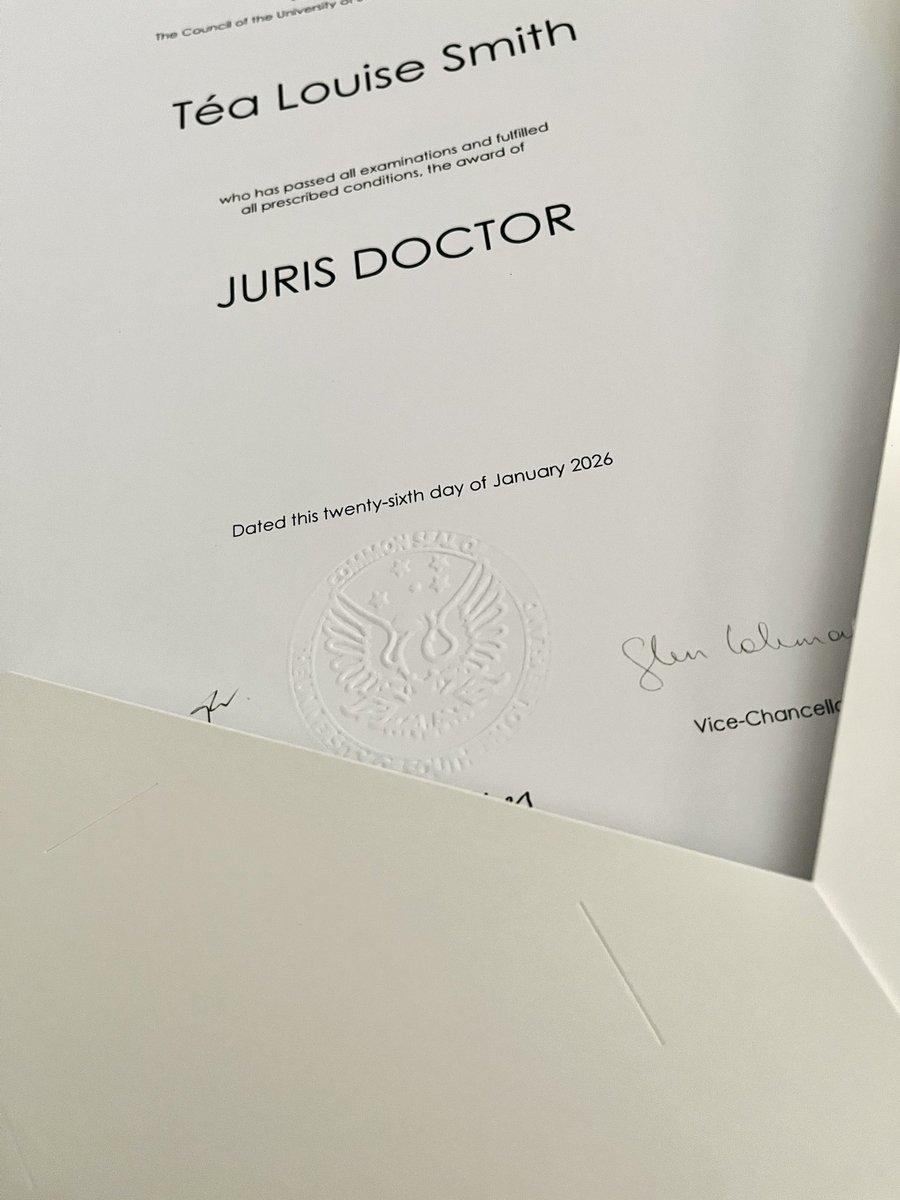
Is it weird that I’m annoyed it’s not in a fancy font Anyway I have this
Téa S tweet media
English
11
0
24
432
Red Alchemy nag-retweet
Arnaud Bertrand
Arnaud Bertrand@RnaudBertrand·
You've got to hand it to Iran: that's masterful asymmetric warfare. If they pull this off and suddenly oil transiting through Hormuz is traded in Yuan, we're talking potentially close to $1 trillion less in annual demand for dollars (20% of the world's oil + LNG). It'd be insanely impressive to achieve this simply by controlling a 30-mile strait with a few missiles and drones. And it'd have compounding effects: $1 trillion less in demand for dollars means less foreign buying of US Treasuries, higher borrowing costs in the U.S., more inflation, etc. Heck even if this doesn't materialize, the mere fact they're suggesting it and that it's taken seriously by mainstream media like CNN is impactful in and of itself: at the end of the day dollar supremacy is also very much based on inertia. But inertia works both ways: once enough people start questioning it, the questioning itself becomes self-reinforcing. Imagine you're a central banker and you're seeing this: you're undoubtedly telling yourself "mmm, maybe it's time to hold a bit more yuan, just in case." It's also pretty ironic: the U.S. has weaponized the dollar against others countless times - including, of course, against Iran - but I can't think of a precedent of a country actively at war with the U.S. using the dollar's dominance as a weapon against them. Literally flipping the playbook, which sets an interesting precedent. All in all, in this war you really have the feeling to witness Sun Tzu's maxim about "knowing the enemy and knowing yourself" in real time: Trump obviously completely failed to understand what he was getting into. Iran, on the other hand, clearly studied its enemy's vulnerabilities, be it hitting Gulf countries until they question whether being a U.S. ally protects or endangers them, choking oil supply to inflict economic pain the US can't bomb its way out of, or now attacking the dollar itself. The U.S. only has bombs to reply, but hard to see how they could bomb their way out of problems that were entirely predictable consequences of their bombing in the first place, if anyone had spent five minutes thinking about what Iran might do in response.
Frederik Pleitgen@fpleitgenCNN

Iran is considering allowing a limited number of oil tankers to pass through the Strait of Hormuz, provided that the oil cargo is traded in Chinese yuan, a senior Iranian official tells CNN. @CNN @cnni cnn.com/world/live-new…

English
263
3.7K
15K
1M
Red Alchemy nag-retweet
Anish Moonka
Anish Moonka@anishmoonka·
Went down the rabbit hole on this one. Your brain burns 20% of your body's total energy. It weighs 2% of your mass. Per gram, it costs 10 times as much to run as muscle. And it barely changes its energy consumption whether you're solving calculus or staring at a wall. A focused mental task increases brain energy use by less than 5%. The difference between "thinking hard" and "doing nothing" is not how much fuel you burn. It's where the fuel goes. When you don't give your brain a specific task, it defaults to something neuroscientists call the Default Mode Network, a set of brain regions that fire up when you're not focused on anything external. It runs your inner monologue. Rehashes old conversations. Simulates future arguments you'll probably never have. Replays embarrassing moments from 2014. A 2010 Harvard study tracked 2,250 people via a smartphone app, pinging them at random moments to ask what they were doing and thinking. Result: our minds wander 47% of our waking hours. Nearly half your conscious life, your brain is somewhere else. And the people whose minds wandered most were consistently the least happy, regardless of what they were doing. How often your mind drifts predicted your happiness 2x better than whatever activity you were doing at the time. When you give the brain a goal, the entire system reorganizes. The prefrontal cortex takes over, activating your brain's reward and motivation pathways. A 2022 Nature Communications study found that goal-relevant information enters through the prefrontal cortex, triggers dopamine neurons, and creates a self-reinforcing motivation loop. Your brain literally rewards itself for pursuing something meaningful. A 2026 review in Frontiers in Behavioral Neuroscience found that flow states, those moments of complete task absorption, partially quiet the Default Mode Network. Less DMN activity meant less self-evaluation, less rumination, and lower anxiety. A twin study of over 9,000 people found that people who experienced flow more often had lower rates of depression, anxiety, and roughly 4% lower risk of heart disease, even after controlling for genetics. The longevity data makes it real. A 2022 Harvard study tracked 13,000+ adults aged 50+ for 8 years. People with the strongest sense of purpose had a 15.2% mortality rate over that period. Lowest sense of purpose: 36.5%. More than double. The effect held across race, ethnicity, and gender. A separate meta-analysis of 136,000+ people found that a strong purpose was linked to a 17% lower risk of death from any cause. Purposeful people were 24% less likely to become physically inactive and 33% less likely to develop sleep problems. Dan Koe compressed a lot of neuroscience into one sentence. The brain doesn't idle when you don't give it a goal. It defaults to a mode that burns the same 20 watts but points them inward, toward rumination and anxiety. Give it a direction, and those same watts start building motivation loops, quieting your inner critic, and apparently adding years to your life.
DAN KOE@thedankoe

Your brain works against you until you give it a meaningful goal to wire itself around.

English
43
874
5.5K
326.7K
Red Alchemy nag-retweet
Matthew Todd 🌏🔥
Matthew Todd 🌏🔥@MrMatthewTodd·
🚨 The British government should be stockpiling food, according to a leading expert on food policy, as it is not prepared for climate shocks or wars that could cause the population to starve. Prof Tim Lang of City St George’s, University of London said the UK produced far less food than it needed to feed itself, and as a small island that relied on a few large companies to feed its giant population, it was particularly vulnerable to shocks. The first UK Food Security Report in December 2021 found the country was 54% food self-sufficient. Other rich countries such as the US, France and Australia are all food self-sufficient, meaning they grow enough food to feed their populations without imports if required. The UK is one of the least food self-sufficient countries in Europe. The Netherlands, for example, which is densely populated, is at 80%, and Spain is at 75%. theguardian.com/global-develop…
English
8
117
203
11.2K
Red Alchemy nag-retweet
👉M-Û-R-Č-H👈
👉M-Û-R-Č-H👈@TheEXECUTlONER_·
Have you ever heard a porcupine before let alone curse the heck out of someone? 😂 “I mean the SERVICE at this restaurant!” “I’ll eat the banana but I’m still MAD!” 😂😂
English
142
556
2.9K
75.2K
Red Alchemy nag-retweet
Gaurab Chakrabarti
Gaurab Chakrabarti@Gaurab·
The Strait of Hormuz has been closed for 8 days. Everyone thinks this is about oil. This is about what oil becomes. 92% of the world's sulfur comes from refining oil and gas. Close the Strait of Hormuz and you don't just lose 20 million barrels of crude per day. You lose the feedstock for sulfuric acid, the single most produced chemical on Earth. Sulfuric acid is how we extract copper. It's how we extract cobalt. Without it, you can't make transformers, EV batteries, or the substrates inside every data center on the planet. One chemical, made from one feedstock, shipped through one chokepoint. The cascade goes further: Qatar ships 30% of Taiwan's liquefied natural gas through Hormuz. Taiwan has 11 days of reserves left. TSMC, the company that makes 90% of the world's advanced chips, draws 8.9% of Taiwan's total electricity. No gas, no power, no chips. Then food. 33% of the world's nitrogen fertilizer feedstock moves through the Strait. Half of all humans alive today exist because of synthetic nitrogen. Sulfur, semiconductors, food. That makes three supply chains, one 21-nautical-mile chokepoint, and zero domestic alternatives at scale.
English
513
8.2K
32.5K
4.8M
Red Alchemy nag-retweet
James Clear
James Clear@JamesClear·
It only takes five minutes to break the cycle. Five minutes of exercise and you are back on the path. Five minutes of writing and the manuscript is moving forward again. Five minutes of conversation and the relationship is restored. It doesn't take much to feel good again.
English
0
762
6.1K
116.9K
Red Alchemy nag-retweet
Karl Mehta
Karl Mehta@karlmehta·
We have proof that specific plant compounds can reverse the "inevitable" cognitive decline that starts in your 30s. New research shows they rebuild the exact brain chemicals that control focus and memory, the ones your body stops producing in your 30s. Here's the breakdown: 🧵
Karl Mehta tweet mediaKarl Mehta tweet media
English
27
445
3K
185.3K
Red Alchemy nag-retweet
Labour Heartlands
Labour Heartlands@Labourheartland·
"In a time of universal deceit, telling the truth is a revolutionary act." - George Orwell The Green Party has committed £540,000 of its members' money to fighting its own women in court. Not on climate policy. Not on housing. On silencing women who state biological facts. The Green Women's Declaration, having exhausted every internal channel, has now formally begun legal proceedings against @TheGreenParty for discrimination under the Equality Act 2010. For two years they raised formal complaints. They were met with silence, hostility, and expulsion. Their own party's lawyers have since warned in a leaked 53-page dossier that the disciplinary processes used against them were unlawful. The Supreme Court has spoken. The law is clear. The Green Party's response is to keep fighting. A party that cannot define what a woman is cannot be trusted to define the future of the planet. Full investigation: labourheartlands.com/the-green-part… #GreenParty #ForWomenAndPlanet #GreenWomen #EqualityAct #ZackPolanski @GWDeclaration
English
82
1.4K
3.4K
56.5K
Red Alchemy nag-retweet
Lesbian Greens ⚢ 💚🤍💜🌍
📢📢 Breaking News: @TheGreenParty face more legal proceedings as @GWDeclaration claim discrimination under the Equality Act 2010. This is the Real Hope for Real Change that Women in the Green party want. About Time ! Forward with the women - we will follow this closely.
Green Women's Declaration@GWDeclaration

🔊 Breaking! Green Women's Declaration, having exhausted all internal channels, has formally begun legal proceedings v @TheGreenParty for discrimination under Equality Act 2010. thetimes.com/article/fd000b… We do this more in sorrow than in anger. We are forever #ForWomenAndPlanet

English
3
27
103
3.5K
Red Alchemy
Red Alchemy@PostPMDD·
@annapistu @CoralineHatz Ah that's a shame. I didn't get on with them 1st or 2nd time around. Something has shifted this time around.
English
0
0
2
19
Pistu:)
Pistu:)@annapistu·
@PostPMDD @CoralineHatz But these pages only have me more anxious and exhausted...
Barcelona, Spain 🇪🇸 English
1
0
2
68
The ADHD Learner
The ADHD Learner@CoralineHatz·
ADHD people, what’s the weirdest thing that helps you focus? Not the official advice. The actual thing. Mine: explaining the topic out loud to no one
English
366
74
1.9K
336.5K
Red Alchemy
Red Alchemy@PostPMDD·
@CoralineHatz For some reason they've really stuck this time. I write myself into presence and sometimes love (I know that sounds a bit crazy). Also all the things my brain is balancing and avoiding - helps to de-escalate it all a bit. Really helping change my relationship with myself.
English
3
0
10
523
The ADHD Learner
The ADHD Learner@CoralineHatz·
@PostPMDD Talking kindly to oneself is such an underrated advice! I've heard of morning pages but haven't tried them myself. I should probably try them out.
English
3
0
29
10.5K
Red Alchemy nag-retweet
non aesthetic things
non aesthetic things@PicturesFoIder·
Tourettes in Scotland (I swear - 2025)
English
67
579
9K
520.6K