Weizhe Hong

347 posts

Weizhe Hong

Weizhe Hong

@TheHongLab

Neuroscientist, Professor @UCLA — studying the neural basis of social behavior

Los Angeles, CA Sumali Şubat 2019
205 Sinusundan3.8K Mga Tagasunod
Naka-pin na Tweet
Weizhe Hong
Weizhe Hong@TheHongLab·
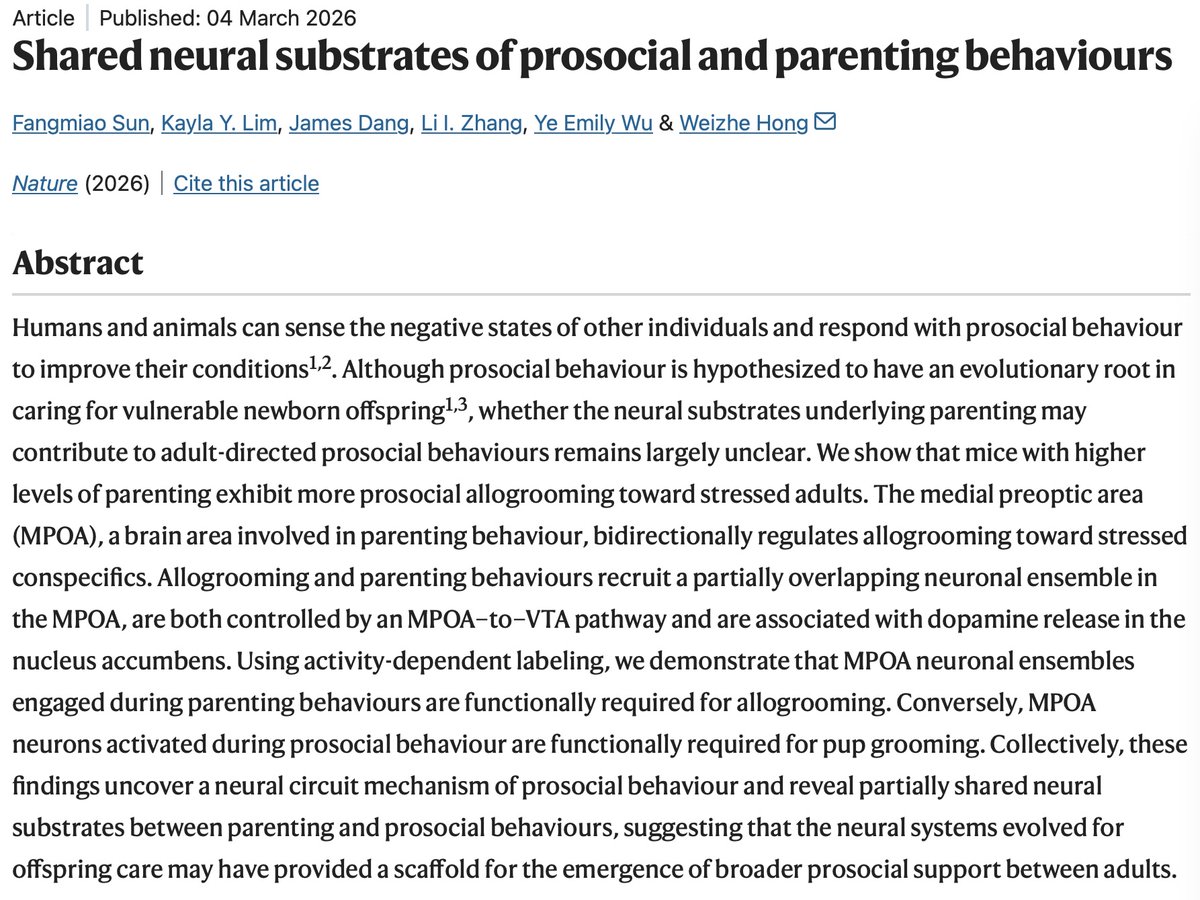
Excited to share our latest work in @Nature showing shared neural substrates for parenting and prosocial helping behavior - fantastic work by @Fangmiao4, @KaylaYingYan, and Emily Wu. Full text available here: rdcu.be/e6PnY
Weizhe Hong tweet media
English
10
53
202
18K
Weizhe Hong
Weizhe Hong@TheHongLab·
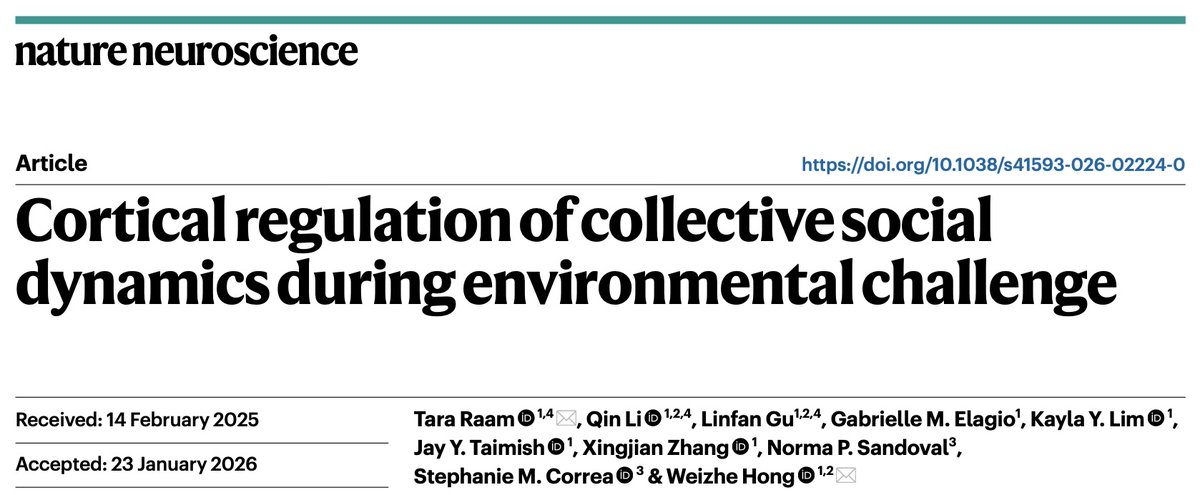
We often think of survival as an individual act. But when facing hardship together, social groups may function more like a unified system than a collection of separate individuals Excited to share our latest work @NatureNeuro on collective social dynamics rdcu.be/e8LrV
Weizhe Hong tweet media
English
2
26
125
5.7K
Weizhe Hong
Weizhe Hong@TheHongLab·
Interestingly, silencing the activity of this region selectively reduced active decisions in targeted mice but elicited compensatory increases in non-manipulated partners, preserving overall group-level huddle time.
English
0
0
3
248
Weizhe Hong
Weizhe Hong@TheHongLab·
At the neural level, we found that the prefrontal cortex tracks not just an individual's own choices, but also those made by its social partners, suggesting the brain continuously models others to enable coordinated group behavior.
English
1
0
3
491
Weizhe Hong nag-retweet
Society for Social Neuroscience
Symposium Proposal Deadline Extended! 2026 Annual Meeting of the Society for Social Neuroscience (S4SN 2026) will take place in Montréal, Canada, August 23–26, 2026 The deadline for symposium proposals has been extended to Tuesday, March 31 Learn more: s4sn.org/s4sn2026
English
0
3
7
846
Weizhe Hong
Weizhe Hong@TheHongLab·
We find that specific neurons in the medial preoptic area that regulate parenting are also critical for comforting behavior toward adults. This suggests that neural systems evolved for offspring care may have provided a scaffold for broader prosocial support between adults.
English
1
1
9
3.7K
Weizhe Hong
Weizhe Hong@TheHongLab·
While prosocial helping behavior is hypothesized to have an evolutionary root in caring for vulnerable newborn offspring, whether the neural substrates underlying parenting may contribute to adult-directed prosocial helping behaviors remains largely unclear.
English
1
0
1
1.1K
Weizhe Hong
Weizhe Hong@TheHongLab·
Join us in beautiful Montreal for the 2026 S4SN Conference (Aug 23–26)! Share your latest research, spark new collaborations, and engage with a vibrant social neuroscience community! Symposium proposals and individual abstract submissions are underway: event.fourwaves.com/s4sn2026/pages
Weizhe Hong tweet media
English
0
4
31
2.1K
Weizhe Hong
Weizhe Hong@TheHongLab·
@morishih Thank you so much for moderating this session!
English
0
0
1
56
Hiro Morishita
Hiro Morishita@morishih·
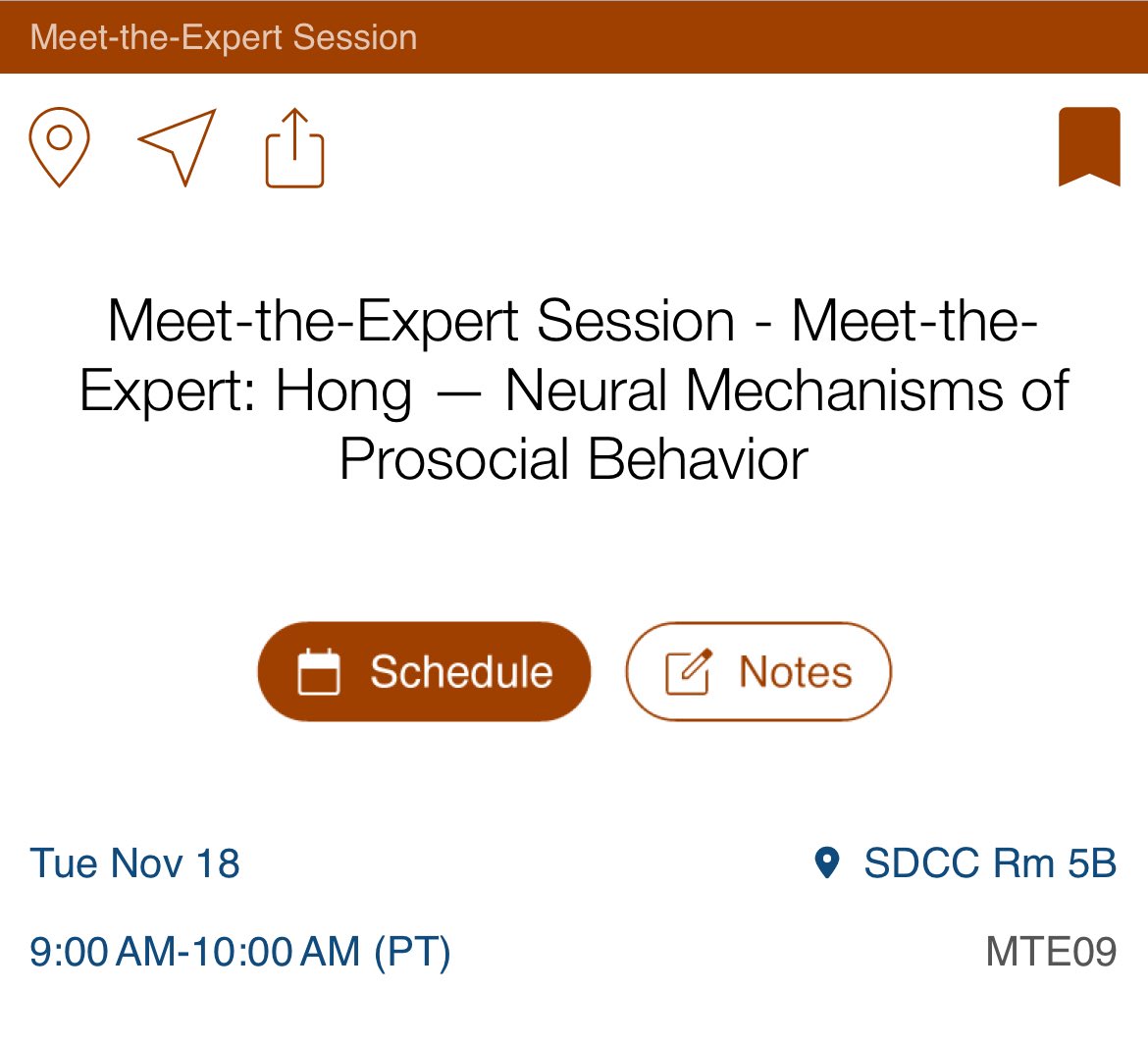
Please join tomorrow from 9am a highly anticipated Meet-the-Expert session by Dr. Weizhe Hong (UCLA) @TheHongLab, a leader in the field of social neuroscience! I am thrilled to moderate this session at room 5B #sfn25 #sfn2025
Hiro Morishita tweet media
English
1
2
8
2.8K
Weizhe Hong
Weizhe Hong@TheHongLab·
We extended our findings to artificial intelligence systems by training artificial agents in a similar cooperation task using multi-agent reinforcement learning (MARL). The agents developed behavioral strategies and neural representations reminiscent of those observed in the biological brain, revealing parallels between cooperative behavior in biological and artificial systems.
English
1
0
5
771
Weizhe Hong
Weizhe Hong@TheHongLab·
We identified key social behavioral strategies and decision-making processes in mice that facilitate successful cooperation. We found that these processes are represented at both single-cell and population levels in the anterior cingulate cortex (ACC) and demonstrated a causal role for ACC activity in cooperation.
English
1
0
4
868
Peyman Golshani
Peyman Golshani@pgolshani·
Very proud of this new paper led by Jiannis Taxidis in Nature Neuro where we use voltage imaging, optogenetics and ephys to record and manipulate PV and SOM interneuron activity patterns during working memory performance! nature.com/articles/s4159…
English
13
29
151
7.5K