Shamil Surhay Bek
5.9K posts


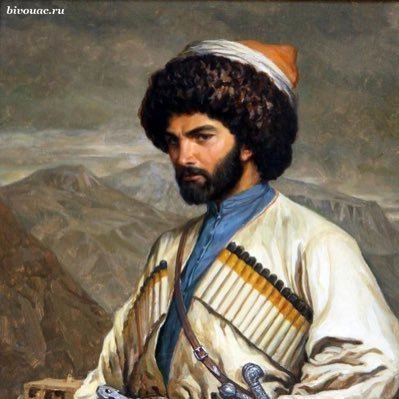
@TselmesBi those who call the Kalpak a "turkish garment" cannot show a single photograph of someone wearing a kalpak in the Ottoman Empire before the arrival of Caucasians. Both the kalpak and the papak belong to the Caucasians (Circassians, Chechens, Ingush, Dagestanis).
English
1. The word papakh is not found in the oldest Turkic records, such as the Orkhon Inscriptions or Mahmud al-Kashgari’s Divanu Lugati't-Turk (11th century). This proves it was not a common military or social term during the early periods of Turkic history in Central Asia.
2. It is also missing from important historical dictionaries like the Codex Cumanicus, which reflects the culture of the Cuman/Kipchak people of the northern steppes, and the Mukaddimetü’l-Edeb, which represents the Khwarezm region. This confirms that the "papakh" had no connection with the Khazars or the nomadic tribes of the Eurasian steppes.
3. Detailed studies of the original Dresden manuscript of Dede Korkut also show that the words "papakh" and "kalpak" do not appear. Instead, the text only uses the ancient Turkic word "börk" for headwear.
4. The fact that the word is missing from all major Turkic texts before the 16th-17th centuries confirms that the papakh was a local adaptation. It appeared after Turkic groups settled in the Caucasus. This headwear was likely adopted from local Caucasian peoples (like Circassians, Georgians, Chechens or Dagestanis) to survive the harsh mountain climate and combat conditions.
5. Turkic groups who had no historical contact with the Caucasus (such as the Uyghurs, Tuvans, Chuvash, and Gagauz) do not have this word or the headwear in their languages. This is clear proof that the papakh is a regional development, not a shared ancient heritage.
6. The name Qarapapaq likely started because Azerbaijanis in the Caucasus integrated this specific "black fur hat" into their identity. Because they used this headwear so consistently, other Turkic groups began to identify them by it (like qarapapaqli). Over time, this description turned into a formal name for the tribe.
7. In conclusion, the birth of the papakh as a specific type of headwear and its entry into written records is entirely the result of a cultural synthesis in the Caucasus region.
At Ağızlı Alp Aruz@Qutalmush
@serapha15 “Qarapapaq” sözünün özü geydirmədir. Türk dilində “papaq” sözünün tarixi 200 ildən o yana keçmir. Özünə fəxrlə “Qarapapaq” deyənlər bir sorğulasın görək, niyə bu “papaq” sözü Ruslarla təmasdan sonra xortlayıb çıxıb?!
English
@KvernadzeG Maybe, I didn’t made deep research about the issue.
English

@TselmesBi I can show you sources predating the arrival of the Chechens, mentioning Pankisi.
It's probably the other way around.
They got the name from the place.
English
The Kists who lives in Pankisi Gorge.
Kists are a part of Waynakh people.
Waynakh means “our nation” in Chechen language. It includes Noxchy (Chechen), Ghalghay (Ingush) and Panghazkhoy (Kist). The name of “Pankisi” is coming from their native name. They are Muslims and Pankisi is heaven on earth.
Kvali@kvali_app
Y-DNA of Nakh-Dagestani origin in regions of Georgia
English

@KvernadzeG I thought Panghazkhoy, their native name could be the origin of the Pankisi. If there is another etymological origin, I don’t know that.
English
@TselmesBi The name Pankisi existed before the 19th century migration of the Chechens into the area.
English
@kvali_app Wow, then Kists could be the bannerbearer of Nakh-Dagestan people.
English

@TselmesBi The Kists aren't even included in this, it's only ethnic Georgians.
English
Caucasians don't claim to be the greatest civilization in the world, nor the oldest, nor the most advanced, nor the most successful…
But our culture belongs to us. We created it, and it will remain ours.
Claiming to teach culture to civilizations that have been settled for at least 6,000 years, building monuments and temples with their own ancient belief systems, traditions, and languages, when you arrived there without even underwear on your ass is beyond stupidity. it’s pure idiocy. Don’t be one of those idiots.
English
Some idiot bare-bottomed gypsies clearly don't read what I share here, but they definitely should. Since they have cockroach brains, they might not understand what they're reading, but they can keep trying until they do.
Shamil Surhay Bek@TselmesBi
According to an interesting analysis by archaeologist Prof. Dr. Natalia Polosmak from the Russian Academy of Sciences, the famous Pazyryk culture findings show strong evidence of being imported from across a wide geography rather than belonging to the local people's own culture. Polosmak, who gained worldwide fame for discovering the "Ice Maiden" in 1993 and received the Russian State Prize, provides technical data proving that this society was a consumer group that obtained silk from China, purple wool from Ancient Persia, and exotic dyes from India and the Mediterranean. However, it is proven with solid evidence that production was already taking place in the Caucasus much earlier than the Pazyryk culture, during the Maykop and Kura-Araxes periods. The local looms, unique fiber processing techniques, and fabrics made with dyes from the regional environment found in these layers prove that the Caucasus had a weaving tradition dating back thousands of years and stood out as a true center of production. This comparison is important for determining the direction of cultural flow. scfh.ru/en/papers/purp…
English
1. According to Russian Academy of Sciences archaeologist Prof. Dr. Natalia Polosmak, the famous Pazyryk findings were not made by locals but were imported from all over. Polosmak, who discovered the "Ice Maiden" and won the Russian State Prize, proved with technical data that this society was just a consumer group. They got their silk from China, their purple wool from Ancient Persia, and their dyes from India and the Mediterranean.
scfh.ru/en/papers/purp…
2. The Dehkhoda dictionary clearly states that chokha is a type of fabric woven in Tabaristan, south of Mount Elbrus. It’s right there in the images you shared, yet you cherry-pick only one meaning like a total hack. There is zero info in that dictionary saying the word has Turkish roots; you’re such a jerk that you just made that up yourself. Even the Nisanyan dictionary points out that the word likely has Indo-European origins. It’s pathetic that you claim the word is Turkish when Altaic people were importing the actual wool from Iran.
3. The Cherkeska is the original and authentic clothing of the Caucasus. While you were a gypsy who couldn't even find underwear, there is massive evidence of professional weaving in the Caucasus since the Kura-Araxes and Maikop cultures. I’ve already shared the proof, go read my profile.
4. Maybe a Caucasian broke your mother’s heart, or maybe you’re just like a gypsy trying to steal anything that looks good to your eyes, but you’re trying to hijack Caucasian culture. You should stick to your own "bare-bottomed" culture. Stop trying to sell these lies you’ve pulled out of your ass.
5. I’m tired of seeing you squirming like a desperate hooker under every single tweet I write. But I have zero interest in you, your mother, or your pathetic culture.
English

@TselmesBi @ThatchEffendi As Turkic groups such as the Khazars and Bulgars moved into the Caucasus and surrounding areas, this cultural tradition also became widespread in the region.

English

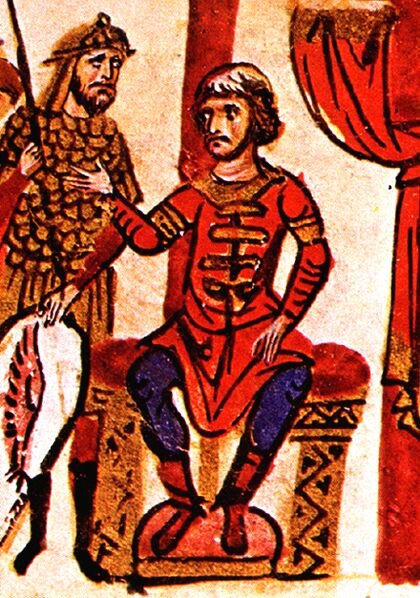
They were originally gunpowder cartridges. They're called gazyr in most Caucasian languages, from a Turkish word for ready (Anatolian Turkish hazır) which is originally from Arabic. Georgian masrebi.
The garment in Georgian is called a chokha, it's a local Caucasian costume that originated as a local variant of Turco-Persian riding clothes. It's now associated with important ceremonies among many Caucasian peoples. They're also associated with Cossacks, and you see them influence a lot of costumes in Sci Fi and Fantasy; Senator Bail Organa in Star Wars wears what's recognizably a chokha.


☆ 🐛🐠benjamin netanyancat⛓️🍭👁️👁️@BlueGreenblue3
@ThatchEffendi Are those bullets
English
Hadji Khamzat Affendi
Poet and herbist
Gidatl-Dagestan
Early 20th century

English


According to an interesting analysis by archaeologist Prof. Dr. Natalia Polosmak from the Russian Academy of Sciences, the famous Pazyryk culture findings show strong evidence of being imported from across a wide geography rather than belonging to the local people's own culture. Polosmak, who gained worldwide fame for discovering the "Ice Maiden" in 1993 and received the Russian State Prize, provides technical data proving that this society was a consumer group that obtained silk from China, purple wool from Ancient Persia, and exotic dyes from India and the Mediterranean.
However, it is proven with solid evidence that production was already taking place in the Caucasus much earlier than the Pazyryk culture, during the Maykop and Kura-Araxes periods. The local looms, unique fiber processing techniques, and fabrics made with dyes from the regional environment found in these layers prove that the Caucasus had a weaving tradition dating back thousands of years and stood out as a true center of production. This comparison is important for determining the direction of cultural flow.
scfh.ru/en/papers/purp…
Kvali@kvali_app
III. THE EARLY EXPANSION — KA I The first phase of KAC expansion appears largely peaceful, spreading primarily among populations that were probably already ethnolinguistically and genetically related, including the preceding Sioni culture people. KA I sites overlap heavily with the Sioni distribution, and the material culture across this phase is strikingly homogeneous — which is what you'd expect if the tradition was spreading through connected, related communities rather than being imposed on strangers. Reconstruction of Kura-Araxes linen clothing
English
Hacı Murad Donogo, a historian, a writer and the former director of the Dagestan National Museum (he is also a relative of Najmuddin Gotinsky), met with Circassian researcher and writer Cem Kumuk and Chechen historian Abulvahab Abdullaev in Istanbul. I feel boundless joy to see these distinguished intellectuals of the Caucasus gathered together like this.

English

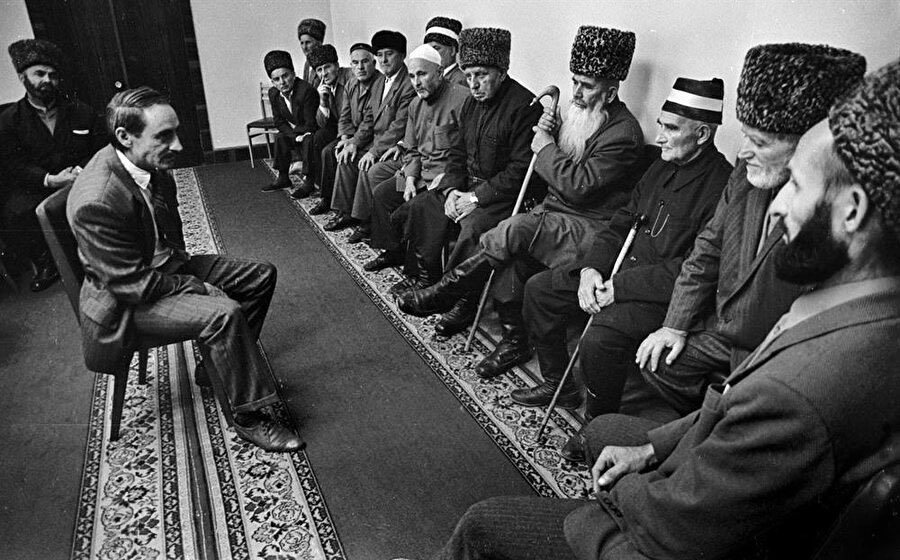
Today marks the 30th anniversary of the martyrdom of Dzhokhar Dudayev, the honorable son of the Chechen people. May Allah accept his deeds and bless his martyrdom.
Dala ğazot kobal doyl tsunan
Дала геч дойла
Română
@Khokh27 I don’t see a sign or mark of craftsman so I can’t say the exact origin.
It can be anywhere from Caucasia.
English