
Naka-pin na Tweet
ArrayBlog
15.2K posts


ArrayBlog
@array_blog
YouTube: https://t.co/SuZiW7nsPl | GitHub: https://t.co/6o1XYZ6NXZ
Coding from Earth | India 🇮🇳 Sumali Ekim 2024
1.1K Sinusundan1.5K Mga Tagasunod
Type Guards in TypeScript 🚀 | instanceof, Custom Guards & is Keyword
Type Guards help TypeScript narrow types safely at runtime — making your applications more reliable and type-safe 👇
They allow you to check a type before using it.
🔹 instanceof Type Guard
Used with classes to check object instances.
Example:
if (user instanceof Admin) {
user.getPermissions();
}
Perfect when working with class-based architecture.
🔹 Custom Type Guards (is Keyword)
Create your own type-checking logic.
Example:
function isString(value: unknown): value is string {
return typeof value === "string";
}
Now TypeScript understands the type inside conditional blocks.
🔹 Why Type Guards Matter?
✅ Safer handling of union types
✅ Better control over dynamic data
✅ Prevent runtime errors
✅ Improve code readability
Mastering type guards helps you write smarter, safer, and more professional TypeScript code.
I’ve explained everything with real-world examples in this video 👇
🎥 youtu.be/S9t2821h4H0
#TypeScript #JavaScript #WebDevelopment #Programming #Frontend

YouTube

English
Type Narrowing in TypeScript 🚀 | typeof, Truthy & Equality Checks
Type Narrowing allows TypeScript to understand more specific types inside conditional blocks — making your code safer and more predictable 👇
Instead of treating a value as a union type everywhere, TypeScript “narrows” it based on your checks.
🔹 typeof Narrowing
Used for primitive types like string, number, boolean.
Example:
function format(value: string | number) {
if (typeof value === "string") {
return value.toUpperCase();
}
return value.toFixed(2);
}
🔹 Truthy & Falsy Checks
Helps narrow types when checking for null or undefined.
Example:
if (user) {
console.log(user.name);
}
🔹 Equality Checks (===)
When comparing values, TypeScript narrows to the common type inside the block.
Example:
if (a === b) {
// TypeScript knows both are the same type here
}
🔹 Why Type Narrowing Matters?
✅ Prevent runtime errors
✅ Write safer conditional logic
✅ Better autocomplete & IntelliSense
✅ More predictable applications
Mastering type narrowing is key to writing clean and professional TypeScript code.
I’ve explained everything with practical examples in this video 👇
🎥 youtu.be/GpI5ewVVzAI
#TypeScript #JavaScript #WebDevelopment #Programming #Frontend

YouTube

English
Type Narrowing in TypeScript 🚀 | typeof, Truthy & Equality Checks
Type Narrowing helps TypeScript understand more specific types inside conditions — making your code safer and smarter 👇
Instead of guessing, TypeScript narrows the type based on checks you write.
🔹 typeof Narrowing
Check primitive types like string, number, boolean.
Example:
function print(value: string | number) {
if (typeof value === "string") {
console.log(value.toUpperCase());
}
}
🔹 Truthy & Falsy Checks
Automatically narrow types when checking existence.
Example:
if (user) {
console.log(user.name);
}
Great for handling null and undefined.
🔹 Equality Narrowing (===)
When comparing values, TypeScript narrows to the common type.
Example:
if (a === b) {
// Both are same type here
}
🔹 Why Type Narrowing Matters?
✅ Prevent runtime errors
✅ Improve IntelliSense
✅ Safer conditional logic
✅ More predictable applications
Mastering type narrowing makes your TypeScript code cleaner, safer, and more professional.
I’ve explained everything with real examples in this video 👇
🎥 youtu.be/ozf458lsmj8
#TypeScript #JavaScript #WebDevelopment #Programming #Frontend

YouTube

English
Template Literal Types in TypeScript 🚀 | Dynamic Strings & Advanced Patterns
Template Literal Types let you create dynamic string types using TypeScript — powerful for building flexible and scalable type systems 👇
This feature combines string literals with type logic.
🔹 Basic Template Literal Type
Create dynamic string patterns.
Example:
type Greeting = `Hello ${string}`;
Now only strings starting with "Hello " are valid.
🔹 Combining with Unions
Generate multiple string combinations automatically.
Example:
type Direction = "top" | "bottom";
type Position = `${Direction}-left` | `${Direction}-right`;
🔹 Advanced Patterns
Works great with:
✅ keyof
✅ Mapped types
✅ Conditional types
✅ API route typing
✅ Event name generation
🔹 Why It Matters?
✔️ Stronger type-safe string patterns
✔️ Prevent invalid string values
✔️ Better autocomplete support
✔️ Scalable dynamic type design
Template Literal Types unlock a whole new level of advanced TypeScript patterns.
I’ve explained everything with practical examples in this video 👇
🎥 youtu.be/LfoC5dHzu2s
#TypeScript #JavaScript #WebDevelopment #Programming #Frontend

YouTube

English
Conditional Types in TypeScript 🚀 | extends, infer & Type Logic
Conditional types allow you to create dynamic types based on conditions — like writing logic, but at the type level 👇
This is where TypeScript becomes truly powerful.
🔹 Basic Conditional Type (extends)
Apply a type conditionally.
Example:
type IsString = T extends string ? true : false;
If T is a string → true, otherwise → false.
🔹 Using infer (Extracting Types)
Capture and reuse a type inside a conditional.
Example:
type ReturnType = T extends (...args: any[]) => infer R ? R : never;
infer lets you extract the return type dynamically.
🔹 Why Conditional Types Matter?
✅ Build dynamic utility types
✅ Extract types from complex structures
✅ Create flexible APIs
✅ Write advanced reusable type logic
Conditional types power many built-in utilities like ReturnType, Exclude, and Extract.
Mastering them takes your TypeScript skills to an advanced level.
I’ve explained everything with real-world examples in this video 👇
🎥 youtu.be/PQMRHF-4OBk
#TypeScript #JavaScript #WebDevelopment #Programming #Frontend

YouTube

English
Mapped Types in TypeScript 🚀 | readonly, Optional Modifiers & Real Use Cases
Mapped types let you transform existing types dynamically — one of the most powerful features in TypeScript 👇
Instead of rewriting types, you can modify them programmatically.
🔹 Basic Mapped Type
Loop through keys of a type.
Example:
type ReadonlyUser = {
readonly [K in keyof T]: T[K];
};
🔹 Making Properties Optional
Use ? modifier inside mapped types.
Example:
type OptionalUser = {
[K in keyof T]?: T[K];
};
🔹 Removing Modifiers
You can also remove readonly or optional using -readonly and -?.
🔹 Real-World Use Cases
✅ Creating update (PATCH) types
✅ Building immutable state models
✅ Designing reusable utility types
✅ Scaling large applications
Mapped types are the foundation behind utility types like Partial, Readonly, and more.
Mastering them helps you write flexible, reusable, and advanced TypeScript code.
I’ve explained everything with practical examples in this video 👇
🎥 youtu.be/lYQZPXrbEbg
#TypeScript #JavaScript #WebDevelopment #Programming #Frontend

YouTube

English
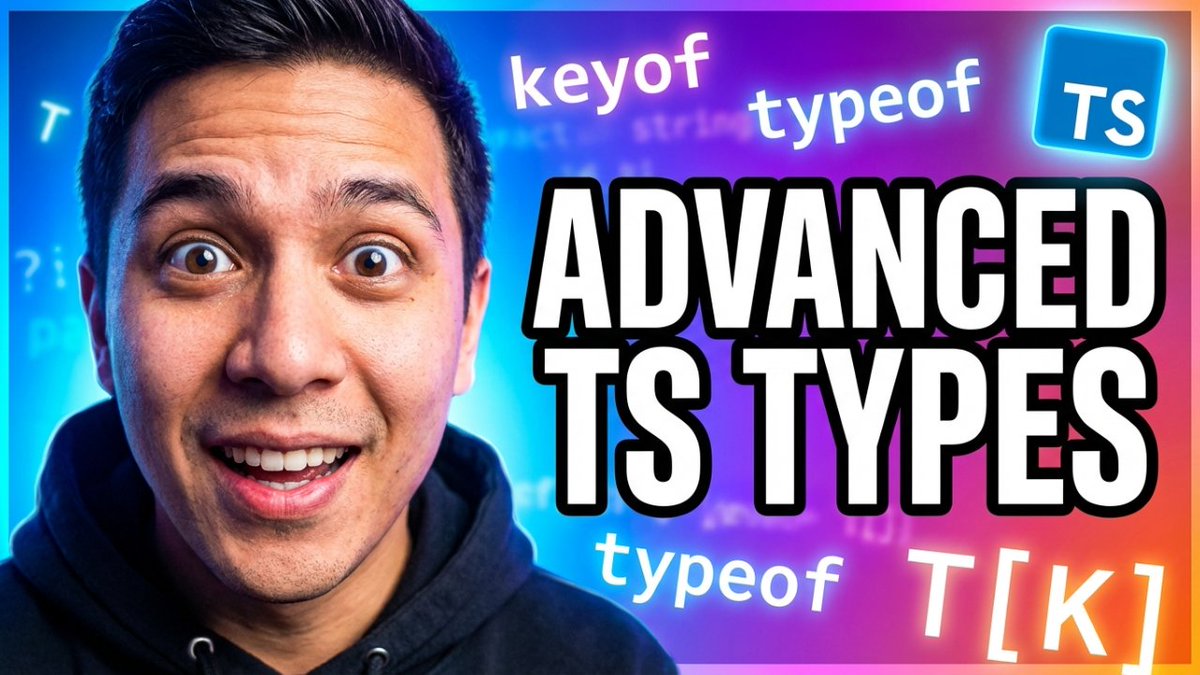
keyof, typeof & Indexed Access in TypeScript 🚀 | Advanced Type Patterns
Ready to level up your TypeScript skills? These advanced type operators help you write smarter and more dynamic types 👇
🔹 keyof
Creates a union of all keys of a type.
Example:
type UserKeys = keyof User;
→ "name" | "email" | "age"
Perfect for dynamic property access.
🔹 typeof (in TypeScript types)
Extracts the type of a variable or object.
Example:
const user = { name: "Vishal", age: 25 };
type UserType = typeof user;
Great for inferring types from existing objects.
🔹 Indexed Access Types (T[K])
Access the type of a specific property.
Example:
type UserName = User["name"];
Powerful when working with dynamic keys and reusable utilities.
🔹 Why These Matter?
✅ Build dynamic & flexible type systems
✅ Improve type reusability
✅ Avoid hardcoding types
✅ Write advanced, scalable TypeScript
Mastering these patterns takes your TypeScript knowledge to the next level.
I’ve explained everything with practical examples in this video 👇
🎥 youtu.be/WnPZco0akV8
#TypeScript #JavaScript #WebDevelopment #Programming #Frontend

YouTube
English
Utility Types in TypeScript 🚀 | Pick, Omit & Record Explained
TypeScript gives us powerful built-in utility types to reshape existing types without rewriting everything 👇
🔹 Pick
Select specific properties from a type.
Perfect when you only need a few fields.
Example:
type UserPreview = Pick;
🔹 Omit
Exclude specific properties from a type.
Useful for removing sensitive fields.
Example:
type PublicUser = Omit;
🔹 Record
Create an object type with specific keys and value types.
Great for mapping dynamic keys.
Example:
type UserRoles = Record;
🔹 Why These Matter?
✅ Reduce duplication
✅ Improve flexibility
✅ Create cleaner APIs
✅ Build scalable TypeScript applications
Mastering Pick, Omit, and Record helps you write more precise and maintainable types.
I’ve explained everything with real-world examples in this video 👇
🎥 youtu.be/1uakwEVCQ84
#TypeScript #JavaScript #WebDevelopment #Programming #Frontend

YouTube

English
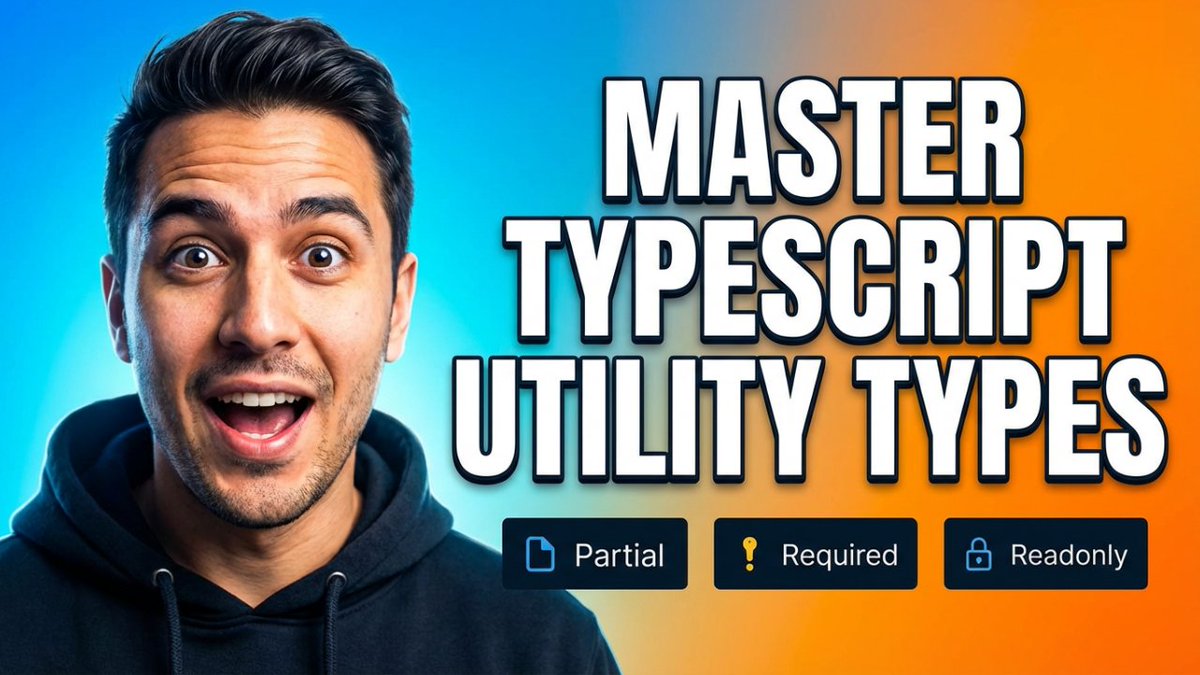
Utility Types in TypeScript 🚀 | Partial, Required & Readonly
Utility types help you transform existing types without rewriting them — making your code cleaner and more scalable 👇
🔹 Partial
Makes all properties optional.
Perfect for update forms or patch APIs.
Example:
type UpdateUser = Partial;
🔹 Required
Makes all properties mandatory.
Useful when you need complete data.
Example:
type CompleteUser = Required;
🔹 Readonly
Makes all properties immutable.
Prevents accidental modifications.
Example:
type ImmutableUser = Readonly;
🔹 Why Utility Types Matter?
✅ Reduce duplicate type definitions
✅ Improve code flexibility
✅ Increase type safety
✅ Keep code DRY (Don’t Repeat Yourself)
Mastering utility types helps you write scalable and maintainable TypeScript applications.
I’ve explained everything with practical examples in this video 👇
🎥 youtu.be/8O9XhszturE
#TypeScript #JavaScript #WebDevelopment #Programming #Frontend

YouTube
English
Generics in TypeScript 🚀 | Functions, Interfaces & Classes Explained
Generics make your code reusable, flexible, and type-safe — without losing strong typing 👇
Instead of using any, generics let you create dynamic yet safe components.
🔹 Generic Functions
Create reusable functions for multiple types.
Example:
function identity(value: T): T { return value; }
🔹 Generic Interfaces
Define flexible yet structured contracts.
Example:
interface ApiResponse { data: T; success: boolean; }
🔹 Generic Classes
Build reusable and scalable class structures.
Example:
class Box { constructor(public value: T) {} }
🔹 Why Generics Matter?
✅ Reusable code without sacrificing type safety
✅ Avoids using any
✅ Better IntelliSense & auto-completion
✅ Cleaner and scalable architecture
Mastering generics is a big step toward writing professional-level TypeScript code.
I’ve explained everything with real-world examples in this video 👇
🎥 youtu.be/bECVN7OXF0E
#TypeScript #JavaScript #WebDevelopment #Programming #Frontend

YouTube

English
Static Members & Accessors in TypeScript 🚀 | Getters, Setters & Static Methods
Take your TypeScript OOP skills to the next level by understanding static members and accessors 👇
🔹 Static Members
Belong to the class itself — not to individual objects.
Accessed using the class name.
Example:
class MathUtil { static PI = 3.14; static square(n: number): number { return n * n; } }
Usage → MathUtil.square(5)
🔹 Getters & Setters (Accessors)
Control how properties are accessed and modified.
Example:
`class User {
private _age: number = 0;
get age(): number {
return this._age;
}
set age(value: number) {
if (value > 0) this._age = value;
}
}`
🔹 Why They Matter?
✅ Static → Utility methods & shared data
✅ Getters → Controlled read access
✅ Setters → Validation before updating values
✅ Cleaner and safer object design
Mastering static members and accessors helps you build structured, secure, and professional-level TypeScript applications.
I’ve explained everything with practical examples in this video 👇
🎥 youtu.be/N8VfpcT65IM
#TypeScript #JavaScript #OOP #WebDevelopment #Programming #Frontend

YouTube

English
Abstract Classes vs Interfaces in TypeScript 🚀 | When & Why to Use Each
This is one of the most confusing topics in TypeScript 👇
When should you use an abstract class and when should you use an interface?
Let’s simplify it 👇
🔹 Abstract Classes
✔️ Can have both implemented methods & abstract methods
✔️ Can contain constructors
✔️ Support access modifiers (private, protected, public)
✔️ Used when classes share common logic
Example:
abstract class Animal { abstract makeSound(): void; move() { console.log("Moving..."); } }
🔹 Interfaces
✔️ Define structure only (no implementation)
✔️ Best for defining object contracts
✔️ Support multiple implementations
✔️ Great for scalable architecture
Example:
interface Animal { makeSound(): void; }
🔹 When to Use What?
✅ Use abstract class when you need shared base logic
✅ Use interface when you only need a contract/structure
✅ Interfaces are more flexible
✅ Abstract classes are better for controlled inheritance
Understanding this difference helps you design cleaner, more scalable TypeScript applications.
I’ve explained everything with real-world examples in this video 👇
🎥 youtu.be/kTHtRac4YaA
#TypeScript #JavaScript #OOP #WebDevelopment #Programming #Frontend

YouTube

English
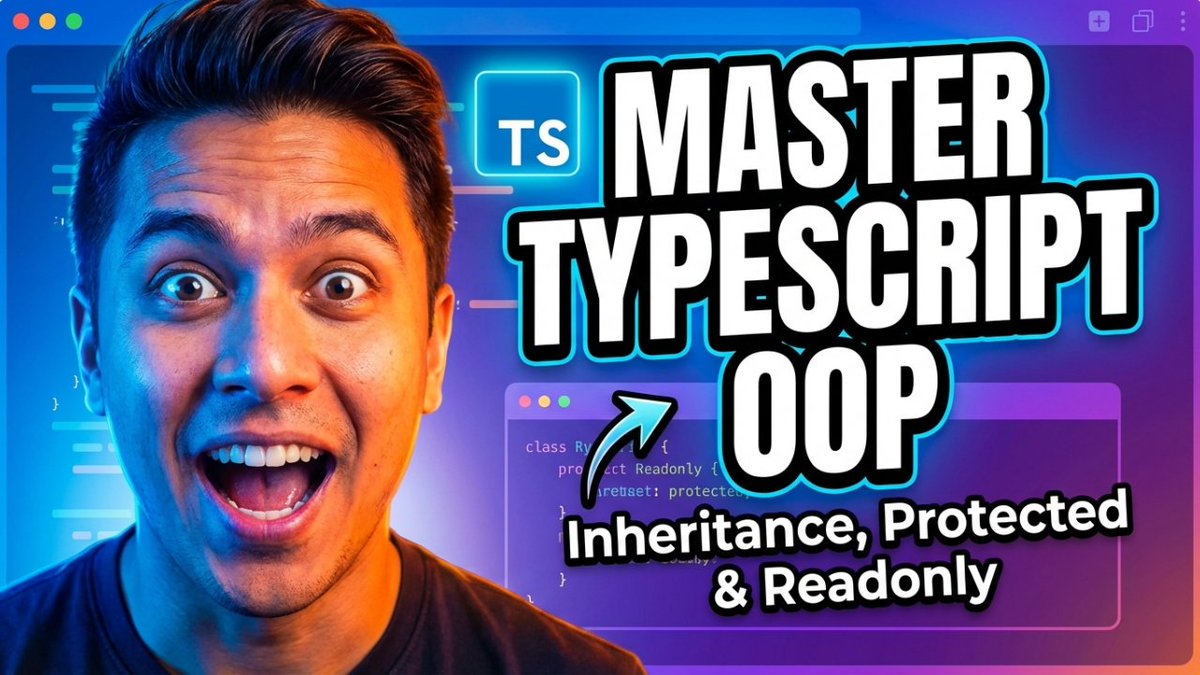
OOP Concepts in TypeScript 🚀 | Inheritance, Protected & Readonly
TypeScript makes Object-Oriented Programming more powerful by adding strong type safety to JavaScript. Let’s break it down 👇
🔹 Inheritance (extends)
Reuse and extend existing classes.
Example:
class Admin extends User {}
Inheritance helps you build reusable and scalable architecture.
🔹 Protected Modifier
Accessible inside the class and its subclasses — but not outside.
Useful when you want controlled access in child classes.
🔹 Readonly Modifier
Prevents properties from being modified after initialization.
Example:
readonly id: number;
Great for immutable data and safer object design.
🔹 Why It Matters?
✅ Better code reusability
✅ Controlled access to properties
✅ Cleaner architecture
✅ More maintainable large-scale applications
Mastering OOP concepts in TypeScript helps you write structured, predictable, and professional-level code.
I’ve explained everything with practical examples in this video 👇
🎥 youtu.be/lrL4qjdkJTo
#TypeScript #JavaScript #OOP #WebDevelopment #Programming #Frontend
YouTube
English
Classes in TypeScript 🚀 | Constructors, Access Modifiers & Parameter Properties
TypeScript classes bring powerful OOP features to JavaScript — making your code more structured and scalable 👇
🔹 Constructors
Initialize properties when creating an object.
Example:
class User {
name: string;
constructor(name: string) {
this.name = name;
}
}
🔹 Access Modifiers
Control visibility of properties & methods.
public → Accessible everywhere
private → Accessible only inside the class
protected → Accessible in class & subclasses
🔹 Parameter Properties (Shortcut 🚀)
Declare and initialize properties directly in the constructor.
class User {
constructor(public name: string, private age: number) {}
}
🔹 Best Practices
✅ Use access modifiers intentionally
✅ Keep properties private when possible
✅ Prefer parameter properties for cleaner code
✅ Follow single responsibility principle
Mastering classes in TypeScript helps you build:
✔️ Clean architecture
✔️ Scalable applications
✔️ Maintainable OOP-based systems
I’ve explained everything with real examples in this video 👇
🎥 youtu.be/gdNYDrzyvRM
#TypeScript #JavaScript #WebDevelopment #Programming #Frontend

YouTube

English
Deep Dive into Interfaces in TypeScript 🚀 | Extend, Functions & Merging
Interfaces are powerful — especially when building scalable applications. Let’s go beyond basics 👇
🔹 Extending Interfaces
Reuse and expand existing structures.
Example:
interface Admin extends User { role: string; }
🔹 Interfaces with Functions
Define function signatures clearly.
Example:
interface Logger { log(message: string): void; }
🔹 Declaration Merging
One of the biggest advantages of interfaces 👇
You can define the same interface multiple times, and TypeScript merges them automatically.
Example:
interface User { name: string }
interface User { age: number }
Result → { name: string; age: number }
🔹 Why Interfaces Matter?
✅ Great for object-based architecture
✅ Ideal for large-scale applications
✅ Cleaner extension patterns
✅ Better maintainability
Mastering interfaces helps you build strong TypeScript foundations and scalable systems.
I’ve explained everything with practical examples in this video 👇
🎥 youtu.be/SQaut6oJj8g
#TypeScript #JavaScript #WebDevelopment #Programming #Frontend
YouTube
English
Type Aliases vs Interfaces in TypeScript 🚀 | When & Why to Use Each
One of the most common TypeScript questions 👇
Should you use type or interface?
Let’s break it down 👇
🔹 Type Aliases (type)
Used for:
✔️ Primitive types
✔️ Union & Intersection types
✔️ Function types
✔️ Complex combinations
Example:
type Status = "success" | "error";
🔹 Interfaces (interface)
Best for:
✔️ Defining object shapes
✔️ Extending objects
✔️ Declaration merging
✔️ Large scalable applications
Example:
interface User { name: string; age: number; }
🔹 When to Use What?
✅ Use interface for objects & scalable architecture
✅ Use type for unions, intersections & flexibility
✅ Both are powerful — choose based on use case
Understanding the difference helps you write:
✔️ Cleaner architecture
✔️ More maintainable code
✔️ Better TypeScript design patterns
I’ve explained everything with real-world examples in this video 👇
🎥 youtu.be/exaV6-jYJgw
#TypeScript #JavaScript #WebDevelopment #Programming #Frontend

YouTube

English
Object Typing in TypeScript 🚀 | Optional, Readonly & Nested Objects
When building real-world applications, objects are everywhere — and typing them correctly makes your code safer and more scalable 👇
🔹 Basic Object Typing
Define structure clearly.
Example:
const user: { name: string; age: number }
🔹 Optional Properties (?)
Make properties flexible.
Example:
age?: number
🔹 Readonly Properties
Prevent accidental modifications.
Example:
readonly id: number
🔹 Nested Objects
Type complex structured data properly.
Example:
address: { city: string; pincode: number }
🔹 Best Practices
✅ Use type or interface for reusable object structures
✅ Keep objects well-structured and predictable
✅ Use readonly for immutable data
✅ Avoid using any
Mastering object typing helps you:
✔️ Prevent runtime errors
✔️ Build scalable APIs
✔️ Write clean, maintainable code
I’ve explained everything with practical examples in this video 👇
🎥 youtu.be/6OHzMDfOrGU
#TypeScript #JavaScript #WebDevelopment #Programming #Frontend
YouTube
English
Arrow Functions & Callbacks in TypeScript 🚀 | Typing Functions the Right Way
Arrow functions and callbacks are everywhere — especially in modern React & JavaScript apps. Typing them correctly makes your code safer and cleaner 👇
🔹 Arrow Functions with Types
Define parameter and return types clearly.
Example:
const add = (a: number, b: number): number => a + b;
🔹 Typing Callback Functions
Specify the function signature properly.
Example:
function process(callback: (value: string) => void) { callback("Hello"); }
🔹 Using Type Aliases for Cleaner Code
type Callback = (value: string) => void;
🔹 Best Practices
✅ Always type parameters
✅ Define return types explicitly
✅ Use type aliases for reusable function types
✅ Avoid using any for callbacks
When typed correctly, arrow functions & callbacks help you:
✔️ Prevent runtime bugs
✔️ Improve readability
✔️ Build scalable applications
I’ve explained everything with real examples in this video 👇
🎥 youtu.be/-APNn1UqQAQ
#TypeScript #JavaScript #WebDevelopment #Programming #Frontend

YouTube
English
Functions in TypeScript 🚀 | Parameters, Return Types & Best Practices
Functions are the core of any application — and TypeScript makes them safer and more powerful 👇
🔹 Typed Parameters
Define the type of inputs clearly.
Example:
function greet(name: string) {}
🔹 Return Types
Explicitly define what a function returns.
Example:
function add(a: number, b: number): number { return a + b; }
🔹 Optional & Default Parameters
Make functions flexible.
Example:
function greet(name: string, age?: number) {}
🔹 Best Practices
✅ Always type parameters
✅ Prefer explicit return types
✅ Keep functions small and reusable
✅ Use interfaces/types for complex parameters
Mastering functions in TypeScript helps you write:
✔️ Predictable code
✔️ Scalable applications
✔️ Cleaner APIs
I’ve explained everything with practical examples in this video 👇
🎥 youtu.be/1KOkZqqbDEI
#TypeScript #JavaScript #WebDevelopment #Programming #Frontend

YouTube
English
Type Assertions in TypeScript 🚀 | as Keyword, Angle Brackets & Best Practices
Type assertions help TypeScript understand your code better when you know more than the compiler 👇
🔹 as Keyword (Recommended)
Used in all environments, especially with React.
Example:
const input = document.getElementById("email") as HTMLInputElement;
🔹 Angle Bracket Syntax
Older but still valid (not recommended in JSX).
Example:
const value = someValue;
🔹 Best Practices
✅ Use assertions only when necessary
✅ Avoid forcing incorrect types
✅ Prefer type guards when possible
✅ Never use assertions to “fix” bad logic
Using type assertions correctly leads to:
✔️ Cleaner code
✔️ Better readability
✔️ Fewer runtime bugs
I’ve explained everything with real-world examples in this video 👇
🎥 youtu.be/pUz59wisR8g
#TypeScript #JavaScript #WebDevelopment #Programming #Frontend
YouTube
English