

Cisco
24.3K posts
Cisco
@ciscolution
25’ @ciflacs D1 🏈 Champ & COTY @southgatefb | Revolutionary 🎤 Comedian | 🇺🇸 made with 🇲🇽 parts | Common Sense Party | RT ≠ Endorsement
Stage & Gridiron Sumali Ocak 2009
948 Sinusundan7.9K Mga Tagasunod
City Section football is in crisis stage. No Angelo Gasca. No Lorenzo Hernandez. Robert Garrett remains on administrative leave for ninth month. Need some young coaches with teaching credentials to step up and lead the City out of this crisis stage.
English

Cisco nag-retweet

Cisco nag-retweet

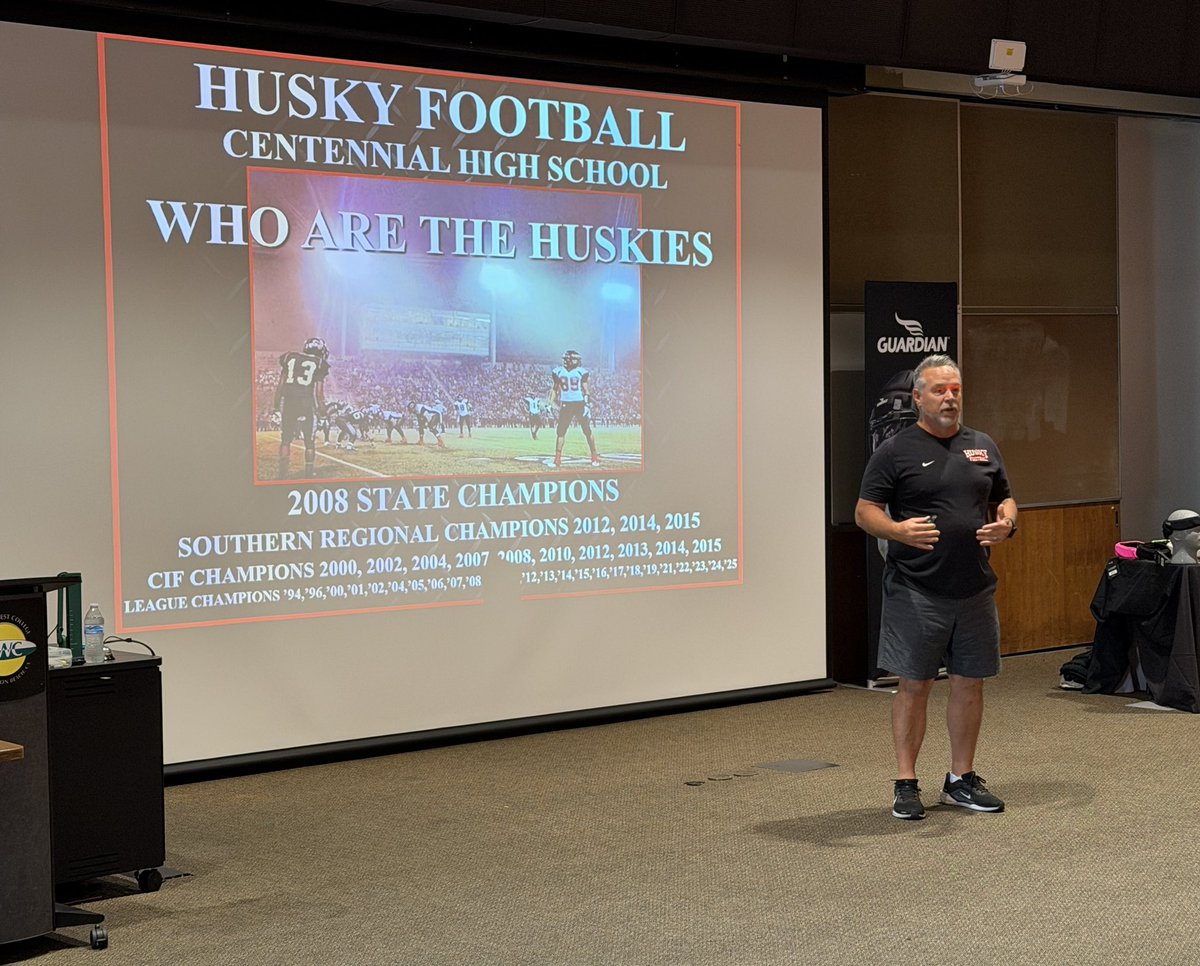
Logan told a story today about the first day of weightlifting under his watch as the HFC at Centennial.
There were 8 kids there!
What he and his staff have done there over the last 25+ years is nothing less than impressive.
Chris Fore@chriscfore
Matt Logan of @Cen10Football speaking at the @SCFCA_ Clinic today. Far too many of you So Cal coaches are missing out on hearing from one of the GOATs today.
English
@chriscfore @SCFCA_ You are 100% accurate. Coaching is a lost art. If there’s no “clout” to be gained, people don’t want to participate. The information shared was priceless.
English
I'm an honest fella. If you've been following me for more than a few months, you know that!
I was disappointed in the turnout today at @SCFCA_.
Coaches had a chance to hear from Matt Logan, Rick Garretson, and about 5 coaches who sit on the CIFSS Coaches Advisory Committee. We discussed the playoff format, and much more during that session.
I know that clinic attendance is way down everywhere: AFCA was down big time this year, Glazier is down, this one was down.
Maybe I'm just old school.
But when I was a coach, I would pay about $300 to see Matt Logan speak for 90 minutes!!
You could have done it for $52, and received $1 million liability policy today!
There is something to be said for spending a day, or even 5-6 hours around a bunch of coaches. Even if you don't get something from a clinic speaker, you can get a whole lot from the brotherhood, and just talking shop with coaches.
I wish more coaches took an active role in this profession as professionals.
Coaches will jump and down to whine and complain about:
1. Playoff system
2. How they're treated by admin
3. Parents
4. Working conditions
5. Their pay
But folks listen: until we take the profession more seriously, until we show up to events like today as an association of coaches, we will be on islands.
I spent 3 years as the President of California Coaches Association. Happy to report we grew the association by 20% during those 3 years, and increased corporate sponsorships by about 300%!
But still, we only had about 1,200 coaches FROM all over California, from ALL sports as a part of the association.
Coaches will NEVER make a splash of noice with districts, with lawmakers in CA, without unifying and coming together.
I'm passionate about this.
When the state was trying to ban youth tackle football, I played a key role in bringing together a team of youth football leaders who led that fight. And played a role in doing so as well.
It took WORK!! Hours and hours, days and days of selfless people who only spent their OWN money to fight that thing!!
I leaned so much through that process about unifying and motivating others to fight against the government at a time I strongly believed in.
Our association need to get stronger. The group of leaders leading SCFCA right now have never worked as hard to move the movement forward!! We need to follow their lead as coaches, if we care about the future of this profession. I strongly believe this.
English
English
Matt Logan of @Cen10Football speaking at the @SCFCA_ Clinic today.
Far too many of you So Cal coaches are missing out on hearing from one of the GOATs today.
English
Cisco nag-retweet

If you didn’t burn a CD and label it with Sharpie, I don’t trust your nostalgia.
English
@SteveKim323 @YouTube Leonard vs Duran for me. I was a little kid, but my dad was a huge Leonard fan.
English

This was the first true 'super fight' I can remember as a kid. I actually watched the ABC replay a week or two after it happened. I still remember all the local LA news covering this
Sugar Ray Leonard vs Thomas Hearns 1 (Closed Circuit) youtu.be/rBAqaeOJjWM?si… via @YouTube

YouTube
English
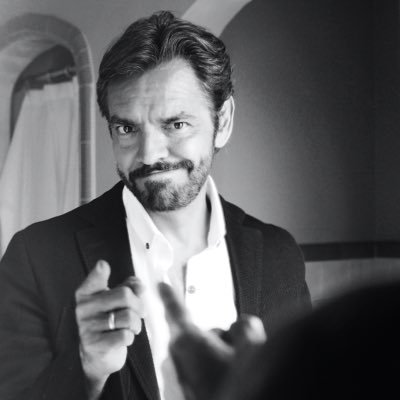
I always dreamed of having a star on the Hollywood Walk of Fame. When I started my career, that dream felt very far away.
After decades of hard work, that day finally came.
Today marks 10 years since I received my star.
And yes, dreams do come true.
But they are also built.
And this story, we built it together. None of this would mean anything without your support and recognition.
Gracias a toda mi gente latina. Es un orgullo ser mexicano. 🇲🇽
Thank you for being part of this journey
English
IYKYK
Coach Kenny Simpson@fbcoachsimpson
Anyone can draw up a play. But great offenses teach concepts. A concept allows your players to: • adjust routes • recognize coverage • adapt to fronts • solve problems during the play Plays prepare athletes for one snap. Concepts prepare them for anything. That philosophy changed the way I coach offense. It’s one of the foundations of this book: Coaching Football Like a Basketball Coach Learn more here: fbcoachsimpson.com/downloads/fbbb…
Suomi


@AdamArchuleta Are you talking about Jay Schroeder the former Washington QB?
English

I first heard this 30 years ago at age 17, when my trainer Jay Schroeder DRILLED it into my soul. I still remember the day we met. He told me, “I don’t want you to squat 450 pounds in 3 seconds… I want you to squat 350 pounds in ½ second. THAT’S power.”
To train with him, he forced me to write a daily training log that timed the concentric portion of EVERY rep, EVERY set, EVERY exercise with a stopwatch. I did this for 6 straight months before he allowed me to train at his gym.
It took over an hour daily to write the log, but what I learned about my body and performance was invaluable. Training with this intent changes everything: to move max weights at high speed, EVERYTHING matters. Technique and position must be flawless, no power leaks. You learn to eccentrically LOAD, not just drop with gravity and momentum. My body awareness skyrocketed.
Speed is king. Details and intention matter. I stopped caring about increasing my max and started caring about moving my max FASTER. It’s the primary reason I transformed myself from a walk-on who ran 4.8 to a first-round pick who ran 4.3.
Josh Bryant@joshstrength
Division 1 football players training in a compensatory acceleration style (CAT) upper body strength regimen were compared to a traditional regimen in their off-season. The CAT group was instructed to perform the positive rep as explosively as possible. The traditional group performed repetitions at a traditional tempo. At the end of both off-season training programs, both power and strength were assessed. Power was tested with a seated medicine ball throw and a force platform plyometric push-up test. Strength was assessed by a one rep max in the bench press. Both groups increased strength and power. The group that trained in a Compensatory Acceleration Training (CAT) style improved their bench press by nearly double the amount of the traditional group. Average power, as expected, increased significantly more in the group that trained explosively. Jones, K. K., Hunter, G. G., Fleisig, G. G., Escamilla, R. R., & Lemak, L. L. (1999). The effects of compensatory acceleration on upper-body strength and power in collegiate football players. Journal of Strength & Conditioning Research (Allen Press Publishing Services Inc.), 13(2), 99-105. Practical Application Fred Hatfield was ahead of his time advocating Compensatory Acceleration Training. It is simply superior! Training adaptations are not just a result of weight on the bar. Adaptations from training are a byproduct of tension and duration. You respond to how much force produced, how fast the force was produced, how long you produced it, and how many times you produced it. Force=mass x acceleration. More tension is result of greater bar speed. Maximal strength training and power adaptations can result from lifting weights with maximal force; one more reason to compensatorily accelerate weights.
English
Cisco nag-retweet

English
Cisco nag-retweet

Parents please care about your child’s ATTENDANCE and ACADEMICS like you care about them getting the ball….
English
Hey, Steve, I don't like your politics or viewpoints. Yeah, OK, that probably means I don't like yours. It is what it is. Only difference is I wont come on your timeline to whine about it.
English

Last day vote to Bobby Pulido for Congress
@bobbypulido425
#BobbyPulido
#RocioSalomeMartinez
🕎 #ANIMO ☪️

English

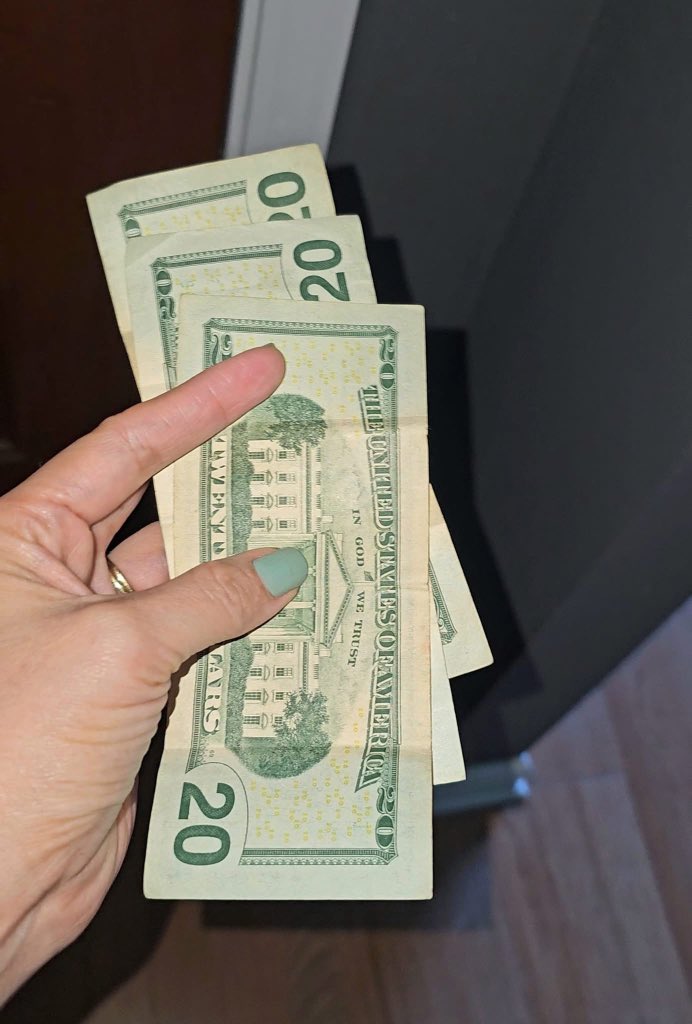
My colleagues and I went to brunch and we spent around $600 on our meal. To appreciate our waiter we gave her $60 tip. We saw her facial expression changed when she saw the amount. She went from happy and all smiles to sour and unappreciative. She accepted the tip, but we could tell she wasn't happy about it. Idk what else we could have done. We thought we were doing something generous, but I guess she may have expected more. We gave what we could afford.
~Amanda via FB
English