Fool for Thought
648 posts

Fool for Thought
@foolforthought_
Author of Fool for Thought Weekly gratitude + life reflections Wisdom lives in ordinary moments 👇 More reflections + free downloads https://t.co/ni2iyE9Thj
Dallas-Fort Worth, TX Sumali Kasım 2025
171 Sinusundan105 Mga Tagasunod
Naka-pin na Tweet

You’re right that the full impact isn’t visible yet, but that was also true in the early internet era. Much of the early narrative focused on job loss, not job creation.
The real mistake is assuming we can see second-order effects in real time. We couldn’t then and we can’t now. AI will eliminate certain roles. That’s clear. What’s less clear, and historically more important, is what gets built on top of it.
The internet lowered the cost of creation and distribution. That unlocked entirely new categories of work that were hard to imagine at the time.
AI is lowering the cost of thinking, building, and experimenting. When that happens, new industries tend to follow, even if they don’t resemble the old ones.
Every major innovation has felt like job destruction in the moment and economic expansion in hindsight. AI may follow the same pattern, even if it feels different today.
English

everyone keeps comparing ai to the early days of the internet like it’s the same opportunity.
it’s not.
the key difference no one wants to talk about is that the internet created millions of jobs. entire industries were born overnight. web development, ecommerce, social media, digital marketing, content creation…
none of that existed before
ai is doing the opposite.
it’s here to eliminate jobs not create them.
and the infrastructure being built to support it is massive data centers with almost no one even working there.
the internet needed people. ai replaces them.
that’s not the same revolution it’s literally the opposite.
English

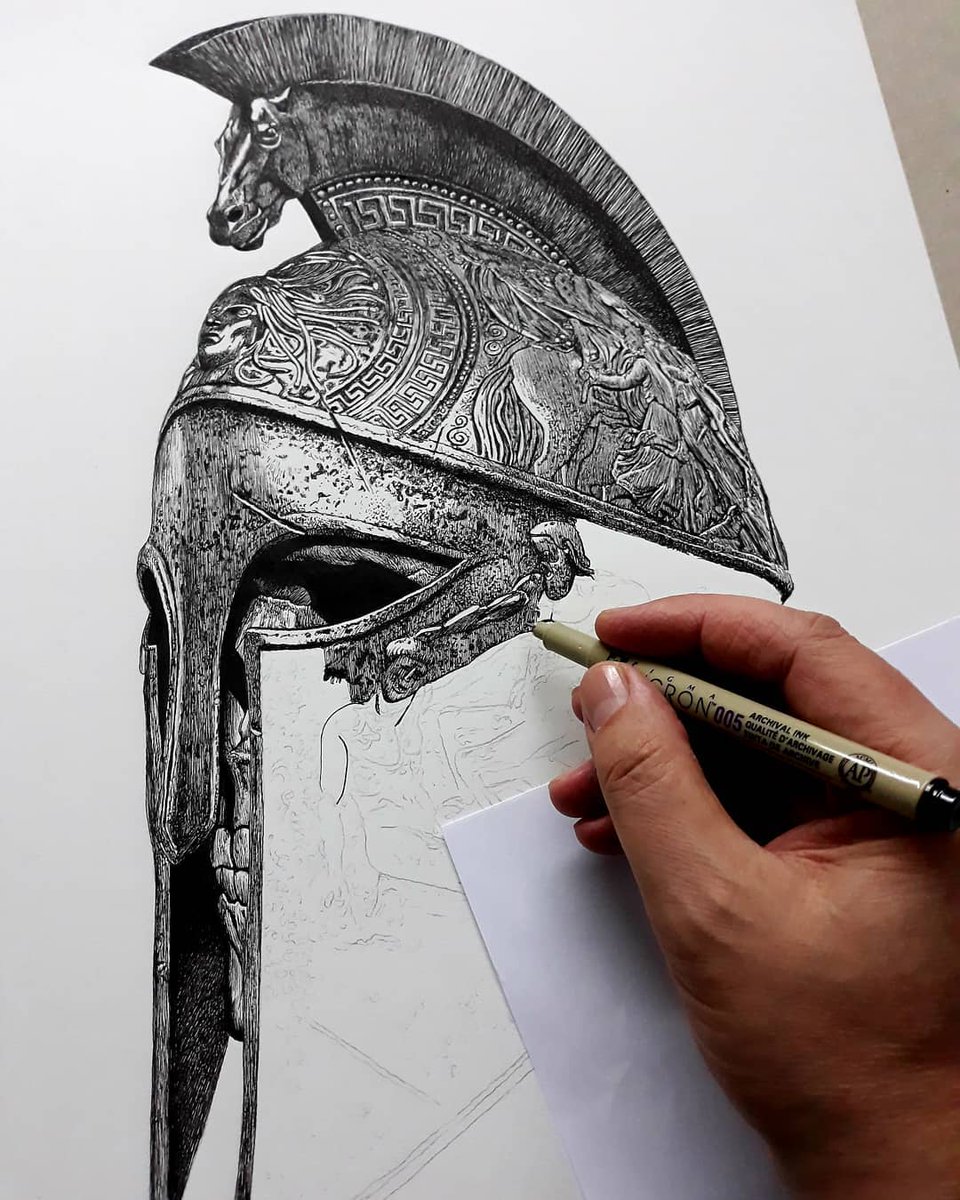
There’s no denying the skill on display here, this is the kind of craftsmanship that takes years, even decades, to develop. As someone who collects art across centuries, I have a deep respect for that level of mastery.
That said, what you’re experiencing is real. Commercial demand is already shifting toward AI, and that trend will likely accelerate as the technology improves. For many clients, speed and cost will outweigh process and tradition.
But that doesn’t mean your value disappears, it changes.
There will always be a market for human-created work, and I suspect it may become more valuable over time, not less. The distinction is that it will increasingly be valued as art, not just as a commercial asset. In a world saturated with AI-generated output, authenticity, human touch, and provenance may carry a premium.
You are not becoming obsolete, you are however likely moving into a different category.
English

If you only judged America by headlines, you’d think everything is broken. But that’s not the full story.
There’s a quieter reality happening every day—one that doesn’t get attention, but matters far more than we realize.
This essay is about that.
open.substack.com/pub/foolfortho…
English

@patrickbetdavid "He who lay to bed with itchy butt, shall awake with stinky fingers" ~ My father was not the greatest dad, but he was funny.
English

@JamesAFurey lol I’ll also take that as not having the ability to make a coherent argument.
English

@foolforthought_ Try writing yours without a chatbot if you want to be taken seriously.
English


This concern is understandable, but it overstates the risk and understates how learning actually evolves.
Education has never been about memorization. It is about thinking, interpreting, and applying ideas. Every major tool, from books to calculators to the internet, was once seen as a shortcut that might weaken learning. Instead, each expanded our capacity and shifted focus to higher order thinking.
AI is no different. Used poorly, it can enable shallow work. Used well, it accelerates understanding, exposes multiple perspectives quickly, and allows students to spend more time analyzing, questioning, and synthesizing. That is not less thinking. It is more advanced thinking.
The real issue is not AI. It is the model of education. If we reward rote output, students will outsource it. If we reward reasoning and insight, AI becomes a powerful tool rather than a crutch.
We do not have to choose between AI and an educated population. We have to update what we mean by educated.
English

The incursion of technology into every aspect of the classroom was always a bad idea, but in light of generative technologies which literally do the thinking for students, it is nothing short of an existential threat to education.
We need to deal intelligently with AI use by our students or sit back and watch generations of students graduate from our schools having learned less than any previous generation.
We can’t have both an educated populace and one which offloads all its work to AI. We need to choose.
English

Solid point on the affordability gap, if you scale a $17K 1970 home by income growth, you land around $157K versus today’s $418K median.
But we’re not buying the same product. Today’s homes are materially larger and higher quality. Median new builds have grown from 1,500 sq ft in the 1970s to roughly 2,300 sq ft today, over 50% larger, along with features that were once luxuries: central air, multiple bathrooms, garages, and better energy efficiency.
On a per-square-foot basis, inflation-adjusted costs have remained relatively stable over time. The headline price increase is largely a function of more house and better specifications.
That said, affordability is still worse even after adjusting for size. The underlying issue is constrained supply, zoning, permitting, and local resistance limit where and how much we build.
In short: we’re choosing bigger homes, but we’re not building enough of them where demand actually exists.
English

Calling all authors and writers! I'm following back everyone in the community ❤ Drop your books, blogs, or projects below, and I'll gladly retweet. Let's support each other! #NewYear2026 #WritingCommunity #Books #Poems #Authors #Writers #ShamelessSelfPromo #TuesdayVibes

English

@averyt_214 When motivation dips, I come back to purpose. Great writing shaped my life, if mine can help even one person, it’s worth it. You don’t need perfect focus, just a reason to keep going.
English

@PhilipDBunn The mistake is assuming AI replaces thinking.
At its best, it amplifies it, surfacing sources, clarifying nuance, and accelerating deeper exploration. Tools don’t make people dumber. How people use them does.
English

@YoRHa2Pee This is a strange take.
Societies advance by adopting new tools, not wishing them away.
The printing press, electricity, the internet, each sparked the same fear. The key isn’t resisting AI. It’s learning how to leverage it responsibly.
English

@sahill_og I tend to think AI amplifies thought.
Curious people will use it to explore ideas more deeply and connect concepts faster. Those who prefer not to think critically won’t change because of the tool.
Technology usually reveals more about the user than the technology itself.
English

@MrEwanMorrison This reminds me a little of the Salem Witch Trials era, where suspicion itself became evidence.
New technologies tend to trigger that reaction. Eventually society learns to separate tools from how people choose to use them.
English

@melissasigodo Language itself is communal. Every writer is drawing from the same relatively finite pool of words, phrases, and ideas that have been evolving for centuries.
Out of curiosity, which words have you declared off limits due to your ownership?
English

This assumes the economy must remain structured around the scarcity model of the past.
Throughout history, new technologies have reduced the need for certain types of labor while dramatically expanding human productivity.
When the cost of intelligence and production falls, the frontier of what people can create expands. Entire industries emerge that were previously unimaginable.
The question isn’t whether the economy survives, it’s what the next version of it looks like.
English

Not enough people have a “we’re all in this together” take on AI.
I’ve seen a lot of celebration about AI potentially (prob not) replacing knowledge workers.
The entire economy is built on top of this type of labor.
If you remove it, and don’t replace it, everyone suffers.
The disposable income of this class of workers is what makes the entire economy function.
English