FullyTokenized

189 posts

FullyTokenized banner
FullyTokenized

FullyTokenized

@fullytokenized

Boutique development company specialized in blockchain, tokenization, and web3 solutions
London, United Kingdom Sumali Şubat 2024
58 Sinusundan955 Mga Tagasunod
FullyTokenized
FullyTokenized@fullytokenized·
9/9 Want to understand how these steps apply to your use case Happy to share what we have learned building tokenization platforms in production environments.
English
0
0
1
25
FullyTokenized
FullyTokenized@fullytokenized·
8/9 How FullyTokenized approaches it At FullyTokenized, we design tokenization systems start-to-end, including chain selection, token standards, custody, compliance automation, and market integrations. We engineer systems that support the asset across its entire lifecycle, not just at issuance. If you want tokenization done right, you need more than a contract. You need an architecture. This is the difference between a demo and a production environment
English
1
0
1
36
FullyTokenized
FullyTokenized@fullytokenized·
THE REAL STATE OF TOKENIZATION 🧵1/9 Why tokenization matters right now Tokenization isn’t a trend. It’s an infrastructure shift driven by one simple reality: Digital markets move faster, more cheaply, and more transparently than traditional rails. Institutions want programmability. Regulators want clarity. Users want access. And every asset class, from financial instruments to real-world assets, is moving toward models where ownership, compliance, and transfer logic can be automated. Tokenization matters because it rewires how value is issued, held, and exchanged.
FullyTokenized tweet media
English
1
0
1
59
FullyTokenized
FullyTokenized@fullytokenized·
Upgradeable contracts are a trust choice, not a feature. In regulated markets, users trust the issuer and regulator more than “immutable code.” >Rules change. >Sanctions lists update. >Security patches can’t wait for migrations. So upgradeability is usually good for institutional products, if it’s governed by: >clear upgrade authority >timelock >emergency pause only In crypto-native markets, the same power can be perceived as a centralization risk. Ship upgradeable when regulation or ops demand it. Otherwise, keep contracts immutable or tightly constrained.
FullyTokenized tweet media
English
0
0
2
28
FullyTokenized
FullyTokenized@fullytokenized·
Interoperability is not a feature. It determines a token's utility. Real value appears when assets can move, integrate, and be composed across ecosystems without fragmenting liquidity or duplicating supply. This is why cross-chain standards matter. @LayerZero_Core OFT model is a good example. Instead of issuing separate tokens on separate chains, OFT keeps a single canonical supply and allows the asset to move across networks without breaking accounting or creating wrapped versions that introduce operational risk. At FullyTokenized, we build systems meant to connect. Not to sit inside one chain, but to operate reliably across the environments where users, partners, and liquidity already live.
FullyTokenized tweet media
English
0
0
2
28
FullyTokenized
FullyTokenized@fullytokenized·
Architecture only works while it stays aligned with the product’s evolution. Most issues in Web3 don’t stem from smart contract limitations. They appear when the product grows in a direction the original architecture did not anticipate. As products evolve, they need new permissions, updated compliance logic, different user flows, richer data models, and new integrations. If the contract system wasn’t designed with this evolution in mind, it slowly becomes misaligned with what the product now requires. >That’s when updates become complex. >That’s when even simple changes introduce unnecessary risk. >That’s when teams start patching code that no longer fits the product’s direction. >This isn’t a coding problem. >It’s a product and architecture problem. Smart contracts don’t become difficult to maintain because the language is fragile. They become difficult when the architecture behind them wasn’t built with long-term product strategy, lifecycle behavior, or evolving requirements in mind. And this is where the right team makes all the difference. At FullyTokenized, we design contract systems by understanding the product first. How it works today, where it’s going, and what it will need in six months. The result is an architecture that supports evolution instead of resisting it. This is how teams avoid costly rewrites and move from prototypes to systems that stay aligned as the product matures.
FullyTokenized tweet media
English
0
0
3
31
FullyTokenized
FullyTokenized@fullytokenized·
Big banks are no longer experimenting with tokenization. They are launching real financial products onchain. JPMorgan Asset Management just launched its first tokenized money market fund on Ethereum. The fund, called MONY, invests exclusively in U.S. Treasuries and fully collateralized Treasury repos. It provides U.S. dollar yield with daily dividend reinvestment, while ownership and settlement happen directly onchain. Qualified investors can subscribe and redeem using cash or a USD stablecoin, receiving the fund token straight into their wallets. The structure mirrors a traditional money market fund, but the infrastructure is native to blockchain. This is not a pilot or a demo. It is a regulated product backed by real assets and deployed on a public network. What matters here is the shift. Tokenization is moving from experimentation to production. Institutions are no longer asking if onchain finance works. They are deciding how to operate it safely and at scale. For teams building tokenization or regulated Web3 infrastructure, this is a strong signal. Real world assets onchain are no longer theoretical. They are becoming operational. Curious how others see this evolving.
English
0
0
2
76
FullyTokenized
FullyTokenized@fullytokenized·
Speed in Web3 doesn’t come from cutting corners. It comes from eliminating uncertainty. Most teams don’t slow down because the tech is hard. They slow down because the product strategy isn’t clear, the MVP isn’t defined, and the feature list keeps expanding along the way. Scope creep becomes the default. Everyone adds “just one more thing”, priorities shift, and suddenly a 90-day build turns into a moving target. But once you know exactly what ownership looks like, what permissions are needed, how upgrades should work, how data flows, and what actually belongs in version one, everything becomes easier. The thinking takes time. The building goes fast. That’s why our clients ship real MVPs in 90 days. Not because we rush, but because we remove the uncertainty that slows everyone else down. What slows you down when building?
FullyTokenized tweet media
English
0
0
3
39
FullyTokenized nag-retweet
Arthur Hayes
Arthur Hayes@CryptoHayes·
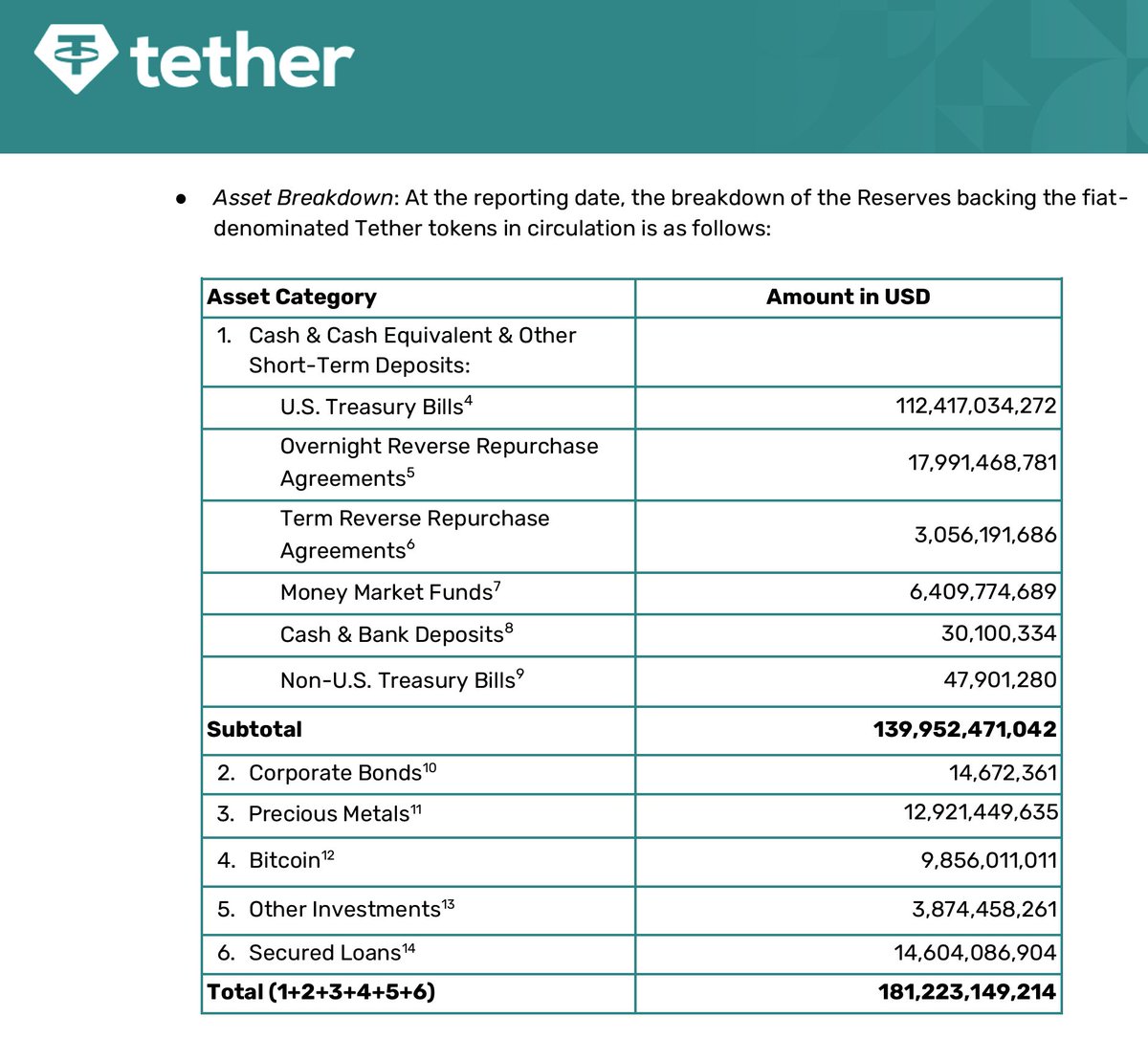
The Tether folks are in the early innings of running a massive interest rate trade. How I read this audit is they think the Fed will cut rates which crushes their interest income. In response, they are buying gold and $BTC that should in theory moon as the price of money falls. A roughly 30% decline in the gold + $BTC position would wipe out their equity, and then USDT would be in theory insolvent. I'm sure some large holders and exchanges will demand a real-time view of their B/S so they can assess the solvency risk of Tether. Get out your popcorn, I expect the MSM to run wild with this, especially all the editors with TDS who want to shit on Lutnick and Cantor for backing this stablecoin.
Arthur Hayes tweet media
English
723
579
4.4K
3.2M
fugazzi
fugazzi@MihaiPisla·
1/14 My Journey to Web3 – Part 1/3 From $0 to €10M/year revenue… and then I sold everything and walked away after an ayahuasca ceremony showed me the truth. Most people only saw the money. Very few saw I was slowly dying inside. Thread New chapter on next Tuesday.
fugazzi tweet media
English
9
1
32
1.1K
FullyTokenized
FullyTokenized@fullytokenized·
Your app is only as fast as your data layer. And most teams learn this the hard way. Everyone talks about chains and contracts. Almost nobody talks about indexing, and it is the layer that makes or breaks the user experience. If your indexer is slow, your UI is slow. If your events are messy, your data is messy. If your queries are expensive, your system collapses under real load. Good indexing is not optional. It is part of the product. At FullyTokenized, we spend as much effort on indexing and data flow as we do on contracts, because a Web3 product is only as strong as the layer people actually interact with.
FullyTokenized tweet media
English
0
0
3
67
FullyTokenized
FullyTokenized@fullytokenized·
Integrations are never the “easy part” of a Web3 product. They are usually the hardest. Every partnership sounds simple on paper. “Just integrate this protocol.” “Just read these events.” “Just support this wallet.” But when you start building, the details explode. Different standards. Different assumptions. Different security models. Different expectations for latency and reliability. Integrations take time because they aren’t plug-and-play. They need real engineering. FullyTokenized helps teams navigate integrations with the right architecture and a predictable process, so partnerships actually work in production.
FullyTokenized tweet media
English
0
0
3
82
FullyTokenized
FullyTokenized@fullytokenized·
Another nine million dollars gone because of one thing: bad engineering. The recent Yearn Finance incident is a perfect example. A legacy yETH contract allowed an attacker to mint a near-infinite amount of fake tokens in a single transaction. Those tokens were then swapped for real assets across Balancer and Curve pools, draining liquidity in minutes. This wasn’t a blockchain problem. It wasn’t a DeFi problem. It was an architecture problem. Here is what actually went wrong: • a minting function with no real supply constraints • no guardrails around accounting logic • no protection against extreme mint inflation • outdated code left running long after newer versions existed • systems depending on pool liquidity instead of protocol safety This is how you get two hundred trillion fake tokens created instantly. This is how nine million dollars disappear. The most important detail: The exploit hit an older contract that had not been upgraded or decommissioned properly. This is exactly where most Web3 systems fail: lifecycle management, not on-chain performance. Bad architecture is always more dangerous than a slow chain. At FullyTokenized, this is why we insist on structure, clarity and long-term thinking. We design systems that cannot inflate supply by accident. We build predictable permission models, upgrade paths and proper separation of logic. We audit architecture before code so problems do not make it to mainnet in the first place. Incidents like this will keep happening until teams treat smart contracts like real financial infrastructure, not experiments left running. If you want to build Web3 products that survive in the real world, not just in demos, you need engineering that does not cut corners.
PeckShieldAlert@PeckShieldAlert

#PeckShieldAlert Yearn Finance @yearnfi suffered an attack resulting in a total loss of ~$9M. The exploit involved minting a near-infinite number of yETH tokens, depleting the pool in a single transaction. ~1K $ETH (worth ~$3M) was sent to #TornadoCash, while the exploiter's address (0xa80d...c822) currently holds cryptos valued at ~$6M.

English
0
0
1
139
FullyTokenized
FullyTokenized@fullytokenized·
Most smart contracts don’t break because of hacks. They break because they were built too fast. I keep seeing this play out. Teams ship contracts to mainnet long before they understand how a real product evolves. No upgrade plan. No clear events. No separation of responsibilities. No predictable permission system. And once the product starts growing, the bill comes due. Expensive audits. Painful migrations. Unexpected downtime. Lost trust. Everything becomes harder and slower than it needed to be. Good smart contracts are not about writing clever code. They are about structure, clarity, and long-term thinking. If you want contracts that survive real-world use, they need intention behind them. FullyTokenized helps teams design smart contracts that scale safely and cleanly as the product grows.
FullyTokenized tweet media
English
0
0
3
85