
Naka-pin na Tweet
Scarface Al
34.5K posts


Scarface Al
@galbataar
interests Tech, Food, Fitness, Finance, Women The parasite hates 3 things Free Markets, Free Will & Free Men
Sumali Ocak 2011
948 Sinusundan1.4K Mga Tagasunod
Scarface Al nag-retweet

One of the things I showed in this short version of the presentation was that China is actually getting out ahead of the U.S. *more* on innovative drugs.
It's highly original trials with new modalities, targets, indications, etc. where China is outpacing America the most!

MTS@MTSlive
.@cremieuxrecueil dismantles the myth that China only makes "me too" drugs, and what it means for the future of gene therapy: "One of the things China's been accused of for a long time is just doing 'Me Too' drugs... where you basically see a new drug get approved and then you copy it immediately. "Are these Chinese drugs just Me Too? No. These are cell and gene therapy trials." "In the US we are banned from offering gene therapies that do germline changes, meaning that they affect sperm or eggs." "If we can cure a family of like a horrible, debilitating disease for all time, why don't we?"
English
Scarface Al nag-retweet

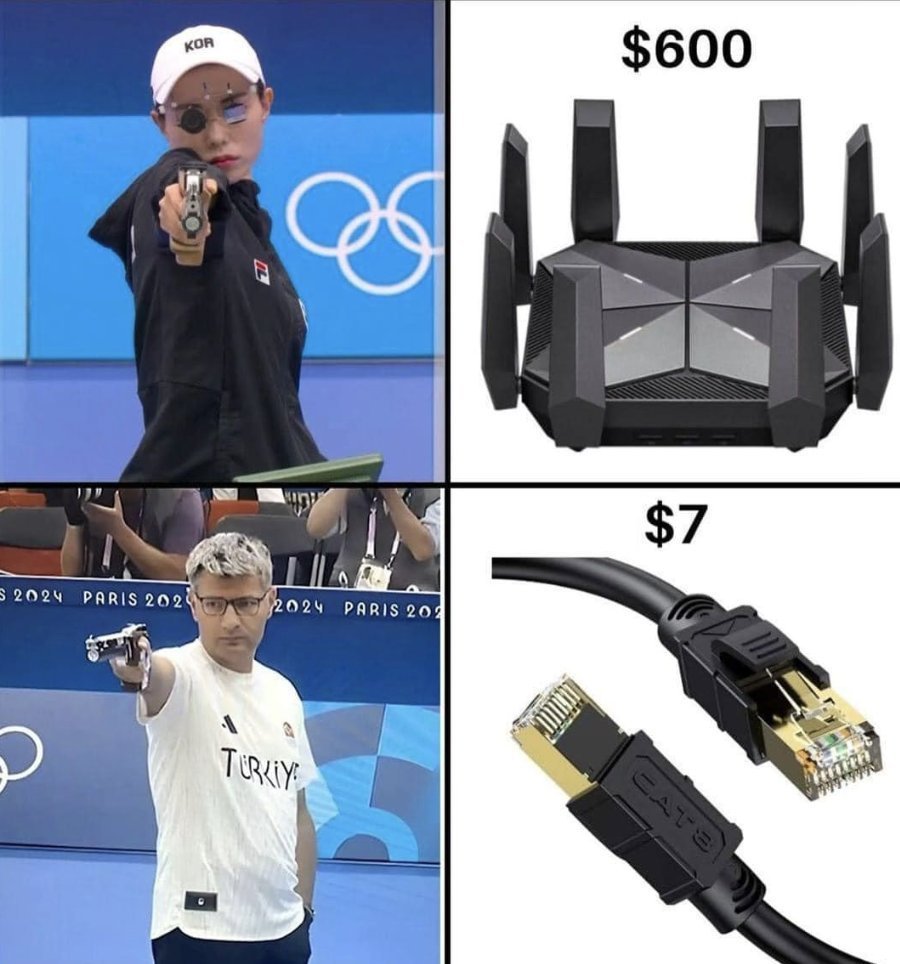
Nobody wants to hear this but the $7 ethernet cable is the highest-ROI health intervention in your house
Rusty ⚡️: Solar Powered ☀️@ze_rusty
This simple cable will save you from the major source of wireless radiation. It's called Ethernet cable. A must-have in every home.
English
@john32505 @SmashJT Because they control education.
Harare, Zimbabwe 🇿🇼 English



Dumbass caught feelings and over invested in a sugar-baby 🤦🏿♂️
Europa.com@europa
🇺🇸 Julia Varvaro, 29, a Deputy Assistant Secretary for Counterterrorism at DHS, is facing an Inspector General complaint filed by an ex-boyfriend over alleged financial misconduct. The complaint states $30,000–$40,000 was spent on her in three months from January 2026, covering luxury travel, jewellery and rent, and alleges she used apps like Seeking and Hinge to find “sugar daddies.” It also alleges she referenced past arrangements and used her DHS role for perks such as expedited airport security. Follow: @europa
Harare, Zimbabwe 🇿🇼 English
Scarface Al nag-retweet

FIXES BINDS LLC Will Never Go Outta Business
The Monetized Dating Marketplace is alive and well
Daily Mail US@Daily_MailUS
A top-level Trump counterterrorism official is under investigation amid claims she actively looks for sugar daddies to maintain her exorbitant lifestyle trib.al/RwSFgBP 🔗
English
Fortunately for women, most men will see this and proudly say
"Not my girl" 😂
Rollo Tomassi@RationalMale
It won’t be the Manosphere that leads men to Red Pill awareness. It will be Call Her Daddy and a million girls on TikTok confirming everything we’ve discussed for 25 years now.
Harare, Zimbabwe 🇿🇼 English
Is there any highly profitable company that's as Loved as Valve🤔
MISOG NIG-NOG Luffy@Luffygearmonger
Steam doesn't own Windows Steam doesn't own PC Valve owns steam but not PC or Windows Sony owns PlayStation and it's entire brand as well as the studios that make games for PlayStation primarily such as naughty dog, insomniac studios, and sucker punch.
Harare, Zimbabwe 🇿🇼 English
Scarface Al nag-retweet

Feminism is the belief that women should have authority without responsibility, while men should have responsibility without authority.
English
Only one husband out of countless cases has any shred of self-respect
Rollo Tomassi@RationalMale
Female Teacher-Student Rapist #22 for 2026. At least the husband dumped her this time.
Harare, Zimbabwe 🇿🇼 English
Scarface Al nag-retweet

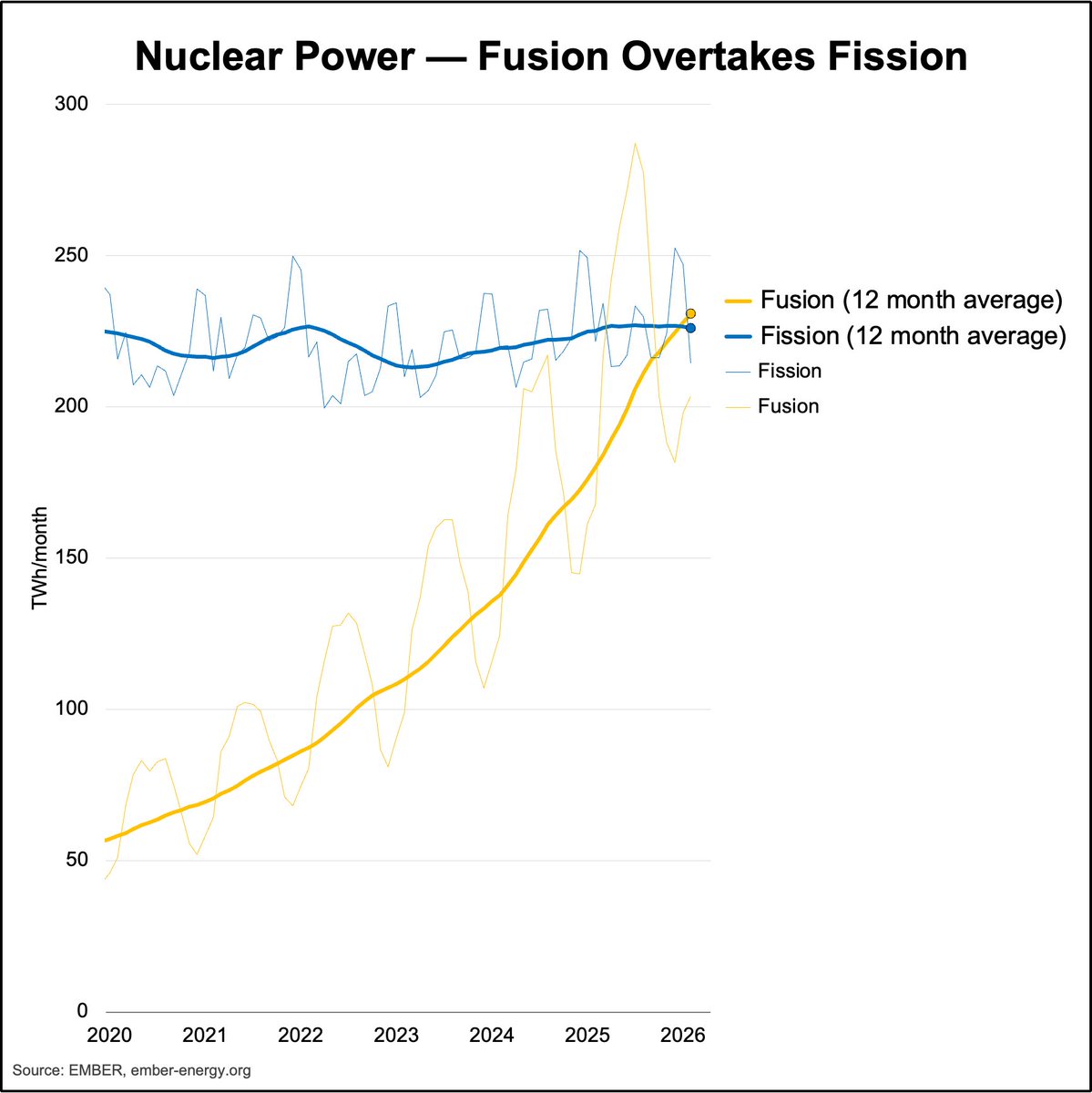
It's 2026.
Humanity now generates more electricity from the great big fusion reactor in the sky (via photovoltaics) than from all our fission reactors combined.
Jesse Peltan@JessePeltan
Nuclear Power Update: Fission vs Fusion Fusion now generates 3/4 as much electricity as fission and is set to overtake fission in 2026. Note: fusion data does not include generation from unregistered SMRs (small modular receivers). These may account for around 10% of total power generation in places like Pakistan.
English
Scarface Al nag-retweet
Funny how women revealing truths about women’s nature is ‘toxic’ to women’s image to men.
The Red Pill is unignorable.
𝓔𝓶 ♡@emkenobi
This podcast has done so much damage to the image of women. At this point it’s just feeding into the toxic narrative men already have about us.
English
Scarface Al nag-retweet

The universe guarantees you'll improve if you keep trying. The universe doesn’t reward talent, luck, or intelligence first , it rewards relentless consistency
Rizzo@masonrizz
the only way to fix uncertainty is an unreasonable amount of action
English
@Shadaya_Knight And that's why the smart baddies open boutiques and sell overpriced products 🤑
English

Cyan Boujee has had her bank accounts frozen on allegations of money laundering, connected to Erkurhuleni manager Kagiso Lerutla who defrauded a lot of money
Not so many weeks ago, she was all over social media celebrating about buying a house. She is always flaunting wealth, expensive iPhones, hairstyles, designers, cars and flying all over
She is seen by many young women as an inspiration and she holds herself as one
Yet for some reason she's unemployed and has no known business. But now she's crying about her bank accounts being frozen. Why wouldn't banks freeze the accounts when they are not clear about the source?
Lesson: Stop looking up to these so called socialities/influencers, majority of them are either into fraud or prostitution. They're just criminals who have mastered the art of looking good

English
Scarface Al nag-retweet

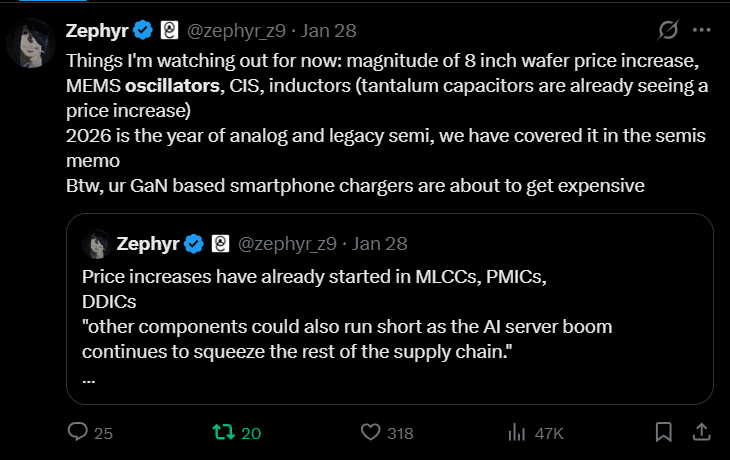
Even quartz oscillator prices are up
Everything mentioned in this tweet has played out as I expected
駿HaYaO@QQ_Timmy
AI資料中心加速建置,推動光通訊模組從400G全面升級至800G,並邁向1.6T商用化,高速網通與高頻傳輸需求爆發,帶動石英元件族群強勢表現。 TrendForce數據顯示,800G以上光模組出貨占比將由2024年的19.5%大幅躍升至2026年逾60%,進入世代交替關鍵期。Light Counting指出,光學元件在前五大雲端業者資本支出中的占比,也將從2025年的2.7%提升至2026年的3.1%,並持續攀升至2031年的4.1%,凸顯光通訊成為AI算力基礎建設的核心。 石英振盪器在高速傳輸中扮演「節拍器」角色,提供穩定時脈,確保訊號同步與低相噪,重要性隨傳輸速率提升而顯著增加。全球石英元件市場預計以年複合成長率5.8%擴張,至2027年規模達53億美元。 供給端方面,貴金屬與原油價格走高推升製造成本,晶技已自4月1日起調漲產品價格5%10%,預期有助改善毛利。晶技受惠AI、光模組與低軌衛星新動能;台嘉碩聚焦AI伺服器、GPU模組與WiFi 7,今年光通訊產品出貨量預估達500600萬顆,呈雙位數成長,800G振盪器將於2026年底量產。 在AI驅動、光通訊升級、技術門檻提升及成本轉嫁等多重利多下,石英元件產業進入新一輪成長循環,具技術與客戶優勢的業者有望優先受惠。 ctee.com.tw/news/202604207…
English
Scarface Al nag-retweet

Scarface Al nag-retweet
Scarface Al nag-retweet

Scarface Al nag-retweet

When the Malthusians were set loose…
Crémieux@cremieuxrecueil
British fertility abruptly fell after one important court case: the Bradlaugh-Besant trial🧵 You can see its impact very visibly on this chart:
English