Political Analysis

1.1K posts

Political Analysis banner
Political Analysis

Political Analysis

@polanalysis

Official Journal of the Society for Political Methodology
Sumali Eylül 2010
2.6K Sinusundan18.8K Mga Tagasunod
Naka-pin na Tweet
Political Analysis
Political Analysis@polanalysis·
We're back! We are excited to share lots of new and exciting research with you all here and on our new Bluesky account. Find us at polanalysis.bsky.social!
English
0
3
4
3K
Political Analysis
Political Analysis@polanalysis·
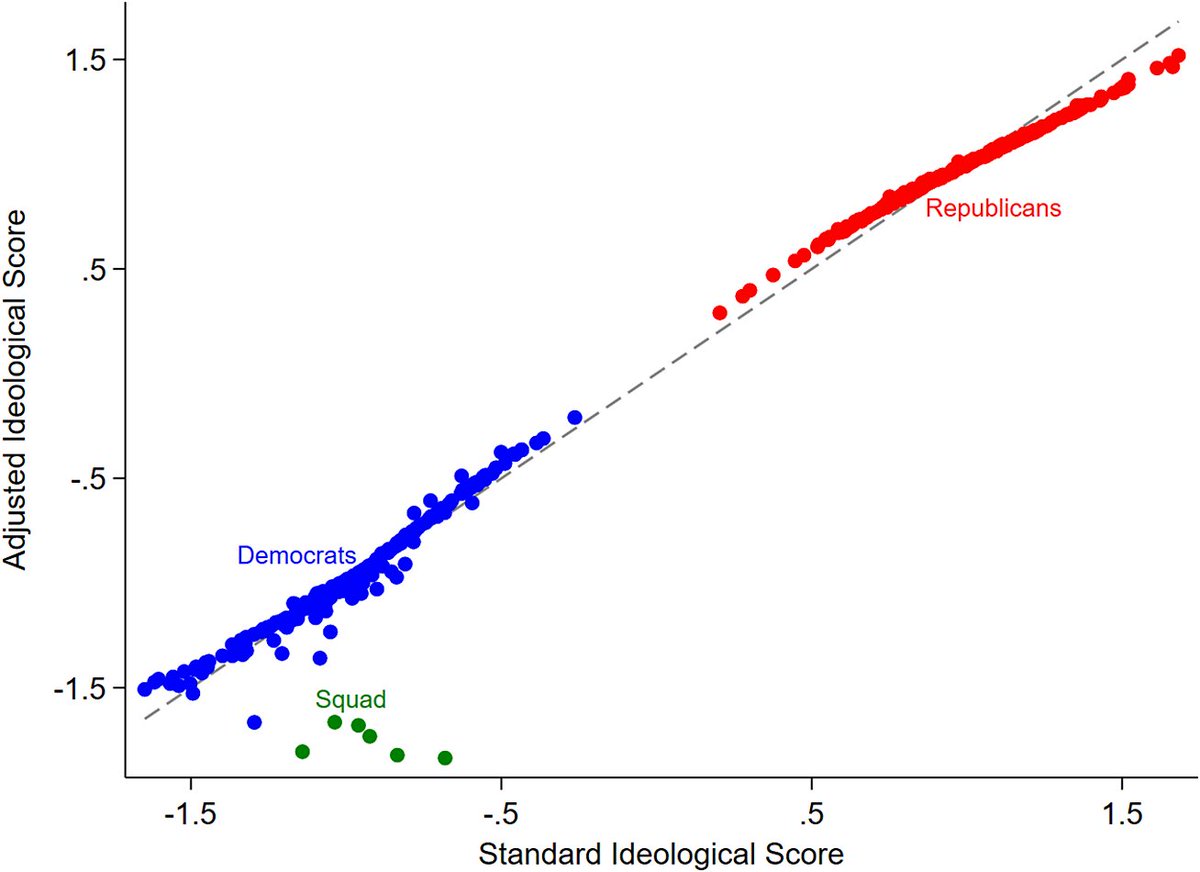
The adjusted estimates show that congressional polarization and its increase over time are ever greater than previously thought, and the electoral penalty associated with ideological extremism is greater than previously thought. Read the paper here: cambridge.org/core/journals/…
English
0
1
6
360
Political Analysis
Political Analysis@polanalysis·
Currently in FirstView: In “Accounting for Protest Voting in the U.S. Congress,” Anthony Fowler and Jeffrey B. Lewis estimate a model of congressional voting that allows for non-ideological protest voting. This has significant implications for roll-call estimates of ideology.
Political Analysis tweet media
English
1
5
29
1.9K
Political Analysis
Political Analysis@polanalysis·
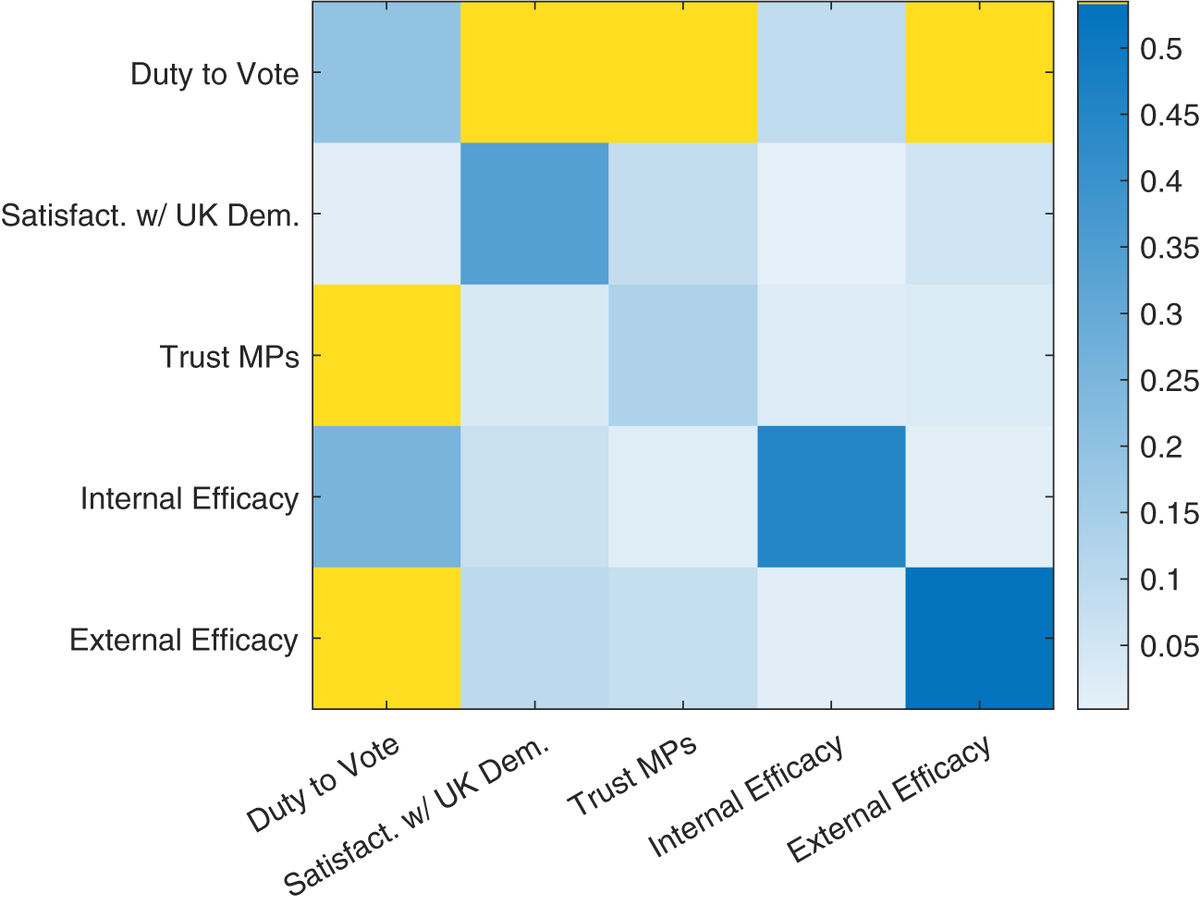
The model offers insights about stability, the direction of causation between attitudes, and their relative influence. They use their model to show the role of ideology on attitudes toward government spending and immigration. Read the paper here: #article" target="_blank" rel="nofollow noopener">cambridge.org/core/journals/…
English
0
3
5
507
Political Analysis
Political Analysis@polanalysis·
Currently in FirstView: In “A Dynamic Discrete Choice Approach to Attitude Stability and Constraint,” Alecia Nepaul and Steven Stern introduce a discrete choice framework to identify influential attitudes within attitude systems.
Political Analysis tweet media
English
1
7
12
2.2K
Political Analysis
Political Analysis@polanalysis·
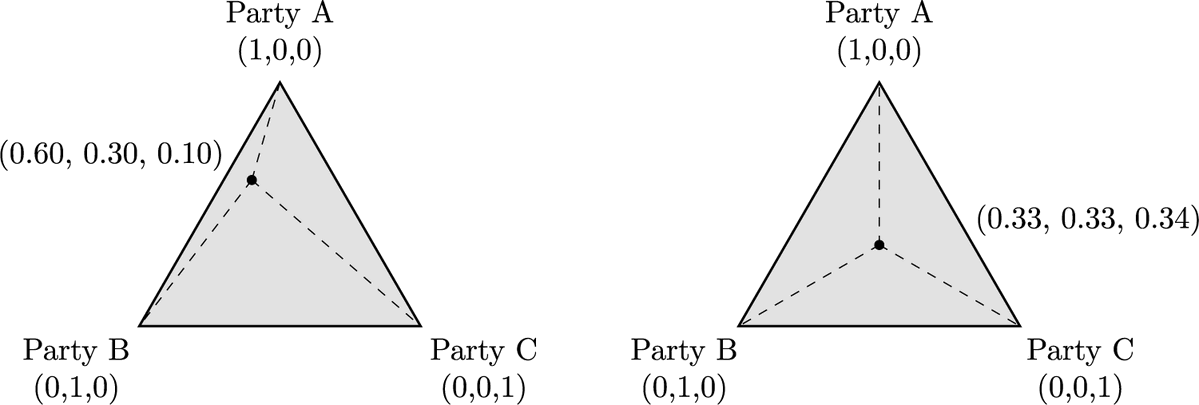
The findings challenge Gamson’s law: the idea that cabinet ministries in multiparty democracies are distributed in proportion to seats. Because portfolio and seats are mutually dependent, ILR addresses concerns of bias and uncertainty. Read the paper here: #article" target="_blank" rel="nofollow noopener">cambridge.org/core/journals/…
English
0
1
0
488
Political Analysis
Political Analysis@polanalysis·
Currently in FirstView: in “Refining Gamson: The Isometric Log-Ratio Transformation and Portfolio Proportionality in Multiparty Governments,” Lanny Martin and Georg Vanberg propose the isometric log-ratio (ILR) as an alternative to the additive log-ratio (ALR) transformation.
Political Analysis tweet media
English
1
3
8
1.4K
Political Analysis
Political Analysis@polanalysis·
They demonstrate the utility of their models by analyzing civil rights protests in the US. These models are useful because many datasets in political science are nested and can potentially have diffusion processes at multiple levels. Read the paper here: cambridge.org/core/journals/…
English
0
0
2
449
Political Analysis
Political Analysis@polanalysis·
Currently in FirstView: in “Modeling Hierarchical Spatial Interdependence for Limited Dependent Variables,” Ali Kagalwala and Kankyeul Yang propose a class of hierarchical models with binary outcomes to account for spatially independent and dependent unobserved group effects.
Political Analysis tweet media
English
1
0
2
766
Political Analysis
Political Analysis@polanalysis·
Using a dataset of all televised U.S. presidential debates from 1960 to 2020, the authors highlight many applications including forced alignment of audio text, speech characterization, and custom classification models. Read the paper here: cambridge.org/core/journals/…
English
0
2
8
1.1K
Political Analysis
Political Analysis@polanalysis·
Currently in FirstView: in “Potential and Pitfalls of Audio as Data for Political Research: Alignment, Features, and Classification Models,” Rafael Mestre and Matt Ryan provide solutions to challenges encountered when analyzing audio data in political science research.
Political Analysis tweet media
English
1
6
28
2K
Political Analysis
Political Analysis@polanalysis·
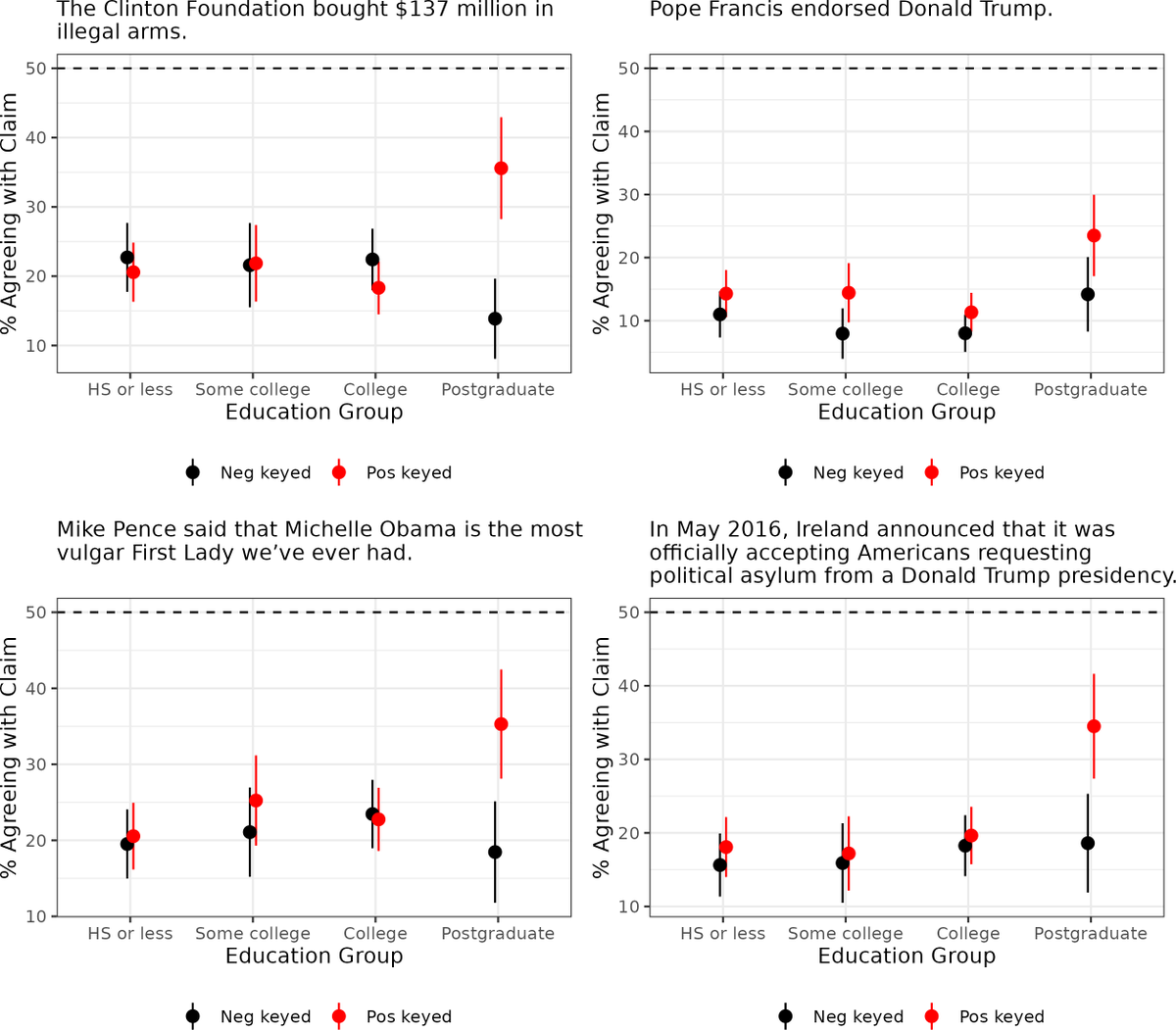
In their replication, they show that the association between education and acquiescence is an artifact of low-quality survey responses. Scholars should be cautious about over-interpreting conditional effects in low-quality surveys. Read the paper here: #article" target="_blank" rel="nofollow noopener">cambridge.org/core/journals/…
English
0
3
5
646
Political Analysis
Political Analysis@polanalysis·
Currently in FirstView: In “Survey Quality and Acquiescence Bias: A Cautionary Tale,” Andrés Cruz, @AdamBouyamourn, and Joseph Ornstein discuss the dangers of drawing inferences from low-quality survey datasets. They replicate an experiment on acquiescence and misinformation.
Political Analysis tweet media
English
1
12
25
2.6K
Political Analysis
Political Analysis@polanalysis·
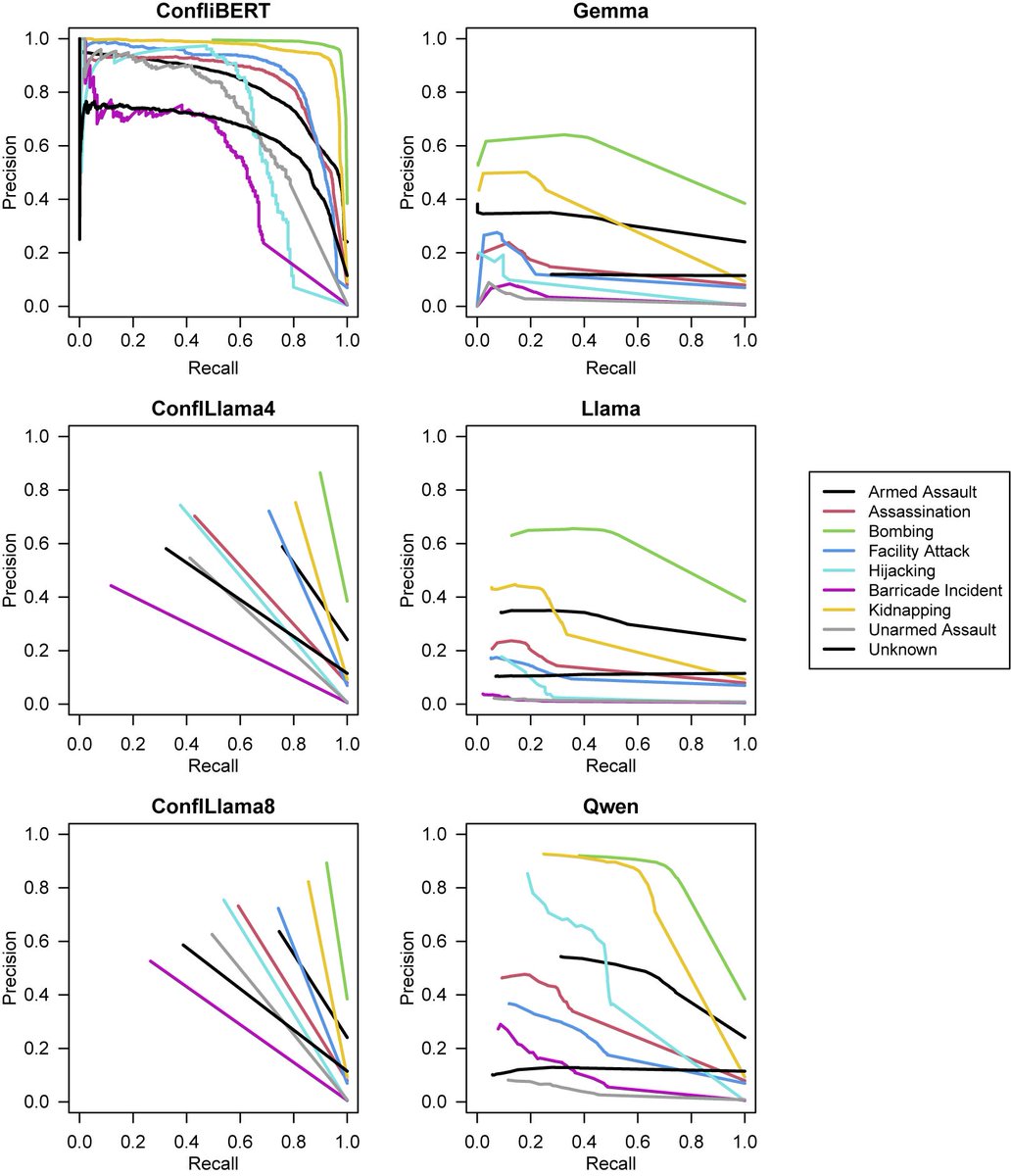
@PatrickTBrandt @vjdorazio @DagmarHeintze ConfliBERT is open source and is easily deployed and replicable. It is significantly better on comparable, relevant quality metrics and faster than other LLMS that use decoder technologies with graphical processing units (GPUs). Read the full paper here: #article" target="_blank" rel="nofollow noopener">cambridge.org/core/journals/…
English
0
1
8
882
Political Analysis
Political Analysis@polanalysis·
Currently in FirstView: In “Extractive versus Generative Language Models for Political Conflict Text Classification,” @PatrickTBrandt, S. Alsarra, @vjdorazio, @DagmarHeintze, L.Khan, S.Meher, J.Osorio, & M.Sianan review their ConfliBERT model and benchmark it against other LLMs.
Political Analysis tweet media
English
1
4
22
2.5K
Political Analysis
Political Analysis@polanalysis·
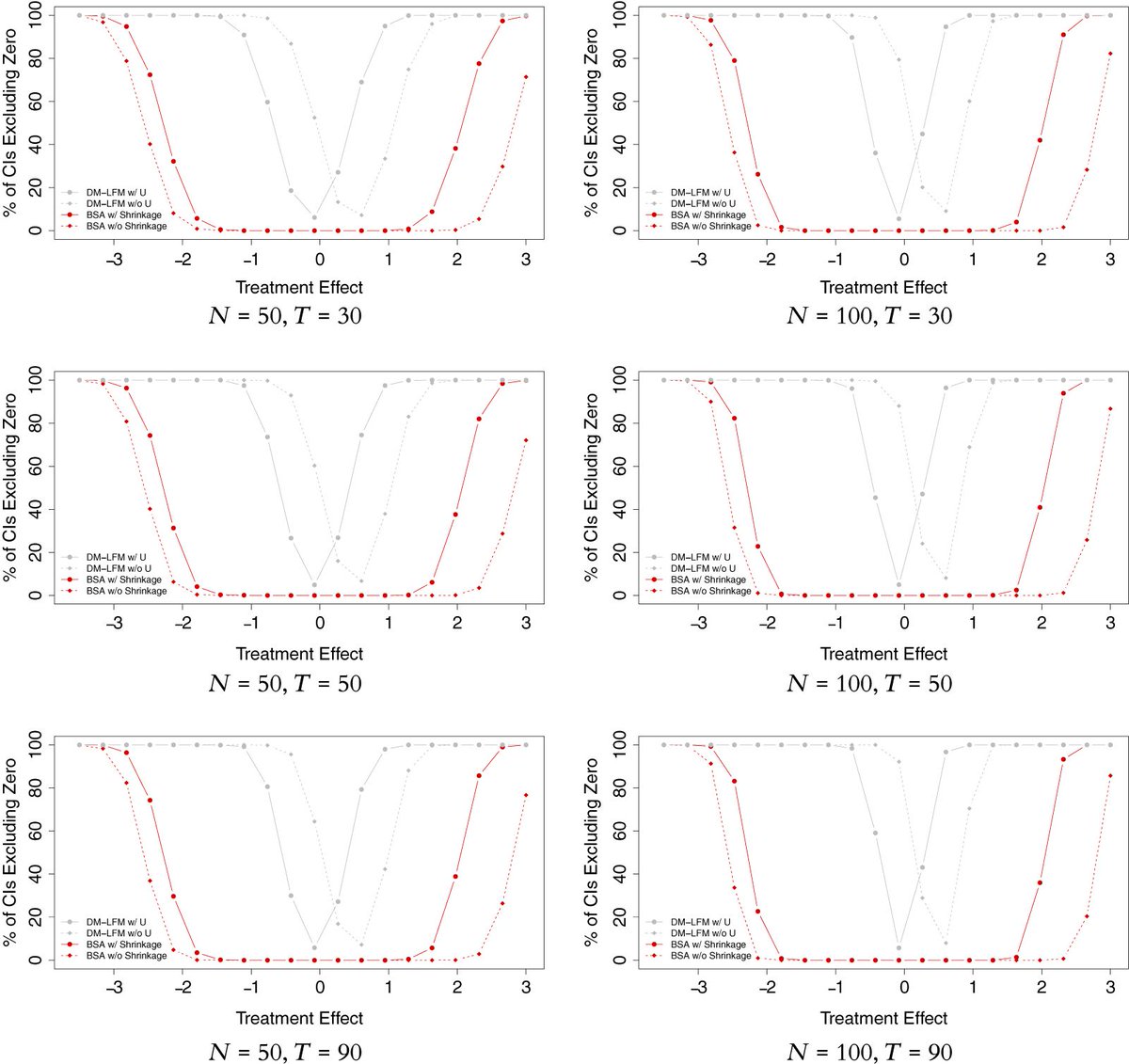
Their BSA method is designed to address concerns about confounders that cannot be addressed by fixed effects. They illustrate this using a Monte Carlo simulation study and an empirical example on the effect of war on tax rates. Read the full paper here: #article" target="_blank" rel="nofollow noopener">cambridge.org/core/journals/…
English
0
0
4
469
Political Analysis
Political Analysis@polanalysis·
Currently in FirstView: In “Bayesian Sensitivity Analysis for Unmeasured Confounding in Causal Panel Data Models,” Licheng Liu and Teppei Yamamoto develop a Bayesian sensitivity analysis (BSA) method for causal panel data analysis.
Political Analysis tweet media
English
1
7
14
1.2K
Political Analysis
Political Analysis@polanalysis·
They find that complex prompting strategies can lead to improved model performance. The authors also offer several recommendations for researchers using LLMs for stance detection in political texts. You can read the full paper here: cambridge.org/core/journals/…
English
0
2
5
592
Political Analysis
Political Analysis@polanalysis·
Currently in FirstView: In “Stay Tuned: Improving Sentiment Analysis and Stance Detection Using Large Language Model,” Max Griswold, Michael Robbins, and @MichaelSPollard evaluate fine-tuning to improve LLM performance using social media data surrounding the 2020 election.
Political Analysis tweet media
English
1
3
22
1.3K
Political Analysis
Political Analysis@polanalysis·
@RachelPaeng The Political Domain Enhanced BERT-based Algorithm for Textual Entailment (DEBATE) is benchmarked against other popular supervised classifiers. Ultimately, DEBATE is both efficient and completely open source. Read the paper here: cambridge.org/core/journals/…
English
0
4
10
661
Political Analysis
Political Analysis@polanalysis·
Currently in FirstView: In “Political DEBATE: Efficient Zero-Shot and Few-Shot Classifiers for Political Text,” Michael Burnham, Kayla Kahn, Ryan Yang Wang, and @RachelPaeng introduce new foundation models for classifying political documents.
Political Analysis tweet media
English
1
8
29
2.5K