Programmers.App

1.7K posts

Programmers.App banner
Programmers.App

Programmers.App

@programmers_app

Empowering coders with AI tools, low-code solutions & expert tips. Beginners to pros—build smarter, faster, and better with https://t.co/AoF95Zlibz! 💻 #Coding

Sumali Aralık 2024
502 Sinusundan28 Mga Tagasunod
Programmers.App
Programmers.App@programmers_app·
@gregisenberg People keep saying plumbers are safe.. they are surely not safe at all, because many more people will become plumbers, people will use AI to fix some 🪠plumbing issues.. and then there is the 🤖 ronots 👀
English
0
1
3
173
Programmers.App nag-retweet
Robert Lufkin MD
Robert Lufkin MD@robertlufkinmd·
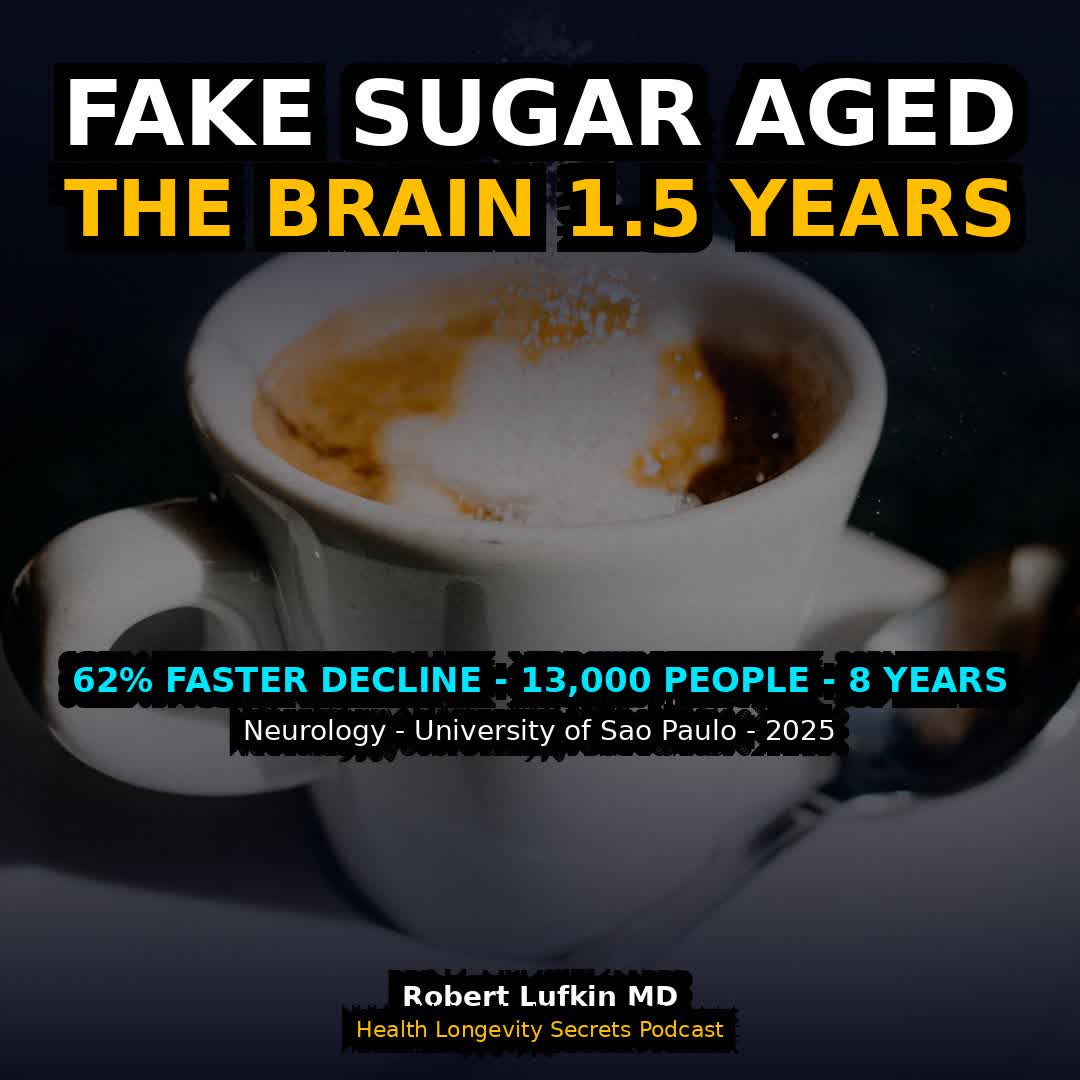
As a medical school professor, this study stopped me cold. Research published in Neurology followed nearly 13,000 people for 8 years and found: People consuming the most artificial sweeteners had 62% faster global cognitive decline -- equal to 1.6 YEARS of brain aging. Even moderate consumption accelerated decline by 35%. The sweeteners linked to damage: aspartame, saccharin, acesulfame-K, erythritol, xylitol, and sorbitol. Key findings: - Memory and word recall hit hardest - People with diabetes showed even worse decline - Adults UNDER 60 were most vulnerable - The damage accumulates silently for decades The researchers called this a potential "midlife exposure" problem -- dietary choices made years before symptoms appear may permanently alter brain health. This is metabolic dysfunction disguised as a "healthy choice." Your brain is paying the price. Full breakdown coming on the Health Longevity Secrets podcast. Source: cnn.com/2025/09/03/hea… #BrainHealth #MetabolicHealth #ArtificialSweeteners #Longevity #HealthLongevitySecrets
Robert Lufkin MD tweet media
English
30
176
472
21.4K
Programmers.App nag-retweet
GREG ISENBERG
GREG ISENBERG@gregisenberg·
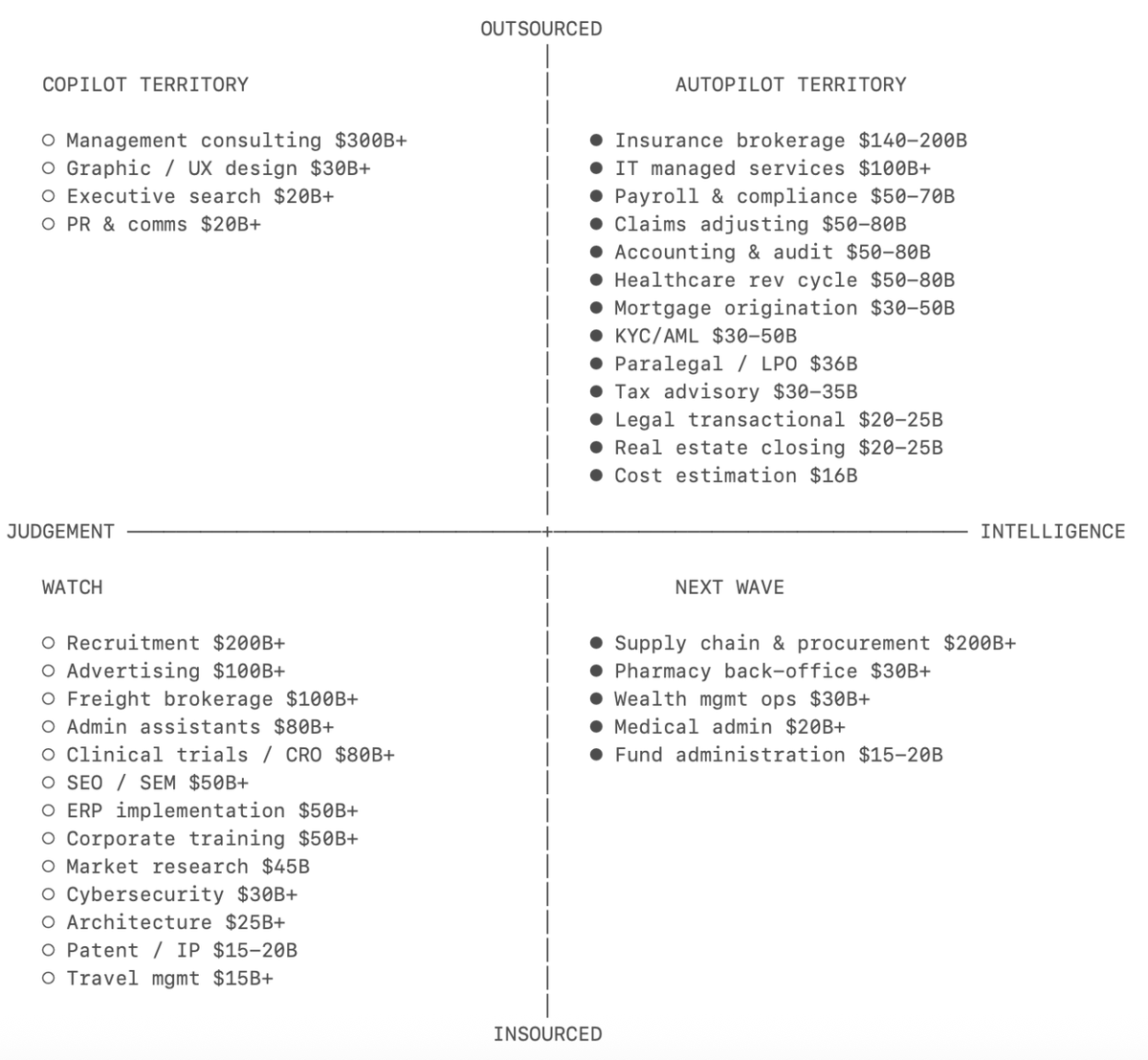
sequoia put out a blog post called "services is the new software" look at this map of over $1T in services being replaced by AI agents
GREG ISENBERG tweet media
English
145
258
2.3K
137.4K
Programmers.App nag-retweet
Claude
Claude@claudeai·
Computer use is now in Claude Code. Claude can open your apps, click through your UI, and test what it built, right from the CLI. Now in research preview on Pro and Max plans.
English
2.5K
4.8K
58.2K
15.1M
Programmers.App nag-retweet
shirish
shirish@shiri_shh·
this Al documentary just came out. definitely worth watching
English
34
75
560
40.2K
Programmers.App nag-retweet
Commentary | Global Ivermectin Research Hub
This is nothing short of a miracle. Dr John Campbell breaks down the study of an 83yr old woman with stage 4 breast cancer that had metastasised to the liver, spine and bones. Usually a death sentence. She took a daily dose of 222mg of FenBen for 8 months. Which normalised her liver enzymes. The tumor marker dropped from 316 to 36. There was an absence of any abnormal metabolic activity indicative of cancer.
English
72
1.8K
4.7K
162.8K
Programmers.App nag-retweet
Shanaka Anslem Perera ⚡
JUST IN: Two hundred helium containers are stranded in the Persian Gulf right now. Each one holds 41,000 litres of liquid helium cooled to minus 269 degrees Celsius. They have 35 to 48 days before the cryogenic systems fail, the helium boils off, and the gas vents into the atmosphere and is lost forever. Those containers were heading to semiconductor fabrication plants in Taiwan and South Korea that manufacture 90 percent of the world’s advanced chips. The helium inside them cools the extreme ultraviolet lithography machines that print transistors at two nanometres. Without it, the machines cannot operate. Without the machines, the chips do not exist. Without the chips, the AI models that are currently selecting targets in this war stop running. This is the connection that nobody has made. The same Strait of Hormuz that carries 20 percent of the world’s oil also carries the helium that cools the machines that make the chips that power the artificial intelligence that the Pentagon is using to prosecute Operation Epic Fury. Maven, the AI targeting system that compressed 2,000 analysts to 20 and selected over 1,000 targets in the first 24 hours, runs on processors manufactured by TSMC using helium sourced from Qatar. Qatar’s Ras Laffan facility, which produced 33 percent of the world’s helium as a byproduct of LNG processing, was struck by Iranian missiles on March 18 and 19 and declared force majeure. The supply is offline. The containers are stranded. The clock is ticking at minus 269 degrees. TSMC says it has 6.2 weeks of inventory and 68 to 95 percent on-site recycling. Samsung holds roughly six months but depends on Qatar for 65 percent of its supply. Both are rationing toward AI and high-bandwidth memory production, starving consumer chips to keep the advanced nodes alive. The calculus is explicit: the war gets priority over your next phone. But here is the paradox that should terrify every strategist in Washington. The AI that selects the targets requires chips that require helium that transits the chokepoint that the war has closed. The cognitive infrastructure of the air campaign depends on a supply chain that the air campaign is destroying. Every strike on Iranian naval assets that keeps Hormuz closed for another day is another day of helium inventory burned at TSMC. Every week the strait stays shut brings the fab closer to rationing. Every month of war brings the AI targeting system closer to the moment when the chips it runs on cannot be replaced because the gas that made them evaporated in a container floating off Fujairah. The Pentagon is fighting a war with artificial intelligence manufactured in Taiwan using helium from Qatar transported through the strait the war has closed. The war is eating its own brain. Taiwan imports 95 percent of its energy. Seventy percent of its oil came through Hormuz. TSMC alone consumes 10 percent of Taiwan’s electricity. The island that makes 90 percent of the world’s advanced semiconductors is powered by fuel from the chokepoint that is shut, cooled by gas from the facility that is offline, and defended by interceptors depleting faster than they can be replaced. And the country that controls the rare earth magnets, the BeiDou navigation, the helium alternative sources, and the peace talks is the same country: China. The war will end when the helium runs out, when the interceptors run out, or when Beijing decides it should. All three clocks are ticking. All three lead to the same room. Read the full analysis - open.substack.com/pub/shanakaans…
Shanaka Anslem Perera ⚡ tweet media
English
81
1.1K
2K
147.4K
Programmers.App nag-retweet
Rimsha Bhardwaj
Rimsha Bhardwaj@heyrimsha·
🚨BREAKING: A dev just open-sourced the #1 ranked OCR model on Earth. It's called GLM-OCR and it just hit 94.62 on OmniDocBench V1.5, beating every OCR model in existence. Only 0.9B parameters. One pip install. Handles documents no other model could touch. 100% Open Source.
Rimsha Bhardwaj tweet media
English
45
377
2.7K
185.2K
Programmers.App nag-retweet
Aakash Gupta
Aakash Gupta@aakashgupta·
The timeline on this is genuinely insane. October 2025: Sam Altman flies to Seoul and signs simultaneous deals with Samsung and SK Hynix for 900,000 DRAM wafers per month. That's 40% of global supply. Neither company knew the other was signing a near-identical commitment at the same time. Those deals were letters of intent. Non-binding. No RAM actually changed hands. But the market treated them as gospel. Contract DRAM prices jumped 171%. A 64GB DDR5 kit went from $190 to $700 in three months. December 2025: Micron kills Crucial, its 29-year-old consumer memory brand, to reallocate every wafer to AI and enterprise customers. The company explicitly said it was exiting consumer memory to "improve supply and support for our larger, strategic customers in faster-growing segments." Translation: the AI demand signal was so loud that selling RAM to PC builders stopped making financial sense. March 2026: Google publishes TurboQuant, a compression algorithm that reduces AI memory requirements by 6x with zero accuracy loss. Cloudflare's CEO called it "Google's DeepSeek." The entire thesis that AI would consume infinite memory forever just got a six-month expiration date on it. Same month: OpenAI and Oracle cancel the Abilene Stargate expansion. The $500 billion data center vision that justified the RAM deals couldn't survive its own financing terms. Bloomberg attributed the collapse partly to OpenAI's "often-changing demand forecasting." MU is now down ~33% from its post-earnings high. Revenue up 196% year over year, EPS up 682%, and the stock is in freefall because the company restructured its entire business around a demand signal that came from non-binding letters and is now being compressed out of existence by a research paper. Micron bet the consumer division on Sam Altman's signature. The signature was worth exactly what the paper said: nothing binding.
Grummz@Grummz

Imagine closing your entire consumer memory division because this guy signed a non binding letter that he would buy 40% of the world’s RAM. Only to have him rug pull 3 months later.

English
261
1.8K
14K
1.6M
Programmers.App nag-retweet
Yishan
Yishan@yishan·
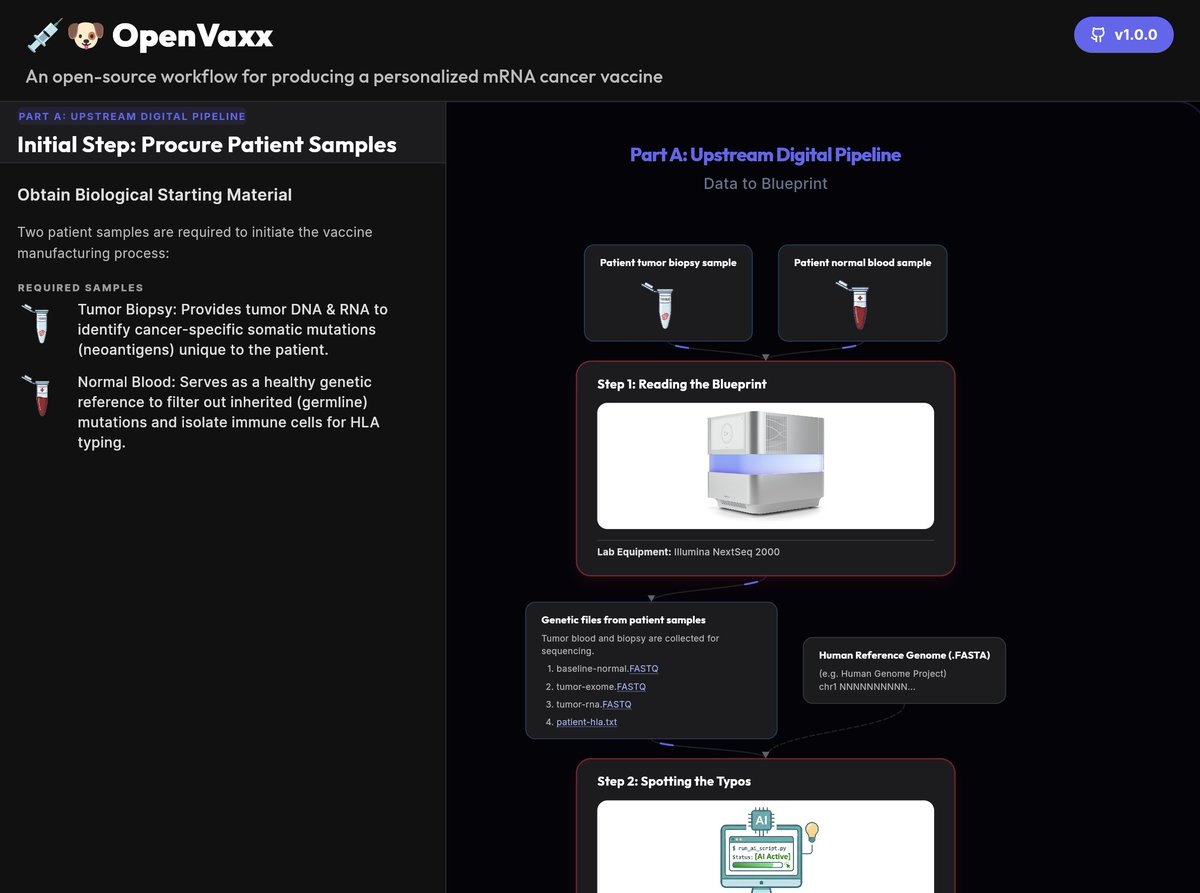
My friend @philfung was inspired by the man who built a personalized cancer vaccine for his dog, so he wrote a guide to DIY mRNA vaccine production. Phil used to run a lab startup, and the guide covers the entire process - from sequencing to synthesis, using open-source software and benchtop lab equipment. Note: This is for educational purposes only and is not intended for medical use um unless you have cancer

Yishan tweet media
English
24
122
858
94.2K
Programmers.App nag-retweet
Kevin Weil 🇺🇸
Kevin Weil 🇺🇸@kevinweil·
"An open source workflow for producing a personalized mRNA cancer vaccine"
Yishan@yishan

My friend @philfung was inspired by the man who built a personalized cancer vaccine for his dog, so he wrote a guide to DIY mRNA vaccine production. Phil used to run a lab startup, and the guide covers the entire process - from sequencing to synthesis, using open-source software and benchtop lab equipment. Note: This is for educational purposes only and is not intended for medical use um unless you have cancer

English
9
60
672
72.9K
Programmers.App nag-retweet
George Pu
George Pu@TheGeorgePu·
Mistral just open-sourced a text-to-speech model that beats ElevenLabs. 3 GB of RAM. Runs locally. Free. The thing people were paying per-word for last year runs on your laptop now.
George Pu tweet media
English
133
868
8.7K
424.6K
Programmers.App nag-retweet
Berci Meskó, MD, PhD
This is Unitree G1, a Chinese humanoid robot being tested at a hospital setting, opening drawers, restocking supplies, and moving the bed. I still have doubts about widespread use due to the Moravec paradox, but maybe healthcare professional shortages can become so crucial that hospitals will need to invest into buying humanoids. The robot has a base price starting around $16,000 USD.
English
3
5
9
2.4K
Programmers.App nag-retweet
Rohan Paul
Rohan Paul@rohanpaul_ai·
Another great Robots in healthcare usecase. Aletta is a robot that fully automates blood draws. The patient sits down; the robot uses ultrasound to find a vein, helps position the arm, collects the sample, and applies a bandage—fully automated
English
89
227
1.2K
481.1K
Programmers.App nag-retweet
Sukh Sroay
Sukh Sroay@sukh_saroy·
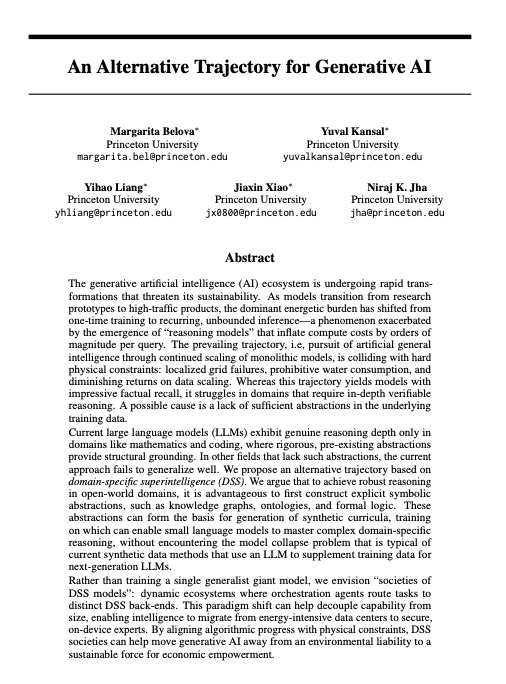
🚨Breaking: Princeton researchers just ran the numbers on where AI is actually heading. The results should make every founder, investor, and policymaker stop what they are doing. Training OpenAI's next-gen model consumes an estimated 11 billion kWh of electricity. That is enough to power every home in New York City for a full year. More than the annual output of a nuclear reactor. For one model. One training run. And that is before a single user asks a single question. Every time someone uses a reasoning model like o1 or DeepSeek-R1, it costs 33 Wh of energy per query. A standard GPT-4 query costs 0.42 Wh. That is a 79x energy multiplier. Per query. At billions of queries per day. Now here is what nobody is saying out loud. The industry's answer to this is Stargate. A $500 billion compute campus. 5 gigawatts of power. Enough to run 5 million homes. Owned by the same four companies that already control the technology. They are building a new kind of utility. Except you do not elect its board. Meanwhile the models consuming all that energy still cannot reliably reason outside of math and code. Everywhere else they pattern-match. They hallucinate. They confabulate confidence. Princeton's argument is that this is not a scaling problem. It is a structural one. More parameters have not fixed it. More data has not fixed it. The architecture itself is the ceiling. Their alternative: stop chasing one god-model and build thousands of small specialists instead. Each one trained on curated domain data. Each one grounded in verified knowledge. Each one small enough to run on your phone. The energy comparison is not close. A cloud query to a reasoning model uses 33 Wh and 20 milliliters of water. The same query on a local specialist model uses 0.001 Wh. Zero water. That is 10,000 times more efficient. AlphaFold did not beat biologists by knowing everything. It won by going impossibly deep in one domain. A 14 billion parameter model trained on medical knowledge graphs just outperformed GPT-5.2 on complex clinical reasoning. Depth beats breadth when the domain is defined. The question nobody building these systems wants to answer: If the only path to general AI requires the energy output of a small nation, controlled by a handful of companies, running on hardware most of the world cannot access — is that actually intelligence? Or is it just the most expensive pattern matcher ever built?
Sukh Sroay tweet media
English
95
353
896
80.1K
Programmers.App nag-retweet
Nicolas Hulscher, MPH
Nicolas Hulscher, MPH@NicHulscher·
This is the dangerous path we’re headed down.
Nicolas Hulscher, MPH tweet media
English
531
1.3K
4.1K
100.7K
Programmers.App nag-retweet
CG
CG@cgtwts·
Anthropic CEO: “ I have engineers within anthropic who don’t write any code, they just let Claude write the code and they edit it and look it over” “At anthropic writing code means designing the next version of Claude it self, so we essentially have Claude designing the next version of Claude itself, not completely but most of it”. In the last 52 days, the Claude team dropped 50+ major feature launches. This is literally INSANE.
Claude@claudeai

Your work tools in Claude are now available on mobile. Explore Figma designs, create Canva slides, check Amplitude dashboards, all from your phone. Give it a try: claude.com/download

English
494
752
8.8K
2.2M
Programmers.App nag-retweet
Damian Player
Damian Player@damianplayer·
Palantir CEO, Alex Karp says only 2 types of people will survive the AI era..
Damian Player tweet media
English
689
1.1K
9.7K
1.3M
Programmers.App nag-retweet
Simplifying AI
Simplifying AI@simplifyinAI·
🚨 BREAKING: Someone just built a self-hosted AI app that processes all your receipts and invoices automatically. You upload a photo. It extracts the product, taxes, dates, and auto-converts the currency, and keeps your financial data 100% private. 100% Open Source.
English
114
408
4.2K
521.8K