@mattpocockuk Counterexample: My wife - a former educator, now gardener & vlogger - can often be heard shouting at ChatGPT "no, stop making things up, use reputable sources and reference them!".
English
Paul Clark
7.6K posts

@sandtreader
Cornish software & creative geek, Green, shantyman, sailor, maker.




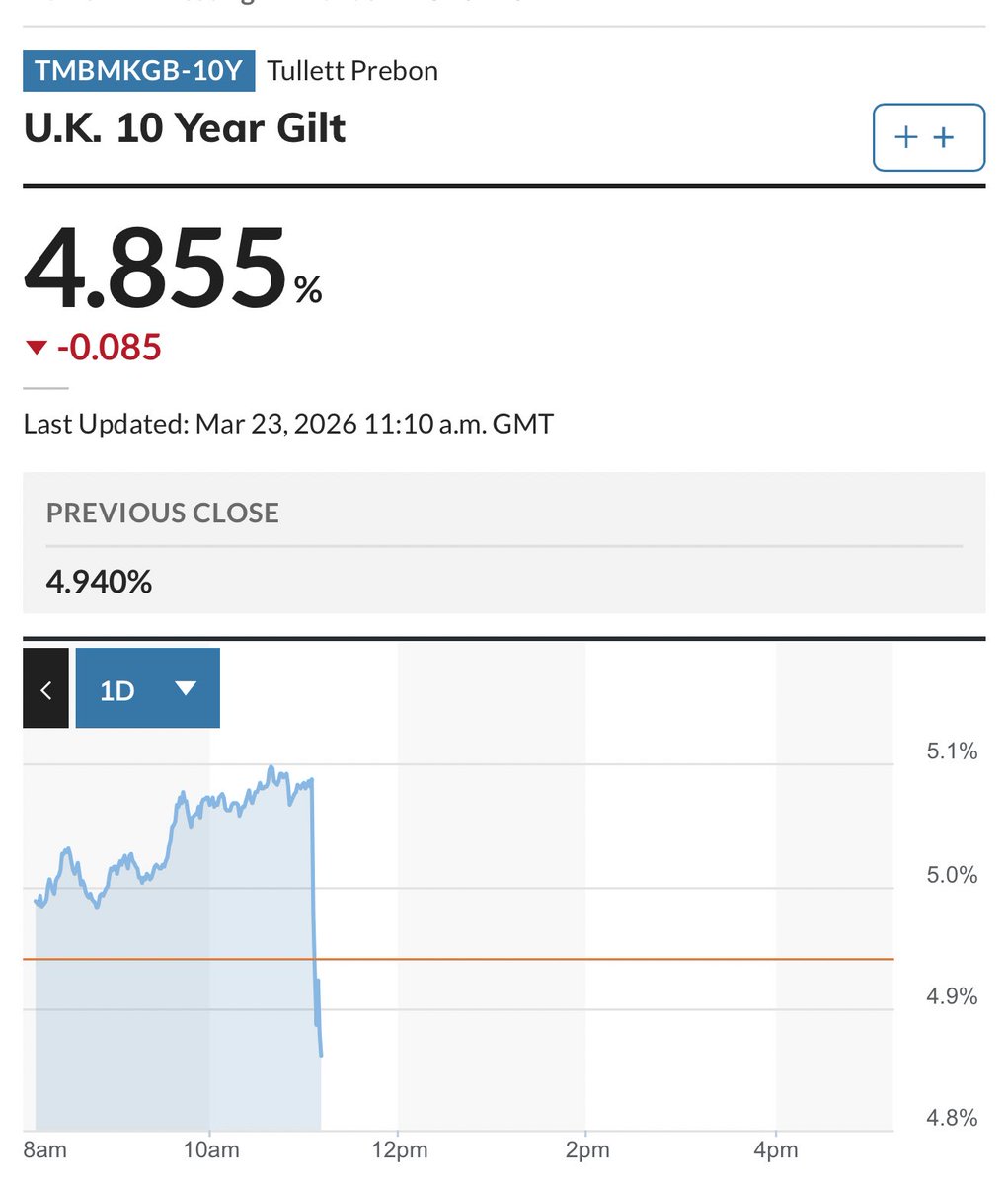

@MartinSLewis @mmhpi Super off topic - can you please explain to me like I’m 5 years old…. Why are mortgage rates going up because of the war? And inflation. I am really struggling to understand…..

Almost every AI power user I know is MORE stressed and busier after using AI, not less What people thought AI would do: 10x productivity so that we can finish work earlier & relax more What it’s actually doing: 10x productivity so that we end up with 20x more things to do cos of the sheer possibilities








This afternoon, The King held an Audience with the Prime Minister of Canada, Mark Carney. 🇨🇦
The war just reached the grocery aisle. Not through wheat or rice or fertiliser. Through plastic. The Middle East is the world’s largest exporter of polyethylene. Approximately 84% of regional PE capacity depends on the Strait of Hormuz for export access. The Strait is running at 0.5 million barrels per day against a pre-war 19.5 million. The naphtha feedstock that Asian petrochemical plants require to crack ethylene and produce the polyethylene that wraps, bottles, trays, and films every packaged food item on every supermarket shelf on Earth is not arriving. The force majeures began on Day 4 and have not stopped. Indonesia’s Chandra Asri declared force majeure on 3 March citing feedstock disruption. South Korea’s Yeochun NCC followed on 4 March, cutting cracker rates to approximately 66%. Singapore’s PCS declared on 5 March. CNOOC-Shell Huizhou is planning shutdown of its 1.2 million tonne cracker in southern China. Four countries. Four declarations. Each one a petrochemical plant telling its customers that the molecules required to produce plastic packaging are no longer available in sufficient quantity because a waterway 8,000 kilometres away has been mined by a regime that says the war will last “as long as it takes.” US polyethylene spot prices surged 10 cents per pound in the first week. Indian PE prices jumped approximately 15,000 to 20,000 rupees per tonne. These are not energy prices. These are packaging input prices. Polyethylene, polypropylene, and PET resin account for the majority of disposable food packaging manufacturing costs. Every plastic bottle of water, every wrapped loaf of bread, every sealed tray of meat, every film-covered vegetable pack is now repricing through a channel that has nothing to do with agricultural commodity markets and everything to do with a naphtha tanker that cannot transit Hormuz. This is the third domino. The first was energy: oil from 19.5 million to 0.5 million barrels per day. The second was fertiliser: nitrogen feedstock dependent on the same natural gas the same strait carries. The third is packaging: the plastic that wraps the food that the fertiliser grew that the energy harvested. Each domino hits the same consumer from a different direction. Energy raises transport costs. Fertiliser raises farm costs. Packaging raises the cost of getting the food from the farm to the shelf. The consumer pays all three. The contrarians note US and Algerian producers can ramp, recycling offsets virgin resin, and Asian inventories buffer. They are correct individually and wrong on the timeline. Naphtha rerouting takes weeks. Cracker restarts after force majeure take longer. Inventories at current consumption cover days, not months. And the 1.2 million tonne Huizhou cracker, when it shuts, will remove more PE capacity from Asia than most countries consume in a year. The grocery inflation central banks are watching is not coming from food. It is coming from the wrapper. The Fed meeting on 18 March will assess an environment in which energy, fertiliser, and packaging inputs are all repricing through the same chokepoint. The plastic bottle costs more. The bread bag costs more. The meat tray costs more. None of it appears in the agricultural commodity indices that traditional models use to forecast food inflation. The molecules that wrap the food are stuck on the wrong side of a strait that is open to ten countries and closed to the rest. The grocery bill is repricing from the outside in. Full deep dive analysis - open.substack.com/pub/shanakaans…