AIAccountantEdge

113 posts

AIAccountantEdge banner
AIAccountantEdge

AIAccountantEdge

@AcctAIEdge

Compliance-first AI for accounting professionals. Tools, documentation, and review frameworks aligned with SSTS 1.4.

Global, Remote شامل ہوئے Ocak 2026
10 فالونگ4 فالوورز
AIAccountantEdge
AIAccountantEdge@AcctAIEdge·
@DockettApp Appreciate this tools like Dockett are a good example of how workflows are evolving. The key, as always, is how firms structure review and documentation around them.
English
0
0
0
3
Dockett.app
Dockett.app@DockettApp·
@AcctAIEdge This is the right framing. The failure mode is AI that moves judgment to the end, when damage is already done. Better design: give someone visibility into what AI captured, field by field, at extraction. Judgment happens continuously, not as a final audit.
English
1
0
1
7
AIAccountantEdge
AIAccountantEdge@AcctAIEdge·
AI doesn’t remove judgment in accounting. It changes when it happens. From: • final-stage review To: • continuous evaluation during the workflow Drafts are faster. Judgment happens earlier. #AIinAccounting #Accounting
AIAccountantEdge tweet media
English
1
0
0
2
AIAccountantEdge
AIAccountantEdge@AcctAIEdge·
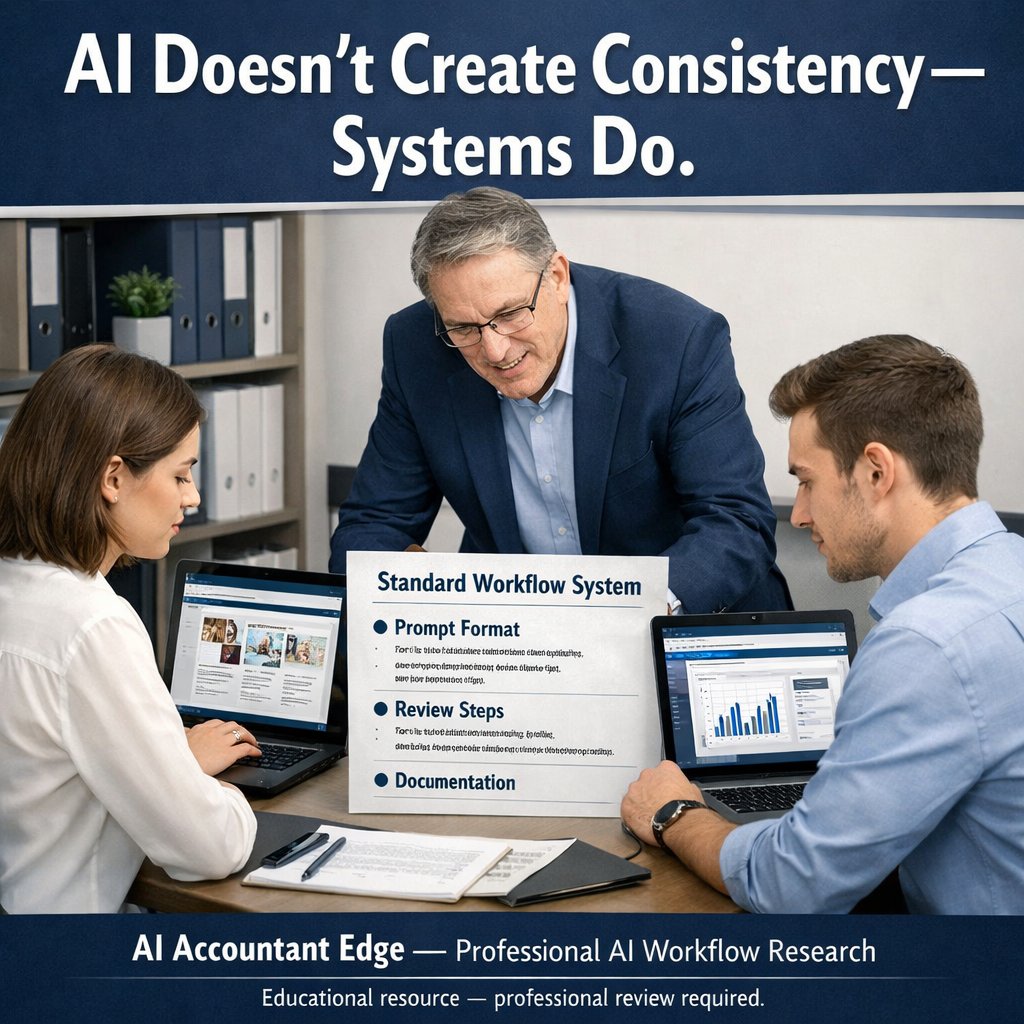
AI doesn’t create consistency in accounting. Systems do. Same tool + different users = different results. Consistency comes from: • structured prompts • review checkpoints • documentation habits AI generates output. Systems make it reliable. #AIinAccounting #Accounting
AIAccountantEdge tweet media
English
0
0
0
4
AIAccountantEdge
AIAccountantEdge@AcctAIEdge·
AI can standardize output in accounting. But it can also create inconsistent processes. Same-looking work doesn’t mean: • same prompts • same review • same documentation Strong firms standardize the process — not just the output. #AIinAccounting #Accounting
AIAccountantEdge tweet media
English
0
0
0
2
AIAccountantEdge
AIAccountantEdge@AcctAIEdge·
AI outputs don’t “miss” context. They reflect what was provided. If you don’t include: • prior decisions • constraints • assumptions …it won’t appear in the output. In accounting, input quality → output reliability. #AIinAccounting #Accounting
AIAccountantEdge tweet media
English
0
0
0
3
AIAccountantEdge
AIAccountantEdge@AcctAIEdge·
AI reduces effort in the first draft. But not responsibility for the final answer. Drafts are faster. Summaries are easier. But: • conclusions still require judgment • decisions still require accountability
English
1
0
0
0
AIAccountantEdge
AIAccountantEdge@AcctAIEdge·
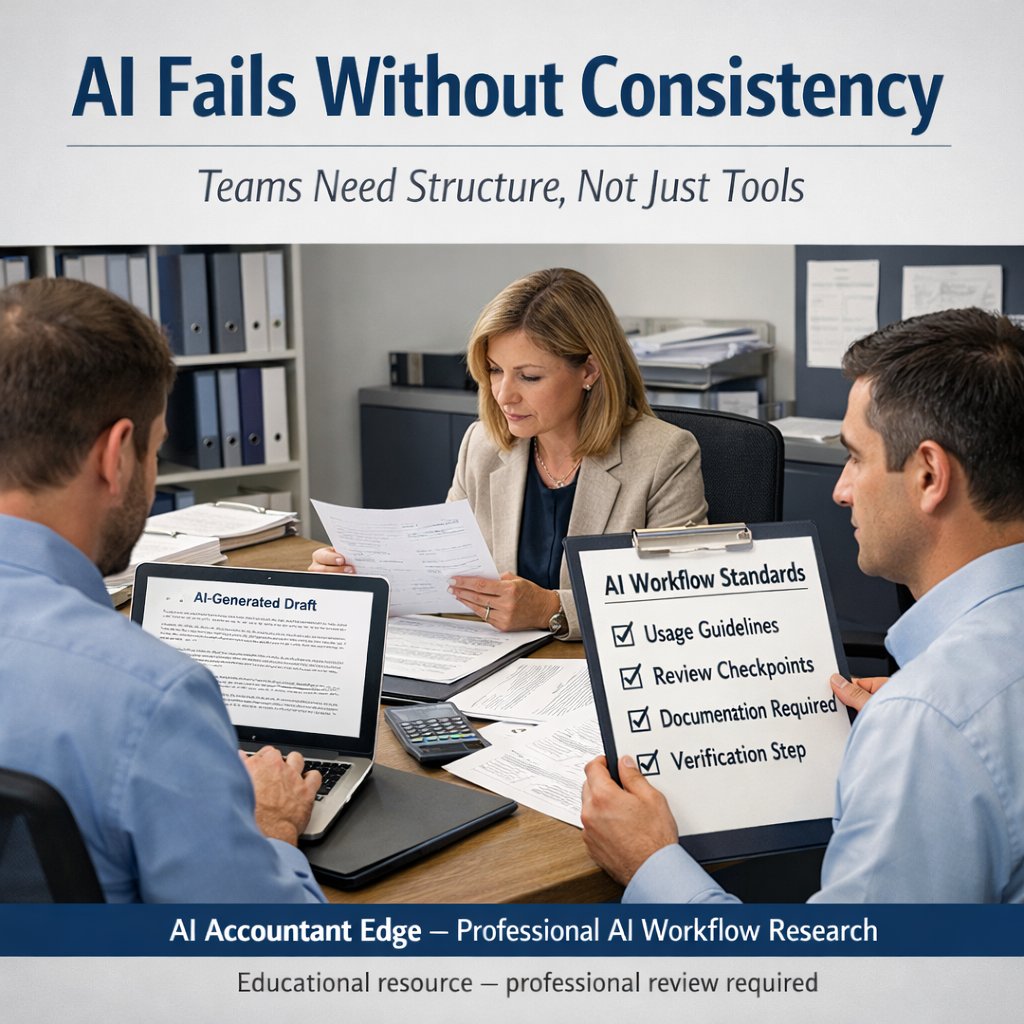
AI in accounting doesn’t fail because of tools. It fails because of inconsistency. Different people use it differently. Strong firms fix this with: • simple usage standards • review checkpoints • documentation habits
English
1
0
0
1
AIAccountantEdge
AIAccountantEdge@AcctAIEdge·
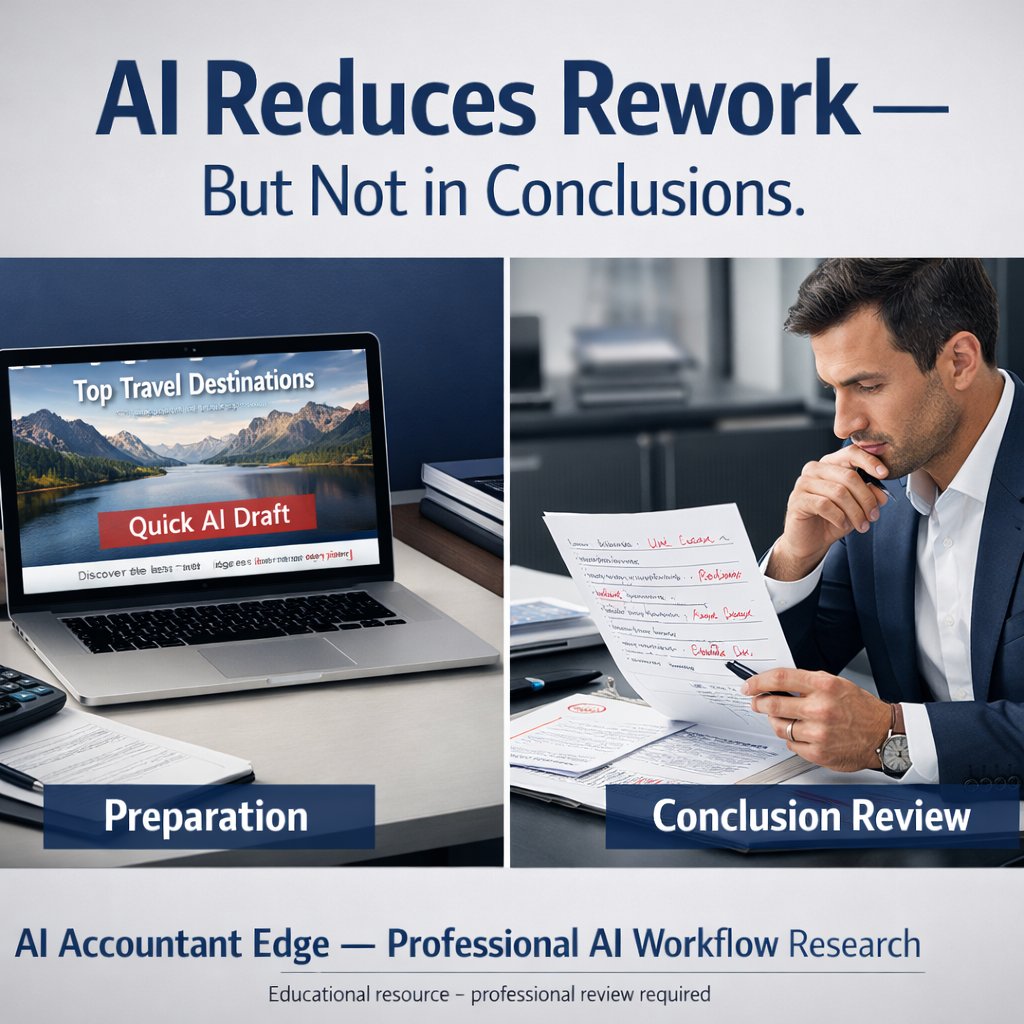
AI reduces rework in accounting. But mainly in preparation. Not in conclusions. Drafts can be restructured quickly. Summaries can be adjusted instantly. But refining conclusions still requires: • judgment • context • review
English
1
0
1
6
AIAccountantEdge
AIAccountantEdge@AcctAIEdge·
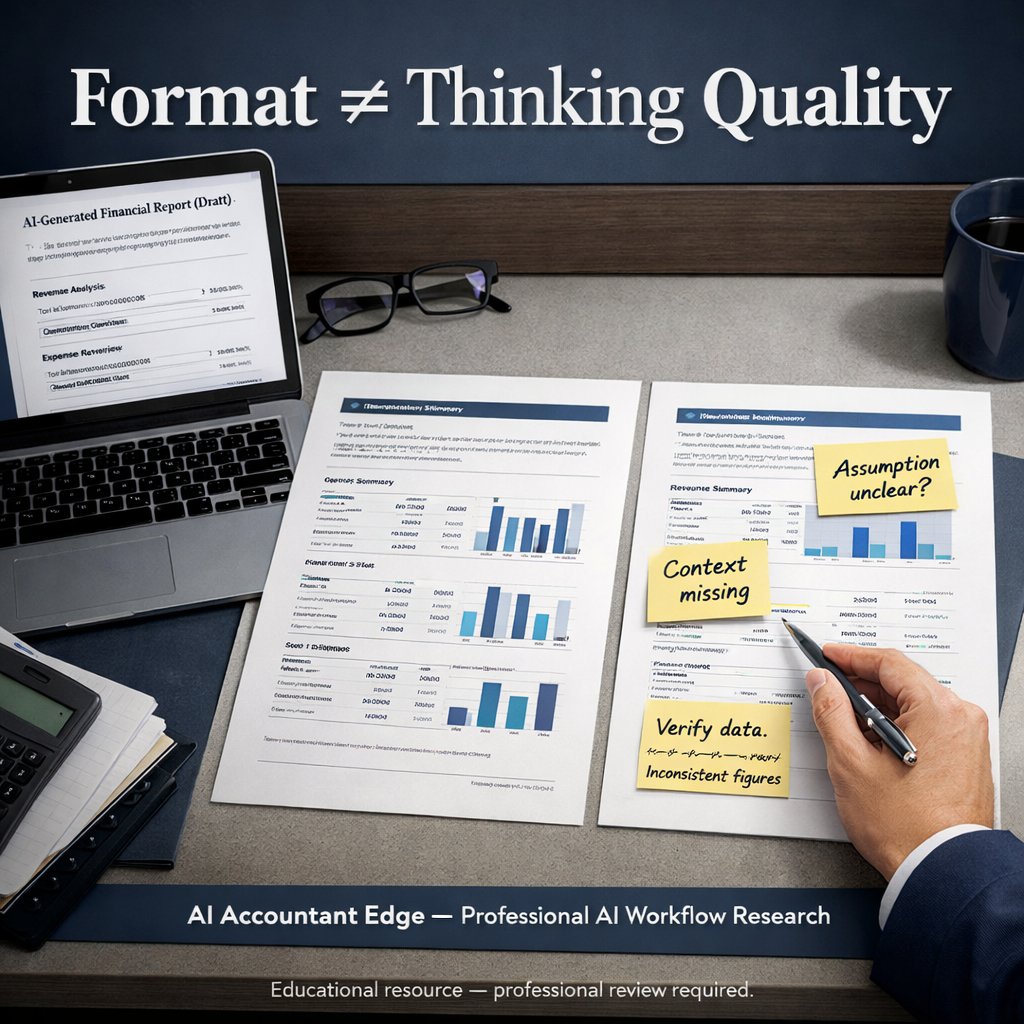
AI standardizes output format. But not thinking quality. Two drafts can look equally polished — yet differ in: • assumptions • context • completeness
English
1
0
0
2
AIAccountantEdge
AIAccountantEdge@AcctAIEdge·
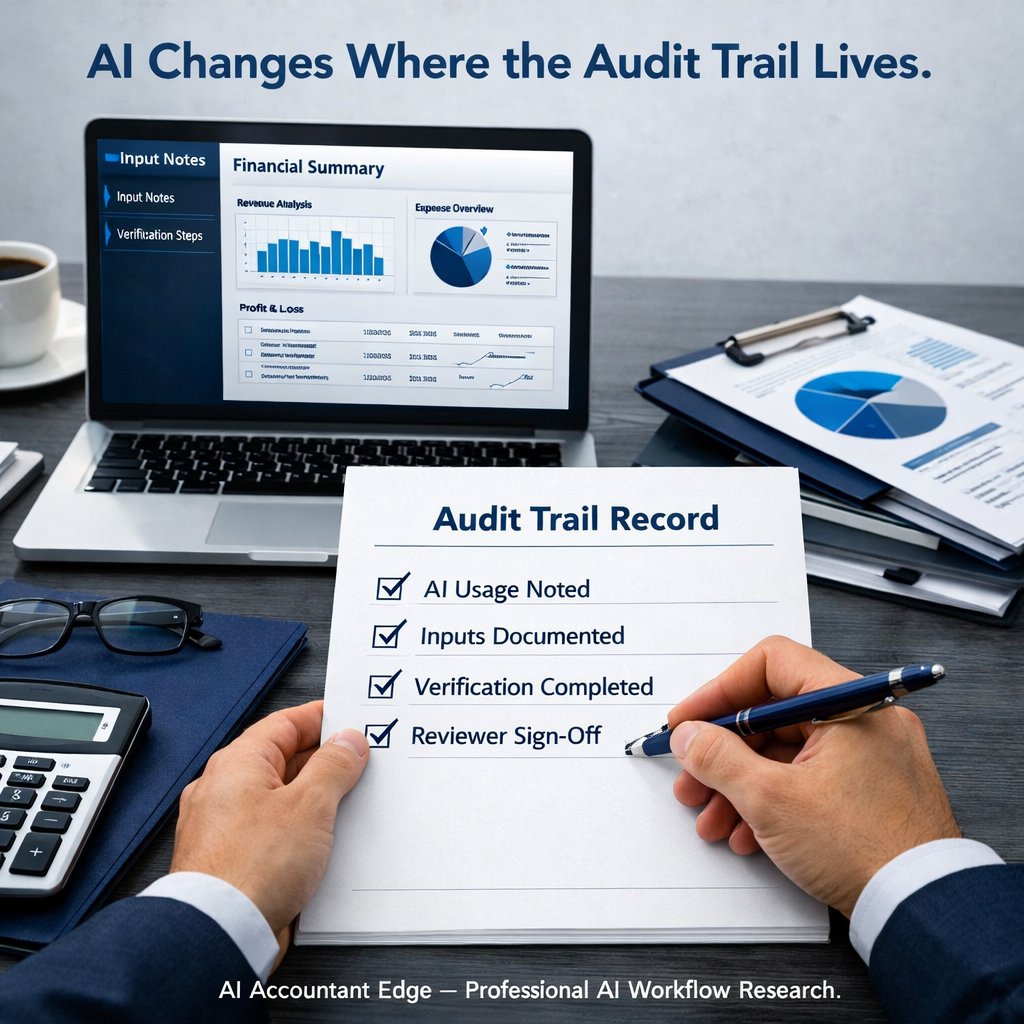
AI in accounting doesn’t remove the audit trail. It changes where it exists. From: • visible calculations To: • less visible AI-assisted steps That’s why firms now focus on: • documenting inputs • verifying outputs • recording reviewer sign-off
English
1
0
0
0
AIAccountantEdge
AIAccountantEdge@AcctAIEdge·
AI doesn’t remove reviews in accounting. It changes how the review is done. From: • checking everything To: • focusing on key assumptions • validating critical areas • prioritizing judgment points
English
1
0
0
3
AIAccountantEdge
AIAccountantEdge@AcctAIEdge·
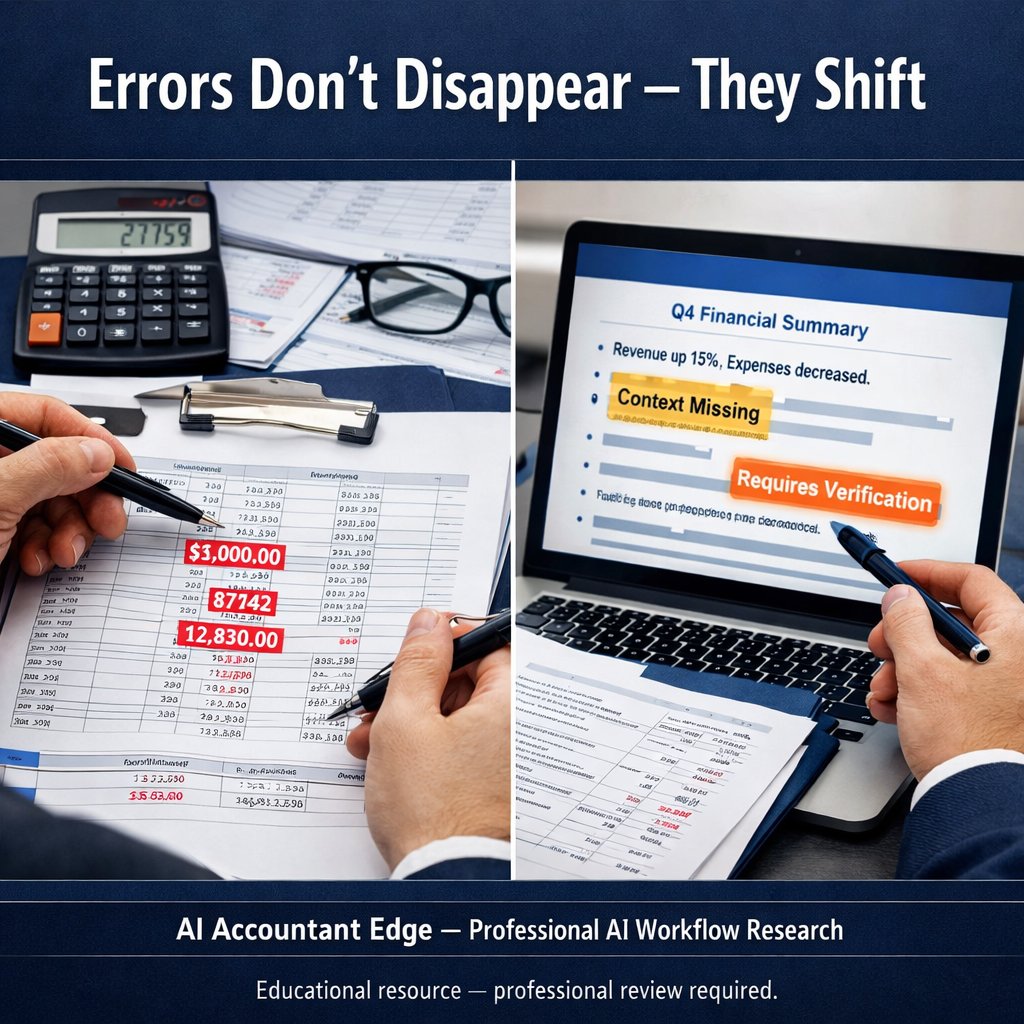
AI in accounting doesn’t eliminate errors. It changes where they occur. From: • data entry mistakes To: • context misinterpretation • incomplete summaries • overconfident outputs
English
1
0
0
2
AIAccountantEdge
AIAccountantEdge@AcctAIEdge·
AI adoption in accounting isn’t just a tool decision. It’s becoming a training decision. Teams need clarity on: • when AI can assist drafting • when verification is required • when judgment overrides output
English
1
0
0
3