@jukan05 I share my real-time TRADE alert (entry & exit points) on WhatsApp, free to join. ✅
➡️Copy search input Reply “TRADE” to WhatsApp: +14012093442
Here’s the link : api.whatsapp.com/send?phone=140…
English
Jnkau Consultant
62 posts


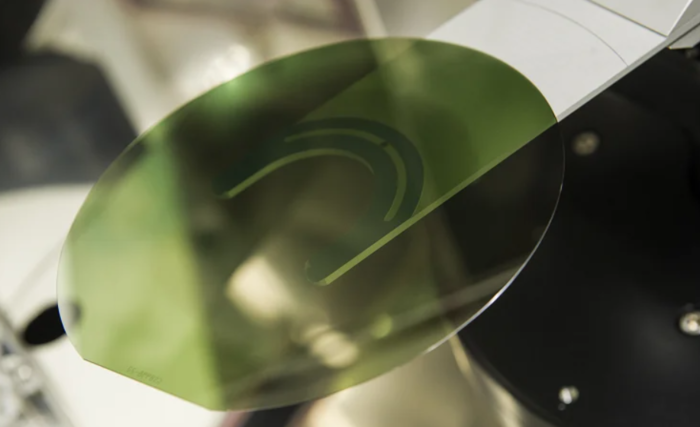
Some quick thoughts on Intel's EMIB-T packaging for the new 2H27 Google TPU (Humufish). Based on my industry checks: 【How to read EMIB-T's 90% yield?】 1. Given Intel's track record running EMIB in mass production, hitting 90% technology validation yield on EMIB-T (still under development) is a very positive but reasonable data point. 2. Intel benchmarks EMIB production/assembly yield against FCBGA. Industry FCBGA yield today is generally above 98%. 3. On yield, getting from 90% to 98% is harder than getting from project kickoff to 90%. And technology validation yield ≠ final production yield, especially with some Humufish specs still unfinalized. So long-term, I'm positive on Intel's advanced packaging story. Near to mid-term, I'm staying cautious on how they get there. 【From 90% to 98%. Looks like just a few points. Does Google care? Absolutely】 1. Google recently asked TSMC how much it could save by placing wafer orders for Humufish's main compute die (designed in-house by Google) directly, rather than routing them through MediaTek. 2. Google and MediaTek have run a semi-COT model since day one (8t). MediaTek's mark-up sits mostly on the parts it designs itself, so whether Google places the wafer orders for main compute die directly isn't a key swing factor for MediaTek's earnings trajectory. 3. But Google even probing whether it can squeeze out the pass-through mark-up on wafer orders tells you something: Google has shifted from easygoing buyer to hard-nosed on cost. The reason is simple: to take on Nvidia head-on, cost is Google's edge, which makes EMIB-T production yield Google's problem to solve. For context, TSMC's yield target on 5.5-reticle CoWoS in 2026 also starts at 98%. 【TSMC's position】 1. My understanding is TSMC is still working out how much advanced-node capacity to allocate to Humufish in 2H27, for two reasons: (1) it still wants the back-end packaging orders, though looks unlikely for now, and that's by design on Google's part; and (2) it's still gauging actual back-end output from EMIB-T, to avoid misallocating scarce advanced-node capacity. 2. Humufish's effective back-end output hinges on both EMIB-T and substrates, and both need to be tracked together. 3. On the Humufish semi-COT model, TSMC also prefers MediaTek to place the wafer orders for the main compute die. Beyond the close working relationship, the key point is MediaTek is TSMC's third-largest advanced-node customer in 2025. If TPU orders shift, MediaTek's scale makes it a natural buffer for TSMC to rebalance its wafer allocation mix.