Donald Patz

4.4K posts

Donald Patz banner
Donald Patz

Donald Patz

@DRPinot

@secretdoorwines - Napa Cabernet Sauvignon @maritanavyrds Russian River Chardonnay and Pinot Noir. https://t.co/8EUsA687Oo

Napa, CA شامل ہوئے Haziran 2015
933 فالونگ656 فالوورز
Donald Patz ری ٹویٹ کیا

The Intellectualist
The Intellectualist@highbrow_nobrow·
In the immediate aftermath of the election, one thing is clear: our issues run deeper than any candidate or single campaign misstep. Americans inhabit separate realities shaped by conflicting information sources, creating a divide with serious, dangerous implications for both the nation and the world. In the digital age, we are navigating multiple, often incompatible realities.
The Intellectualist tweet media
English
19
31
157
12.6K
Donald Patz ری ٹویٹ کیا
The Intellectualist
The Intellectualist@highbrow_nobrow·
"If the United States fully retreats from its role as a global stabilizer, nations around the world may soon find themselves grappling with a void—one that invites chaos, conflict, and existential threats." theintellectualist.com/the-true-end-o…
English
18
60
198
23.9K
Donald Patz ری ٹویٹ کیا
The Intellectualist
The Intellectualist@highbrow_nobrow·
The True End of Pax Americana: A Second Trump Presidency and the Dawn of a New Era of Global Instability The world’s surface lies in fragile calm, yet from beneath, shadows gather—a silent, unyielding invitation to the chaos we believed had been quarantined to the past. A Second Trump Presidency: The End of Pax Americana Since the end of World War II, Pax Americana—a period of relative global stability under U.S. leadership—has served as the backbone of the modern international order. For nearly eight decades, the United States has acted as both anchor and enforcer, promoting democracy, free trade, and collective security. Today, however, that foundation seems to be fracturing, and a second Trump presidency could mark the ultimate collapse. If the United States fully retreats from its role as a global stabilizer, nations around the world may soon find themselves grappling with a void—one that invites chaos, conflict, and existential threats. Trump’s first term left allies shaken and adversaries emboldened, as his foreign policy oscillated between abrupt decisions and transactional values. A defining moment came with Trump’s impeachment, after allegedly withholding military aid from Ukraine—a critical buffer against Russian aggression—to pressure them into investigating his political rival. For allies, this incident underscored Trump’s willingness to compromise national security for personal gain. The hasty, chaotic withdrawal from northern Syria further exemplified this volatility, abandoning Kurdish allies who had fought alongside the United States against ISIS, and echoing the haunting evacuation scenes of Saigon in Afghanistan. Should Trump return to office, this stance may harden, signaling to the world that U.S. commitments are more conditional than ever—a precarious message in a world teetering on the edge of instability. For many allies, Trump’s past actions have raised a fundamental question: Can they trust the United States to honor its commitments? When he abandoned the Kurds, one of America’s staunchest allies in the fight against ISIS, and moved to withdraw from NATO, it sent a message that U.S. promises could be easily discarded. Trump’s public statements, suggesting he would “let Russia do whatever it wants” and referring to NATO as a “protection racket,” further eroded faith in America’s reliability as a partner. For allies facing existential threats, a U.S. promise under Trump may no longer be a guarantee of security but a gamble. As a result, nations are increasingly pursuing “self-help” measures, from nuclear proliferation to significant increases in defense spending. Japan has recently announced a substantial increase in its defense budget, doubling spending to reach 2% of GDP—a historic shift that reflects deep concerns about the stability of American alliances. Taiwan, too, is ramping up its military budget in anticipation of a potential conflict with China, especially as Beijing has closely observed how the world reacted—largely in silence—when it tightened its grip on Hong Kong. In Europe, Germany has committed €100 billion to modernize its military, a direct response to growing uncertainty over U.S. involvement and the threat of Russian aggression in the region. This global trend toward increased defense spending and nuclear self-sufficiency reflects the fears of a world without a reliable stabilizer. Should the U.S. continue on an unpredictable, isolationist path, other nations may feel they have no choice but to secure their own means of defense, up to and including nuclear arms. The echoes of history are hard to ignore: as empires recede, smaller powers are often left to fend for themselves, and self-preservation can lead to an arms race that escalates tensions rather than defuses them. The Dangers of a Power Vacuum in a Multipolar World Nature abhors a vacuum. History shows that when a great power retreats, disorder rushes in to fill the space. The end of Pax Americana would create just such a void, likely unleashing rivalries, territorial ambitions, and a resurgence of opportunistic alliances. The collapse of the Roman Empire ushered in centuries of fragmented rule, leaving Europe vulnerable to violent power struggles. As the British Empire receded, alliances fractured, fueling the tensions that eventually led to World War I. The interwar period, defined by the collapse of European empires, created a fertile ground for totalitarian regimes, culminating in the devastation of World War II. Today, a similar collapse could herald catastrophic consequences. In a world without a stabilizing force, nations would scramble to form self-serving alliances, gravitating toward authoritarian powers willing to exploit vulnerabilities. China and Russia, poised to expand their influence, would likely demand concessions from smaller nations in exchange for “protection.” The once-open oceans may become contested zones, with authoritarian powers setting terms for safe passage. Smaller countries, fearing abandonment, may accept oppressive alliances as a means of survival, reshaping the global landscape in ways that favor power over principle. A second Trump presidency, accompanied by an isolationist outlook, would almost certainly accelerate this shift. By pivoting inward and retracting its influence, the United States would leave a power vacuum that rivals like China and Russia would rush to fill. The result: a fragmented world where dominant regional powers openly vie for control, and smaller states are left adrift in a dangerous, divided landscape. The Shadow of Great Power War and Existential Threats The risks of this unanchored world are profound, none more so than the possibility of renewed great power conflict. World War II, at its core, was a great power struggle—a collision of empires following the collapse of stability. Today, any similar conflict would carry existential stakes. Advances in AI, autonomous weapons, and cyber warfare have fundamentally altered the nature of conflict, raising the specter of automated battlegrounds and weapons systems capable of striking across continents in minutes. In a world where no stabilizing force exists, the race for technological supremacy would accelerate unchecked, as each nation pursues increasingly advanced, automated weapons for an edge. Without international oversight, AI and autonomous systems capable of making life-or-death decisions independent of human control could proliferate, exponentially increasing the potential for catastrophic miscalculations. A small skirmish could escalate, triggering an irreversible chain of events—one that humanity is not prepared to control. A second Trump term would likely deepen these risks, as the U.S. steps away from treaties and multilateral discussions on emerging technologies. In this world, warfare would no longer require human decision-making; conflicts could unfold on a scale and speed unprecedented in history, with potentially existential consequences. Nuclear Proliferation and the Erosion of Non-Proliferation Norms One of the most immediate dangers in a post-Pax Americana world is the risk of nuclear proliferation. As American influence fades, nations previously dependent on U.S. protection may feel compelled to develop their own nuclear capabilities, either as a deterrent or a bargaining chip. Japan, South Korea, and Saudi Arabia, in particular, may pursue nuclear programs if U.S. guarantees no longer appear credible. In a world where nuclear weapons become more accessible, the risks of an arms race—and the potential for nuclear miscalculations—would rise dramatically. Trump’s previous foreign policy approach, marked by unpredictability and a disregard for long-standing alliances, could be a tipping point for these nations. Should the U.S. signal that it will no longer defend its allies decisively, these countries may see self-armament as their only viable path to security. This erosion of non-proliferation norms could yield a world far more precarious than during the Cold War, as multiple states acquire nuclear arsenals with limited channels for communication or protocols to prevent escalation. theintellectualist.com/the-true-end-o…
The Intellectualist tweet media
English
34
230
607
102.1K
Headquarters
Headquarters@HQNewsNow·
.@KingJames: I have a daughter, a wife, and a mother. What Kamala Harris believes when it comes to women’s rights and the future, I feel that endorsing her is only right 👑
English
6.8K
9.2K
66.5K
8.4M
Donald Patz ری ٹویٹ کیا
David Frum
David Frum@davidfrum·
Pro-Trump talkers express concern that the Madison Square rally's rage, disdain, and thuggery is distracting from the Trump campaign's core message of rage, disdain, and thuggery.
English
789
6.2K
25.8K
784.8K
Donald Patz ری ٹویٹ کیا
GoDucks
GoDucks@GoDucks·
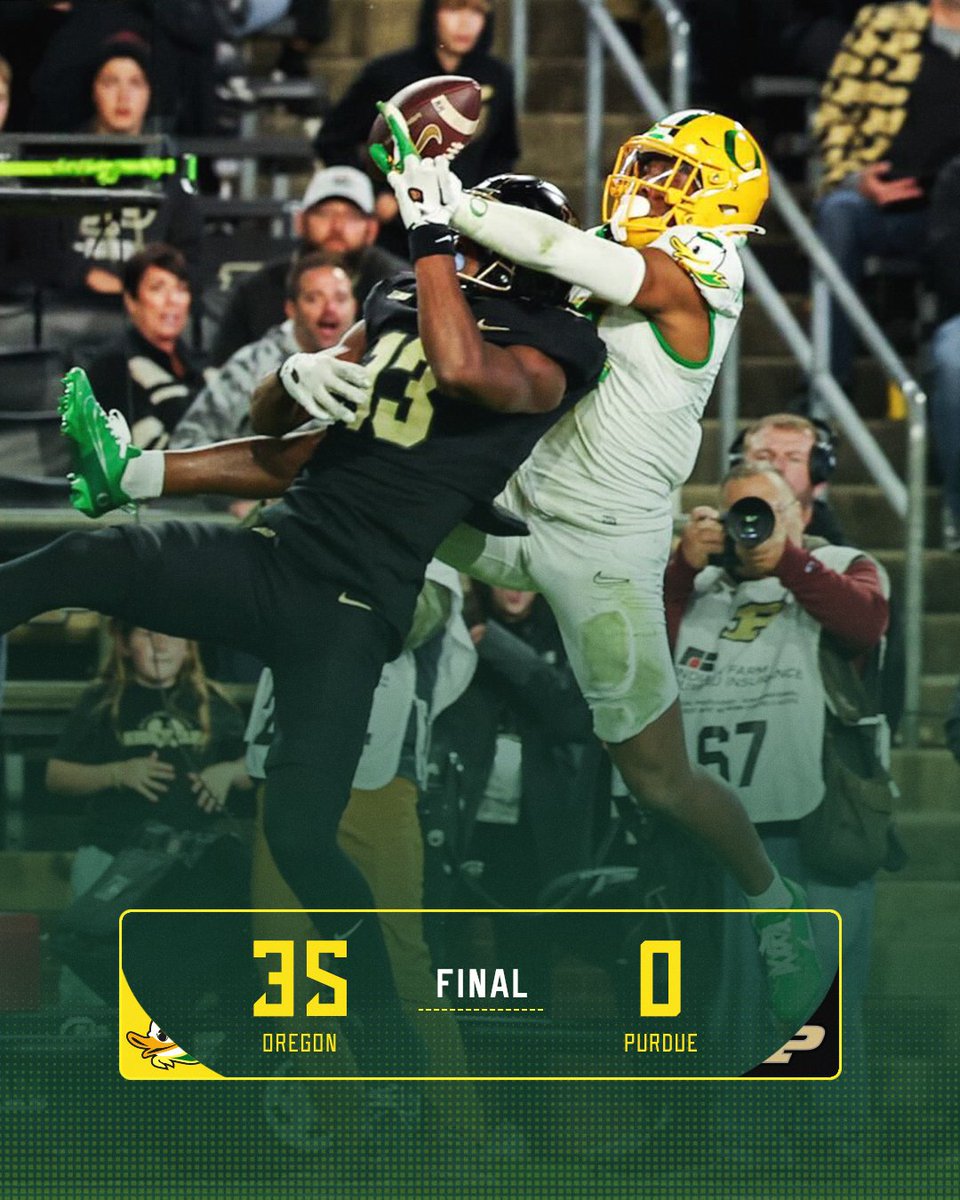
Brought the boom. #GoDucks
English
31
399
3.2K
168K
Donald Patz ری ٹویٹ کیا
Morgan J. Freeman
Morgan J. Freeman@mjfree·
I'm going to post this video every day until the election
English
704
8.4K
17.9K
336.2K
Ron Filipkowski
Ron Filipkowski@RonFilipkowski·
Alina Habba says that as a woman who has spent many hours with Trump she can say that he is not someone who would sexually abuse women.
English
6.8K
1.2K
7.5K
1.5M
Donald Patz
Donald Patz@DRPinot·
@RightforAmerica The question is - why? Trump thinks you’re too stupid to look at the economics that lead to inflation.
English
0
0
0
4
Right for America
Right for America@RightforAmerica·
Kamala Harris thinks you're too stupid to realize prices have skyrocketed since she arrived in the White House. - Groceries up 26% - Gas from $2 to $6 - New home prices up 46% We can't afford four more years. Share your #CantAffordKamala story to help defeat Kamala Harris.
English
18.9K
31.6K
104.2K
44.9M
Donald Patz ری ٹویٹ کیا
@judgeluttig
@judgeluttig@judgeluttig·
There was never a doubt that the courageous Liz Cheney would endorse Vice President Harris, because Liz Cheney stands for America. She is the very embodiment of country over party and country over self. And she fears no one -- least of all the former president.
Jamie Gangel@jamiegangel

Breaking news: @Liz_Cheney endorses Kamala Harris during a speech at Duke University in North Carolina. Here is what she said: “Because we are here in North Carolina, I think it is crucially important for people to recognize, not only is what I just said about the danger that Trump poses something that should prevent people from voting for him, but I don’t believe that we have the luxury of writing in candidates names, particularly in swing states. And as a conservative, as someone who believes in and cares about the constitution, I have thought deeply about this, and because of the danger that Donald Trump poses not only am I not voting for Donald Trump, but I will be voting for Kamala Harris.” @CNN @CNNPolitics @cnnbrk @KamalaHQ @KamalaHarris

English
1.1K
3.2K
13.9K
671.2K
Donald Patz ری ٹویٹ کیا
The Intellectualist
The Intellectualist@highbrow_nobrow·
John McCain’s son: I am switching to the Democratic Party and plan to support Kamala Harris for president. What Trump said about my father was reprehensible. I can never forgive him. I am putting my country first
English
21
237
916
33.4K
Donald Patz ری ٹویٹ کیا
The Intellectualist
The Intellectualist@highbrow_nobrow·
In this video montage, JD Vance says: 1. He “never liked” Trump. 2. Trump never “tells the truth”. 3. Trump is a “total fraud”. 4. Trump doesn’t “care about folks” . 5. He “can’t stomach” Trump.
English
89
937
1.8K
56.2K
Annie
Annie@AnnieForTruth·
It’s true!
Annie tweet media
English
5.5K
5.5K
44K
1.1M
Paul Farhi
Paul Farhi@farhip·
“Federal law prohibits political campaign or election-related activities within Army National Military Cemeteries, to include photographers, content creators or any other persons attending for purposes, or in direct support of a partisan political candidate’s campaign.”
Dan Scavino Jr.🇺🇸🦅@DanScavino

English
3.8K
11.2K
95.3K
5.1M
Ron Filipkowski
Ron Filipkowski@RonFilipkowski·
Trump will be hosting a ‘J6 Awards Gala’ at Bedminster on Sept 5 with Rudy Giuliani to “pay tribute to all J6 defendants who have shown incredible courage and sacrifice.” Story. meidasnews.com/news/trump-wil…
English
3.3K
2.5K
6.6K
1.9M