Dogs_Historian - Giovanni Padrone 🇺🇦

19.3K posts

Dogs_Historian - Giovanni Padrone 🇺🇦 banner
Dogs_Historian - Giovanni Padrone 🇺🇦

Dogs_Historian - Giovanni Padrone 🇺🇦

@DogsHistorian

#doghistory, #science, and AI to read the present through the past. #storiadelcane, scienza e IA per leggere il presente attraverso il passato. #SlavaUkraini

شامل ہوئے Kasım 2020
159 فالونگ1.3K فالوورز
Marco Fattorini
Marco Fattorini@MarcoFattorini·
Peggio di Trump, ci sono solo i suoi fedelissimi costretti a giustificare gli attacchi al Papa. Questo è lo speaker della Camera, Mike Johnson: «Un leader religioso può dire qualsiasi cosa voglia, ma se entri in questioni politiche, dovresti aspettarti una risposta politica e penso che il Papa ne abbia ricevuta una. Sono rimasto sconcertato dal fatto che abbia detto qualcosa su “Gesù non ascolta le loro preghiere di chi fa la guerra”. Esiste la dottrina della guerra giusta»
Italiano
5
17
97
3.4K
Acyn
Acyn@Acyn·
LEAVITT: One final announcement. President Trump and the Department of Interior will submit plans for the US Triumphal Arch. It will be 250 feet tall in honor of 250 years. Long after everyone in this room is gone, our children and grandchildren will remain inspired by this.
English
1.8K
256
907
318.2K
NEXTA
NEXTA@nexta_tv·
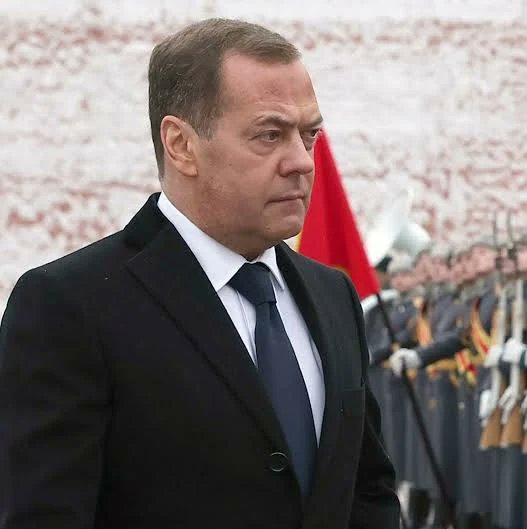
🚨Germany, UK, and Poland on Russia’s “target list” Russia has published a list of European factories allegedly producing drones and equipment for Ukraine. The list includes facilities in Germany, the United Kingdom, Poland, the Netherlands, and the Czech Republic — as well as companies in Italy, Spain, Turkey, and Israel. Medvedev reacted on X, saying the Defense Ministry’s statement should be taken literally: “When the strikes become reality depends on what happens next. Sleep well, European partners!” In reality, this reads as a direct threat toward NATO and EU countries.
NEXTA tweet media
English
118
172
417
41K
Acyn
Acyn@Acyn·
Nehls: The pope needs to keep his business to leading his flock, leading the church, and stay out of the political arena. Go lead your church. Stay out of politics. We didn’t elect the pope to be the president. Donald Trump is our president.
English
2.5K
818
3.2K
490.3K
Volodymyr Zelenskyy / Володимир Зеленський
Cara Italia, Grazie per questa visita e per il vostro costante sostegno all’Ucraina e agli ucraini; desidero in particolare ringraziarvi per il rispetto nei confronti del nostro Stato, della nostra indipendenza, della nostra integrità territoriale e del nostro popolo. Il rispetto è importante tanto quanto la sicurezza. Quando le persone e gli Stati sono rispettati e quando la sicurezza è garantita, possono esistere relazioni davvero dignitose e una vita normale. È proprio così che lavoriamo insieme all’Italia e insieme a tutti i partner, per garantire la sicurezza – in tutti i sensi della parola – e affinché le relazioni tra noi siano sempre amichevoli e solide. Sono grato per tutto il sostegno che l’Italia ha offerto all’Ucraina e al popolo ucraino — sul piano politico, economico, umanitario e della sicurezza. Grazie a te, Giorgia, per la tua leadership, che aiuta non solo noi ma anche l’intera Europa ad affrontare questo momento di crisi, e per il tuo impegno costante nella difesa dell’Europa e dei suoi interessi.
Italiano
186
510
3.7K
61.5K
Volodymyr Zelenskyy / Володимир Зеленський
Thank you, Italy, for hosting this visit and for your unwavering support for Ukraine and Ukrainians. I especially want to thank you for the respect shown to our state, to our independence and territorial integrity, and to our people. Respect is just as important as security. When people and states are respected, and when security is guaranteed, there can be truly dignified relations and normal life. This is exactly how we work together with Italy and with all our partners to guarantee security in every sense of the word and to ensure that relations between us are always friendly and meaningful. I am grateful for all the assistance from Italy to Ukraine and Ukrainians – political, security, economic, and humanitarian. Giorgia, thank you personally, for your leadership, which helps us and Europe as a whole navigate this time of crisis, and for your efforts to protect Europe and European interests. From a joint press conference with Giorgia Meloni (1/3).
English
144
872
5.9K
86.1K
Republicans against Trump
Republicans against Trump@RpsAgainstTrump·
Trump on Viktor Orban: “He was my friend. It wasn’t my election, but he was my friend, a good man. He did a good job on the immigration issue. He didn’t let people come and destroy his country, as happened in Italy.”
Republicans against Trump tweet media
English
205
97
539
76.9K
Dario D'Angelo
Dario D'Angelo@dariodangelo91·
🚨🪖🇮🇹🇺🇦🇷🇺 Giuseppe Conte: "La politica estera, nel momento in cui si rivela fallimentare, la pagano famiglie e imprese. Come puoi scommettere sulla vittoria militare sulla Russia con seimila testate nucleari? Addirittura scommettere sul crollo del Pil quando ieri è stato invece rivisto al rialzo. Abbiamo scommesso sulle armi, dovevamo scommettere sulla diplomazia. Non c'è nessuno, ancora oggi in Europa, che dica 'andiamo a concludere un accordo di pace'. Noi abbiamo condannato dall'inizio l'aggressione della Russia a Putin. Noi oggi siamo tra i pochi a dire che non si può andare a comprare il gas russo: usiamo il gas russo per concludere il negoziato. Dobbiamo concludere un accordo prima di comprare il gas russo".
Italiano
121
15
104
17.3K
un girovago
un girovago@UGirovago77000·
è rimasto l'ultimo Trampiano appollaiato sul trespolo. Cornuto e mazziato continua la sua crociata. Lo vedremo presto in una clinica specializzata per il recupero degli idioti.
un girovago tweet media
Italiano
38
59
358
2.8K
The Day Warrior
The Day Warrior@thedaywar90·
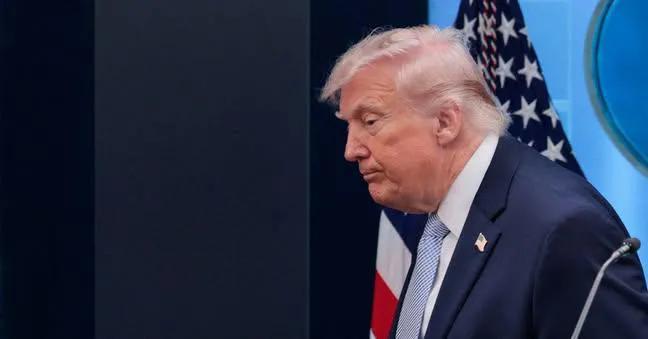
What can President Donald Trump change about himself that may make you like him- even a little bit?
The Day Warrior tweet media
English
3.3K
89
268
57.1K
Yasmina
Yasmina@yasminalombaert·
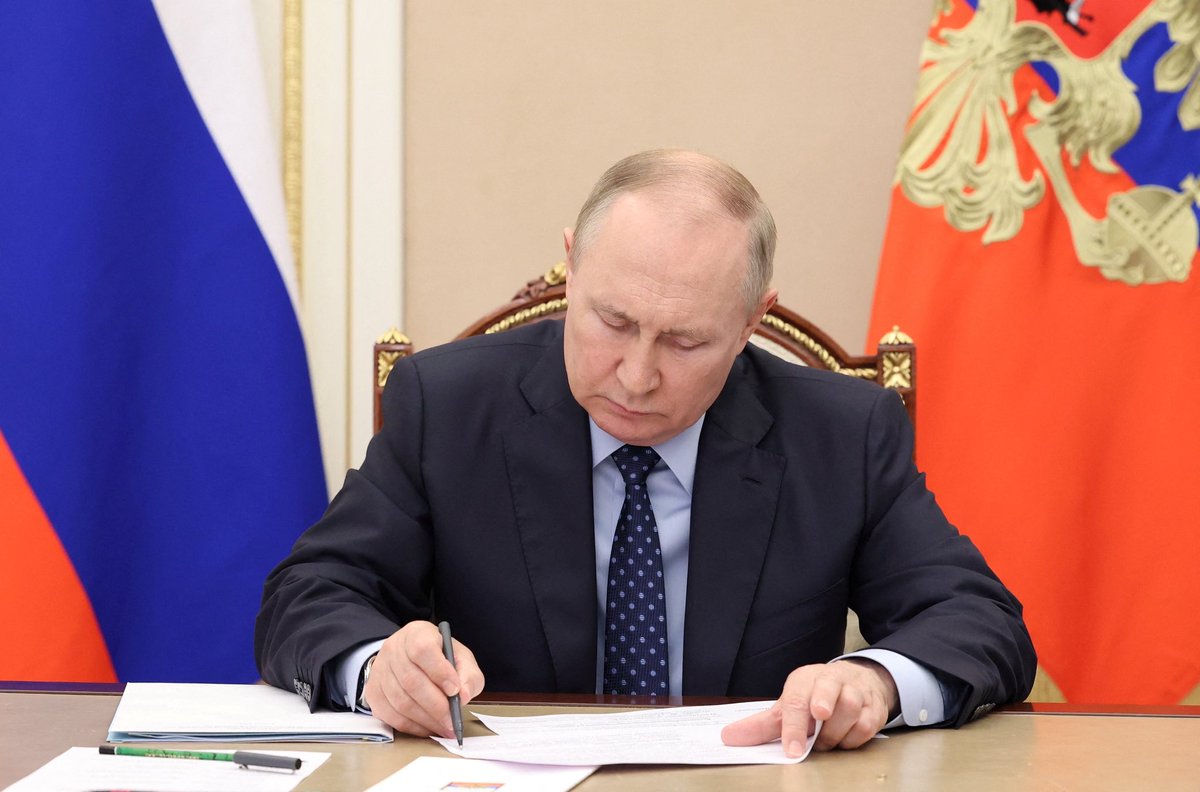
putin signed a "License to Invade"! Russian State Duma has passed the first reading of a bill that significantly expands putin’s authority to deploy the Russian military abroad. The legislation proposes that putin can deploy armed forces to any foreign country to “protect the rights of Russian citizens" The playbook is identical to what we've seen before : the 2014 annexation of Crimea and the 2022 full-scale invasion of Ukraine. If fully enacted, it effectively gives putin a permanent green light to launch "protection" operations anywhere in the world where Russian nationals are “oppressed” by the local government. “Russophobia" is a manufactured ghost used to justify real-world aggression. By making this vague term a trigger for military action, putin creates a borderless mandate. The bill is being viewed by NATO and European intelligence services as a "zero phase" preparation for potential future conflicts or escalations in the Baltic states or other neighbouring regions. putin is simply making sure that the next time he wants to redraw a map, he has a piece of paper in his hand that says he’s allowed to do it. It’s a pre-written script for annexation.
Yasmina tweet media
English
232
830
1.7K
64K
Dogs_Historian - Giovanni Padrone 🇺🇦
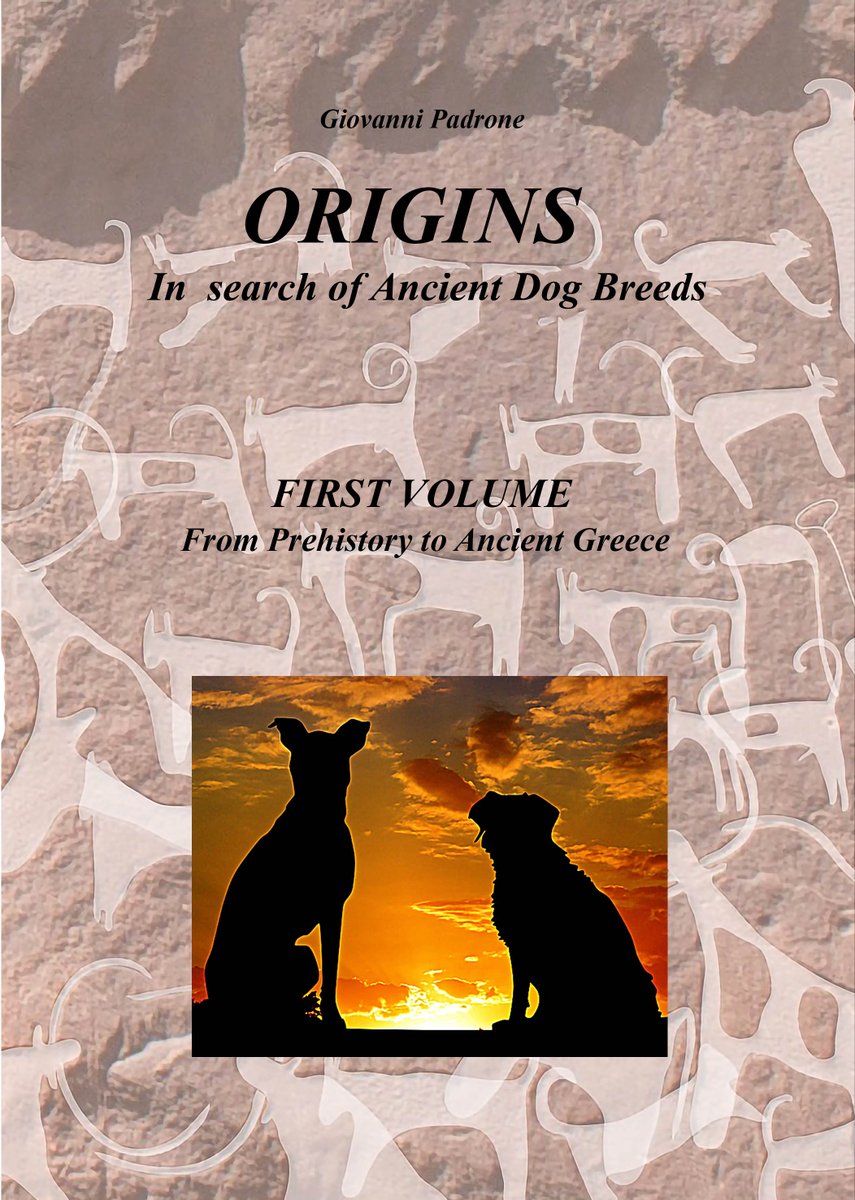
About Kokoni #dog and hits evolution, in my #book ORIGINS x.com/DogsHistorian/…
Dogs_Historian - Giovanni Padrone 🇺🇦 tweet media
Dogs_Historian - Giovanni Padrone 🇺🇦@DogsHistorian

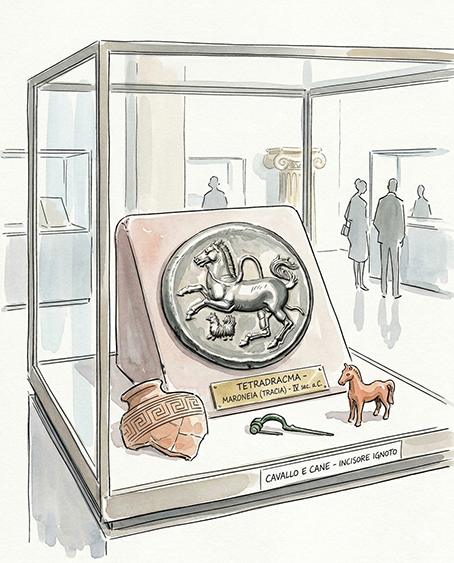
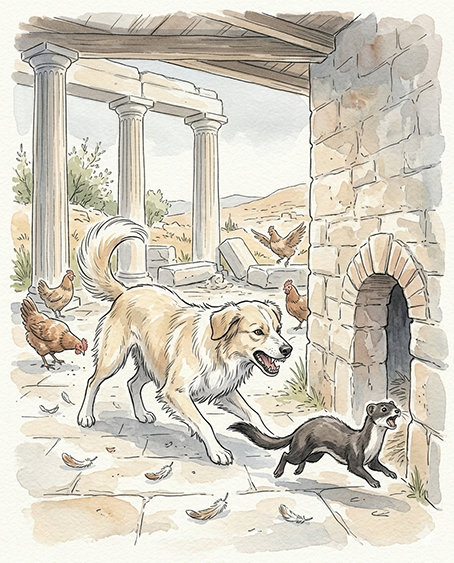
Melitaion kunidion: not "Maltese dog," but a small furry #dog For centuries, it has been repeated that the Canis melitaeus was the "dog of Malta." However, this reading is too simple, and perhaps even wrong. In Greek, kunidion means "small dog" (in Latin, Catulus). The real issue lies with Melitaion: this is where the confusion arises. It is by no means mandatory to read it as a geographical name. More likely, it indicated a small, long-haired dog—a "furry" type, very close to the modern Kokoni. Key Points • Kunidion = small dog. • Melitaion can be a descriptive term, not necessarily geographical. • The transformation into "Maltese dog" is a later simplification. • The #Kokoni (still called Μελιταίων Κυνίδιον by Greeks today) fits well into this framework as a possible heir to ancient Greek small dogs. A Note on #Genetics We must be rigorous here: on a genetic level, we do not yet have definitive proof that allows us to say with absolute certainty that the modern Kokoni descends in a direct, uncontaminated line from those small dogs of ancient Greece. Historical and iconographic sources suggest a continuity of type and function, but available genetic data alone are not enough to settle the discussion on origins. In other words, the picture is very consistent, but not yet fully resolved. The Central Point The problem, therefore, is not just the name. It is the way an ancient, perhaps descriptive term has been transformed over time into a geographical label. When this happens, we risk erasing the original meaning: not "dog of Malta," but likely a "small furry dog." In Summary The Kokoni likely represents an ancient canine tradition of the Greek world, but the precise origins remain open. For this reason, it is more correct to speak of a very solid historical hypothesis rather than absolute genetic certainty. Ultimately, this is exactly where research becomes interesting: between what sources suggest, what morphology confirms, and what genetics has yet to clarify. I wrote about the Kokoni in my #book 'Origins,' along with the other breeds recognized today in Greece. Er... no, the Laconians have been extinct for a few centuries. #history #pets #evolution #ancientgreece
English
0
0
0
30
Dogs_Historian - Giovanni Padrone 🇺🇦
About Kokoni #dog and hits evolution, in my book ORIGINS x.com/DogsHistorian/…
Dogs_Historian - Giovanni Padrone 🇺🇦 tweet media
Dogs_Historian - Giovanni Padrone 🇺🇦@DogsHistorian

Melitaion kunidion: not "Maltese dog," but a small furry #dog For centuries, it has been repeated that the Canis melitaeus was the "dog of Malta." However, this reading is too simple, and perhaps even wrong. In Greek, kunidion means "small dog" (in Latin, Catulus). The real issue lies with Melitaion: this is where the confusion arises. It is by no means mandatory to read it as a geographical name. More likely, it indicated a small, long-haired dog—a "furry" type, very close to the modern Kokoni. Key Points • Kunidion = small dog. • Melitaion can be a descriptive term, not necessarily geographical. • The transformation into "Maltese dog" is a later simplification. • The #Kokoni (still called Μελιταίων Κυνίδιον by Greeks today) fits well into this framework as a possible heir to ancient Greek small dogs. A Note on #Genetics We must be rigorous here: on a genetic level, we do not yet have definitive proof that allows us to say with absolute certainty that the modern Kokoni descends in a direct, uncontaminated line from those small dogs of ancient Greece. Historical and iconographic sources suggest a continuity of type and function, but available genetic data alone are not enough to settle the discussion on origins. In other words, the picture is very consistent, but not yet fully resolved. The Central Point The problem, therefore, is not just the name. It is the way an ancient, perhaps descriptive term has been transformed over time into a geographical label. When this happens, we risk erasing the original meaning: not "dog of Malta," but likely a "small furry dog." In Summary The Kokoni likely represents an ancient canine tradition of the Greek world, but the precise origins remain open. For this reason, it is more correct to speak of a very solid historical hypothesis rather than absolute genetic certainty. Ultimately, this is exactly where research becomes interesting: between what sources suggest, what morphology confirms, and what genetics has yet to clarify. I wrote about the Kokoni in my #book 'Origins,' along with the other breeds recognized today in Greece. Er... no, the Laconians have been extinct for a few centuries. #history #pets #evolution #ancientgreece

English
0
0
0
20
Dogs_Historian - Giovanni Padrone 🇺🇦
About Kokoni #dog and hits evolution, in my book ORIGINS x.com/DogsHistorian/…
Dogs_Historian - Giovanni Padrone 🇺🇦 tweet media
Dogs_Historian - Giovanni Padrone 🇺🇦@DogsHistorian

Melitaion kunidion: not "Maltese dog," but a small furry #dog For centuries, it has been repeated that the Canis melitaeus was the "dog of Malta." However, this reading is too simple, and perhaps even wrong. In Greek, kunidion means "small dog" (in Latin, Catulus). The real issue lies with Melitaion: this is where the confusion arises. It is by no means mandatory to read it as a geographical name. More likely, it indicated a small, long-haired dog—a "furry" type, very close to the modern Kokoni. Key Points • Kunidion = small dog. • Melitaion can be a descriptive term, not necessarily geographical. • The transformation into "Maltese dog" is a later simplification. • The #Kokoni (still called Μελιταίων Κυνίδιον by Greeks today) fits well into this framework as a possible heir to ancient Greek small dogs. A Note on #Genetics We must be rigorous here: on a genetic level, we do not yet have definitive proof that allows us to say with absolute certainty that the modern Kokoni descends in a direct, uncontaminated line from those small dogs of ancient Greece. Historical and iconographic sources suggest a continuity of type and function, but available genetic data alone are not enough to settle the discussion on origins. In other words, the picture is very consistent, but not yet fully resolved. The Central Point The problem, therefore, is not just the name. It is the way an ancient, perhaps descriptive term has been transformed over time into a geographical label. When this happens, we risk erasing the original meaning: not "dog of Malta," but likely a "small furry dog." In Summary The Kokoni likely represents an ancient canine tradition of the Greek world, but the precise origins remain open. For this reason, it is more correct to speak of a very solid historical hypothesis rather than absolute genetic certainty. Ultimately, this is exactly where research becomes interesting: between what sources suggest, what morphology confirms, and what genetics has yet to clarify. I wrote about the Kokoni in my #book 'Origins,' along with the other breeds recognized today in Greece. Er... no, the Laconians have been extinct for a few centuries. #history #pets #evolution #ancientgreece

English
0
0
0
7
Dogs_Historian - Giovanni Padrone 🇺🇦
About Kokoni #dog and hits evolution, in my book ORIGINS x.com/DogsHistorian/…
Dogs_Historian - Giovanni Padrone 🇺🇦 tweet media
Dogs_Historian - Giovanni Padrone 🇺🇦@DogsHistorian

Melitaion kunidion: not "Maltese dog," but a small furry #dog For centuries, it has been repeated that the Canis melitaeus was the "dog of Malta." However, this reading is too simple, and perhaps even wrong. In Greek, kunidion means "small dog" (in Latin, Catulus). The real issue lies with Melitaion: this is where the confusion arises. It is by no means mandatory to read it as a geographical name. More likely, it indicated a small, long-haired dog—a "furry" type, very close to the modern Kokoni. Key Points • Kunidion = small dog. • Melitaion can be a descriptive term, not necessarily geographical. • The transformation into "Maltese dog" is a later simplification. • The #Kokoni (still called Μελιταίων Κυνίδιον by Greeks today) fits well into this framework as a possible heir to ancient Greek small dogs. A Note on #Genetics We must be rigorous here: on a genetic level, we do not yet have definitive proof that allows us to say with absolute certainty that the modern Kokoni descends in a direct, uncontaminated line from those small dogs of ancient Greece. Historical and iconographic sources suggest a continuity of type and function, but available genetic data alone are not enough to settle the discussion on origins. In other words, the picture is very consistent, but not yet fully resolved. The Central Point The problem, therefore, is not just the name. It is the way an ancient, perhaps descriptive term has been transformed over time into a geographical label. When this happens, we risk erasing the original meaning: not "dog of Malta," but likely a "small furry dog." In Summary The Kokoni likely represents an ancient canine tradition of the Greek world, but the precise origins remain open. For this reason, it is more correct to speak of a very solid historical hypothesis rather than absolute genetic certainty. Ultimately, this is exactly where research becomes interesting: between what sources suggest, what morphology confirms, and what genetics has yet to clarify. I wrote about the Kokoni in my #book 'Origins,' along with the other breeds recognized today in Greece. Er... no, the Laconians have been extinct for a few centuries. #history #pets #evolution #ancientgreece

English
0
0
0
12
Dogs_Historian - Giovanni Padrone 🇺🇦
About Kokoni #dog and hits evolution, in my book ORIGINS x.com/DogsHistorian/…
Dogs_Historian - Giovanni Padrone 🇺🇦 tweet media
Dogs_Historian - Giovanni Padrone 🇺🇦@DogsHistorian

Melitaion kunidion: not "Maltese dog," but a small furry #dog For centuries, it has been repeated that the Canis melitaeus was the "dog of Malta." However, this reading is too simple, and perhaps even wrong. In Greek, kunidion means "small dog" (in Latin, Catulus). The real issue lies with Melitaion: this is where the confusion arises. It is by no means mandatory to read it as a geographical name. More likely, it indicated a small, long-haired dog—a "furry" type, very close to the modern Kokoni. Key Points • Kunidion = small dog. • Melitaion can be a descriptive term, not necessarily geographical. • The transformation into "Maltese dog" is a later simplification. • The #Kokoni (still called Μελιταίων Κυνίδιον by Greeks today) fits well into this framework as a possible heir to ancient Greek small dogs. A Note on #Genetics We must be rigorous here: on a genetic level, we do not yet have definitive proof that allows us to say with absolute certainty that the modern Kokoni descends in a direct, uncontaminated line from those small dogs of ancient Greece. Historical and iconographic sources suggest a continuity of type and function, but available genetic data alone are not enough to settle the discussion on origins. In other words, the picture is very consistent, but not yet fully resolved. The Central Point The problem, therefore, is not just the name. It is the way an ancient, perhaps descriptive term has been transformed over time into a geographical label. When this happens, we risk erasing the original meaning: not "dog of Malta," but likely a "small furry dog." In Summary The Kokoni likely represents an ancient canine tradition of the Greek world, but the precise origins remain open. For this reason, it is more correct to speak of a very solid historical hypothesis rather than absolute genetic certainty. Ultimately, this is exactly where research becomes interesting: between what sources suggest, what morphology confirms, and what genetics has yet to clarify. I wrote about the Kokoni in my #book 'Origins,' along with the other breeds recognized today in Greece. Er... no, the Laconians have been extinct for a few centuries. #history #pets #evolution #ancientgreece

English
0
0
1
78
Dogs_Historian - Giovanni Padrone 🇺🇦
About Kokoni #dog and hits evolution, in my book ORIGINS x.com/DogsHistorian/…
Dogs_Historian - Giovanni Padrone 🇺🇦 tweet media
Dogs_Historian - Giovanni Padrone 🇺🇦@DogsHistorian

Melitaion kunidion: not "Maltese dog," but a small furry #dog For centuries, it has been repeated that the Canis melitaeus was the "dog of Malta." However, this reading is too simple, and perhaps even wrong. In Greek, kunidion means "small dog" (in Latin, Catulus). The real issue lies with Melitaion: this is where the confusion arises. It is by no means mandatory to read it as a geographical name. More likely, it indicated a small, long-haired dog—a "furry" type, very close to the modern Kokoni. Key Points • Kunidion = small dog. • Melitaion can be a descriptive term, not necessarily geographical. • The transformation into "Maltese dog" is a later simplification. • The #Kokoni (still called Μελιταίων Κυνίδιον by Greeks today) fits well into this framework as a possible heir to ancient Greek small dogs. A Note on #Genetics We must be rigorous here: on a genetic level, we do not yet have definitive proof that allows us to say with absolute certainty that the modern Kokoni descends in a direct, uncontaminated line from those small dogs of ancient Greece. Historical and iconographic sources suggest a continuity of type and function, but available genetic data alone are not enough to settle the discussion on origins. In other words, the picture is very consistent, but not yet fully resolved. The Central Point The problem, therefore, is not just the name. It is the way an ancient, perhaps descriptive term has been transformed over time into a geographical label. When this happens, we risk erasing the original meaning: not "dog of Malta," but likely a "small furry dog." In Summary The Kokoni likely represents an ancient canine tradition of the Greek world, but the precise origins remain open. For this reason, it is more correct to speak of a very solid historical hypothesis rather than absolute genetic certainty. Ultimately, this is exactly where research becomes interesting: between what sources suggest, what morphology confirms, and what genetics has yet to clarify. I wrote about the Kokoni in my #book 'Origins,' along with the other breeds recognized today in Greece. Er... no, the Laconians have been extinct for a few centuries. #history #pets #evolution #ancientgreece
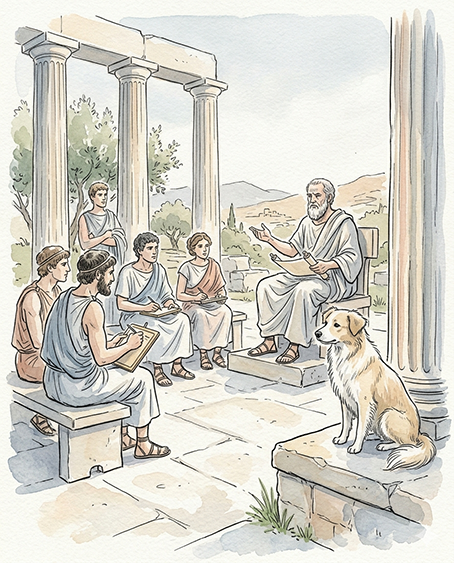
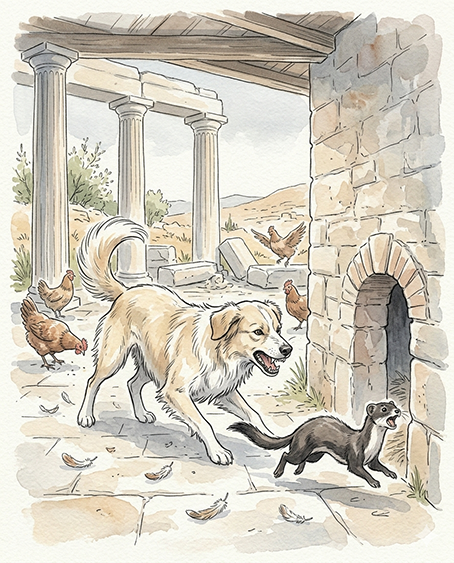
English
0
0
0
14
Dogs_Historian - Giovanni Padrone 🇺🇦
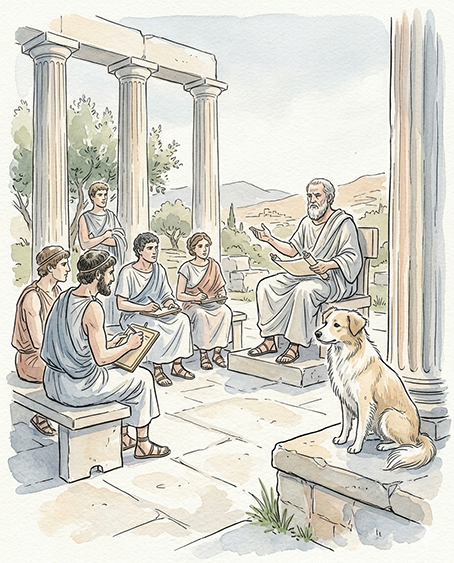
Melitaion kunidion: not "Maltese dog," but a small furry #dog For centuries, it has been repeated that the Canis melitaeus was the "dog of Malta." However, this reading is too simple, and perhaps even wrong. In Greek, kunidion means "small dog" (in Latin, Catulus). The real issue lies with Melitaion: this is where the confusion arises. It is by no means mandatory to read it as a geographical name. More likely, it indicated a small, long-haired dog—a "furry" type, very close to the modern Kokoni. Key Points • Kunidion = small dog. • Melitaion can be a descriptive term, not necessarily geographical. • The transformation into "Maltese dog" is a later simplification. • The #Kokoni (still called Μελιταίων Κυνίδιον by Greeks today) fits well into this framework as a possible heir to ancient Greek small dogs. A Note on #Genetics We must be rigorous here: on a genetic level, we do not yet have definitive proof that allows us to say with absolute certainty that the modern Kokoni descends in a direct, uncontaminated line from those small dogs of ancient Greece. Historical and iconographic sources suggest a continuity of type and function, but available genetic data alone are not enough to settle the discussion on origins. In other words, the picture is very consistent, but not yet fully resolved. The Central Point The problem, therefore, is not just the name. It is the way an ancient, perhaps descriptive term has been transformed over time into a geographical label. When this happens, we risk erasing the original meaning: not "dog of Malta," but likely a "small furry dog." In Summary The Kokoni likely represents an ancient canine tradition of the Greek world, but the precise origins remain open. For this reason, it is more correct to speak of a very solid historical hypothesis rather than absolute genetic certainty. Ultimately, this is exactly where research becomes interesting: between what sources suggest, what morphology confirms, and what genetics has yet to clarify. I wrote about the Kokoni in my #book 'Origins,' along with the other breeds recognized today in Greece. Er... no, the Laconians have been extinct for a few centuries. #history #pets #evolution #ancientgreece
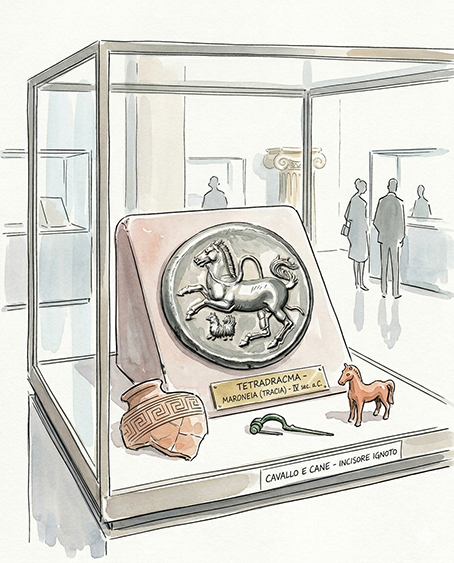
Dogs_Historian - Giovanni Padrone 🇺🇦 tweet mediaDogs_Historian - Giovanni Padrone 🇺🇦 tweet mediaDogs_Historian - Giovanni Padrone 🇺🇦 tweet mediaDogs_Historian - Giovanni Padrone 🇺🇦 tweet media
English
0
0
0
181
Dogs_Historian - Giovanni Padrone 🇺🇦
Melitaion kunidion: non “cane di Malta”, ma cagnolino peloso Per secoli si è ripetuto che il Canis melitaeus fosse il “cane di Malta”. Ma questa lettura è troppo semplice, e forse anche sbagliata. In greco, kunidion significa “cagnolino” (in latino Catulus). Il punto vero è Melitaion: qui nasce la confusione. Non è affatto obbligatorio leggerlo come un nome geografico. Più probabilmente indicava un piccolo cane dal pelo lungo, cioè un tipo “peloso”, molto vicino al moderno #Kokoni. I punti essenziali • Kunidion = cagnolino. • Melitaion può essere un termine descrittivo, non per forza geografico. • La trasformazione in “cane di Malta” è una semplificazione successiva. • Il Kokoni (ancora oggi chiamato dai greci Μελιταίων Κυνίδιον) si inserisce bene in questo quadro come possibile erede dei piccoli cani greci antichi. Ma attenzione alla genetica Qui però bisogna essere rigorosi: sul piano genetico non abbiamo ancora una prova definitiva che ci permetta di dire con assoluta certezza che il Kokoni moderno discenda in linea diretta e incontaminata da quei piccoli cani dell’antica Grecia. Le fonti storiche e iconografiche suggeriscono una continuità di tipo e di funzione, ma i dati genetici disponibili non bastano da soli a chiudere ogni discussione sulle origini. In altre parole: il quadro è molto coerente, ma non ancora totalmente risolto. Il punto centrale Il problema, quindi, non è solo il nome. È il modo in cui un termine antico, forse descrittivo, è stato trasformato nel tempo in un’etichetta geografica. E quando questo accade, si rischia di cancellare il significato originario: non “cane di Malta”, ma probabilmente piccolo cane peloso. In sintesi Il Kokoni rappresenta con ogni probabilità una tradizione canina antica del mondo greco, ma le origini precise restano aperte. Per questo è più corretto parlare di ipotesi storica molto solida, e non di certezza genetica assoluta. In fondo, è proprio qui che la ricerca diventa interessante: tra ciò che le fonti suggeriscono, ciò che la morfologia conferma e ciò che la genetica dovrà ancora chiarire. Del Kokoni ho scritto nel mio #libro 'Origini', insieme alle altre razze oggi riconosciute in Grecia. Ehm... no, i laconiani sono estinti da qualche secolo. #cane #cani #storia #genetica
Dogs_Historian - Giovanni Padrone 🇺🇦 tweet mediaDogs_Historian - Giovanni Padrone 🇺🇦 tweet mediaDogs_Historian - Giovanni Padrone 🇺🇦 tweet mediaDogs_Historian - Giovanni Padrone 🇺🇦 tweet media
Italiano
1
0
1
24
IlGuffanti 🇮🇹 🇺🇦
IlGuffanti 🇮🇹 🇺🇦@guffanti_marco·
30 anni di governo: 🇷🇺milioni senza cesso 🇷🇺 esercito decimato 🇷🇺 marina con i pedalò 🇷🇺 raffinerie falcidiate 🇷🇺 economia a zoccole 🇷🇺 al guinzaglio della Cina 🇷🇺 umiliato da un Paese disarmato Signori e Signore: il maiale del Cremlino!
IlGuffanti 🇮🇹 🇺🇦 tweet media
Italiano
239
626
3.7K
36.7K
È sempre Cartabianca
È sempre Cartabianca@CartabiancaR4·
Crisi carburante, Claudio Borghi: "Allucinante la posizione di Von Der Leyen che non vuole sospendere il patto di stabilità, è come dare un aiuto a un'azienda dopo che ha chiuso" #ÈsempreCartabianca
Italiano
75
191
719
18.4K