Edward Harding

1.7K posts

Edward Harding banner
Edward Harding

Edward Harding

@EdwardCHarding

Postdoctoral Neuroscientist @IMS_MRL | @FlorianMerkle lab | @Cambridge_Uni and @ClareCollege | Obesity and Neurodegeneration | Still in awe of Biology

South East, England شامل ہوئے Mart 2018
1.4K فالونگ736 فالوورز
Edward Harding ری ٹویٹ کیا
BryanRoth
BryanRoth@zenbrainest·
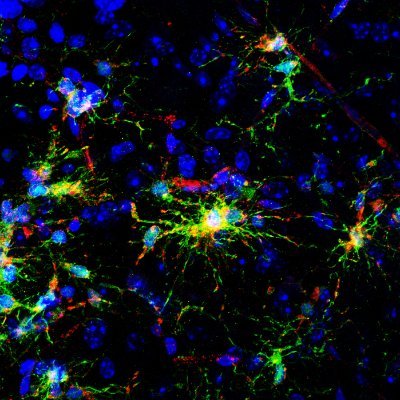
Cryo-EM Structures of Brain-Derived G Protein-Coupled Receptors: The First Direct Visualization from Mammalian Brain Tissue biorxiv.org/content/10.648…
BryanRoth tweet media
English
1
32
87
11.3K
Edward Harding ری ٹویٹ کیا
Arjun Raj
Arjun Raj@arjunrajlab·
I had two undergrads in my office today working on a computational project. My normal advice in research is to use tools to their fullest to get to the cutting edge. For the first time, I was reluctant. I worry that using coding agents would rob them of something.
English
12
4
219
51.7K
Edward Harding ری ٹویٹ کیا
Simon Mead
Simon Mead@smead2·
Divalent siRNA for prion disease biorxiv.org/content/10.110… Can’t have too many compounds in clinical trials for CJD. This looks v promising. Tissue penetration in human brain will be a key exploration but only one way to find out.
English
1
3
6
1K
Edward Harding ری ٹویٹ کیا
Science Magazine
Science Magazine@ScienceMagazine·
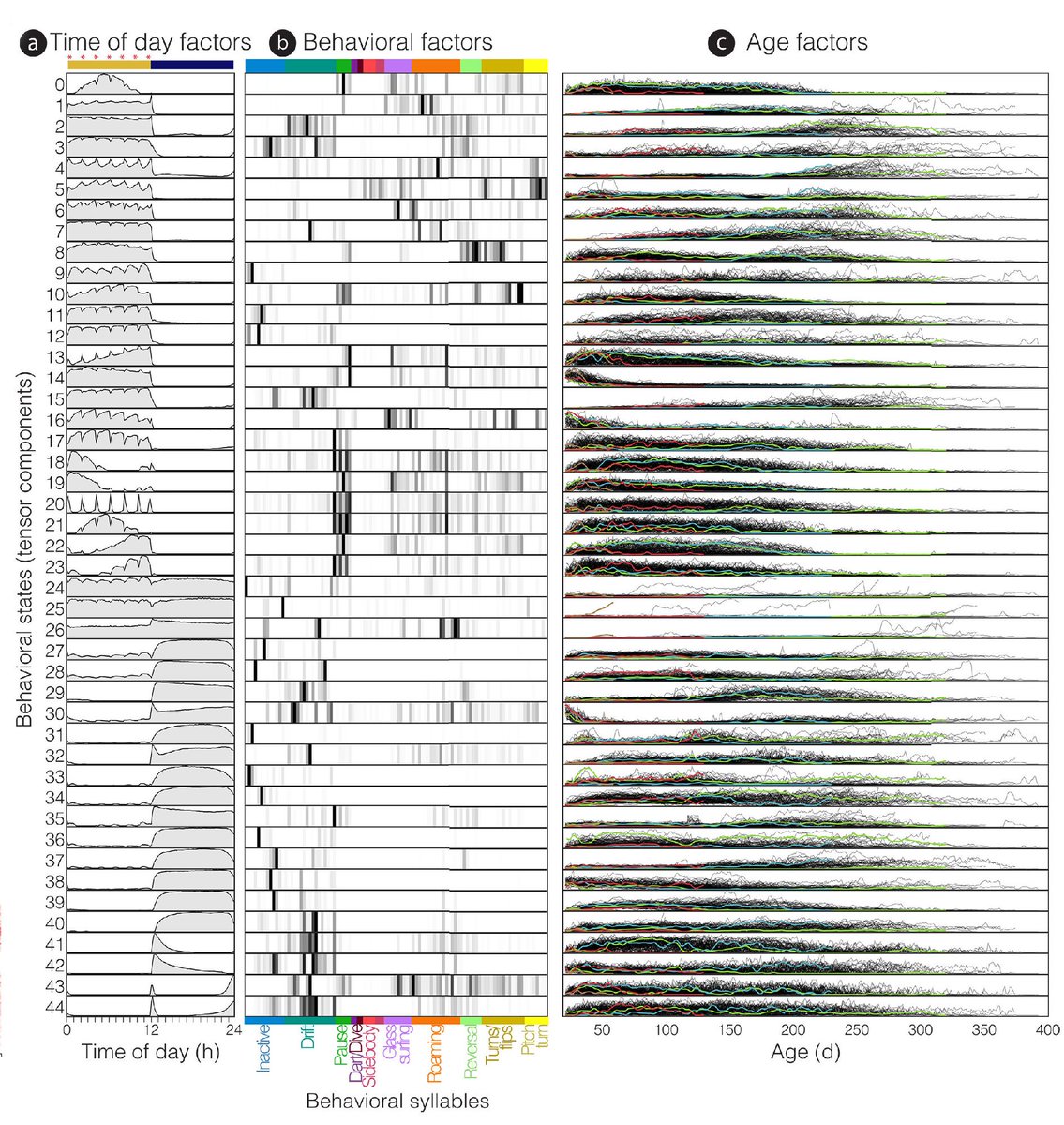
By tracking nearly every movement of a tiny fish’s life from adolescence to death, a new Science study reveals a hidden behavioral blueprint of aging—one that can predict a fish’s age or how long an individual will live. Learn more: scim.ag/4dm1GA9
Science Magazine tweet media
English
2
17
103
25.1K
Edward Harding ری ٹویٹ کیا
Claire Bedbrook
Claire Bedbrook@clairebedbrook·
Aging may feel gradual… but what if it’s not? In our paper out today, we tracked fish continuously from puberty until death. This gave us a unique view of how aging unfolds across the adult lifespan. 🧵
English
22
145
555
69.9K
Edward Harding ری ٹویٹ کیا
Subodh Verma
Subodh Verma@SubodhVermaMD·
One night of sleep loss changes how your brain clears waste: Breakthrough News from PNAS A new study shows sleep deprivation amplifies brain signals tied to CSF flow—possibly a compensatory “cleanup” mechanism. But here’s the problem: By midlife (40–50) that response largely disappears. Sleep deprivation may be quietly accelerating brain aging. #SleepDeprivation #BrainAging #Alzheimers #Neuroscience #Longevity Sleep deprivation exhibits an age-dependent effect on infraslow global brain activity | PNAS pnas.org/doi/10.1073/pn…
English
9
102
362
48.9K
Edward Harding ری ٹویٹ کیا
Sam Rosenfeld
Sam Rosenfeld@sam_rosenfeld·
the modern professor's feeling of warm relief and gratitude at encountering artisanal, human-crafted bad writing while grading papers
English
89
1.3K
16.1K
437.1K
Edward Harding ری ٹویٹ کیا
Simon Mead
Simon Mead@smead2·
Extraordinary claims require extraordinary evidence (Sagan). Letter to the Editor Regarding Kortazar‐Zubizarreta et al. ‘The Risk of Transmission of Genetic Prion Diseases Is Greater Than 50%’ onlinelibrary.wiley.com/doi/epdf/10.11…
English
0
1
4
463
Edward Harding ری ٹویٹ کیا
David Brang
David Brang@DavidJBrang·
EEG requires many neurons aligned so that their electric fields can positively sum to spread up to the scalp. I made a browser-based simulator for my EEG class to visualize how "open fields" contribute to EEG recordings. dbrang.github.io/Open-Closed-Fi… Github: github.com/dbrang/Open-Cl…
David Brang tweet mediaDavid Brang tweet media
English
3
42
235
10.9K
Edward Harding ری ٹویٹ کیا
Eurasia Naval Insight
Eurasia Naval Insight@EurasiaNaval·
The Russian Navy has traditionally specialised the roles of shipborne radars to a greater degree than the US Navy, reflecting different design philosophies and operational priorities. Russian surface combatants commonly carry multiple, function-specific sensors rather than a single dominant multifunction array. A typical example is the pairing of a long-range volume search radar such as Fregat or Podberyozovik with a dedicated fire-control radar for missile guidance, alongside separate surface-search and surface-targeting radars like Mineral-M for over-the-horizon anti-ship engagements. On newer ships, the Poliment-Redut system continues this logic: the Poliment AESA radar is optimised primarily for missile guidance and sector air defence, while other sensors handle horizon search and surface tracking. This contrasts with the US Navy's approach, where SPY-1 and now SPY-6 electronically scanned array radars are designed as highly capable multifunction radars performing volume search, tracking, and fire control within a single integrated system. The Russian model offers clear advantages. Specialised radars can be individually optimised for wavelength, beam shaping, and power management, potentially improving performance against specific target sets such as sea-skimming missiles or surface contacts in cluttered littoral environments. It also provides a degree of redundancy: the loss or degradation of one sensor does not automatically cripple all mission areas. Each Russian radar can be used for other purposes they are not intended for in a pinch if needed, albeit less effectively. However, the Russian approach carries penalties in complexity, topside weight, crew training, and combat system integration, and can complicate electronic warfare management. The US Navy’s multifunction philosophy simplifies integration and reduces sensor sprawl, enabling tighter fusion and easier upgrades, but concentrates risk in a smaller number of critical systems and demands extremely high performance from a single radar family to cover all roles equally well. Which approach to shipborne radars is better? Tell me why.
Eurasia Naval Insight tweet mediaEurasia Naval Insight tweet media
English
20
51
641
45.8K
Edward Harding ری ٹویٹ کیا
Ayşe Baltacıoğlu-Brammer
Ayşe Baltacıoğlu-Brammer@BrammerAyse·
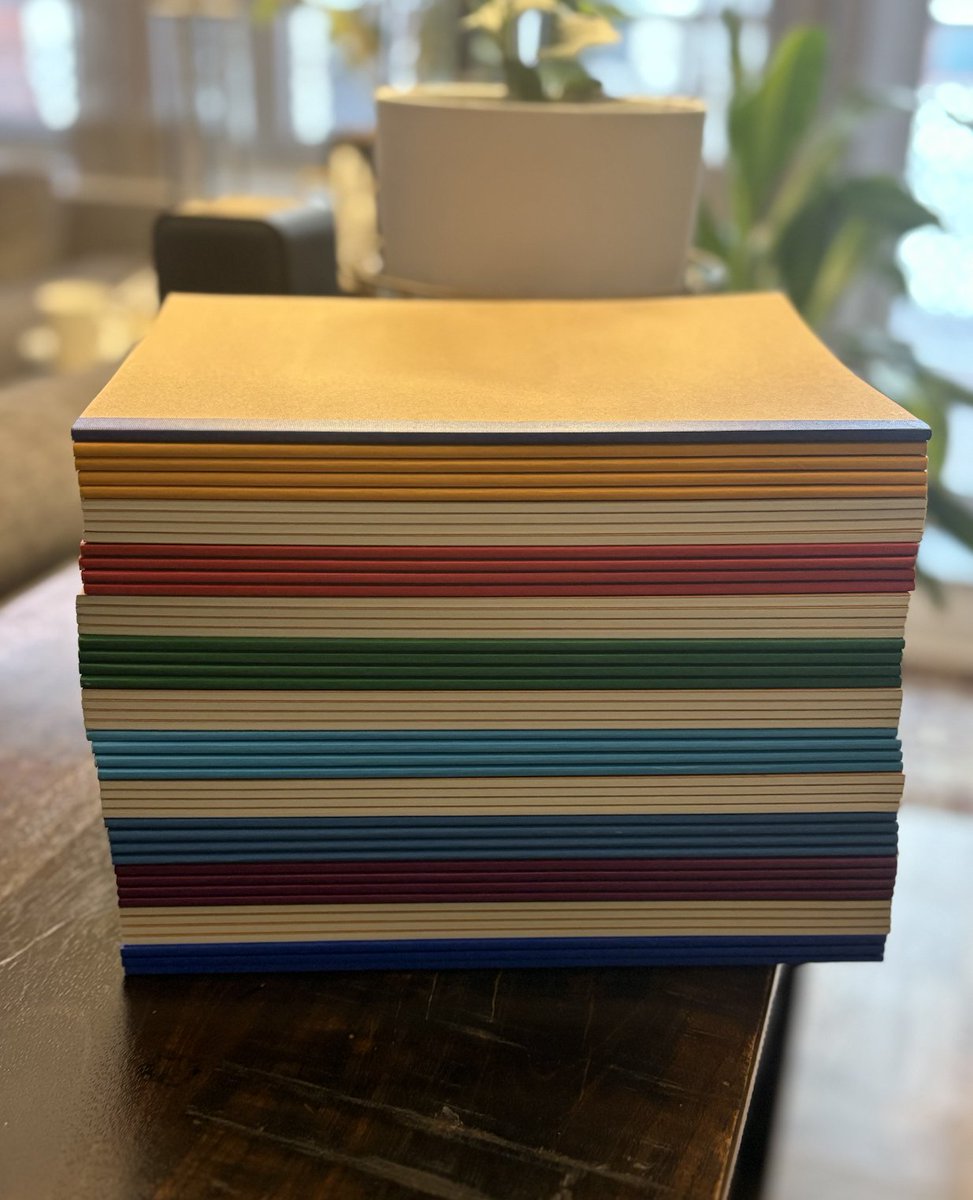
For the first time this semester, I ordered notebooks for my students. Instead of submitting typed papers online, they’ll be journaling regularly, by hand, to analyze what they’re reading. In the age of AI, many of us have gone back to old-school blue book exams. But I’ve also found it exciting to try something different. I told students that these journals are not optional: they need to keep them with them, and I’ll collect them regularly to give feedback on their writing and thinking. I also emphasized that I’m not looking for perfectly polished pieces of writing, but for ideas in motion, questions, and close engagement with the texts. We’ll see how it goes, but so far, I’m hopeful.
Ayşe Baltacıoğlu-Brammer tweet media
English
446
867
11.9K
445.9K
Edward Harding ری ٹویٹ کیا
Inna Vishik
Inna Vishik@InnaVishik·
My PhD advisor told me that my research directions will be determined by my boundary conditions (presumed to be colleagues, collaborators, and funding zeitgeist), but it turns out that the junior personnel actually change the Hamiltonian. Most of the students and postdocs I have mentored have pushed my group into new directions by pursuing projects outside of my immediate expertise, often with collaborators serving as additional mentors in these pursuits. These new directions not initiated by me have so far included 2D materials, (a lot of) quantitative XPS, and machine learning approaches to data analysis.
English
12
8
273
39.1K
Edward Harding ری ٹویٹ کیا
Nature Rev Neurosci
Nature Rev Neurosci@NatRevNeurosci·
Long-range axon branching: contributions to brain network plasticity and repair — a Review by Linda J. Richards, Cheng Huang, Adam Q. Bauer & Jin-Moo Lee nature.com/articles/s4158…
English
2
32
149
10.1K
Edward Harding ری ٹویٹ کیا
Gan Lab
Gan Lab@LiGanLab·
AD genetic risk links microglial immunity & cholesterol. Our new BioRxiv study identifies CH25H-derived 25-HC as a toxic lipid downstream of cGAS–STING–IFN that drives tau spread, inflammation, & neurodegeneration, offering a tractable therapeutic pathway biorxiv.org/cgi/content/sh…
English
2
17
104
7.7K
Edward Harding ری ٹویٹ کیا
CLaE
CLaE@leafs_s·
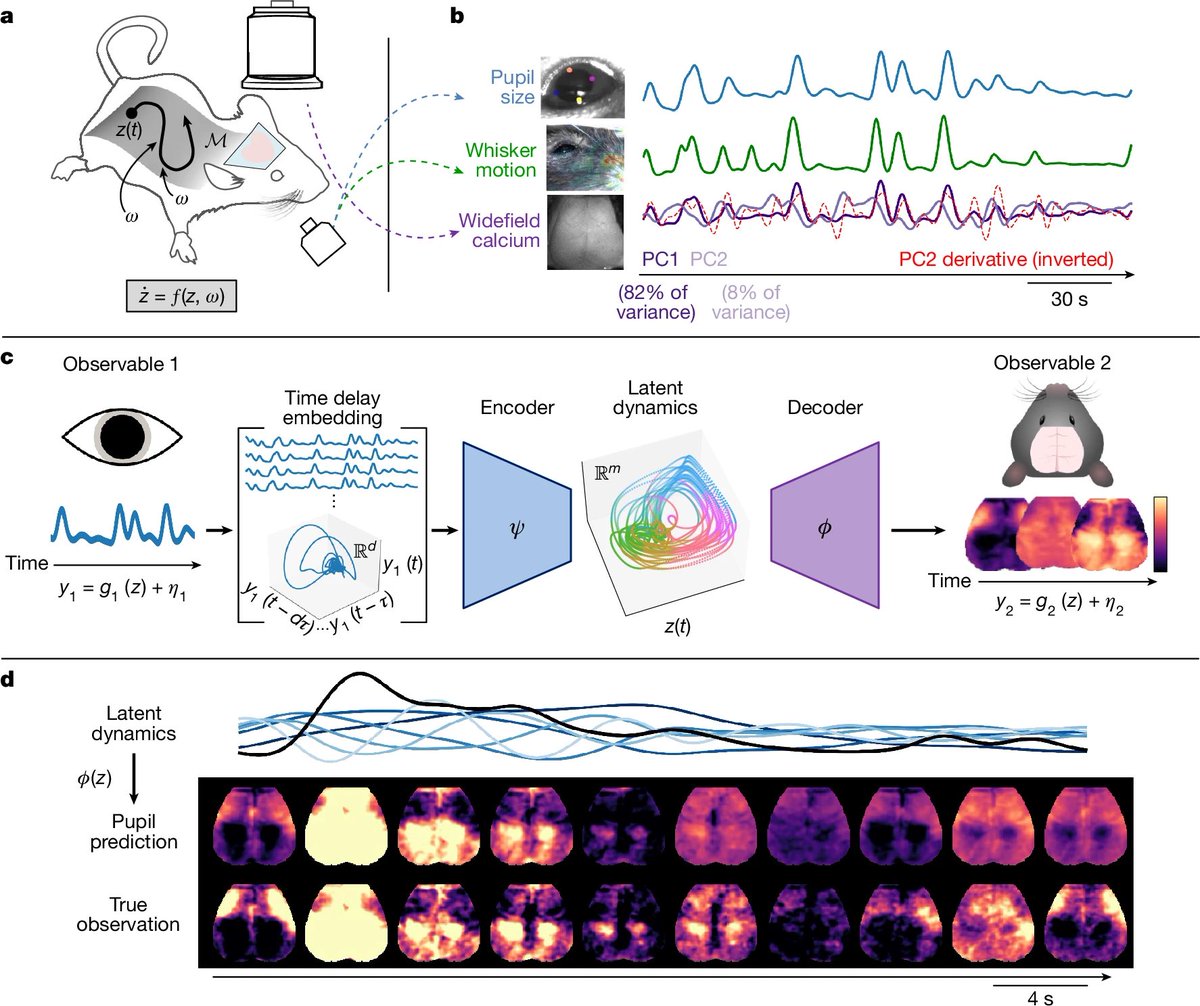
Nature Arousal as a universal embedding for spatiotemporal brain dynamics nature.com/articles/s4158…
CLaE tweet media
English
2
47
216
11.5K