Hanming Fang

291 posts

Hanming Fang banner
Hanming Fang

Hanming Fang

@HanmingF

Norman C Grosman Professor of Economics, University of Pennsylvania. Co-Founder of VoxChina @voxchina2017. My tweets are my own.

Philadelphia, PA شامل ہوئے Kasım 2023
206 فالونگ1.5K فالوورز
Hanming Fang
Hanming Fang@HanmingF·
I am totally saddened by the passing of Chris Sims. He influenced generations of Penn students in macro, econometrics and empirical microeconomics. Chris left Yale a year before I joined Yale faculty but I did see him in seminars in 2018/19 during my visit to Princeton. R.I.P.
Markus K. Brunnermeier@MarkusEconomist

R.I.P. Christopher Sims (21 Oct. 1942 - 14 March 2026) - a giant in macroeconomics and one of the finest human beings I have ever met -

English
0
2
25
1.5K
Hanming Fang ری ٹویٹ کیا
Jesús Fernández-Villaverde
Jesús Fernández-Villaverde@JesusFerna7026·
One of the more frustrating trends in public life over the past decade is how people who lead failing institutions blame social media for their failures. A university president whose faculty have become political activists instead of educators and whose administrators multiply like rabbits will tell you that “misinformation on social networks” is eroding public trust in higher education. An editor whose publication lost its readership will claim that the real problem is X, rather than consider that the publication became boring, that the writing was uniformly uninspired, and that it stopped covering anything that mattered. A politician who loses an election will blame Meta algorithms rather than admit that voters simply did not like what was offered. A central banker whose institution missed the worst inflation in 40 years will worry publicly about TikTok videos spreading financial illiteracy. The pattern is always the same. The institution fails at its core mission. The public notices. The people in charge, rather than examining what went wrong, identify an external force that is “polarizing.” The diagnosis is never “we did a poor job.” It is never “we lost our audience because we gave them nothing worth reading.” The diagnosis is always “bad actors are distorting the conversation.” This is not new, of course. Before social media, talk radio was the scapegoat. Before talk radio, it was television. Before television, it was tabloid newspapers. Every generation of leaders has found a communication technology to blame for people’s loss of trust in them. What is new is the intensity and the shamelessness. Over the last few years, “social media” has become a universal excuse that requires no evidence and tolerates no scrutiny. It is deployed reflexively. The people who make this argument never seem to ask the obvious question: why are people on social networks so receptive to criticism of your institution in the first place? If your university were delivering excellent education at a reasonable price, no number of tweets would persuade parents otherwise. If your publication were covering important questions with clarity and substance, readers would not have migrated elsewhere. If the work you showcased were serious rather than trivial, people would still be paying attention. Trust is not destroyed by social media. Trust is destroyed by poor performance, and social media makes it harder to hide. That is a different thing entirely, and the people running these institutions know it, which is what makes the excuse so cynical. The honest version of the argument would be: “We used to be able to fail quietly because there was no mechanism for people to compare notes. Now there is, and we do not like it.” That, at least, would have the virtue of being true.
Jesús Fernández-Villaverde tweet media
English
30
235
702
85.2K
Hanming Fang
Hanming Fang@HanmingF·
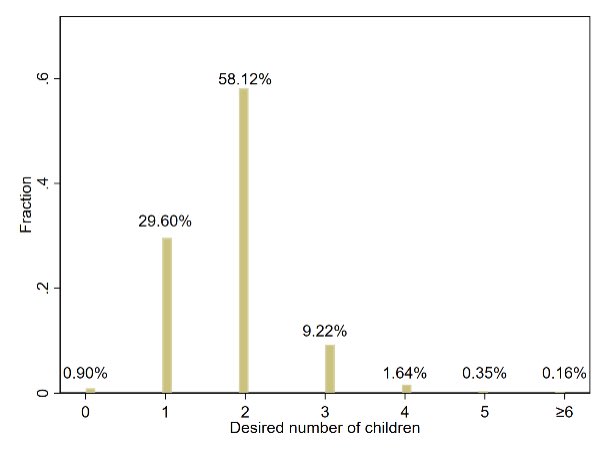
While fertility decline is a global phenomenon, China’s demographic challenges are significant because the gov’s elimination of one-child policy had little effect. The constraint is fertility desire, no longer birth quota. Mean fertility desire is 1.73, absent any constraint.
Hanming Fang tweet media
Financial Times@FT

China last year registered the lowest number of births since records began, marking the fourth consecutive year of population decline as policymakers grapple with a demographic crisis. ft.trib.al/fQHMNJk

English
0
0
15
1.2K
Hanming Fang ری ٹویٹ کیا
Penn LDI
Penn LDI@PennLDI·
In a new @JHealthEcon study, LDI Fellow @HanmingF examines why insurers on the Federally Facilitated Marketplace may cover some counties but not others, and what it means for patients. Read more here: ldi.upenn.edu/our-work/resea…
English
1
3
3
406
Hanming Fang
Hanming Fang@HanmingF·
I am not sure if there will be big fights on enhanced Obamacare premium subsidies fights in the Congress in the next weeks as they are set to expire on Dec 31. For those who may not be on top of the situation, the basic premium subsidies in the ACA will remain intact. 1/
English
2
1
4
685
Hanming Fang
Hanming Fang@HanmingF·
Some of my past research can be useful as a starting point of fraud detection based on the implied working hours in the billing codes. We all have 24 hours a day. Add up all the timed codes, see how many hours each provider is billing CMS each week. aeaweb.org/articles?id=10…
DrOzCMS@DrOzCMS

You’ve probably heard the news by now: Minnesota fraudsters stole over $1 billion from Medicaid. And you deserve an explanation. Our staff at CMS told me they’ve never seen anything like this in Medicaid — and everyone from Gov. Tim Walz on down needs to be investigated, because they’ve been asleep at the wheel. Based on what we know now, this is a clear dereliction of duty. First, the facts: In recent years, Minnesota Medicaid launched several new programs, including Housing Stabilization Services, which helped disabled homeless individuals, and Early Intensive Developmental and Behavioral Intervention, which reimbursed therapy costs for families with autistic children. Some bad actors in Minnesota’s Somali community decided to game the system. And when they got away with it, they decided to go bigger. The housing program was supposed to cost $2.6 million dollars annually. Last year, it paid out over $100 million. The autism program ballooned from $3 million in 2018 to nearly $400 million in 2023. These scammers used stolen taxpayer money to buy flashy cars, purchase overseas real estate, and offer kickbacks to parents who enrolled their kids at fake autism treatment centers. Some of it may have even made its way to the Somalian terrorist group Al-Shebab. So why didn’t Walz stop them? That’s simple: because he went all-in on identity politics. Somalis are a huge voting bloc, and the state’s leaders were afraid that “forcefully tackling this issue might cause political backlash.” That’s not me saying that. It’s a Somali-American fraud investigator who talked to The New York Times. Somali scammers get rich off the programs Gov. Walz was supposed to be managing. Minnesota politicians get elected with Somali votes and keep the money flowing. This isn’t just fraud: it’s political patronage at public expense. When Minnesota told CMS about the problem last year, they assured us they’d handle it. By summer, it was obvious they couldn’t — or wouldn’t. So, we stepped in and shut down the worst program: housing. We also froze provider enrollment in a few of the most abused programs. So where do we go from here? To restore the integrity of the Medicaid program, Minnesota must: 1. Provide CMS with weekly updates on how the state is stopping fraud. 2. Freeze enrollment of all high-risk providers for 6 months. 3. Confirm all providers in place are legitimate or remove them. 4. Send CMS a corrective action plan of how these will prevent this from happening again. If we’re unsatisfied with the state’s plans or cooperation, we’ll stop paying the federal share of these programs. The message to Walz is clear: either fix this in 60 days or start looking under your couch for spare change, because we’re done footing the bill for your incompetence. With CMS on the case, these scammers and their bureaucratic enablers have nowhere left to hide. The vulnerable Americans who depend on these programs — and the taxpayers who fund them — deserve the truth.


English
0
1
3
1K
Hanming Fang
Hanming Fang@HanmingF·
@andrewbatson I see your point. We can agree that significantly boosting domestic demand will take more than strengthening the social safety net.
English
0
0
0
150
Andrew Batson
Andrew Batson@andrewbatson·
@HanmingF For some reason you seem to think I’m arguing against redistribution or further expansion of the social safety. I’m not; I’m in favor. But I do think claims that changes to the social safety net will have massive macro effects are probably wrong.
English
1
0
3
1.4K
Andrew Batson
Andrew Batson@andrewbatson·
Nick Lardy has an excellent new paper out reviewing China's progress in building up a social safety net, particularly its pension system. He thinks the consensus view that a weak social safety net is pushing up savings and pushing down consumption is outdated. I agree! 1/
Andrew Batson tweet media
English
11
33
173
68.6K