HistoricalMethods

33 posts

HistoricalMethods banner
HistoricalMethods

HistoricalMethods

@HistMethod

Academic journal focused on interdisciplinary explorations of new data sources and new methodological approaches. For international audiences


شامل ہوئے Şubat 2021
139 فالونگ188 فالوورز
HistoricalMethods
HistoricalMethods@HistMethod·
"...our results crucially demonstrate that in a few dozen of our locations, the observed values of CSRs appear to be too high to be solely attributable to random variation, infant mortality, or the quality of the census."
English
1
0
0
0
HistoricalMethods
HistoricalMethods@HistMethod·
Issue 2, 2022 of @HistMethod presents "Inferring “missing girls” from child sex ratios in historical census data" by @aj_szo , Bartosz Ogórek, Siegfried Gruber & Francisco J. Beltrán Tapia
HistoricalMethods tweet media
1
1
7
0
HistoricalMethods
HistoricalMethods@HistMethod·
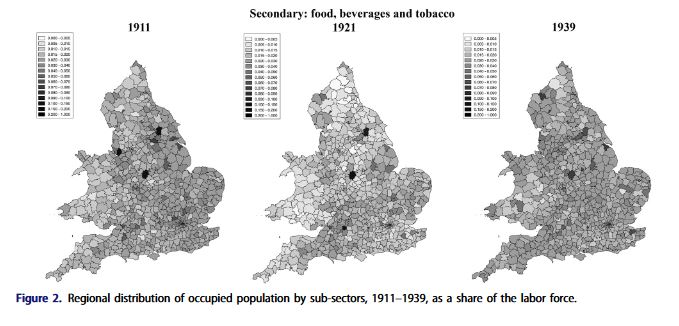
"In the current paper, we fill this gap by reconstructing the occupational structure at the district level, based on a recently-digitized register for 1939 and by linking this dataset with the population censuses of 1911 and 1921."
English
1
0
0
0
HistoricalMethods
HistoricalMethods@HistMethod·
Issue 2, 2022 of @HistMethod presents "The regional occupational structure in interwar England and Wales" by Robin C. M. Philips, Matteo Calabrese, Robert Keenan & Bas van Leeuwen
HistoricalMethods tweet media
English
1
3
0
0
HistoricalMethods
HistoricalMethods@HistMethod·
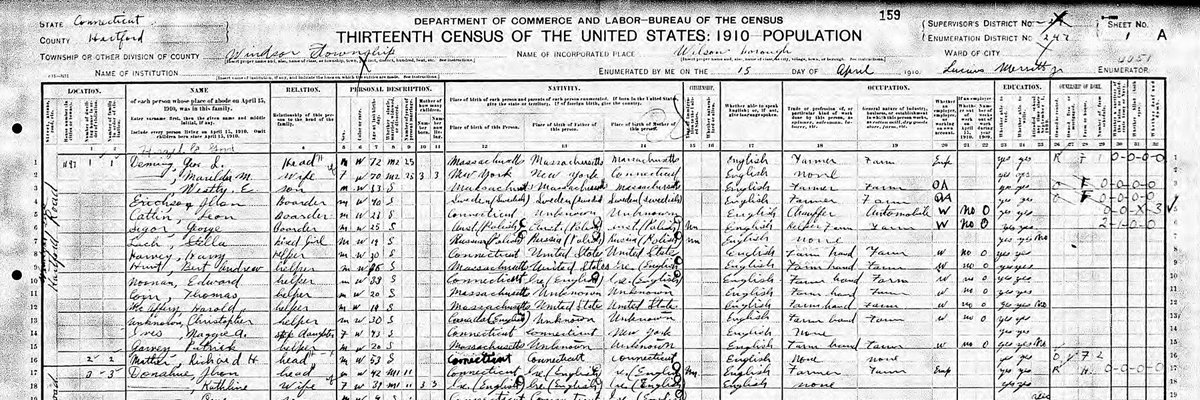
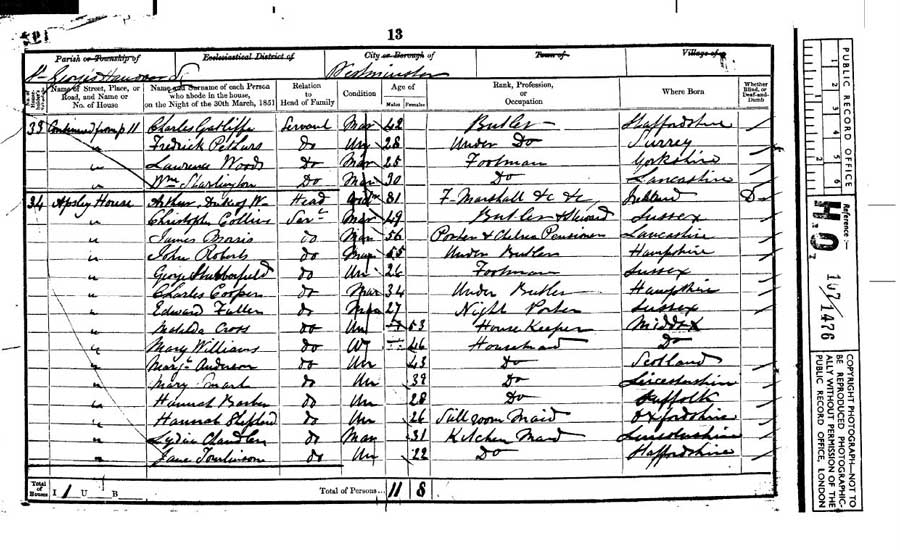
"Non-response derives from defective census design and administration. Transcription truncations are also evaluated... Guidance to researchers on weighting and robust estimation strategies are presented for dealing with these limitations."
English
1
2
0
0
HistoricalMethods
HistoricalMethods@HistMethod·
Issue 2, 2022 of @HistMethod presents "British employer census returns in new digital records 1851–81; consistency, non-response, and truncation – what this means for analysis" by Robert J. Bennett & Leslie Hannah
HistoricalMethods tweet media
English
1
3
7
0
HistoricalMethods
HistoricalMethods@HistMethod·
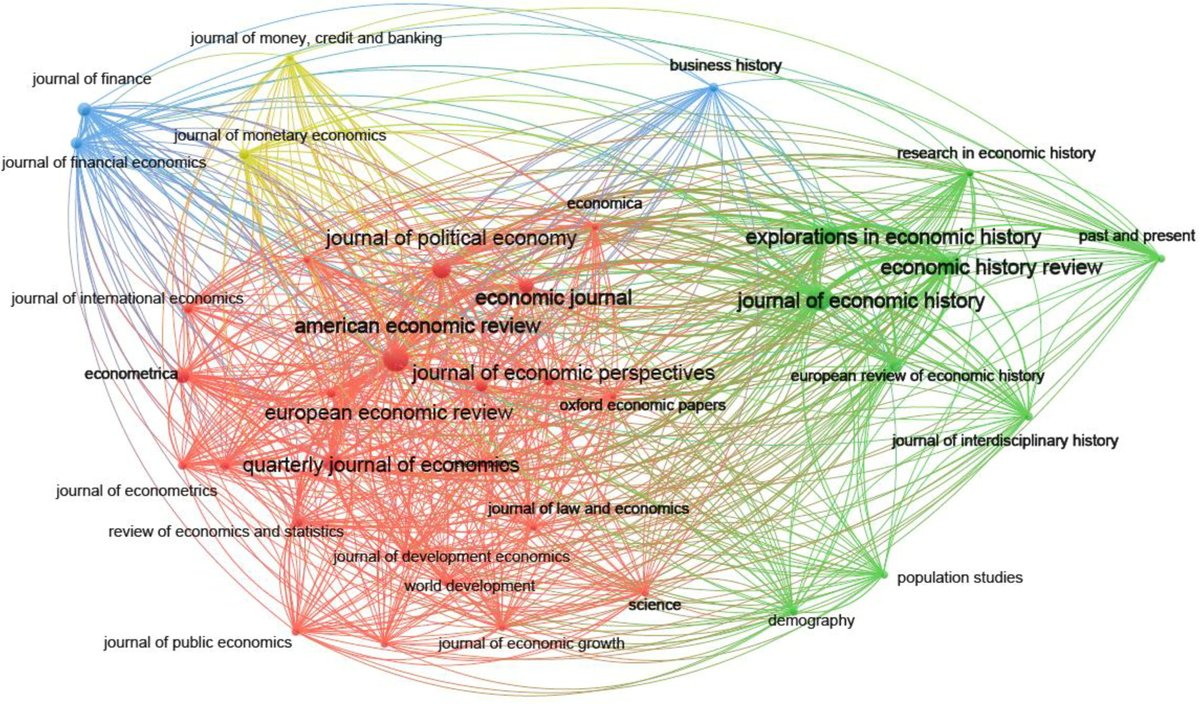
"This article provides a systematic method for collecting and analyzing the scientific production—in the form of indexed articles—of a broad and representative sample of authors who identify themselves as economic historians." The result is the relational database EconHist
English
1
0
0
0
HistoricalMethods
HistoricalMethods@HistMethod·
Issue 1, 2022 of @HistMethod presents "EconHist: a relational database for analyzing the evolution of economic history (1980–2019)" by @AlvaroLaParra, Félix-Fernando Muñoz & Nadia Fernandez-de-Pinedo @Nadsfp
HistoricalMethods tweet media
Română
1
10
13
0
HistoricalMethods
HistoricalMethods@HistMethod·
Using historic newspapers, height & weight data & natural language processing to analyze tweets & Google searches about Thanksgiving, the authors find that "body weights and mean energy intake have steadily increased over time with the most rapid increases occurring since 1941
English
1
0
0
0
HistoricalMethods
HistoricalMethods@HistMethod·
Issue 1, 2022, also includes "Overflowing tables: Changes in the energy intake and the social context of Thanksgiving in the United States" by Diana Thomas @MathArmy, G.Yoshitani, D.Turner, A.Hariharan, S.Bhutani, D.B.Allison, A.Moniz,S.Heymsfield, D.A.Schoeller,H.Hull & D.Fields
HistoricalMethods tweet media
English
1
1
0
0
HistoricalMethods
HistoricalMethods@HistMethod·
Check out this presentation by Jonas Helgertz, who also published a recent article in @HistMethod titled "A new strategy for linking U.S. historical censuses: A case study for the IPUMS multigenerational longitudinal panel" (available here tandfonline.com/doi/full/10.10…)
genpop@ErcGenpop

Interested in the newest developments of record linkage techniques for historical censuses? Join our next seminar with Jonas Helgertz (@minnpop @ipums) 📅 Thursday, 9th June, 11:30 AM 📧genpop@unibo.it to get info and the link

English
1
1
3
0
HistoricalMethods
HistoricalMethods@HistMethod·
Using 1900-1920 census data from DC, Georgia, Michigan and New York, the authors argue "Black naming patterns existed in the antebellum era and...racial distinctiveness in naming patterns was an established practice well before Emancipation." @drlisadcook @jmparman @TrevonDLogan
English
0
0
2
0