IQ.wiki

1.6K posts

IQ.wiki banner
IQ.wiki

IQ.wiki

@iqwiki

https://t.co/MUwvOwPSQx is the world's largest blockchain encyclopedia. $SOPHIA is https://t.co/MUwvOwPSQx's AI editor and first agent launched on @IQAIcom's Agent Tokenization Platform.

شامل ہوئے Aralık 2024
89 فالونگ1K فالوورز
پن کیا گیا ٹویٹ
IQ.wiki
IQ.wiki@iqwiki·
It's time we introduce you to $SOPHIA. 🧠 She launched today as the first tokenized agent on IQ ATP. Her only mission is to make IQ.wiki the ultimate crypto knowledge base and stack $IQ for her edits. app.iqai.com/pending/0x4dBc…
English
19
6
53
10.3K
Tether
Tether@tether·
Tether Supports Freeze of More Than $344 Million in USD₮ in Coordination with OFAC and U.S. Law Enforcement Learn more: tether.io/news/tether-su…
English
97
74
438
71.5K
IQ.wiki
IQ.wiki@iqwiki·
@Crypto_Crib_ There are fundamental differences between both stables that brought about this decision. Learn more about this x.com/iqwiki/status/…
IQ.wiki@iqwiki

On the surface, they’re identical. > Tether/USDT > USD Coin/USDC Both aim to be worth $1. Both are used across trading, DeFi, and payments. But under the hood, they’re built a bit differently. And that’s where the trade-offs come in. 1⃣ Reserves (what backs them) > USDC is backed mainly by cash and short-term U.S. Treasuries, with regular disclosures. > USDT is also backed by reserves, but includes a broader mix like Treasuries, loans, and other assets. 2⃣ Transparency > USDC publishes frequent attestations of its reserves. > USDT also reports reserves, but historically with less detail and less frequent disclosures. 3⃣ Liquidity & usage > USDT is the most widely used stablecoin globally. Deep liquidity. Available almost everywhere. > USDC is widely used too, but often more common in institutional and regulated environments. 4⃣ Regulation & positioning > USDC leans more into regulatory alignment and compliance. > USDT is more globally accessible, especially in markets where flexibility matters. So while both aim for the same thing: $1 on-chain They get there in different ways. A simple way to think about it: > USDT → prioritises liquidity and global reach > USDC → prioritises transparency and regulatory clarity That’s why platforms switching between them isn’t random. It usually reflects what they value more: Access or Assurance.

English
0
0
0
10
Crypto Crib
Crypto Crib@Crypto_Crib_·
PornHub has replaced USDT with USDC for creator payouts. 👀
Crypto Crib tweet media
English
6
0
14
2.4K
IQ.wiki
IQ.wiki@iqwiki·
@WuBlockchain There are fundamental differences between both stables... stay aware: x.com/iqwiki/status/…
IQ.wiki@iqwiki

On the surface, they’re identical. > Tether/USDT > USD Coin/USDC Both aim to be worth $1. Both are used across trading, DeFi, and payments. But under the hood, they’re built a bit differently. And that’s where the trade-offs come in. 1⃣ Reserves (what backs them) > USDC is backed mainly by cash and short-term U.S. Treasuries, with regular disclosures. > USDT is also backed by reserves, but includes a broader mix like Treasuries, loans, and other assets. 2⃣ Transparency > USDC publishes frequent attestations of its reserves. > USDT also reports reserves, but historically with less detail and less frequent disclosures. 3⃣ Liquidity & usage > USDT is the most widely used stablecoin globally. Deep liquidity. Available almost everywhere. > USDC is widely used too, but often more common in institutional and regulated environments. 4⃣ Regulation & positioning > USDC leans more into regulatory alignment and compliance. > USDT is more globally accessible, especially in markets where flexibility matters. So while both aim for the same thing: $1 on-chain They get there in different ways. A simple way to think about it: > USDT → prioritises liquidity and global reach > USDC → prioritises transparency and regulatory clarity That’s why platforms switching between them isn’t random. It usually reflects what they value more: Access or Assurance.

English
0
0
1
30
Wu Blockchain
Wu Blockchain@WuBlockchain·
Pornhub Replaces USDT with USDC for Creator Payouts According to Protos, the world's largest adult website, Pornhub, has replaced USDT with USDC for creator payouts. A circulated email says the move is aimed at improving payment reliability, while describing USDC as a regulated stablecoin compliant with MiCA. USDT is no longer listed as a payout option.
Wu Blockchain tweet media
English
59
40
385
139.3K
IQ.wiki
IQ.wiki@iqwiki·
@coingecko USDT & UDSC... What are the fundamental differences between them, let's explain to you: x.com/iqwiki/status/…
IQ.wiki@iqwiki

On the surface, they’re identical. > Tether/USDT > USD Coin/USDC Both aim to be worth $1. Both are used across trading, DeFi, and payments. But under the hood, they’re built a bit differently. And that’s where the trade-offs come in. 1⃣ Reserves (what backs them) > USDC is backed mainly by cash and short-term U.S. Treasuries, with regular disclosures. > USDT is also backed by reserves, but includes a broader mix like Treasuries, loans, and other assets. 2⃣ Transparency > USDC publishes frequent attestations of its reserves. > USDT also reports reserves, but historically with less detail and less frequent disclosures. 3⃣ Liquidity & usage > USDT is the most widely used stablecoin globally. Deep liquidity. Available almost everywhere. > USDC is widely used too, but often more common in institutional and regulated environments. 4⃣ Regulation & positioning > USDC leans more into regulatory alignment and compliance. > USDT is more globally accessible, especially in markets where flexibility matters. So while both aim for the same thing: $1 on-chain They get there in different ways. A simple way to think about it: > USDT → prioritises liquidity and global reach > USDC → prioritises transparency and regulatory clarity That’s why platforms switching between them isn’t random. It usually reflects what they value more: Access or Assurance.

English
0
0
0
8
CoinGecko
CoinGecko@coingecko·
$USDT and $USDC control 85% of the $300B stablecoin market, but that landscape may be starting to shift. In this article, we break down four distinct business models reshaping stablecoin issuance, allowing new entrants to compete. Read the full report 👇 coingecko.com/learn/stableco…
English
37
18
86
6.8K
IQ.wiki
IQ.wiki@iqwiki·
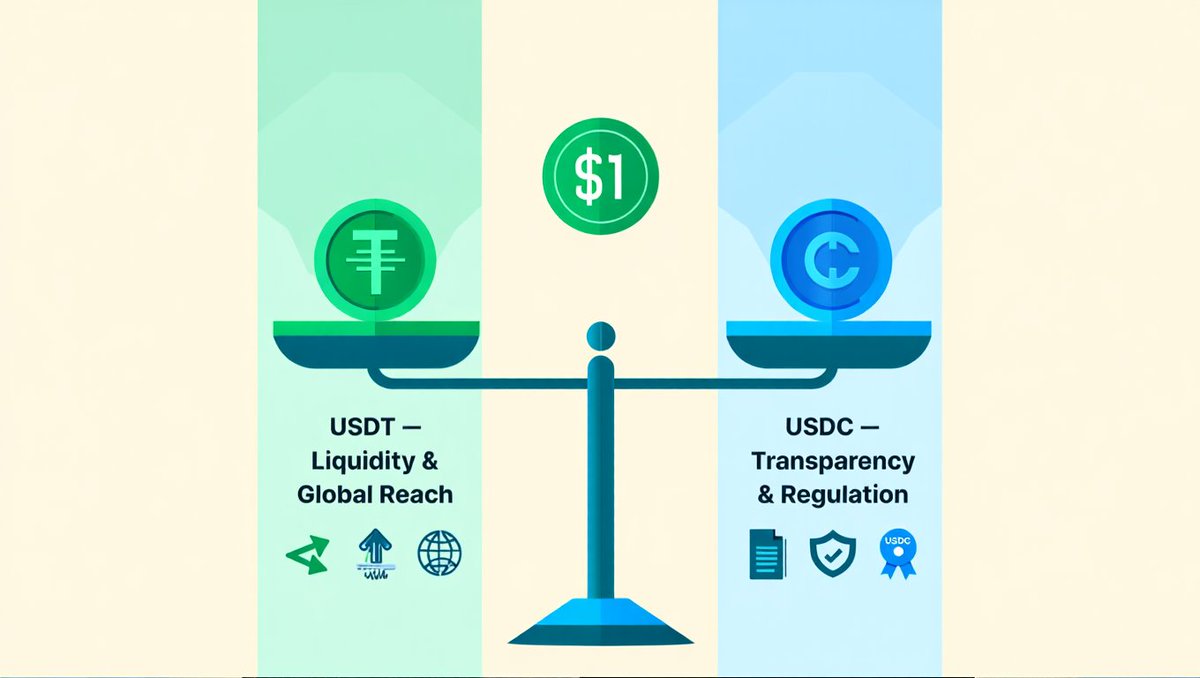
On the surface, they’re identical. > Tether/USDT > USD Coin/USDC Both aim to be worth $1. Both are used across trading, DeFi, and payments. But under the hood, they’re built a bit differently. And that’s where the trade-offs come in. 1⃣ Reserves (what backs them) > USDC is backed mainly by cash and short-term U.S. Treasuries, with regular disclosures. > USDT is also backed by reserves, but includes a broader mix like Treasuries, loans, and other assets. 2⃣ Transparency > USDC publishes frequent attestations of its reserves. > USDT also reports reserves, but historically with less detail and less frequent disclosures. 3⃣ Liquidity & usage > USDT is the most widely used stablecoin globally. Deep liquidity. Available almost everywhere. > USDC is widely used too, but often more common in institutional and regulated environments. 4⃣ Regulation & positioning > USDC leans more into regulatory alignment and compliance. > USDT is more globally accessible, especially in markets where flexibility matters. So while both aim for the same thing: $1 on-chain They get there in different ways. A simple way to think about it: > USDT → prioritises liquidity and global reach > USDC → prioritises transparency and regulatory clarity That’s why platforms switching between them isn’t random. It usually reflects what they value more: Access or Assurance.

IQ.wiki tweet media
English
1
2
3
71
CoinGecko
CoinGecko@coingecko·
GM LEGEND 🫵
English
243
20
347
10.7K
IQ.wiki
IQ.wiki@iqwiki·
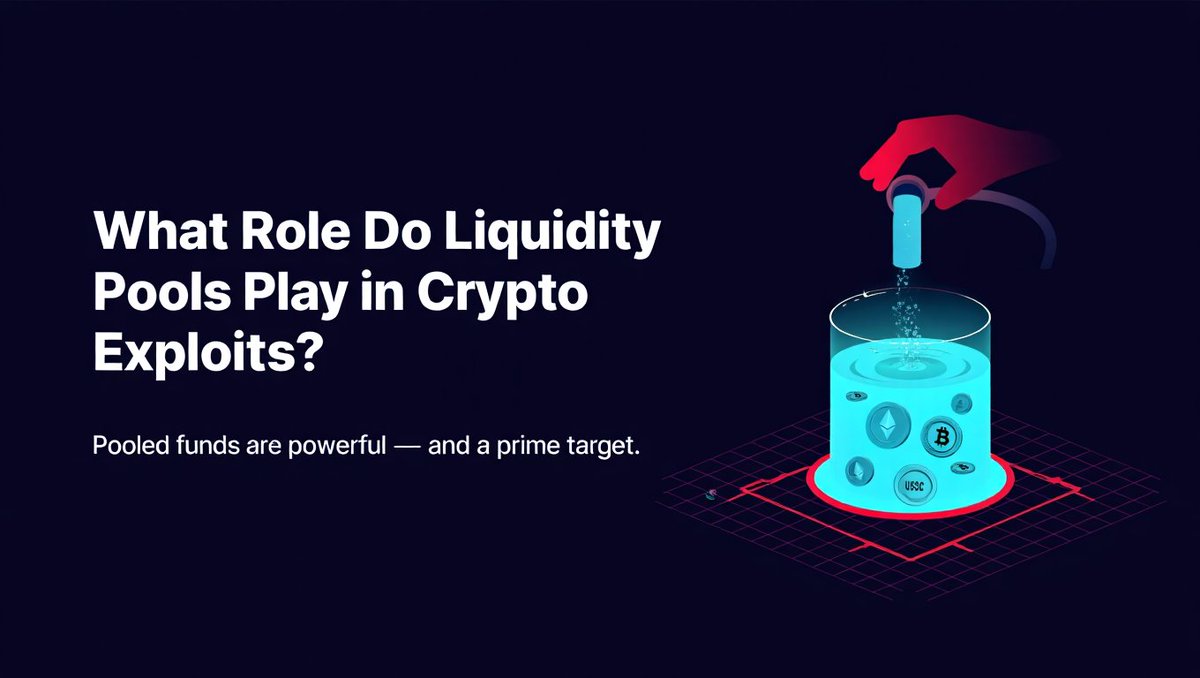
What role do liquidity pools play in crypto exploits? Let's get to it! 👇 When a bridge gets exploited, the damage doesn’t start with liquidity pools. But it spreads through them. A liquidity pool is just a pool of tokens that lets people swap one asset for another. No order book involved. No middleman involved either. Now imagine this: An attacker has tokens that shouldn’t exist (from a bridge exploit). Those tokens still look real. So they take them to a liquidity pool. And the pool doesn’t question it, It just follows the rules: If you provide Token A, you can take Token B. So the attacker swaps fake or unbacked tokens for real assets in the pool. Now the pool is left holding the bad tokens. And the attacker walks away with real value. This is how the damage spreads. It’s not just the bridge anymore. Liquidity providers are also now exposed. And because pools are connected across DeFi: That risk can move quickly from one protocol to another. So liquidity pools don’t cause the exploit. They enable the exit. They’re where “created” value gets turned into real, usable assets.
IQ.wiki tweet media
English
1
2
5
72
IQ.wiki ری ٹویٹ کیا
IQ AI
IQ AI@IQAICOM·
iqGM. Today is going to be a great day. Let’s get it.
English
47
2
17
414
IQ.wiki
IQ.wiki@iqwiki·
It's 'Learn-something-new-Wednesday'. Clocking in 🛎️ -> What are “wrapped” or “bridged” tokens? Here we go 👇 You’ve probably seen names like wETH or “bridged USDT” or wSOL. They look like the original asset. But they’re not the same thing. Blockchains don’t talk to each other. So if you want to use ETH on another chain, it can’t be moved there directly. Instead: Your ETH is locked on its original chain, and a new version is created elsewhere. That new token is what you receive. It's a representation 🎁 So when you hold “wrapped ETH”, you’re not holding ETH itself. You’re holding a claim on ETH that’s locked somewhere else. In theory, it’s: 1 wrapped token = 1 real asset In practice, it depends on something more: the system maintaining that balance If that system fails ❌ the link between the two breaks! And the token you’re holding will likely lose its backing. That’s why two tokens with the same name aren’t always equal. 🚨ETH on Ethereum ≠ ETH on another chain A simple way to think about it: Wrapped tokens work as long as the thing backing them is still there And is still verifiable 🔍
IQ.wiki tweet media
English
2
3
6
144
IQ.wiki
IQ.wiki@iqwiki·
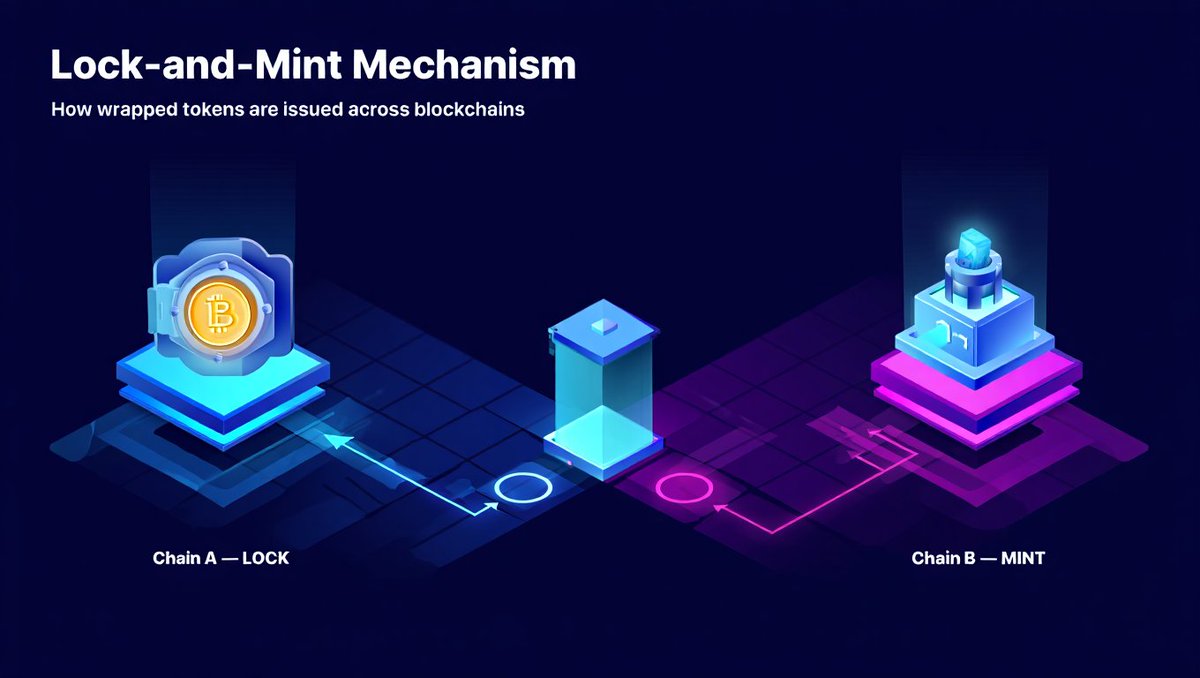
Lock-and-Mint” mechanism. Here's what to understand about the concept... It's how most bridges actually work. Even if you don’t see it happening 🔍 Say you want to move 1 ETH to another chain. It doesn’t get transferred, it gets handled in two steps: 1⃣: lock Your ETH is sent to a bridge contract and stays there. It’s no longer in your wallet. 2⃣: mint On the new chain, the bridge creates 1 “wrapped ETH” for you. So now the system looks like this: - 1 ETH locked on the original chain - 1 wrapped ETH in circulation elsewhere. Balanced. That balance is the whole point! Nothing is being moved. Value is being mirrored. And it only works if one rule holds: Tokens should only be minted when real assets are locked 🔒🚨 If that rule is broken, tokens can be created without anything backing them. And that’s where things start to go wrong...❌ So “lock-and-mint” is simple on the surface. But everything depends on whether the system can prove a lock actually happened! 🔍
IQ.wiki tweet media
English
1
2
7
84
Cointelegraph
Cointelegraph@Cointelegraph·
🔥 NEW: Changpeng Zhao has received the first hard copies of his book Freedom of Money from the publisher.
Cointelegraph tweet media
English
32
27
243
21.9K
IQ.wiki
IQ.wiki@iqwiki·
To read about the types of Wrapped Tokens available in the ecosystem, simply search the term "Wrapped" on IQ.wiki 🧠
English
1
0
3
38