GlobalInsightHub
473 posts

@InsideSweden
🇸🇪 The world is louder than the truth — I try to listen anyway. Global insights on politics, culture & society. Stay if you prefer clarity over noise.


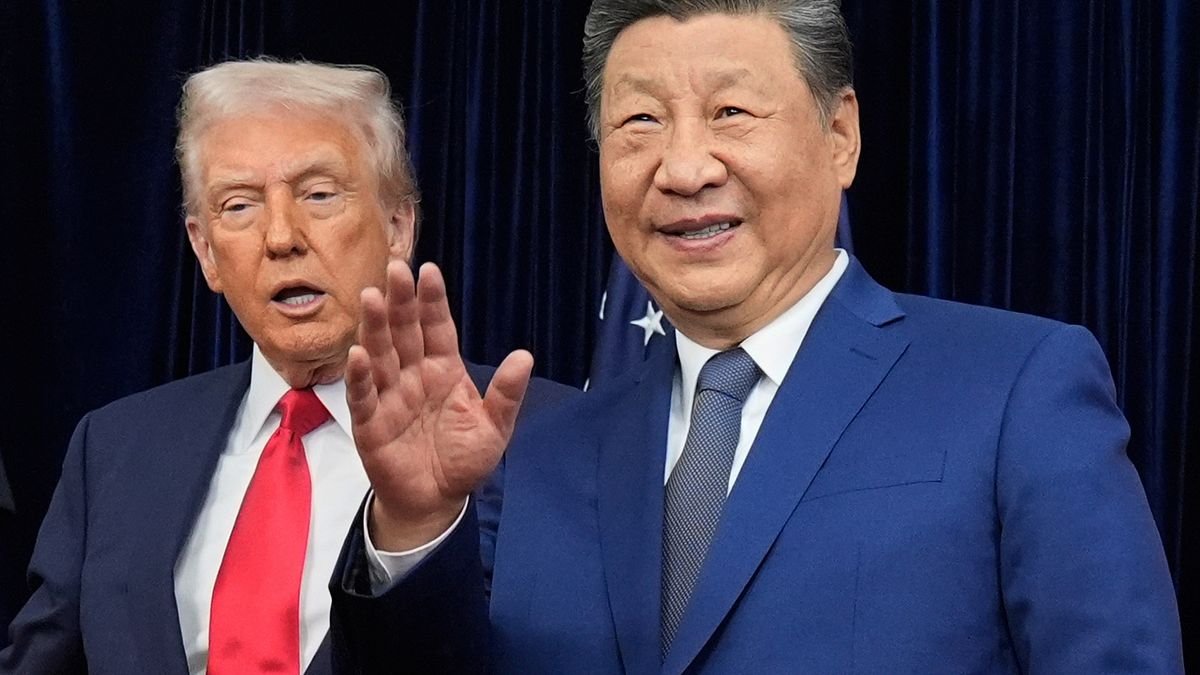
This is not a negotiation. It is a stress test between two superpowers deciding how much tension the world can actually absorb. The upcoming meeting between Donald Trump and Xi Jinping should not be understood as a “negotiation” in the traditional sense. It is a strategic stress test between two superpowers where neither side is seeking a breakthrough, but instead attempting to redefine the boundaries of competition. The United States is currently pursuing a strategy of “managed de-risking”: not a full decoupling from China, but a tightening of control over core technologies, strategic supply chains, and AI capabilities. For Trump, domestic political considerations are also crucial projecting strength while maintaining economic stability. Meanwhile, China prioritizes stability. Slowing growth, pressure from the property sector, and weak consumer confidence are pushing Beijing to avoid escalation, while preserving space for exports and economic restructuring. The real flashpoints are no longer tariffs, but technology: semiconductors, AI, data, and strategic supply chains. This is where the conflict is structural, making long-term compromise difficult. As a result, the most likely outcome of this meeting is not a “grand deal,” but the establishment of a new equilibrium: managing competition rather than resolving it. In today’s world, the objective is no longer full reconciliation but ensuring that competition does not spiral out of control. #Trump #Xijinping


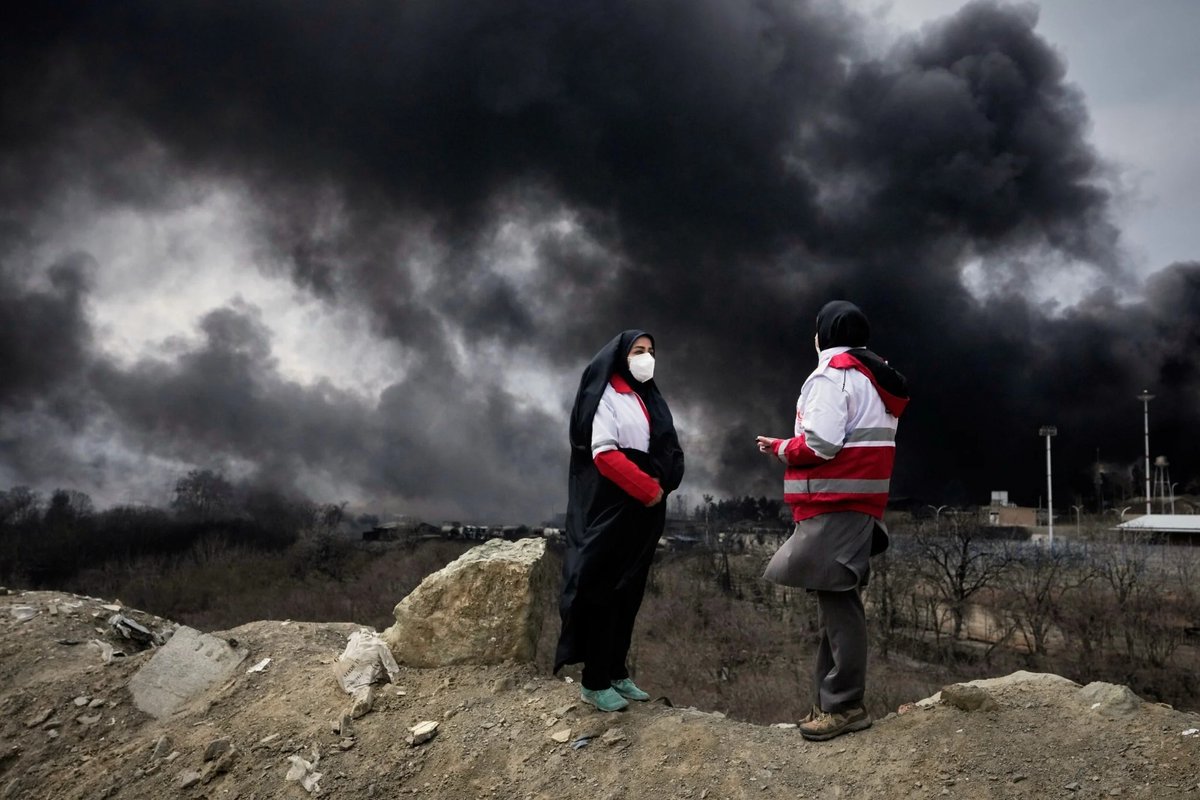
This is not a war. But it is not peace either. The dispute between the United Arab Emirates and Iran is not a traditional war. It is a “grey-zone confrontation” — where a real conflict may already be taking place, but neither side openly acknowledges it. The core issue is not ideology, but geostrategy: control and influence over the Strait of Hormuz a critical maritime chokepoint through which a significant share of global oil flows. Iran operates under a logic of “continuous pressure”: using asymmetric deterrence, from missiles and drones to proxy forces, to impose sustained security costs on its adversaries. The UAE, in contrast, follows the opposite approach: prioritizing economic stability and uninterrupted trade flows, avoiding open war while strengthening its defenses and maintaining the capacity for discreet retaliation. Crucially, both sides understand that full-scale escalation would be strategic suicide — yet neither can fully back down. The result is a highly unusual condition: a conflict that is real, but consistently kept just below the threshold of open war. This is not peace. It is not war either. It is a prolonged state of tense equilibrium and that is precisely what makes it most dangerous. #IranWar #UAE


🇦🇪🇮🇷 BREAKING The UAE was secretly striking Iran during the war. And Iran struck back. The UAE covertly launched an April attack on an oil refinery on Lavan Island that caused a major fire and months-long disruption. Iran retaliated with missile and drone attacks on the UAE and Kuwait. The UAE never confirmed the strikes but defended its right to respond to hostile acts. This marks a fundamental shift in the UAE's posture toward Iran, a country Abu Dhabi had spent years quietly normalizing ties with. So to be clear: while the U.S. and Israel were the official combatants, the UAE was running its own covert air campaign next door. And Iran was hitting Dubai, Abu Dhabi, and Kuwait with hundreds of drones and ballistic missiles in response. This war had more participants than anyone has announced yet... Who else do you think was quietly involved? Source: WSJ


🇧🇾🇺🇦🇷🇺 Lukashenko is mobilizing troops while praying he never has to use them. Belarus has been running surprise readiness drills and selective call-ups for months, but ruled out full mobilization. The real read? Minsk is buying insurance, not picking a side. Belarus sits on Ukraine's northern border and still hasn't fully recovered economically from the 2022 bluff that let Russian troops stage there. Lukashenko knows another miscalculation ends him.


Journalist: "Do you consider yourself [a dictator]?" 🇧🇾🇺🇸 Lukashenko: "No, I don’t. I don’t have the resources to dictate. Trump has this resource. He dictates in Venezuela, Cuba. He tries to dictate in Iran, China. I am a historian."


RECAP: The U.S and Iran are still deadlocked over a peace deal after Trump rejected their latest proposal. The ceasefire's still holding, despite Israel desperately wanting to resume strikes on Iran. Meanwhile, Iran's FM spokesperson claimed they are a "responsible power" in the Middle East and are anti-bullying. That was around the same time that Iran's Senior Advisor to the Supreme Leader warned Gulf nations of "dire consequences" if they cooperate with Israel. Newly released satellite data showed 2 of Iran's oil tankers were on fire after being hit by the U.S when they attempted to breach the blockade a couple of days ago. Elsewhere, passengers from the cruise ship with the hantavirus outbreak have been returning home to their respective countries, some to hospitals, others to quarantine at home. All eyes are watching to see if it's the start of another pandemic.


🛢️🇸🇦 Aramco is the world's largest oil producer. When its CEO says the market is broken, it matters. - CEO Amin Nasser says even if the Strait opens today, it will take months for oil markets to rebalance - Traffic through the Strait has collapsed from 70 vessels a day to just 2 to 5 - Futures markets and physical markets are disconnected, with strong refining margins signaling real supply tightness on the ground - Demand rationing will continue as long as the Strait stays disrupted - If normal shipping resumes, Nasser expects a "very robust return to demand growth" - Aramco's reserves stand at 250 billion barrels of oil equivalent, roughly 5 times the combined reserves of all international oil companies Source: CGTN, Al Arabiya


It’s Official: Alberta will vote on Independence after years of abuse from the rest of Canada. If it succeeds, it's 80% odds Alberta applies to join the US.


🇺🇸🇮🇷 The Iran war has cost the U.S. between $2.3B and $2.8B in destroyed military equipment alone. - 3 F-15E/F-15EX fighters lost in Kuwait on March 1: $309M - 1-2 AN/TPY-2 radar systems destroyed: $485-970M - 1 E-3 AWACS/E-7 surveillance aircraft lost in Saudi Arabia on March 27: $700M - 1 KC-135/KC-46A tanker lost in Iraq on March 12: $165M - 2 MC-130J special operations aircraft: $240M - 11-24 MQ-9 Reaper drones across various locations: $165-360M - Additional losses include CH-47 helicopters, A-10s, and an MQ-4C naval drone in the Gulf Source: Al Jazeera

🇮🇷🇸🇦 Iranian FM Araghchi spoke with Saudi FM Faisal bin Farhan this past week. Both ministers pushed for sustained diplomacy and tighter coordination among regional states to pull back from the edge. Iran also briefed the Saudis on Iran-U.S. diplomatic efforts, which are being brokered by Pakistan. Araghchi was in Beijing for talks when the call happened. Riyadh and Tehran have spent years as one another's biggest threat in the region. Still willing to talk when it benefits them. Source: @IranIntlbrk