Jason Parks
4.2K posts

Jason Parks
@Jason_Parks1
Owner of @themediacaptain, digital marketing agency working with 100s of small/medium businesses. Breaking down ad platform performance & tech trends.
Columbus, Ohio شامل ہوئے Mart 2009
923 فالونگ980 فالوورز

I'd say focus more on acquiring high-quality local backlinks. So many businesses have similar content. The differentiator is a strong backlink profile. Also, be careful when building out a ton of neighborhood and zip code pages. This could be seen as doorway content/thin content and do more harm than good.
English

HVAC SEO is brutal.
Everyone's targeting the same 5 keywords.
Here's what most don't do:
AI scans your competitors' rankings and finds the neighborhood-level searches they're winning - and you're not even indexed for.
"AC Repair [neighborhood name]"
"Furnace Repair Near [zip code]"
"Emergency AC Repair [suburb]"
You build on-page content for it.
And they rank fast because nobody's fighting for them.
Stop competing on the keywords everyone's chasing.
Build the pages nobody built yet.
English

I was shocked when we generated a 3:1 ROAS utilizing direct mail.
Not email. Not ads. Not retargeting.
A postcard.
Here's the story — and how you can replicate it.
We own an eCommerce brand called DermWarehouse, and it was sitting on a goldmine of 100,000 past customers.
They loved our products.
But many of them hadn't come back.
So like most eCommerce businesses, we tried email reactivation.
It barely moved the needle.
And here's why that's not surprising anymore:
- Gmail filters bury marketing emails before they're ever seen
- The "Promotions" tab kills visibility
- Inboxes are so overloaded that people have trained themselves to ignore it
Our customers weren't gone. They just weren't seeing us.
So I tried something different.
I pulled a list from Klaviyo: past customers who spent $100 or more but hadn't purchased in over a year.
Sent them a simple postcard with a compelling offer and a unique promo code to track every dollar back to the mailer.
Timed it right before Black Friday to get customers back into the email funnel for the holidays.
The result? A 3:1 ROAS (and growing).
Here's why direct mail works so well for lapsed customers right now:
Competition in the physical mailbox is at an all-time low. With so much AI and digital content that's not personal, there's something to be said for receiving an old-fashioned mailer that you have to open.
And lapsed customers are the perfect audience for it. They already bought from you. They already trust you. They just need a reason to come back.
A postcard puts that reason directly in their hands.
Want to run your own version? Here's the playbook:
- Pull your lapsed list from Klaviyo, Mailchimp, or Shopify — filter by lifetime spend and last purchase date
- Build a compelling offer — 30% off, store credit, an exclusive freebie
- Add a unique promo code so you can track results
- Time it around a season or holiday that fits your products
- Think long-term — the real goal is getting them back into your email funnel, not just one sale
The businesses winning right now aren't just chasing new customers.
They're recovering the ones they already earned.
Direct mail is one of the most underused tools in eCommerce today. We're also utilizing this for our service-based clients.
There's no better time to combine old-school and new-school than right now. That's exactly why it worked.

English

Most businesses are running Meta ads completely backwards.
And it’s costing them a lot of money.
They treat Meta ads like Google Ads, with a hard sales pitch.
“Book now.”
“Schedule today.”
“Limited time offer.”
But that’s not how people use Facebook or Instagram.
Very few people open those apps looking to buy something.
They’re there to:
- watch videos
- learn something
- scroll mindlessly
- kill time
So when your ad shows up screaming “BUY NOW”…
People typically scroll right past it.
The companies winning with Meta ads right now understand something different:
Meta ads work more like TV commercials than search ads.
Think about the best TV ads you remember.
They didn’t start with a sales pitch.
Instead:
- They told a story
- They explained something interesting
- They entertained you
- They built familiarity with the brand
Then weeks, or even months later…
when you needed that product…
you remembered them.
Meta ads should work the exact same way in 2026.
We tested this mindset shift with a healthcare client of ours who has 15 locations.
Most of their budget previously went to TV and radio.
Instead of running appointment-booking ads, we ran simple educational videos.
After two months, the practice saw a 15% increase in patient referrals from social media.
We saw the same thing with a plumbing company.
Right before a snowstorm, they recorded a quick, timely video about tips to protect your home from thousands of dollars in damage.
No promotion or sales pitch. Just honest, helpful advice.
It resulted in thousands of interactions and massive local brand awareness on a tiny budget.
The best Meta ads don’t feel like ads.
They feel like content you’d watch anyway.
If your Meta ads strategy is:
“Hit them with the strongest sales pitch possible”
You’re probably doing the opposite of what works.
Instead, create content people actually want in their feed.
Then promote it. And retarget them later with your stronger offers.
The businesses that understand this will dominate Meta ads over the next few years.
Everyone else will keep paying for ads people scroll past.
English

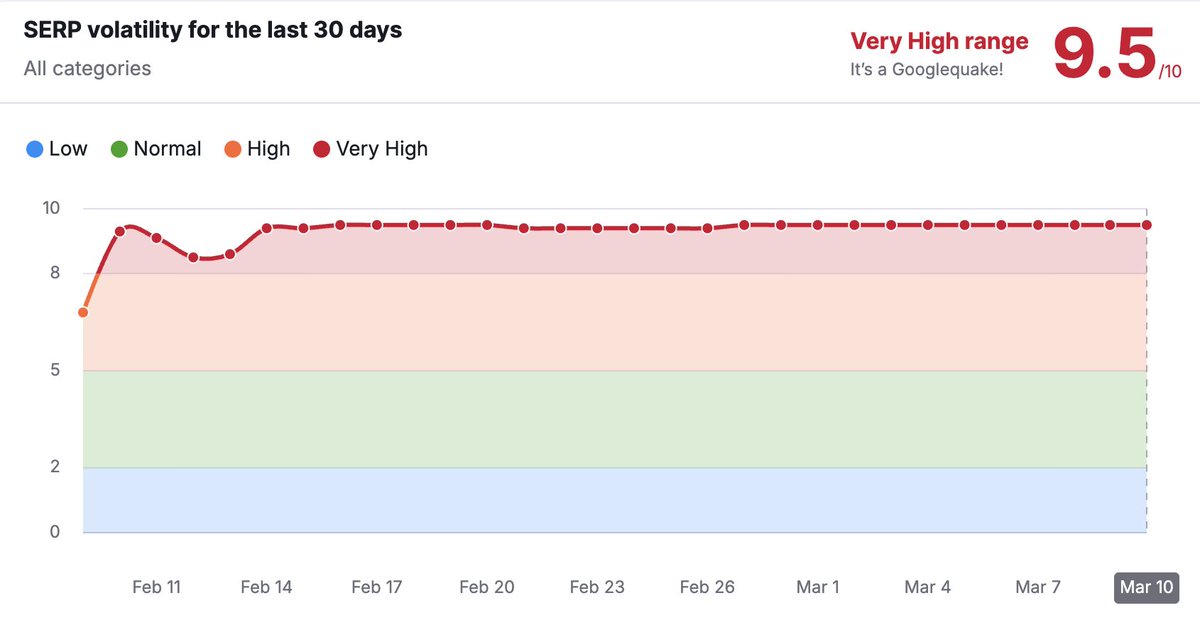
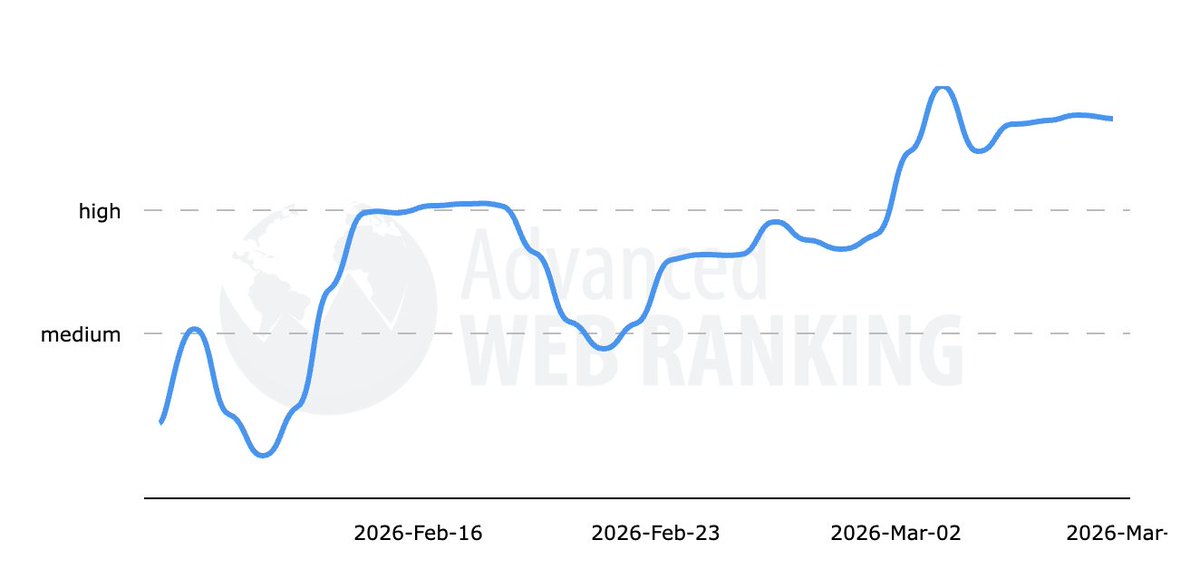
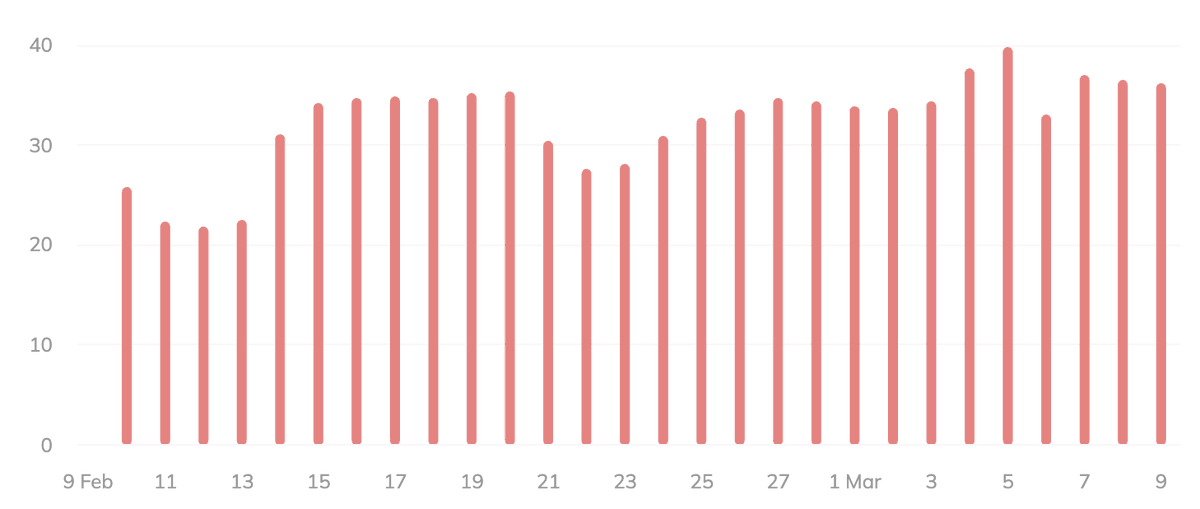
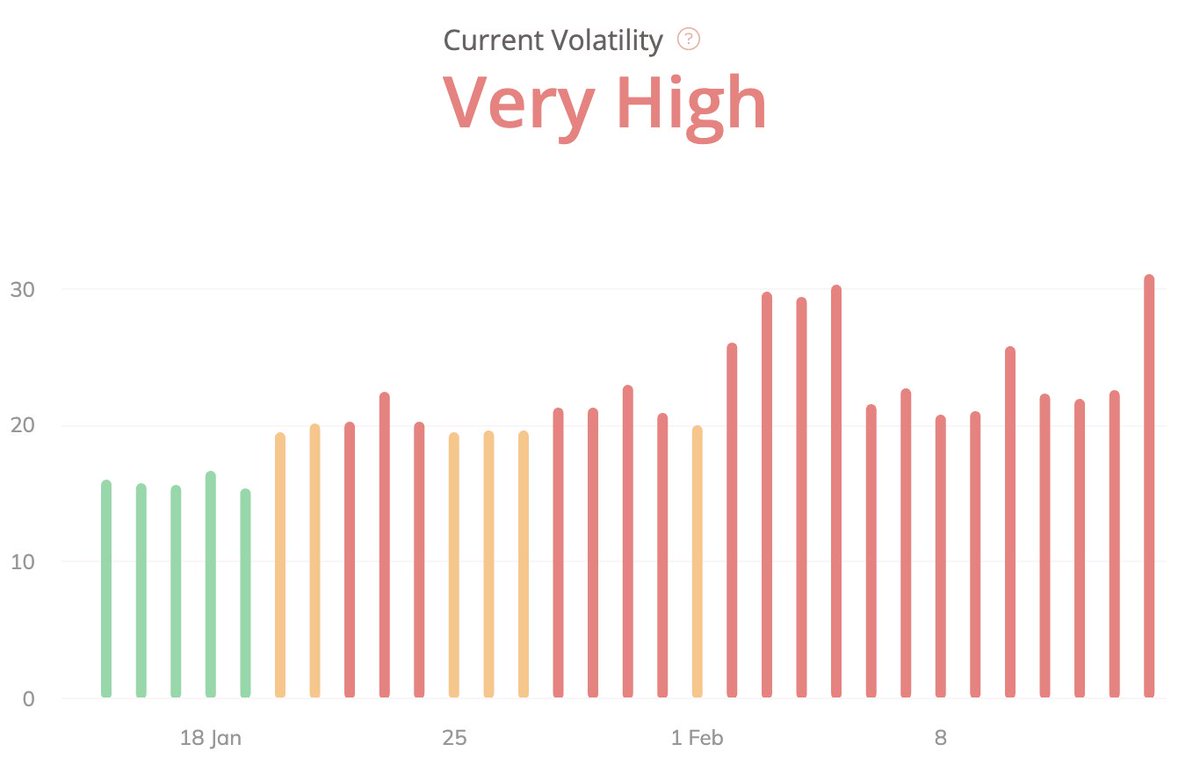
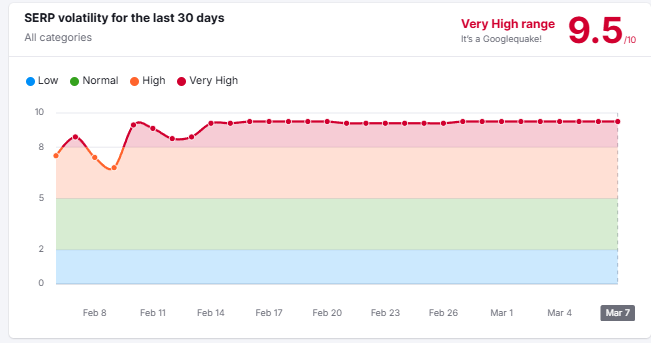
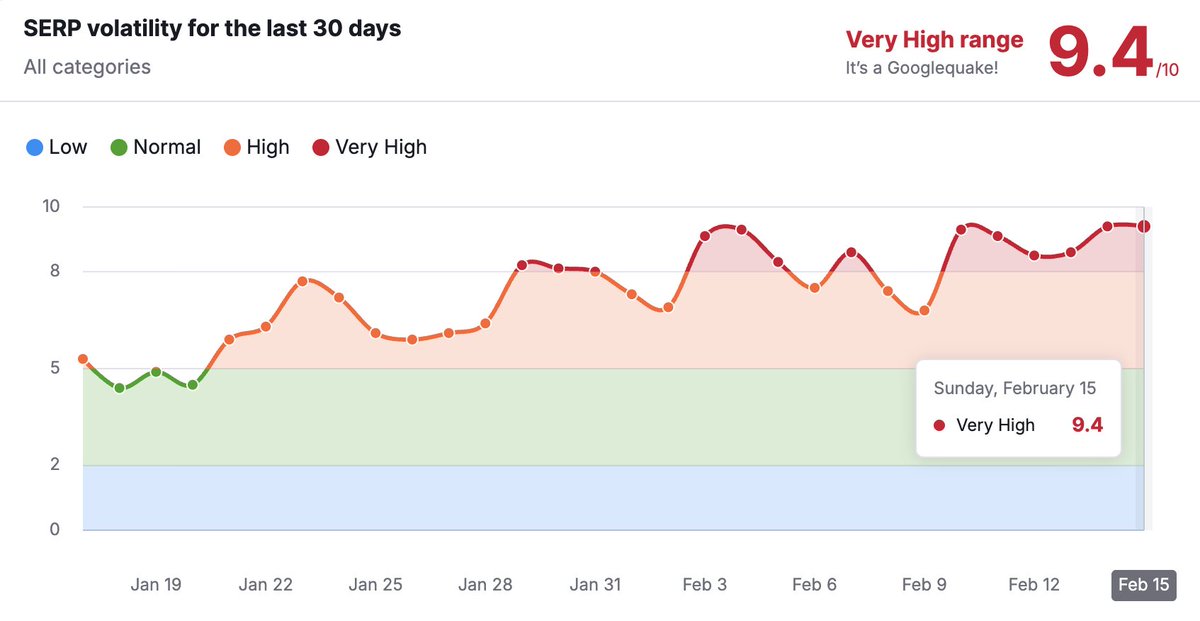
@rustybrick Can you remember this much high volatility for this long of a timespan? Going on 40+ days now of above 9.
English

Google Search ranking volatility continues to be heated without a confirmed core update seroundtable.com/google-search-…


English

Neil Patel says the longer your content is, the better your chances of being cited in AI search. You have to be careful, though. If you write a lot of fluff content that's not helpful or AI-generated, this can penalize your site and do more harm than good. It's more important that each page on your site is helpful and provides a good user experience.
Neil Patel@neilpatel
Does your content length affect how often AI platforms cite you? We looked at 15,000 prompts to see the content they cite and its length. Check out the results. Now, keep in mind that other factors, like structure, can cause an LLM to cite one article over another, but it's clear they are citing longer articles, as there is more text for them to pull from.
English

I have a feeling there's going to be a core algorithm announced this week. I've never seen fluctuations in rankings for this long. We're going on 40+ days of insane volatility. Something has to give. Also, many of the results look wonky across many industries. I'm hoping volatility cools down or we get some sort of announcement.

English

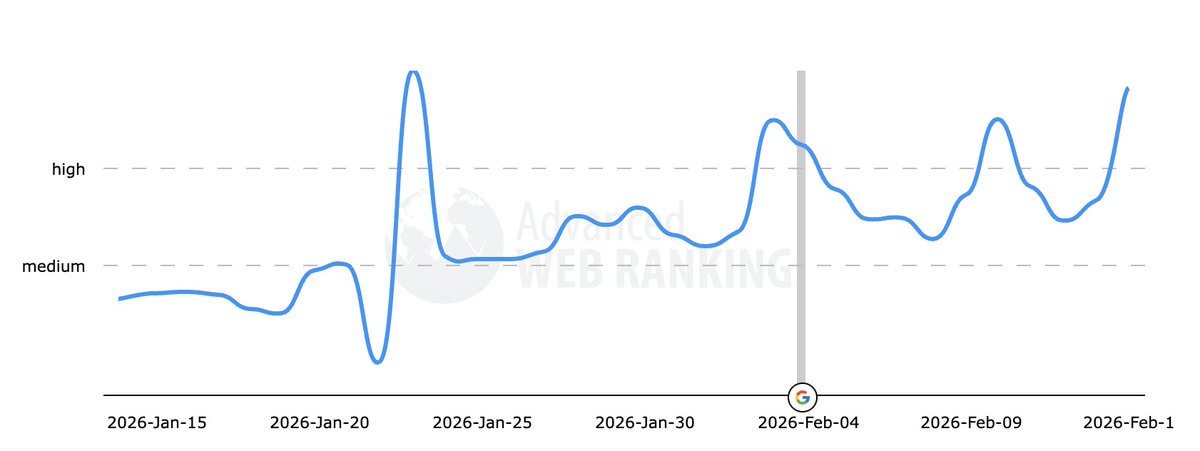
This update has been impacting more than just publishers. There’s been massive fluctuations for local businesses dating back to end of Jan. Curious if volatility calms down now that this is done running.
Barry Schwartz@rustybrick
Google's February 2026 Discover core update finally finished rolling out after 3 weeks seroundtable.com/february-2026-…
English

@NhlRatings follow me back. I have a business inquiry and would like to send you DM.
English

@rustybrick Crazy that we’re almost at a month straight of this heated volatility and fluctuations. Very tough for site owners to wait this long without a cooldown or explanation.
English

Google Search ranking volatility is still incredibly heated, even more so - this has been really hard on site owners - special Sunday story.... seroundtable.com/google-search-…


English

@JoyanneHawkins - Is there any downside in having a CallRail number as your GBP number? There’s always been this notion that there should be consistency between GBP number what’s on your site but more numbers are dynamic now. Curious to get your two cents.
English

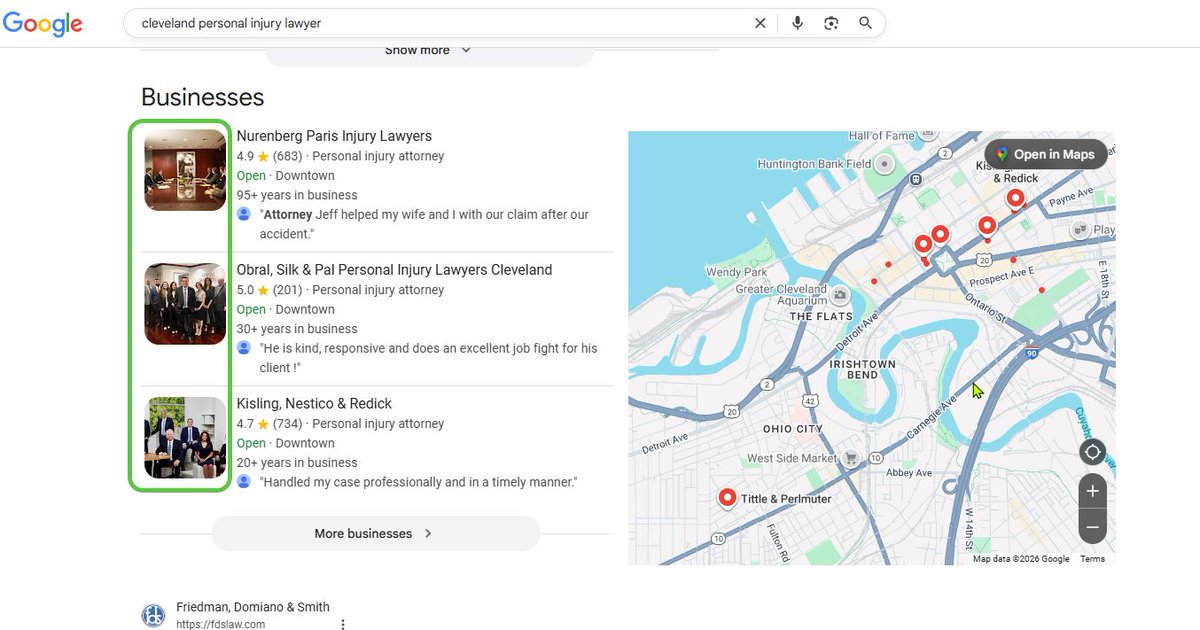
I'm seeing a new layout for Google Business Profile. There are now images associated with each local pack listing. The website and directions button are no longer visible. Overall, it has a cleaner layout and puts more emphasis on optimizing your GBP images.
cc'd: @rustybrick

English

@readDanwrite @FOS @AEricFisher If you want to focus on TV ratings, put the games in beautiful settings with minimal fans (like they did with Lake Tahoe). The outdoor stadium game has run its course.
English

The NHL has pulled out all the stops for really cool Winter Classics -- last year in Wrigley on NYE (date was a miss), this year in Florida with all kinds of cool bells & whistles-- and still can't get strong ratings. what do they do to fix? @AEricFisher
frontofficesports.com/nhl-commish-ut…

English

@cory_analla The example I gave in the Columbus market, they did it the right way by that being the legitimate name of their business/brand. Still a ton of bad practices being deployed here.
English

Amazes me how keywords in your business name still carry so much SEO weight in 2026.
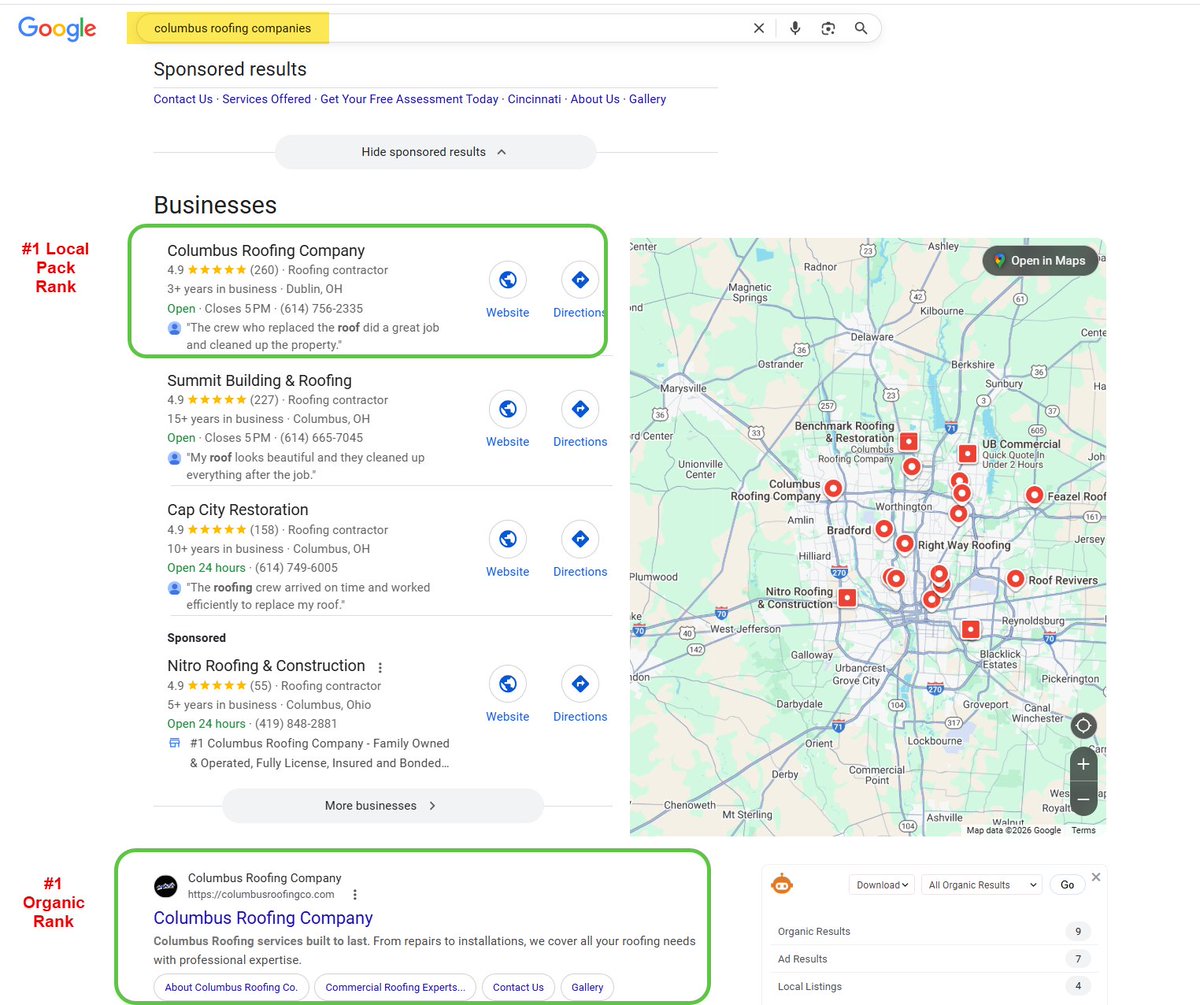
Columbus Roofing Company ranks #1 in the local pack and organically for the query, "Columbus Roofing Companies."
Let's take a look at the authority score of the two competitors behind them.
Columbus Roofing Company: 15
Feazel: 28
Newman: 27
Is there a downside to keyword-heavy domains? Sure. Columbus Roofing Company can't expand outside of Columbus. The brand name is generic, which can cause confusion when others try to replicate it.
The pros in this situation heavily outweigh the cons. Columbus Roofing Company has grown into a multimillion-dollar business and a major player in the Columbus market, all because of a strategic naming convention, outranking larger businesses with a higher authority score.
Do I think it's fair that Google gives so much weight to the business name in correlation to rank? Absolutely not. This has been happening since I entered the SEO industry in 2010. Google preaches 'user experience first,' yet exact match domains still game the system 16 years later. Until Google truly prioritizes relevance over keyword matching, smart businesses will continue to exploit this advantage.

English