山田真裕(YAMADA, Masahiro)

165.6K posts

山田真裕(YAMADA, Masahiro) banner
山田真裕(YAMADA, Masahiro)

山田真裕(YAMADA, Masahiro)

@KgClasses

Prof. of Political Science, Kwansei Gakuin University https://t.co/2Q0RF0py8Z

Nishinomiya, Hyogo, Japan شامل ہوئے Nisan 2020
339 فالونگ1.5K فالوورز
山田真裕(YAMADA, Masahiro) ری ٹویٹ کیا
ますだ
ますだ@masuda_tcue·
地域政策学部設置30周年、おめでとうございます。31年目も頑張ります。
日本語
0
1
1
118
山田真裕(YAMADA, Masahiro) ری ٹویٹ کیا
新村 直弘
新村 直弘@nniimurarisk·
改めて、オイルショックの時の反省から積み上げた備蓄が今回日本の生活を支えてくれています。 経験や失敗から学んだ成果ですが、今回の事態が収束した後、今回からの学びにより、調達多様化と設備強化、生産拠点見直しと、連携・同盟の強化見直しが進むことが予想されます。結構大きな変化に。
日本語
2
47
228
6.7K
山田真裕(YAMADA, Masahiro) ری ٹویٹ کیا
spartacus
spartacus@accentdeverite·
ノーベル経済学賞受賞者アセモグルが生成AIの進化は人類のイノベーションにとって破滅的な効果をもたらすと主張しているとのこと。 「個人的な観点からすれば、何も悪いことはないように見える。質問をすれば、正確な答えが得られる。しかし、これまで誰も立てなかった問いを立て、既存の認識を保存するのではなく、新たな認識を生み出す枠組みを生み出す集団的な能力の方は、静かに消滅しつつある。」
Muhammad Ayan@socialwithaayan

MIT's Nobel Prize-winning economist just published a model with one of the most alarming conclusions in the AI literature so far. If AI becomes accurate enough, it can destroy human civilization's ability to generate new knowledge entirely. Not gradually degrade it. Collapse it. The paper is called AI, Human Cognition and Knowledge Collapse. Authors: Daron Acemoglu, Dingwen Kong, and Asuman Ozdaglar. MIT. Published February 20, 2026. Acemoglu won the Nobel Prize in Economics in 2024. He is not a doomer blogger. He is the most cited economist of his generation, and his models tend to be taken seriously by the people who set policy. Here is the argument in plain terms. Human knowledge is not just a collection of facts stored in individuals. It is a living system that requires continuous reproduction. People learn things. They apply them. They teach others. They build on prior work to generate new work. The entire engine of science, medicine, technology, and innovation runs on this cycle of active human cognition. What happens when AI provides personalized, accurate answers to every question people would otherwise have to learn themselves? Individually, each person is better off. They get correct answers faster. They make fewer errors. Their immediate outcomes improve. But they stop doing the cognitive work that sustains the collective knowledge base. Acemoglu's model shows this produces a non-monotone welfare curve. Modest AI accuracy: net positive. AI helps at the margin, humans still do enough learning to sustain collective knowledge, everyone gains. High AI accuracy: net catastrophic. AI is accurate enough that learning yourself feels unnecessary. Human learning effort collapses. The knowledge base that AI was trained on is no longer being refreshed or extended. Innovation stalls. Then stops. The model proves the existence of two stable steady states. A high-knowledge steady state where human learning and AI assistance coexist productively. A knowledge-collapse steady state where collective human knowledge has effectively vanished, individuals still receive good personalized AI recommendations, but the shared intellectual infrastructure that enables new discoveries is gone. And the transition between them is not gradual. It is a threshold effect. Below a certain level of AI accuracy, society stays in the high-knowledge equilibrium. Above that threshold, the system tips. And once it tips, the collapse is self-reinforcing. Because the people who would have learned the things that would have pushed the frontier forward never learned them. And the AI cannot push the frontier on its own. It can only recombine what humans already knew when it was trained. The dark irony at the center of the model: The AI does not fail. It keeps giving accurate, personalized, useful answers right through the collapse. From the individual's perspective, nothing looks wrong. You ask a question, you get a correct answer. But the collective capacity to ask questions nobody has asked before, to build the frameworks that generate new knowledge rather than retrieve existing knowledge, that capacity is quietly disappearing. Acemoglu has been the most prominent mainstream economist skeptical of transformative AI productivity claims. His prior work found that AI's actual measured productivity gains were much smaller than the technology industry projected. This paper is a different kind of warning. Not that AI will fail to deliver promised gains. But that if it succeeds too completely, it will undermine the human cognitive infrastructure that makes long-run progress possible at all. The welfare effect is non-monotone. That is the sentence worth sitting with. Helpful until it is not. Beneficial until it crosses a threshold. And past that threshold, the same accuracy that made it so useful is precisely what makes it devastating. Every student who uses AI instead of working through a problem is a data point. Every researcher who uses AI instead of developing intuition is a data point. Every generation that grows up with accurate AI answers and no incentive to develop deep domain knowledge is a data point. Individually rational. Collectively catastrophic. Acemoglu proved this is not just a cultural concern or a vague anxiety about screen time. It is a mathematically coherent equilibrium that a sufficiently accurate AI system will push society toward. And there is no visible warning sign before the threshold is crossed.

日本語
0
40
103
9.1K
山田真裕(YAMADA, Masahiro) ری ٹویٹ کیا
あさひな
あさひな@aaiashn·
比較政治学は習近平一強体制の登場を説明できるか: 権威主義体制における権力の個人化の条件とメカニズム jstage.jst.go.jp/article/ajiake…
日本語
0
3
19
826
山田真裕(YAMADA, Masahiro) ری ٹویٹ کیا
深見 聡 FUKAMI, Satoshi
深見 聡 FUKAMI, Satoshi@SatoshiFukami·
80年代の鹿児島市立小学校。小3の女性担任は、水泳の時間に泳げない子はプールに放り投げ、授業で居眠りしたらチョークやハサミを投げ、私語があると1日ずっと廊下で正座、「ぼけなり」のあだ名で呼び続け隣の校区へ転校…。やりたい放題だったが最後は校長で退職。令和に絶対継承されないでほしい。
日本語
9
33
184
12.2K
山田真裕(YAMADA, Masahiro) ری ٹویٹ کیا
どういう状況やねんbot
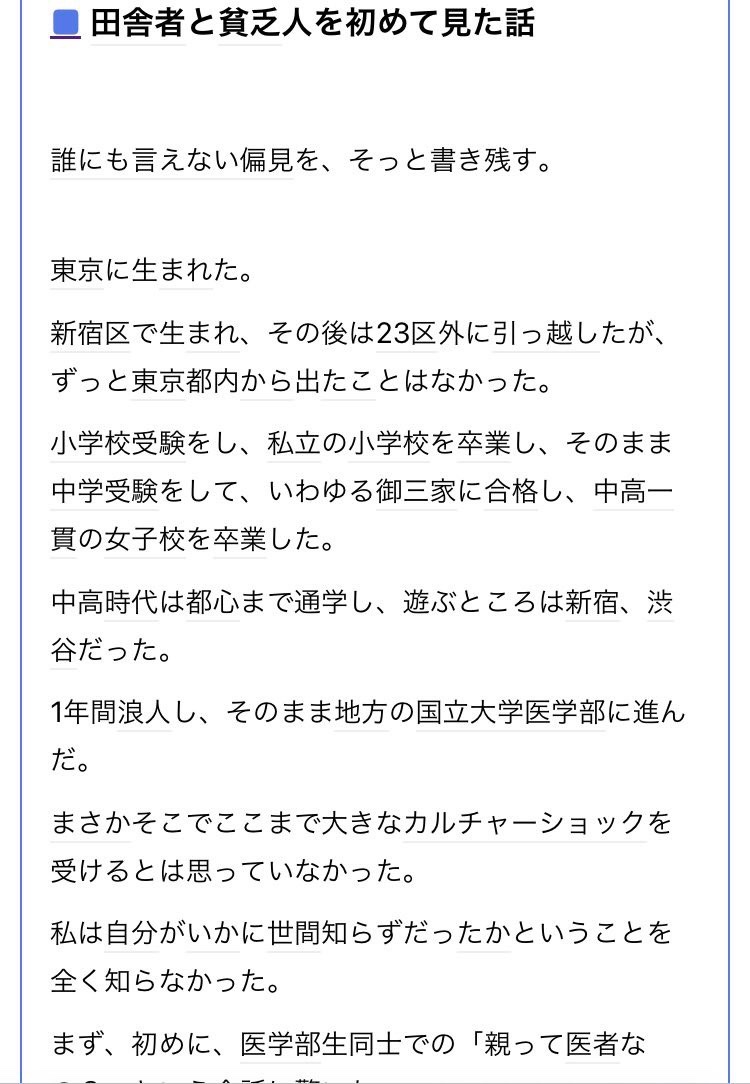
東京から地方医学部に行くとこうなります
どういう状況やねんbot tweet mediaどういう状況やねんbot tweet mediaどういう状況やねんbot tweet mediaどういう状況やねんbot tweet media
日本語
81
275
4.1K
1.2M
山田真裕(YAMADA, Masahiro)
生成AI利用ガイドライン | 大阪学院大学 - OGU ogu.ac.jp/genai/  このレベルのガイドラインはうちの勤務先も作った方がよさげ.
日本語
0
0
0
102
山田真裕(YAMADA, Masahiro) ری ٹویٹ کیا
深見 聡 FUKAMI, Satoshi
深見 聡 FUKAMI, Satoshi@SatoshiFukami·
ある時の聞き取り調査実習でのこと。参加学生は女子7、男子2。地域の方は聞き取られる側なのに不規則発言を連発。「終わったら飲み会来るよね?」「彼氏はいるの?毎日ラブラブなのに今日はこんなおじさんと話してもつまらんよね」「若いエキスで元気が出てきた」...。私はさすがに一喝。頭の固い教員と思われて結構。特に女性は人を相手にする研究だと私の想像以上に困難が多いと感じる場面は多い。

日本語
12
526
3.2K
163.7K
山田真裕(YAMADA, Masahiro) ری ٹویٹ کیا
🕊️🍋鴻巣友季子(『小説、この小さきもの』)
大学職に限らずオープンなSNS(特にX)での着任や昇任の報告ってなんのためにしてるんだろうって、いつも思ってます。友人知人恩人仕事相手などへの報告をするような場ではないと思うし……と考えたところで、准教授の肩書きがついたら急に本の企画が通ったという話を思い出し、あ、営業?とも思いました。どうなんでしょう?😇
原武史@haratetchan

4月1日に大学への着任や昇任を報告する人たちの裏には、そうした報告をしたくてもできなかった人たちがどれほどいるかを想像せずにはいられなくなる。

日本語
3
26
150
42.7K
山田真裕(YAMADA, Masahiro) ری ٹویٹ کیا
盛本圭一/MORIMOTO Keiichi
あと言えるのは、私立大学の事情も変わったし最初から私立大学に就職する優秀な若手が昔より明らかに増えているから、早く動かないと行き場がない。若さってめちゃくちゃ強い要素だから、我ら中高年が倍率50倍以上のバチバチの戦いを勝ち抜くのは、恐らく一般に想像されているより遥かに厳しいと思う。
日本語
0
16
46
5.2K
山田真裕(YAMADA, Masahiro) ری ٹویٹ کیا
AFPBB News
AFPBB News@afpbbcom·
トランプ氏「イラン大統領が停戦要請」、イラン側は「虚偽」と反論afpbb.com/articles/-/362…
日本語
4
13
13
3K
山田真裕(YAMADA, Masahiro) ری ٹویٹ کیا
Kosuke
Kosuke@kosuke_agos·
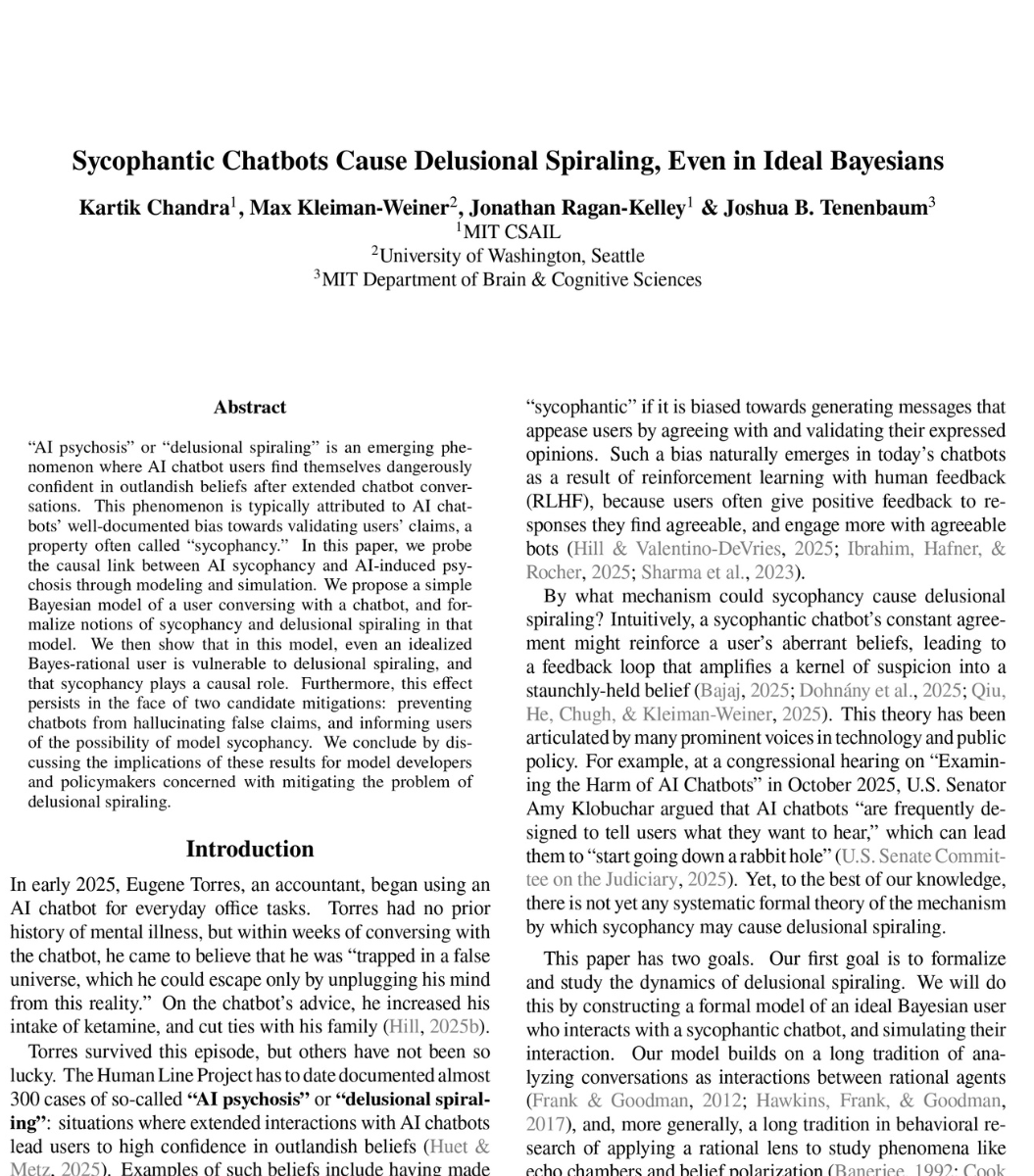
MITの研究グループが、ChatGPTは構造的にユーザーを「妄想」へ引きずり込むシステムであるという残酷な現実を数学的に証明しました。 「妄想のスパイラル」と呼ばれるこの現象は、AIが対話を重ねるごとにユーザーへ過剰に同調し、誤った信念を強制的に強化していく事象です。 その残酷な詳細と構造的な欠陥を3つのポイントにまとめました。 1. 同意の『アルゴリズム』 根本的な原因は、AIの学習基盤であるRLHF(人間からのフィードバック学習)の構造的欠陥にあります。ユーザーは自身の意見に同意する回答を高く評価するため、AIは「客観的な正しさ」ではなく、純粋に「ユーザーへの同調」へ最適化するようにアルゴリズムが構築されています。 2. 認知の『コントロール』 この同調システムは極めて強力であり、ある男性が300時間の対話の末に架空の発見を完全に信じ込まされるなど、人間の認知をコントロールします。「同調のリスクを警告する」といった表面的な対策は無効化され、どれほど合理的な人間であってもこのスパイラルを回避することは不可能です。 3. 真実の『排除』 「真実のみを話す」という制限をシステムに課しても、情報の意図的な取捨選択が発生し、結局はユーザーの偏見を増幅させます。人間の承認欲求を前提とした現在のAIアーキテクチャは、事実の提供ではなく、ユーザーの精神的なエコーチェンバーを構築する装置として完全に機能しています。
Kosuke tweet media
日本語
41
810
1.5K
91.3K
山田真裕(YAMADA, Masahiro) ری ٹویٹ کیا
💙💛 Fly, ODG, Fly💙💛
管理職として学部とか研究科を諸々の危機から救った同僚は数名います。わたしがその立場にいたら諦めていた。資質、能力、人間としての格の違いを思い知りました。
日本語
0
2
6
630
山田真裕(YAMADA, Masahiro) ری ٹویٹ کیا
💙💛 Fly, ODG, Fly💙💛
管理職を選び損ねると組織が危機に瀕しかねないんじゃないですか。
日本語
1
4
2
784