LaunchPro

763 posts

LaunchPro banner
LaunchPro

LaunchPro

@LaunchPro1

I enjoy discussing/following any and everything about launch vehicles and space related topics. Views are my own.

شامل ہوئے Şubat 2022
1K فالونگ103 فالوورز
LaunchPro ری ٹویٹ کیا
Julia Bergeron
Julia Bergeron@julia_bergeron·
It's been a wild almost 24 hours and @SLDelta45 is about to support a second launch within 24 hours of a major mishap. Shout out to airport like operations that enabled SLD and mission partners to respond, contain and maintain operations on the Eastern Range.
Space Launch Delta 45@SLDelta45

When an anomaly occurred during testing operations at SLC-36, SLD 45 emergency responders and mission partners responded immediately, ensuring personnel safety while maintaining Eastern Range mission readiness. Learn more: patrick.spaceforce.mil/News/Article-D…

English
1
9
62
3K
LaunchPro ری ٹویٹ کیا
Valerie Anne Smith
Valerie Anne Smith@ValerieAnne1970·
STAGE IV CANCER IS BEING REVERSED — BIG PHARMA SHOULD BE TERRIFIED Epidemiologist Nicolas Hulscher: "Over 100 studies prove IVERMECTIN has 12 distinct anti-cancer mechanisms across 12 different cancer types." Documented case reports of complete Stage IV remissions using IVERMECTIN and FENBENDAZOLE — the same anti-parasitics Big Pharma tried to bury. This isn’t “horse paste” conspiracy theory anymore. This is published science. Real people. Terminal diagnoses erased. Why are oncologists still pushing toxic chemo while these cheap, safe drugs are delivering miracles? Your doctor won’t tell you this. The media won’t cover it. Big Pharma can’t patent it.
English
70
1.5K
3.5K
70.4K
LaunchPro ری ٹویٹ کیا
Dr. Mel Aaron Gibson
Dr. Mel Aaron Gibson@MelAaronGibson1·
🚨 IT’S OFFICIAL: Epidemiologist Nicolas Hulscher Says IVERMECTIN and FENBENDAZOL Are Showing Documented Stage IV Cancer Remissions — Big Pharma Cannot Ignore This Anymore | VIDEO 🚨 A global medical firestorm is erupting after epidemiologist Nicolas Hulscher highlighted scientific reports documenting stage IV cancer remissions involving #ivermectin and #fenbendazole , reigniting worldwide debate over Big Pharma, alternative therapies, and the future of cancer treatment. 🚨 THE STAGE IV REMISSION CASES NOW SHOCKING THE MEDICAL WORLD FOLLOW ME, THE NEXT DROP WILL BE SHOCKING.
English
141
3.5K
11.7K
1.2M
LaunchPro ری ٹویٹ کیا
AlphaFox
AlphaFox@alphafox·
People are starting to realize that tablets and instant gratification devices are ruining kids - and going back to older technology is actually an upgrade for children's development:
English
64
372
3.7K
118.5K
LaunchPro ری ٹویٹ کیا
Space Force Association
Space Force Association@SpaceForceAssoc·
Everyone has a place in Space. Col. Eric Zarybnisky explained last week on the Spacepower Podcast space needs more than engineers, it needs artists, designers, and creative thinkers. Showing students there's a place for them in the future of American spacepower.
English
1
6
29
1.4K
Sassafrass84
Sassafrass84@Sassafrass_84·
You guys..... parenting done right. This hits right in the feels.
English
74
345
4.5K
197.7K
LaunchPro ری ٹویٹ کیا
Elon Musk
Elon Musk@elonmusk·
🇺🇸🇺🇸
General Chance Saltzman@SpaceForceCSO

Early this morning, @SpaceX launched the final GPS III satellite in our constellation, the most advanced GPS satellites ever built. This video aired at T-9:25, marking the achievement for the Space Force as we celebrate 250 years of American strength and innovation. 🇺🇸

ART
4K
14.3K
96.6K
18.1M
LaunchPro ری ٹویٹ کیا
Jaynit
Jaynit@jaynitx·
Steve Jobs walked into a room full of MBA students and asked how many were going into consulting. Hands went up. He said their careers would be “like a picture of a banana.” “You might get a very accurate picture. But you never really taste it.” He spent 60 minutes explaining what actually builds careers: "Without owning something over an extended period of time, where one has a chance to take responsibility for one's recommendations, where one has to see one's recommendations through all action stages and accumulate scar tissue for the mistakes and pick oneself up off the ground and dust oneself off, one learns a fraction of what one can." He continues: "Coming in and making recommendations and not owning the results, not owning the implementation, I think is a fraction of the value and a fraction of the opportunity to learn and get better." "You do get a broad cut at companies, but it's very thin." Then the line that made the room go silent: "It's like a picture of a banana. You might get a very accurate picture, but it's only two dimensional. Without the experience of actually doing it, you never get three dimensional." "So you might have a lot of pictures on your walls. You can show it off to your friends. You can say, look, I've worked in bananas, I've worked in peaches, I've worked in grapes." "But you never really taste it." The room applauded. This was 1992. Jobs had been fired from Apple seven years earlier. He was running NeXT. He had scar tissue. An MIT student asked him: where would Apple be if you hadn't left? Jobs paused. "I've obviously thought about this a lot. I think everybody lost. I think I lost. I think Apple lost. I think customers lost." "And having said all that, so what? You go on. It's not as bad as a lot of things. Not as bad as losing your arm." That's Steve Jobs. Getting fired from the company he built, comparing it to losing a limb, and shrugging. He spent the rest of the talk explaining what he learned about building companies. On competitive advantage: "Hardware churns every 18 months. It's pretty impossible to get a sustainable competitive advantage from hardware. If you're lucky, you can make something one and a half or two times as good as your competitor. And it only lasts for six months." "But software seems to take a lot longer for people to catch up with." "I watched Microsoft take eight or nine years to catch up with the Mac, and it's arguable whether they've even caught up." On technology windows: "You can use the concept of technology windows opening and then eventually closing." "Enough technology from fairly diverse places comes together and makes something that's a quantum leap forward possible. And a window opens up." "It usually takes around five years to create a commercial product that takes advantage of that technical window opening up." "And then it seems to take about another five years to really exploit it in the marketplace." He gave examples from his own life: Apple II lasted 15 years. DOS lasted 15 years. Mac was eight years old at the time and would easily last another five. "These things are hard. They don't last because it's convenient, or even because it's economic. They last because this is hard stuff to do." On management: "I've never believed in the theory that if we're on the same management team and a decision has to be made, and I decide in a way that you don't like, and I say, come on, buy into the decision." "Because what happens is, sooner or later, you're paying somebody to do what they think is right, but then you're trying to get them to do what they think isn't right. And sooner or later, it outs." His approach: "The best way is to get everybody in a room and talk it through until you agree." Then this: "We don't pay people to do things. That's easy, to find people to do things." "What's harder is to find people to tell you what should be done. That's what we look for." "So we pay people a lot of money, and we expect them to tell us what to do. And when that's your attitude, you shouldn't run off and do things if people don't all feel good about them." A student asked: what's the most important thing you learned at Apple that you're doing at NeXT? Jobs thought for a moment. "I now take a longer-term view on people." "When I see something not being done right, my first reaction isn't to go fix it. It's to say, we're building a team here. And we're going to do great stuff for the next decade, not just the next year." "So what do I need to do to help so that the person that's screwing up learns, versus how do I fix the problem?" "And that's painful sometimes. And I still have that first instinct to go fix the problem." "But taking a longer-term view on people is probably the biggest thing that's changed." On not knowing your own competitive advantage: "A lot of times you don't know what your competitive advantage is when you launch a new product." "When we did the Macintosh, we never anticipated desktop publishing. Sounds funny, because that turned out to be the Mac's compelling advantage." "We anticipated bitmap displays and laser printers. But we never thought about PageMaker, that whole industry really coming down to the desktop." "But we were smart enough to see it start to happen nine to twelve months later. And we changed our entire marketing and business strategy to focus on desktop publishing." "And it became the Trojan horse that eventually got the Mac into corporate America." The same thing happened at NeXT. They built software to help developers create apps faster. Their target customers were Lotus, Adobe, WordPerfect. Then big companies started showing up and saying: "You don't understand what you've got. The same software that allows Lotus to create their apps faster is letting us build our in-house apps five to ten times faster." "And you dummies don't even know it." Jobs admitted: "It took them about three months before we finally heard it." On hiring: "It seems like all the good people I really want to hire, it takes me a year to hire them. It's always been that way, even at Apple." "I usually meet somebody that is really good. And you can't get them. And then you go try to find other people. And nobody measures up." "When you meet somebody that good, you always compare them to this one person. And you know you're going to be settling for second best if you compromise." "And I've always found it best not to compromise, and just keep chipping away." His VP of Marketing took a year and a half to hire. "And they're all worth it." This talk is Steve Jobs at his most unfiltered. A founder with scar tissue explaining what he learned the hard way. This 60 minute MIT lecture will teach you more about building companies than every startup book you've read combined. Bookmark & give it an hour, no matter what.
English
23
559
2.6K
959.4K
LaunchPro ری ٹویٹ کیا
Joe.B
Joe.B@JoeB_Photos·
Joe.B tweet media
ZXX
0
5
126
1.6K
LaunchPro ری ٹویٹ کیا
Kevin Carpenter
Kevin Carpenter@kejca·
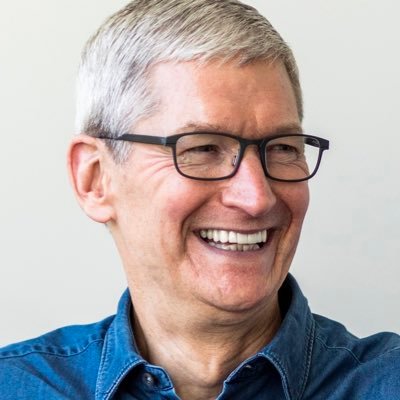
Apple CEO Tim Cook: "[Steve Jobs] was a brilliant guy. He was a genius. He is a once-in-a-thousand-years kind of person. He is of that magnitude." "I miss him terribly."
English
13
77
1.3K
87.3K
LaunchPro ری ٹویٹ کیا
Eric Jorgenson 📚 ☀️
Eric Jorgenson 📚 ☀️@EricJorgenson·
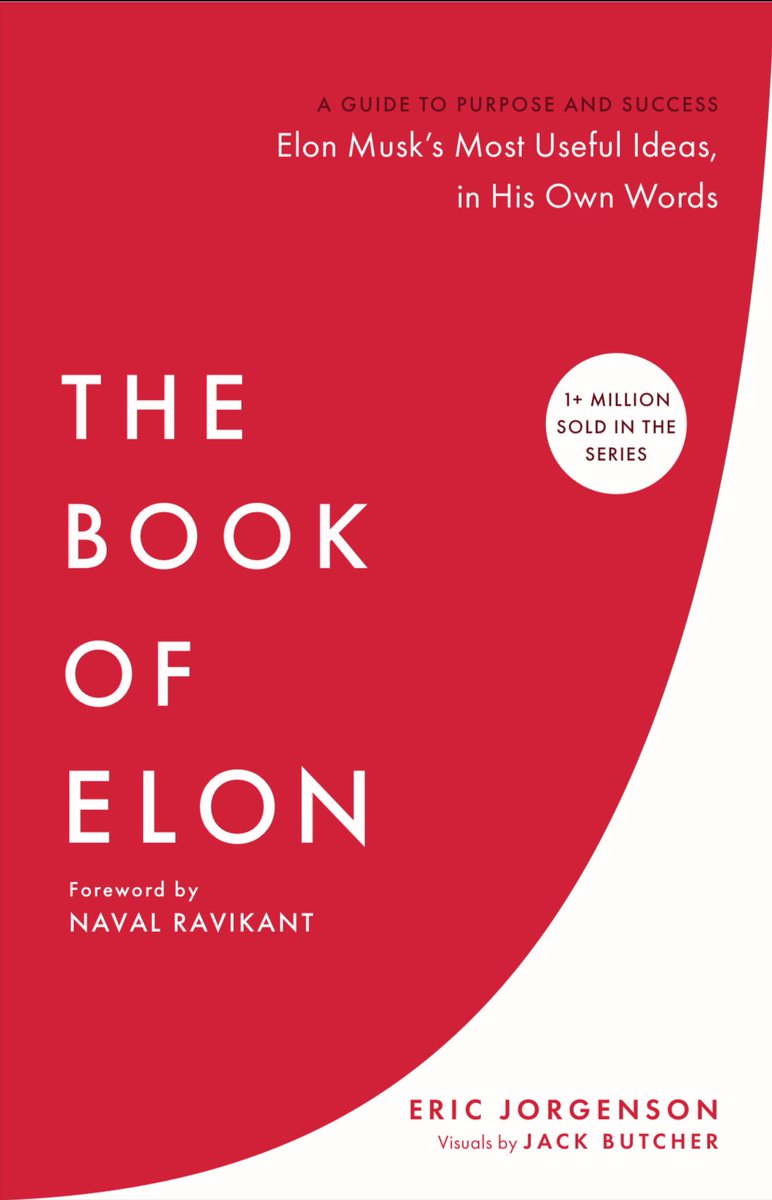
How it felt to get Elon's permission to publish this book after 4 years of working on it:
Eric Jorgenson 📚 ☀️ tweet mediaEric Jorgenson 📚 ☀️ tweet media
English
69
79
2.3K
158.2K
LaunchPro ری ٹویٹ کیا
Elon Musk
Elon Musk@elonmusk·
Tunnels are so underrated
Aakash Gupta@aakashgupta

The real story is the $25 million per mile price tag they’re betting on. Nashville’s own 2018 light rail plan priced at $200 million per mile. New York’s East Side Access cost $3.5 billion per mile. The LA Metro expansion is running $1 billion per mile. The Boring Company says it can build 13 miles of twin tunnels through Nashville for $240-300 million total. That’s a 95% cost reduction from the industry average. If the number holds, it rewrites the economics of every transit project in America. If it doesn’t, a few hundred million in private capital evaporates and taxpayers lose nothing. That risk asymmetry explains why Tennessee said yes when LA, Chicago, Baltimore, and DC all said no. The engineering gamble is wild. 12-foot diameter tunnels instead of 28-foot. Fully electric Prufrock machines that mine continuously instead of stopping every 5 feet to install lining segments. Zero people in the tunnel during operations. A machine that “porpoises” into the ground from a truck instead of requiring million-dollar launch pits and cranes. Every one of those innovations has worked in Las Vegas sand. None have been tested in karst limestone, the geology that creates sinkholes, caves, and underground streams. Their own CEO said at the unveiling that Nashville would not be their choice if they were optimizing for easiest places to tunnel. This tells you everything about what The Boring Company is actually trying to prove. Nashville is where the thesis meets the hardest possible geology. 50 inches of annual rainfall versus Vegas’s 4. Rock that creates underground caves and streams. They just signed a construction contract in Dubai too, meaning they need Nashville to work before the next project launches. The internal memo from the governor’s office estimates 1 mile per month. The Boring Company’s website claims 1 mile per week. That 4x gap between political planning and corporate marketing will determine whether this finishes in 2027 or 2030. Week 7, when Prufrock-MB2 arrives, is when this gets real. Two machines boring simultaneously through Tennessee limestone will answer the question the entire tunneling industry has been debating for a decade: whether a startup can actually outrun the physics that made infrastructure the slowest-moving sector in construction.

English
2.5K
3.6K
44.1K
34.7M
LaunchPro ری ٹویٹ کیا
Mustafa
Mustafa@oprydai·
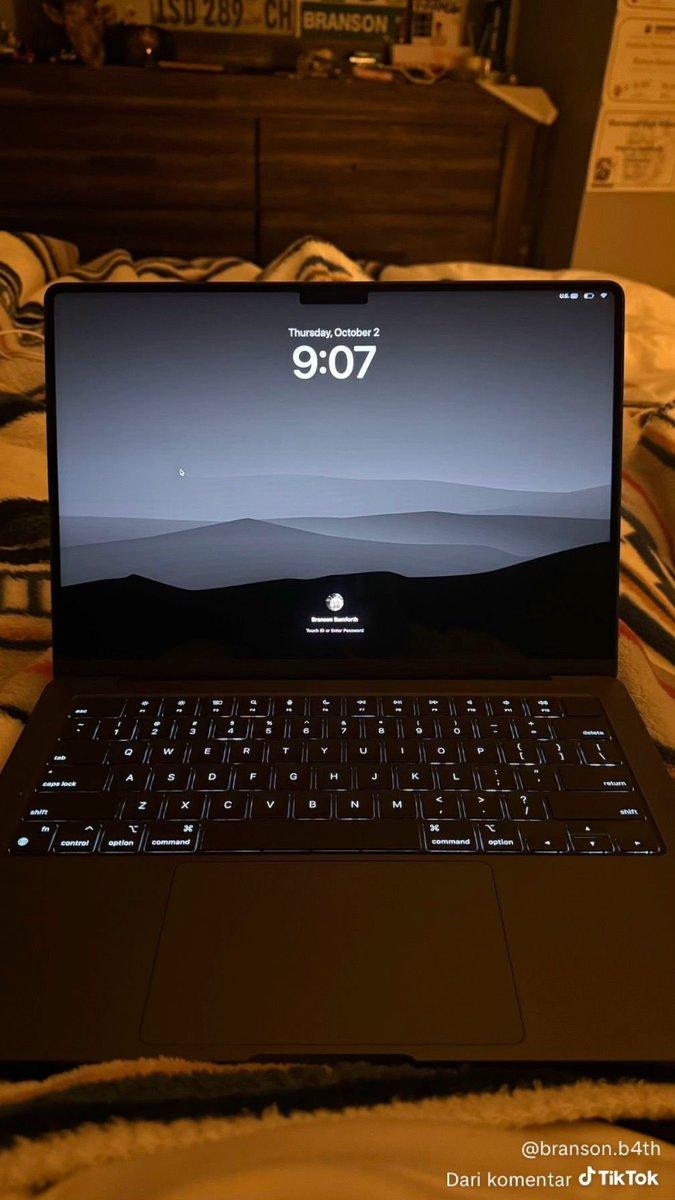
Buy a MacBook, it'll change your life.
Mustafa tweet media
English
940
493
11.9K
1.6M
LaunchPro ری ٹویٹ کیا
General Chance Saltzman
General Chance Saltzman@SpaceForceCSO·
Space Force Guardians and our capabilities on the invisible front line are vital to the success of all modern day U.S. military operations.
English
53
193
715
25.8K
LaunchPro ری ٹویٹ کیا
Tim Cook
Tim Cook@tim_cook·
Steve was an incredible leader, innovator, and friend whose world-changing ideas moved all of us forward. Celebrating his remarkable life and legacy today, on his birthday.
Tim Cook tweet media
English
1.7K
4.4K
41.2K
1.4M
LaunchPro ری ٹویٹ کیا
Tim Cook
Tim Cook@tim_cook·
As part of our $600B commitment, Mac mini will be produced in the US for the first time later this year! We're accelerating our progress even further— producing more AI servers and opening an all-new Apple Advanced Manufacturing Center for hands-on training.
English
2.7K
3.9K
37.8K
3M
LaunchPro ری ٹویٹ کیا
Ian Miles Cheong
Ian Miles Cheong@ianmiles·
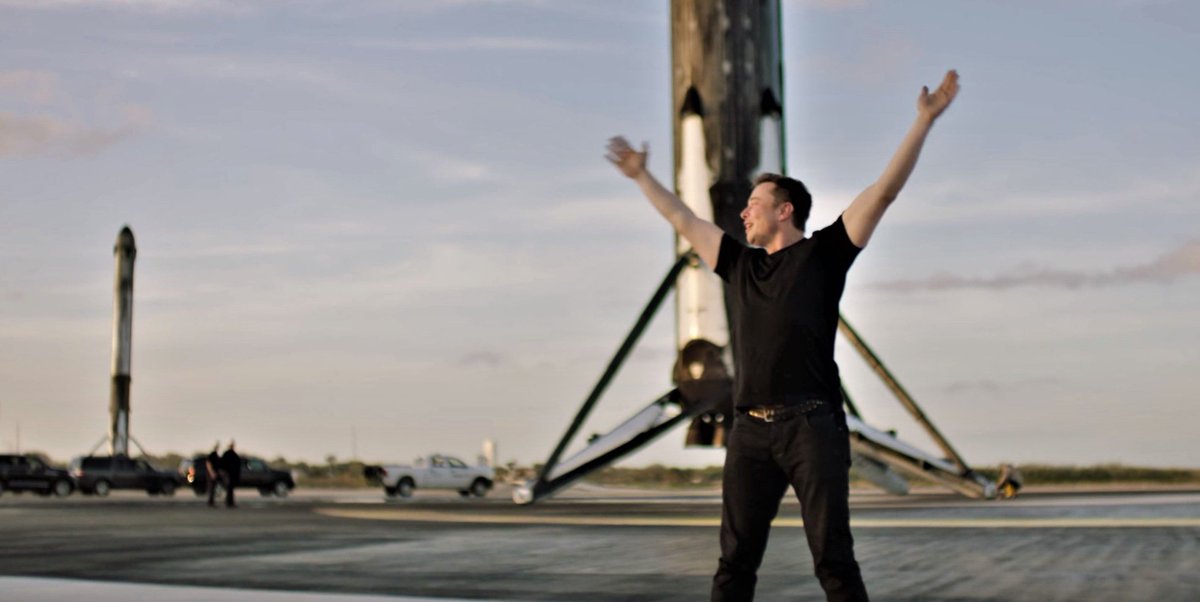
Elon Musk explains the logical impossibility of micromanagement at scale. When you’re running multiple world-changing companies, time becomes your most constrained resource. Most people view “drilling down” as a lack of trust, but for Musk, it’s a surgical strike. He doesn't look at the small details because he’s a perfectionist—he looks at them because, occasionally, a “tiny thing” is the only thing standing between progress and failure. “But the reason for drilling into some very detailed item is because it is the limiting factor. It's not arbitrarily drilling into tiny things.” The switch from carbon composites to stainless steel on Starship is the perfect example. A “tiny” material detail changed the course of space exploration.
English
35
141
1.5K
206K