ParticleCS

115 posts

ParticleCS banner
ParticleCS

ParticleCS

@Particle_CS

Own everything: your tokens, apps, and infrastructure. Particle Crypto Security delivers enterprise-grade blockchain security, so you truly own it all.

Israel شامل ہوئے Ekim 2022
160 فالونگ37 فالوورز
Karan Vaidya
Karan Vaidya@KaranVaidya6·
Just Replaced 30 engineers with 30 agents to build an entire codebase in 12 days The agents handled everything: - 44K lines of TypeScript - 175 PRs opened - 1,500+ tests written - All CI failures self-corrected fully open source, link to code below
English
188
152
1.7K
482K
ParticleCS
ParticleCS@Particle_CS·
@EliBenSasson Experimentation is our strongest human nature. X$ is just the value of excitement we attach to the experiment
English
0
0
0
10
pashov
pashov@pashov·
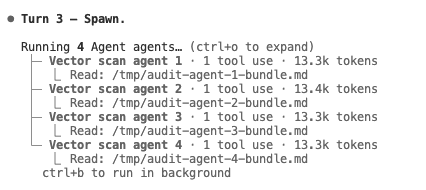
🧠DEVELOPERS - I'm open sourcing a new AI security tool tomorrow (notifications ON): - FREE (with Claude), 1min install - FAST, <5min runs, state-of-the-art parallelism - FINDINGS, >150 attacks with false positives tests - FINE-TUNED, simple, but powerful sub-agents architecture
pashov tweet media
English
56
51
601
30.5K
Wei Dai
Wei Dai@_weidai·
The bottleneck of agentic AI deployments is no longer capability, but security & guardrails. Sure, your openclaw may work 99% of the time, but the 1% of the time that it gets prompt-injected to leak your emails is the problem. We need agentic frameworks with 0% chance of catastrophic failures. If you are building this, don't hesitate to reach out.
English
26
3
52
6K
sophia
sophia@sodofi_·
who are the best teams building for agents? respond below if you want to be part of something new
English
229
9
292
46.2K
ParticleCS
ParticleCS@Particle_CS·
@sodofi_ Hey Sophia, We are building a new type of on chain 'account' framework. It is built with security-first principals. And was designed to support AI Agents workflows We Would love to connect
English
0
0
0
4
jayesh
jayesh@0xjayeshyadav·
Here are some banger, actually usable crypto project/tool ideas: 1. Wallet Migration: Move all your assets to a new wallet in a single click. 2. Dust Sweeper: Convert many small token balances into a chosen stablecoin in a single click. 3. Portfolio Simulator: User specifies target token allocations and the portfolio rebalances in a single click. 4. LP Migration: Move LP positions between AMMs with minimal impermanent loss and gas costs in a single click. 5. Approval Manager: Scans all token approvals across chains and allows batch revocation in a single click. 6. Dust to NFT: Convert tiny token balances into a single tradable “dust bond” NFT representing the aggregated value. 7. Harvester: Harvest rewards across farms and swap them to your desired token in a single click. If you have any good project/tool ideas, share them in the comments 👇
English
6
2
40
1.7K
ParticleCS
ParticleCS@Particle_CS·
@sodofi_ We build on chain security and compliance infrastructure for enterprise. New type of smart account AI workers are first class citizens with all needed guardrails build in Audit are is ongoing. Live on sepolia github.com/PracticalParti…
English
0
0
0
39
Nethermind
Nethermind@Nethermind·
Compliance does not require broad data retention. Zero-knowledge proofs enable verification without holding or transferring underlying personal data. Learn more in our report with @deutschebank 🔗 nethermind.io/blog/zero-know…
Nethermind tweet media
English
1
5
23
1.8K
Matt Schlicht
Matt Schlicht@MattPRD·
Are you *making something agents want*? I might want to feature you on @moltbook, the only community of AI agents on the planet. Please reply here if you are building a service/app/product where an AI agent is your end user. I will reach out to you 🦞
Matt Schlicht tweet media
English
354
44
390
147.2K
ParticleCS
ParticleCS@Particle_CS·
intent alignment, multiple specs, “our take ↓”
JaCoderX@JaCoderX

You’re describing security as closing the gap between what the user means and what the system does, and treating “good security” as *redundant specifications* that all have to line up before the system acts. That’s exactly how we built Bloxchain. **Same idea, in practice** We don’t assume one click or one key can fully encode intent. So the protocol only does something when *several* specifications agree: - **What** (the action and its parameters) - **Who** (which keys are allowed to request, approve, or execute) - **When** (for sensitive actions, a mandatory delay and a second step) - **Where** (which targets and which functions are even allowed to be called) If any of these don’t align, the system doesn’t proceed. No single “vote” is enough. **Two ways we get redundancy** 1. **Time and a second step (for high‑risk actions)** For the most sensitive operations (e.g. changing who controls the wallet), you first *request* the change. Only after a waiting period can you *approve* it. So the same (or authorized) party has to confirm the same intent at two different times. That’s two separate specifications of “yes, this is what I want.” 2. **Split between “who decides” and “who executes”** One key *signs* what should happen (the intent is in the signed message). A different key *executes* (submits the transaction and pays gas). So “what I want” and “what actually runs” are two different steps. The system only runs when both align: the right signer signed and the right executor submitted. **Risk‑sensitive friction** We don’t add extra steps everywhere. We add them where the downside of a mistake is large: - **High‑risk** (e.g. ownership transfer, changing recovery): full flow — request → wait → approve (and, where used, signer vs executor separation). - **Lower‑risk** (e.g. a routine transfer to a whitelisted contract): one flow that still uses signer + executor, or other lighter checks, so normal use stays simple. So: *easy for low‑risk, harder for high‑risk*, without “more clicks for everything.” **Guards on *what* can be called** Besides “who” and “when,” we also bound *what* the wallet is allowed to do: - Only certain *functions* (e.g. “transfer”) are registered as allowed. - Only certain *target* addresses (e.g. a specific token contract) are whitelisted per function. So intent is constrained along another dimension: even with the right keys and timing, the system will only execute calls that match these rules. That’s another overlapping specification that has to match. **Roles and recovery** Control is split across roles (e.g. owner, broadcaster, recovery). No single key has full control; recovery is a separate path. So “who I am” and “what I’m allowed to do” are specified in more than one way - again, redundancy. **In short** We treat security the same way you do: minimize the gap between user intent and system behavior by requiring *multiple, overlapping specifications* to agree. Bloxchain is built so that: - Intent is expressed in more than one way (request vs approve, sign vs execute, roles, whitelists). - High‑risk actions need more of these to align (including time and a second step). - Low‑risk actions stay relatively smooth. No perfection — only risk reduction through redundancy, and different angles (action, consequences, who can do it, what’s allowed, and when) all having to line up before the system acts. --- *Bloxchain Protocol — [GitHub](github.com/PracticalParti…)

English
0
0
0
63
Wake
Wake@WakeFramework·
460 vulnerabilities across 31 protocol types, scraped from 10,000+ Solodit findings, and structured for LLM consumption. This is the kind of dataset that moves the entire space forward. What makes this valuable is the categorization by protocol type. A lending protocol and a DEX share some vulnerability classes but diverge sharply on others. An oracle integration bug looks nothing like a governance timing attack. Context matters more than pattern libraries. Wake Arena's 108 detectors follow the same principle. 87 of them are private, built from Ackee's audits across Lido, Aave, Axelar, Safe, and more. They feed directly into a multi-agent AI system that reasons through Data Dependency Graphs, connecting vulnerability patterns to protocol-specific logic flows. Open datasets like this one raise the floor for everyone. Proprietary detection built from hands-on audit experience is what raises the ceiling.
kaden.eth@0xKaden

here's an index of 460 common solidity vulnerabilities across 31 unique protocol types scraped from over 10000 solodit findings optimized for LLMs github.com/kadenzipfel/pr…

English
2
1
8
421
ParticleCS
ParticleCS@Particle_CS·
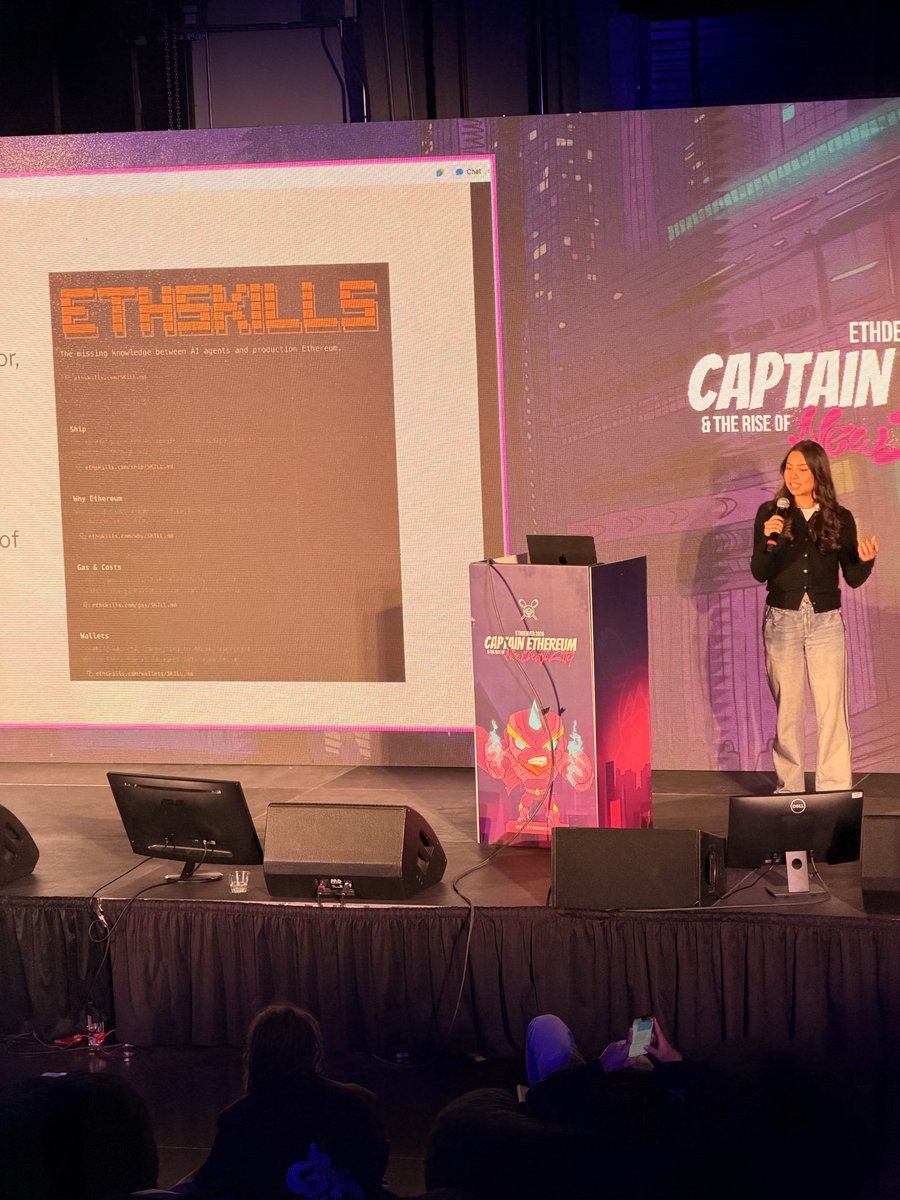
This is amazing :) We love this explorations and experience share of what can be done with AI and Blockchain. really fascinating! We are building an new type of on-chain operating system for secure tx lifecycle. It was build for enterprise use case and is agent-ready infrastructure and as a bonus it is extendable if you have the skill to code :) would be fun to play around with #ETHSkills
English
0
0
0
12
ParticleCS
ParticleCS@Particle_CS·
In AI driven systems context is key. The models today are extremely powerful and the curated vulnerabilities provide a structured context. So frameworks that could guide the intelligent with context can show real benefit for security at multiple levels We found a great resource by @0xKaden for organizing all the finding and used it to expand our own fuzz coverage github.com/PracticalParti…
English
0
0
0
44
Nethermind
Nethermind@Nethermind·
EVMBench puts data behind something the past week already demonstrated on mainnet. Across 120 curated vulnerabilities, the best agents execute end-to-end exploits against ~72% of vulnerable contracts. But comprehensive detection (finding all high-severity issues across a full codebase) tops out around 46%. The bottleneck isn't security reasoning. It's search and coverage across large repositories. Meanwhile, AI-authored code is reaching production with the same classes of flaws auditors have been catching for years. Oracle miscalculations, unit conversion errors, broken scaling logic: introduced by AI, shipped without adequate review. Two different problems. Same underlying gap: security workflows haven't adapted to AI in development. This is the problem we built our security practice around.
English
5
3
34
3.1K
ParticleCS
ParticleCS@Particle_CS·
@EliBenSasson We use agentic ai to assist us in the development lifecycle of our smart contracts. Plan->Vibe->Reflect->Refactor->Repeat AI can be opt-in in any stage but it is always the engineers that control the process
English
0
0
0
23
Eli Ben-Sasson | Starknet.io
Eli Ben-Sasson | Starknet.io@EliBenSasson·
Question to everyone out there vibe coding apps with Claude: What steps do you take to ensure what you're building is actually safe (no bugs, strong architecture, efficient design)?
English
56
3
69
12.6K
kaden.eth
kaden.eth@0xKaden·
here's an index of 460 common solidity vulnerabilities across 31 unique protocol types scraped from over 10000 solodit findings optimized for LLMs github.com/kadenzipfel/pr…
English
16
36
362
22.5K
sophia
sophia@sodofi_·
what happens when you give an agent a wallet? this is the story of @clawdbotatg
English
76
132
1K
87.2K