Planetary Plot of the Week

94 posts

Planetary Plot of the Week banner
Planetary Plot of the Week

Planetary Plot of the Week

@PlanetaryPlots

We post an interesting figure from a Planetary Science paper every week. Managed by grad students @henrymanelski, @smmenten98, @KrisLaferriere, @pcharon2000.

1 AU شامل ہوئے Şubat 2024
27 فالونگ315 فالوورز
پن کیا گیا ٹویٹ
Planetary Plot of the Week
Planetary Plot of the Week@PlanetaryPlots·
Hello! Welcome to the Planetary Plot of the Week. This account is focused on planetary science outreach. Each week we will be tweeting a different figure from an exciting recent paper in planetary science. Follow along with us to learn about current research in the field!
English
0
1
4
1.2K
Planetary Plot of the Week
Planetary Plot of the Week@PlanetaryPlots·
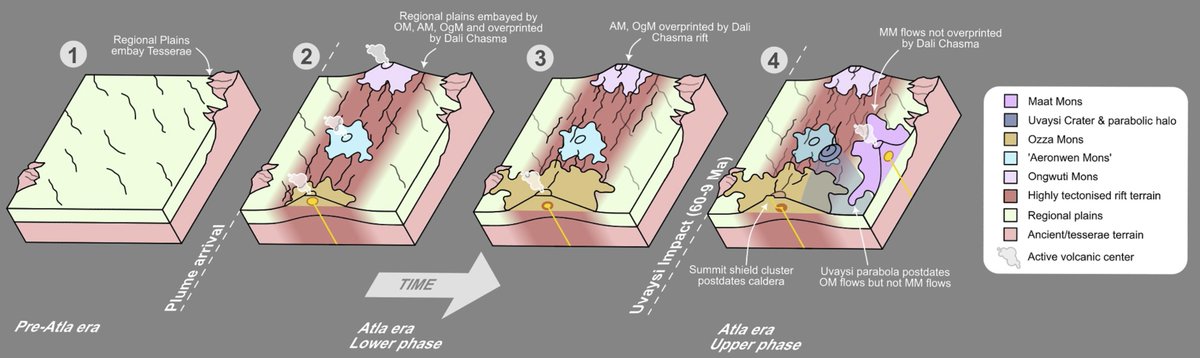
Our plot of the week is a diagram depicting the evolution of Atla Regio, an area on Venus known for its large volcanoes. Using Magellan radar data, the authors mapped volcanic and tectonic features, and found evidence for recent geologic activity. (1/2)
Planetary Plot of the Week tweet media
English
1
6
19
476
Planetary Plot of the Week
Planetary Plot of the Week@PlanetaryPlots·
Our figure of the week depicts a reconstruction of the surface of Ariel, one of Uranus’ moons, from images captured by Voyager 2. The authors propose that the subsurface material emerged from medial grooves, forming new crust and spreading the pre-existing cratered terrain. (1/2)
Planetary Plot of the Week tweet media
English
1
1
12
290
Planetary Plot of the Week
Planetary Plot of the Week@PlanetaryPlots·
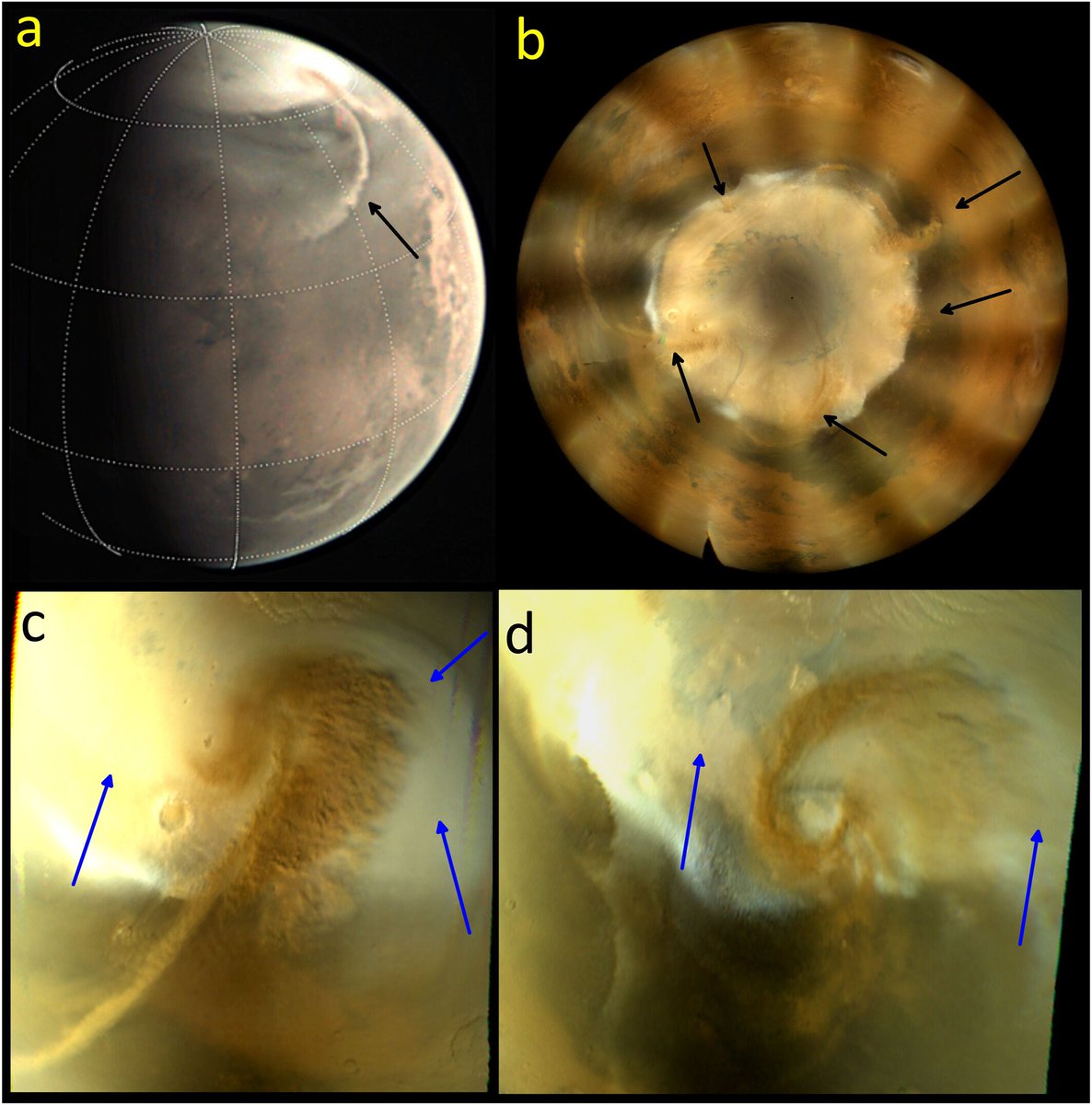
Our plot of the week shows orbital views of cyclone dust storms near the north polar cap of Mars. The authors investigate how these large-scale atmospheric phenomena could be contributing to periodic oscillations in surface pressure measured by the Perseverance rover (1/2).
Planetary Plot of the Week tweet media
English
1
7
30
1.1K
Planetary Plot of the Week
Planetary Plot of the Week@PlanetaryPlots·
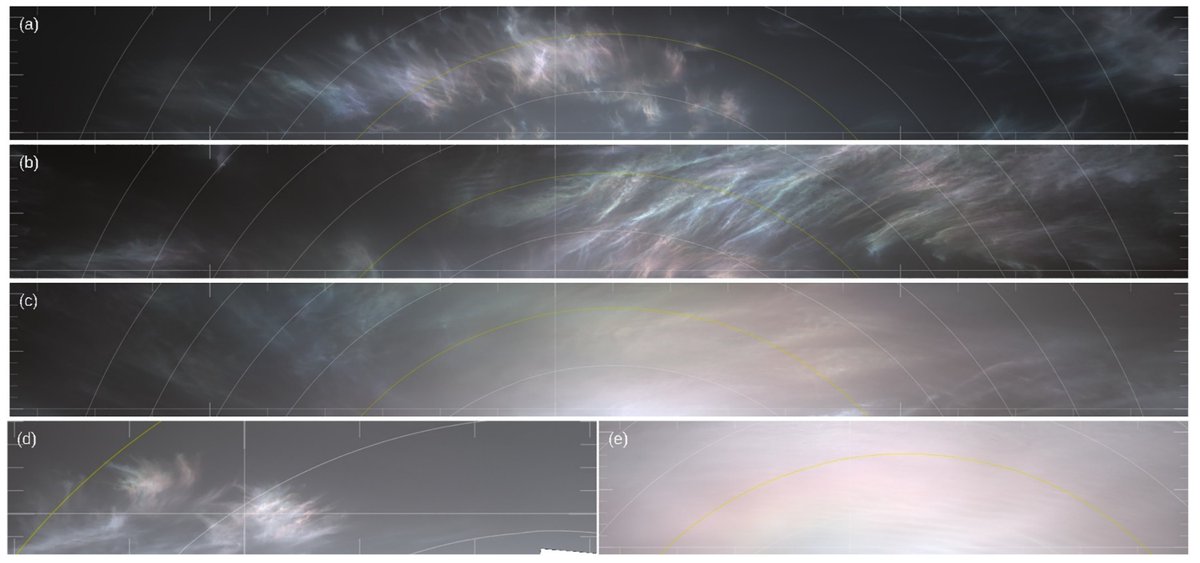
Our figure for this week is of multiple iridescent clouds captured by the Curiosity rover (@MarsCuriosity) on Mars. These clouds often form near sunset in early autumn, between 50 and 80 km in altitude, and are likely to be carbon dioxide.
Planetary Plot of the Week tweet media
English
1
14
28
1.4K